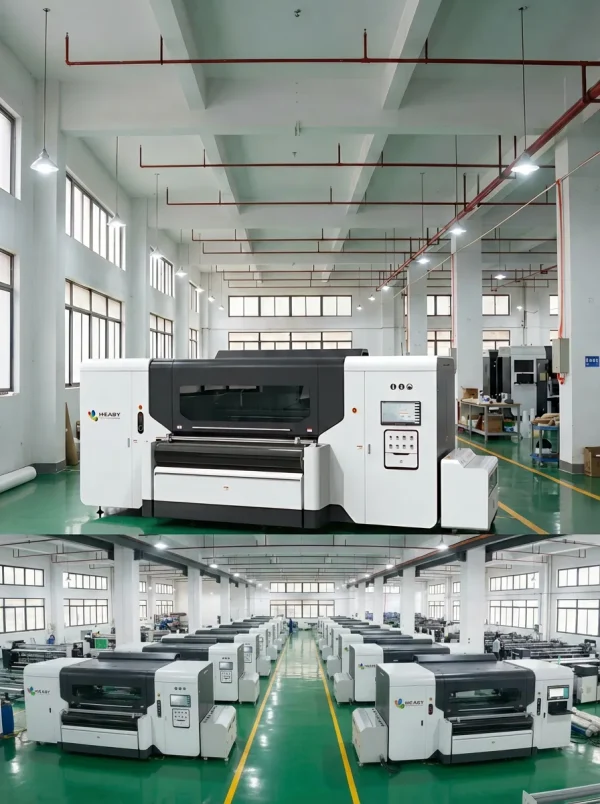
Engineered for 24/7 Profitability: Digital Textile Printers from 1.8m to 3.2m

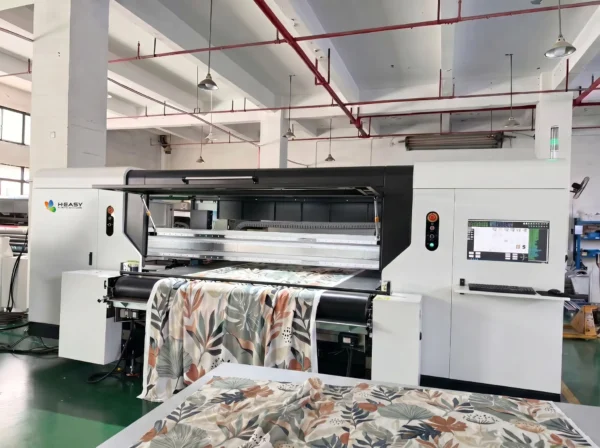
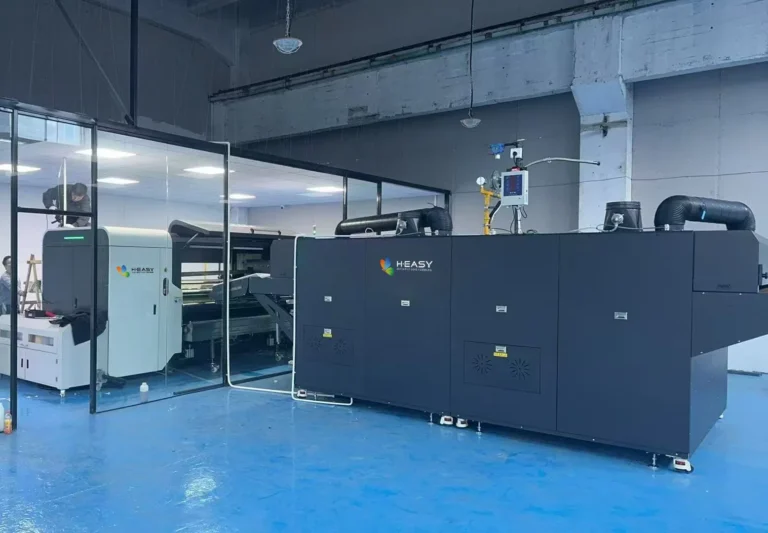
Whether you need the luxurious wash fastness of Reactive, the waterless efficiency of Pigment, or the deep penetration of High-Temp Disperse, H·EASY delivers true industrial stability. Built with our proprietary Ricoh drive boards and up to 96 printheads.

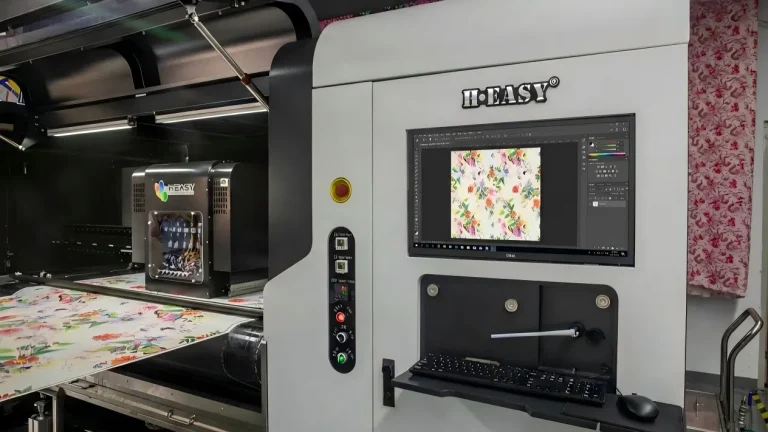
Genuine Neostampa V10

Professional RIP software for flawless color management.

Up to 3.2m / 96 Printheads

Scale from agile sampling to rotary replacement.

Total Line Planning

We guide you on sizing, steaming, and washing.

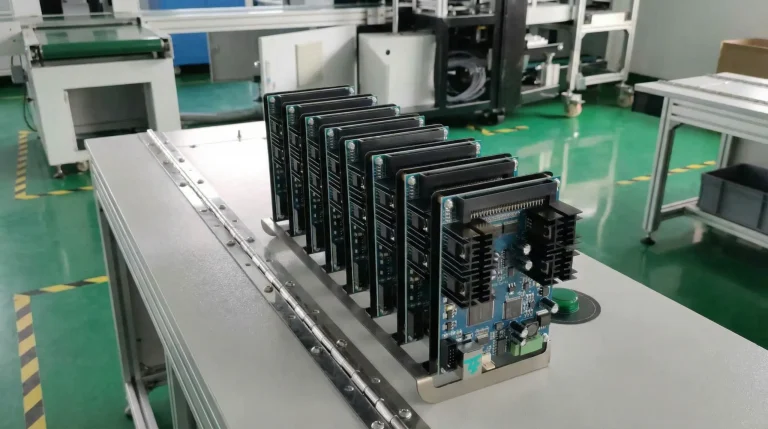
Proprietary Ricoh Boards

Extracting max lifespan (3-4 years) since 2013.

ENGINEERED WITH GLOBAL TIER-1 COMPONENTS FOR UNMATCHED STABILITY

We don’t compromise on the core architecture. Every H·EASY printer relies on the world’s most trusted industrial component brands to guarantee 24/7 uptime.

RICOH
PRINTHEADS (JAPAN)
THK
LINEAR GUIDES (JAPAN)
Panasonic
SERVO MOTORS (JAPAN)
IGUS
CABLES & CHAINS (GER)
NEUGART
SPEED REDUCER (GER)

Choose the Right Textile Printing Route for Your Fabric

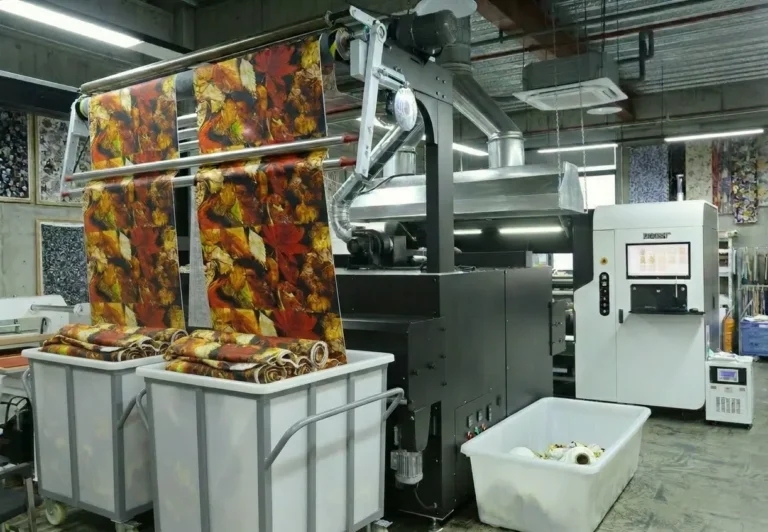
Different fabric types require different ink chemistries, post-treatment workflows, and machine configurations. Explore the most suitable printing route for cotton, polyester, blended fabrics, and wide-format home textiles.

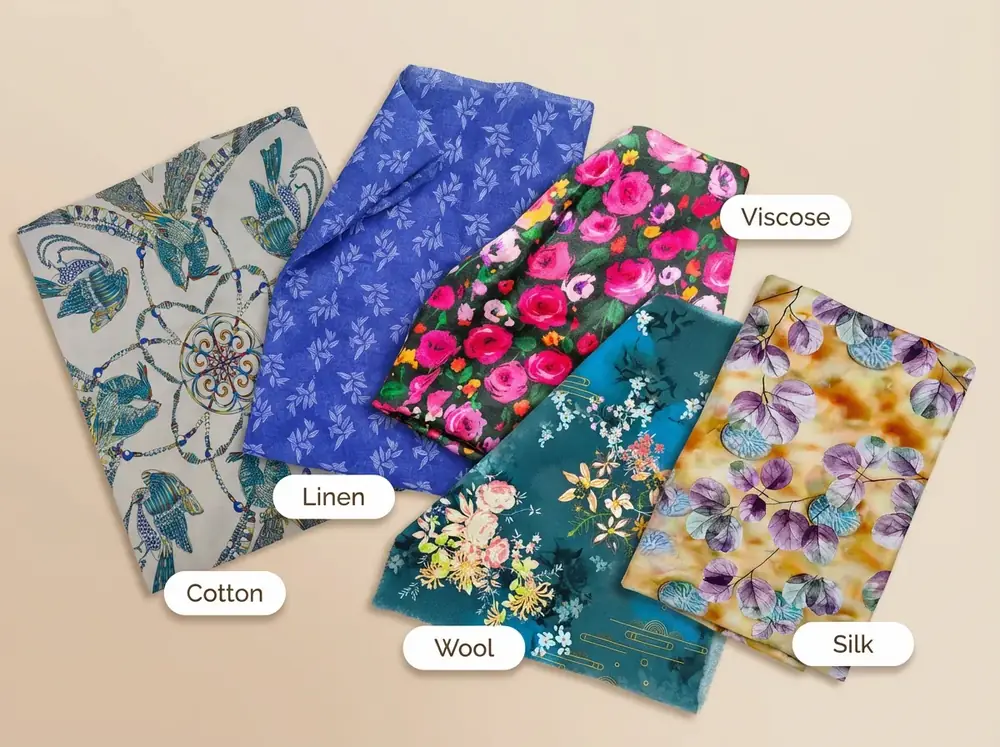
Cellulose Fabrics

Breathable, absorbent, and widely used in fashion apparel, shirting, dresses, and soft home textile products.

  • Best Route: Reactive or Pigment
  • Why: Reactive is commonly preferred for premium softness and wash fastness on cellulose-based fabrics. Pigment is often chosen for shorter, water-saving production.
  • Production Note: Reactive typically requires steaming and washing. Pigment typically requires thermal curing only.

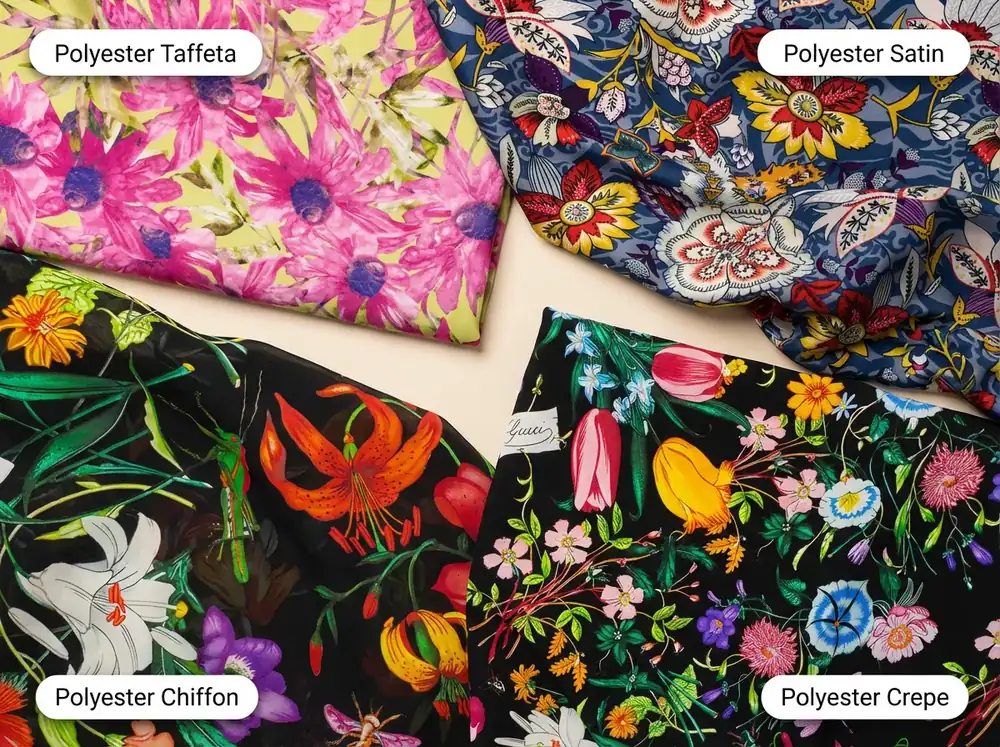
Polyester-Based Synthetic Fabrics

Durable, stretchable, and widely used in sportswear, activewear, and soft signage.

  • Best Route: High-Temp Disperse
  • Why: High-temp direct disperse is commonly selected for polyester fabrics because it improves penetration and helps reduce white-edge issues on stretch materials.
  • Production Note: Steam or baking should be selected based on the exact fabric structure, target penetration, and factory finishing line.

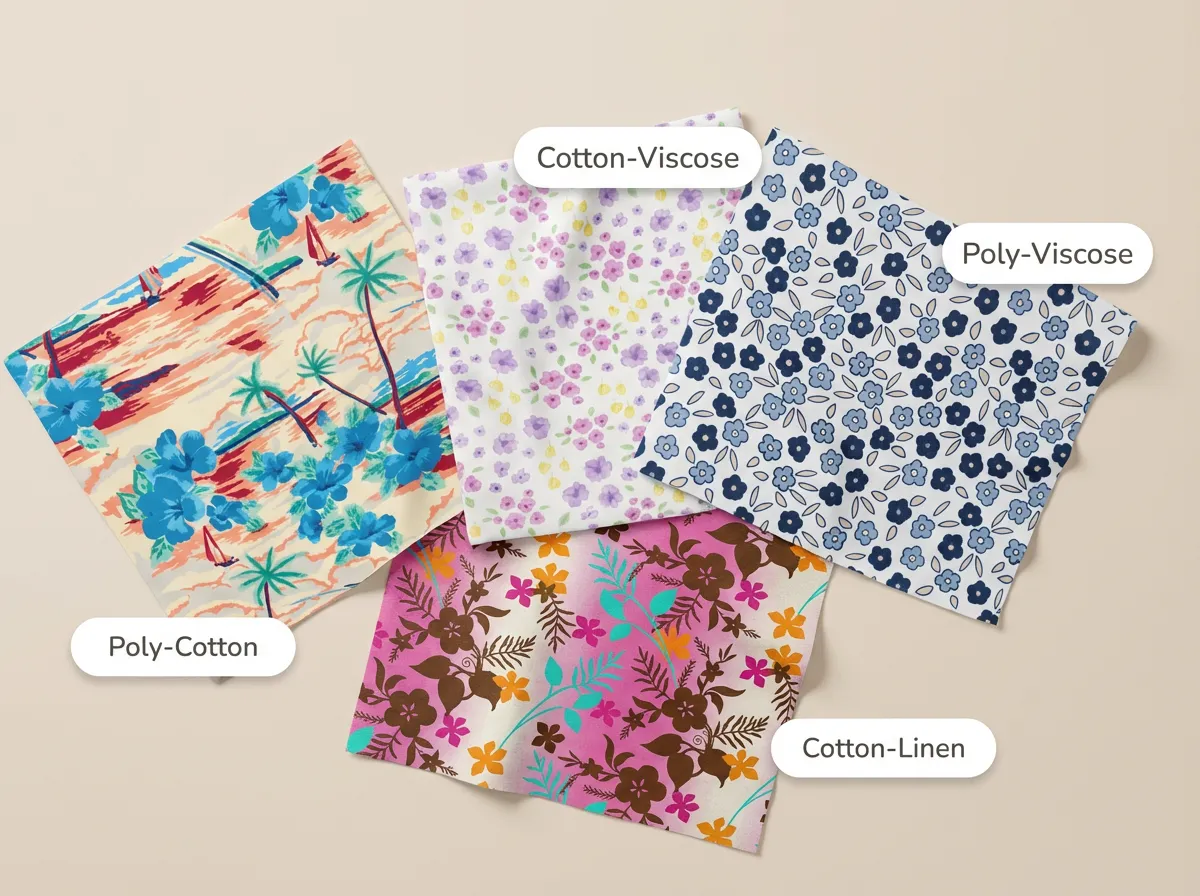
Blended Fabrics

Popular in fast fashion, hoodies, uniforms, and casualwear where mixed fibers require a more flexible printing route.

  • Best Route: Pigment
  • Why: Pigment is often the most practical route for many blended fabrics because it sits on the fabric surface instead of relying on fiber-specific dye chemistry.
  • Production Note: This route is often preferred when versatility, lower water dependence, and shorter production flow matter more than fiber-specific dye routes.

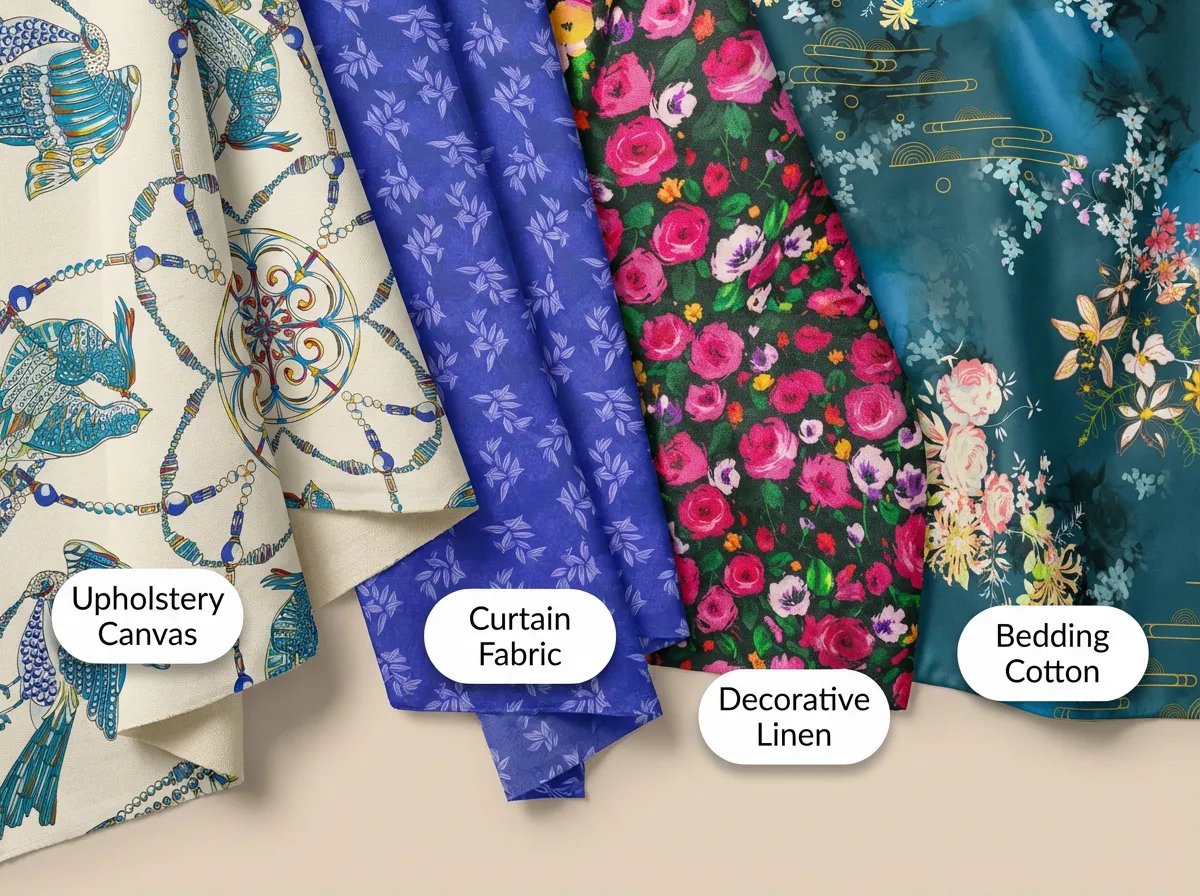
Wide-Format Home Textiles

Ideal for curtains, bedding, decorative fabrics, and other large-format textile products that require stable fabric transport and seamless repeat consistency.

  • Best Route: Depends on Fiber Base
  • Why: The right route depends on fabric composition, hand feel expectations, finishing requirements, and production efficiency targets.
  • Production Note: Wide-width production requires stable feeding, repeat accuracy, and route-specific post-treatment planning.

PROCESS ENGINEERING

Reactive vs Pigment vs Disperse Textile Printing: Which Ink Route Fits Your Production?

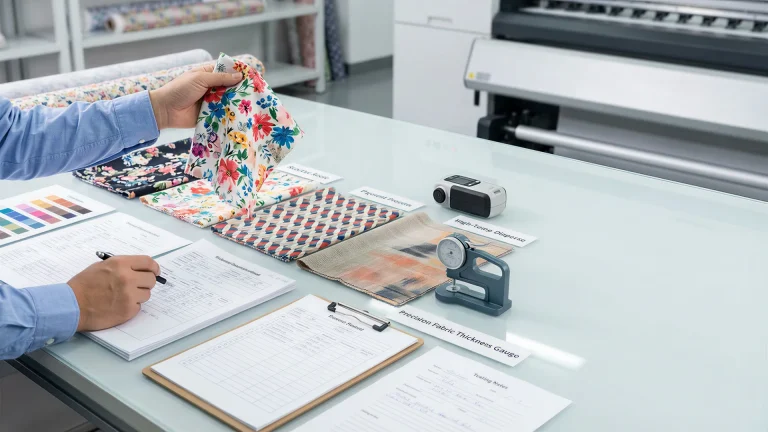
Compare reactive, pigment, and high-temp disperse printing for cotton, viscose, polyester, and blended fabrics. Understand process flow, post-treatment, factory requirements, and which production setup best matches your business.

The Gold Standard for Premium Natural Fibers

Reactive dye forms a permanent covalent bond directly with cellulosic fibre hydroxyl groups. Unlike surface-adhesion methods, this bond becomes part of the fibre itself — delivering Grade 4–5 wash fastness and genuinely soft hand feel that high-end fashion and home textile export programs demand.

CottonLinenViscose / RayonSilk blendsModalBamboo fibre

Wash Fastness

Covalent fiber bond withstands repeated commercial washing. Meets the wash durability requirements of European and US apparel export programs.

Wash: Grade 4–5ISO 105-C06Light: Grade 3–4

Facility Requirements

Industrial steam generator — continuous 102–103°C
Wastewater treatment system (unfixed dye discharge)
Water softener recommended for steam equipment longevity
H·EASY provides full line-planning before delivery

The complete reactive route — step by step
Fabric Inspection
pH · weft slope · cleanliness
Fabric Sizing
Pre-treatment paste application
5% solution ratio
Digital Printing
Dye deposited — not yet fixed
20–30°C · 50–65% RH
Pre-Drying
Ink fully dried before steaming
Must be 100% dry
Finished Fabric
Grade 4–5 wash fastness
Ultra-soft hand feel
Drying & Setting
Final finishing and softening
Thorough Washing
Removes all unfixed dye
Multi-stage wash required
Steaming
Covalent bond activation
102–103°C · 10–15 min
Step 01
Fabric Inspection
pH · weft slope · cleanliness
Step 02
Fabric Sizing
Pre-treatment paste application
5% solution ratio
Step 03
Digital Printing
Dye deposited — not yet fixed
20–30°C · 50–65% RH
Step 04
Pre-Drying
Ink fully dried before steaming
Must be 100% dry
Step 05
Steaming
Covalent bond activation
102–103°C · 10–15 min
Step 06
Thorough Washing
Removes all unfixed dye
Multi-stage wash required
Step 07
Drying & Setting
Final finishing and softening
Step 08
Finished Fabric
Grade 4–5 wash fastness
Ultra-soft hand feel
Process Note — Why Fabric Inspection Matters

pH value directly impacts steaming fixation. A value too high or low causes colour inconsistencies and batch rejects. Weft slope should be controlled within 3–5 cm. Raw edges over 1 cm will touch the printhead during printing and cause clogging.

Print Environment: 20–30°C Humidity: 50–65% Steaming: 102–103°C / 10–15 min Power: 15 kW (16-head) / 30 kW (32-head)

The Waterless, Fast-to-Market Solution

Pigment ink binds to the fabric surface through a binder chemistry system — completely eliminating steaming lines and large-scale washing infrastructure. Advances since 2020 have resolved historic issues of rigid hand feel and poor fastness. Pigment printing now accounts for approximately 10% of the global digital printing market, with rapid growth in Shandong, Guangdong, and international markets.

CottonLinenT/C BlendsPoly-CottonCVCKnitted fabricsMost natural & blended fibres

Fastness Performance

Superior light fastness makes pigment the preferred route for curtains, home furnishings, and any application where UV durability outweighs wash cycle requirements. Results depend on correct thermal curing parameters.

Dry Rub: Grade 3Wet Rub: 2–3Light: Grade 5–6

Sustainability Advantage

Zero process water consumption during production
No steam boiler infrastructure required
No wastewater treatment system needed
Ideal for water-scarce regions and green certification programs

The lean pigment route — step by step
Fabric Inspection
pH · weft slope · cleanliness
Fabric Sizing
Optional pre-treatment
Often omitted for knits
Digital Printing
Pigment + binder on surface
20–30°C · 50–65% RH
Finished Fabric
No wash · No wastewater
Light: Grade 5–6
Softening Treatment
Improves hand feel if required
Optional — project-specific
Thermal Fixation
Binder activates — locks pigment
130–150°C · 4–6 min
Drying
100% dry before curing
Drying room required
Step 01
Fabric Inspection
pH · weft slope · cleanliness
Step 02
Fabric Sizing
Optional pre-treatment
Often omitted for knits
Step 03
Digital Printing
Pigment + binder on surface
20–30°C · 50–65% RH
Step 04
Drying
100% dry before curing
Drying room required
Step 05
Thermal Fixation
Binder activates — locks pigment
130–150°C · 4–6 min
Step 06
Softening Treatment
Improves hand feel if required
Optional — project-specific
Step 07
Finished Fabric
No wash · No wastewater
Light: Grade 5–6
Process Note — Drying Before Fixation Is Non-Negotiable

If fabric is not completely dry before entering the curing oven, colour uptake becomes unstable and floating colour increases — particularly cyan, which becomes extremely difficult to remove in any post-wash. In the Shandong market, many knitted fabric programs combine drying and fixation into a single pass. Sample validation is strongly recommended before committing to this in production.

Print Environment: 20–30°C Humidity: 50–65% Fixation: 130–150°C / 4–6 min Ink consumption: ~20 g/m² Power: 15 kW (16-head) / 30 kW (32-head)

Industrial-Grade Polyester Penetration

High-temperature direct disperse ink is forced deep into the polyester fibre core under elevated heat — achieving penetration depth that transfer-based and low-temp methods cannot replicate. H·EASY pioneered this technology through the DragonPlay Digital project (11 units, Shaoxing), the first factory in China to achieve mass-scale high-temp disperse direct printing. For stretch fabrics and sportswear, this is the correct industrial route.

Polyester SatinPerformance KnitsPolyester ChiffonStretch SyntheticsPolyester CrepeChemical fibre fabrics

Performance vs. Transfer Printing

High-Temp Direct
Deep fibre penetration
Zero white edge on stretch
Raised / hairy fabrics OK
No re-sublimation risk
Transfer Sublimation
◦ Surface penetration only
White edge risk on stretch
Not for raised surfaces
Re-sublimation under heat

Fixation Method Guide

Baking ≥170°C — Best for smooth polyester, satin, chiffon. Consistent temperature, no moisture variables. Use H·EASY custom oven developed for this process.

Steam at 130°C — Better for knit structures and thicker constructions where moisture-assisted penetration is needed.

The high-temp direct disperse route — step by step
Fabric Inspection
Fibre content · surface · pH
Fabric Sizing
Controls ink spread on polyester
Prevents surface bleeding
Digital Printing
Direct — no transfer paper
20–30°C · 50–65% RH
Pre-Drying
Fully dry before fixation
Required before baking
Finished Fabric
Zero white edge on stretch
Light: Grade 5–6
Setting & Softening
Final finishing if required
Optional
Washing & Final Fixing
Removes surface dye
Export-grade quality
Baking or Steaming
High heat drives ink into fibre core
≥170°C bake · OR · 130°C steam
Step 01
Fabric Inspection
Fibre content · surface · pH
Step 02
Fabric Sizing
Controls ink spread on polyester
Prevents surface bleeding
Step 03
Digital Printing
Direct — no transfer paper
20–30°C · 50–65% RH
Step 04
Pre-Drying
Fully dry before fixation
Required before baking
Step 05
Baking or Steaming
High heat drives ink into fibre core
≥170°C bake · OR · 130°C steam
Step 06
Washing & Final Fixing
Removes surface dye
Export-grade quality
Step 07
Setting & Softening
Final finishing if required
Optional
Step 08
Finished Fabric
Zero white edge on stretch
Light: Grade 5–6
Process Note — Why High-Temp Direct Outperforms Transfer for Industrial Polyester

Transfer printing is faster to set up but faces fundamental limitations: re-sublimation risk under heat, limited suitability for raised-surface fabrics, and surface-only penetration that shows white fibre edges when stretched. H·EASY worked alongside DragonPlay Digital for over six months — China's first factory to achieve mass-scale high-temp disperse direct printing with 11 installed units.

Print Environment: 20–30°C Humidity: 50–65% Baking: ≥170°C Steam option: 130°C Power: 15 kW (16-head) / 30 kW (32-head)

Side-by-Side Comparison

Which Route Is Right for Your Factory?

Reactive InkPigment InkHigh-Temp Disperse
Primary FabricCotton, Linen, Viscose, SilkCotton, Blends, KnitsPolyester, Synthetics
Wash FastnessGrade 4–5Grade 2–3Grade 4–5
Light FastnessGrade 3–4Grade 5–6Grade 5–6
Post-ProcessingSteam + Multi-washThermal Cure OnlyBake / Steam + Wash
Water ConsumptionHighZeroMedium
Machine Sharing✓ With Disperse✗ Dedicated Only✓ With Reactive
Stretch PerformanceModerateModerateExcellent — zero white edge
Fixation MethodSteam 102–103°COven 130–150°CBake ≥170°C or Steam 130°C
Best MarketFashion · Home TextileFast Fashion · Eco MfgSportswear · Activewear
Reactive Ink
Primary Fabric
Cotton, Linen, Viscose, Silk
Wash Fastness
Grade 4–5
Light Fastness
Grade 3–4
Post-Processing
Steam + Multi-wash
Water Consumption
High
Machine Sharing
✓ With Disperse
Stretch Performance
Moderate
Fixation Method
Steam 102–103°C
Best Market
Fashion · Home Textile
Pigment Ink
Primary Fabric
Cotton, Blends, Knits
Wash Fastness
Grade 2–3
Light Fastness
Grade 5–6
Post-Processing
Thermal Cure Only
Water Consumption
Zero
Machine Sharing
✗ Dedicated Only
Stretch Performance
Moderate
Fixation Method
Oven 130–150°C
Best Market
Fast Fashion · Eco Mfg
High-Temp Disperse
Primary Fabric
Polyester, Synthetics
Wash Fastness
Grade 4–5
Light Fastness
Grade 5–6
Post-Processing
Bake / Steam + Wash
Water Consumption
Medium
Machine Sharing
✓ With Reactive
Stretch Performance
Excellent — zero white edge
Fixation Method
Bake ≥170°C or Steam 130°C
Best Market
Sportswear · Activewear

Not sure which route fits your fabric? Our engineers evaluate your specification free of charge — typically within 1 business day.
Choose the Right Printer Architecture for Your Production Goals

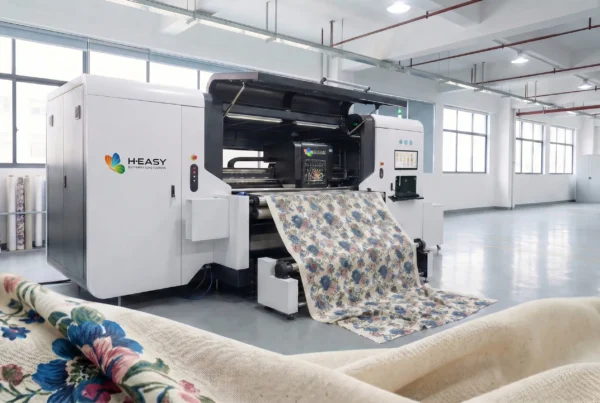
Select the most suitable roll-to-roll digital textile printer based on fabric width, printhead configuration, and output requirements. From agile 1.8m sampling lines to high-volume 3.2m industrial production, each model is designed for a specific stage of growth.

Model
Available Widths
Printhead Configuration
Best For

H1804

1.8m Only

4x Ricoh Gen 6

Color testing, short proofing cycles, and low-risk production validation.

H1808

1.8m Only

8x Ricoh Gen 6

Faster sampling cycles, mixed-order workflows, and agile apparel production environments.

H1816 Series

1.8m / 2.2m / 2.6m / 3.2m

16x Ricoh Gen 6

Manufacturers moving from sampling to stable industrial production across multiple width options.

H2232/H2632

1.8m / 2.2m / 2.6m / 3.2m

32x Ricoh Gen 6

Apparel, sportswear, and wide-format textile production where output and width flexibility matter.

H3264 / H3296

2.2m / 3.2m Only

64 / 96x Ricoh Gen 6

High-volume industrial production and rotary replacement projects requiring maximum throughput.

Need help selecting the right model? Share your target fabric, print width, and daily output goals to get a machine recommendation and line-planning suggestion.

Built for 24/7 Profitability, Not Just Specs

Marketing claims don’t print fabrics. We engineer out the vibrations, alignment issues, and head clogs that plague generic machines.

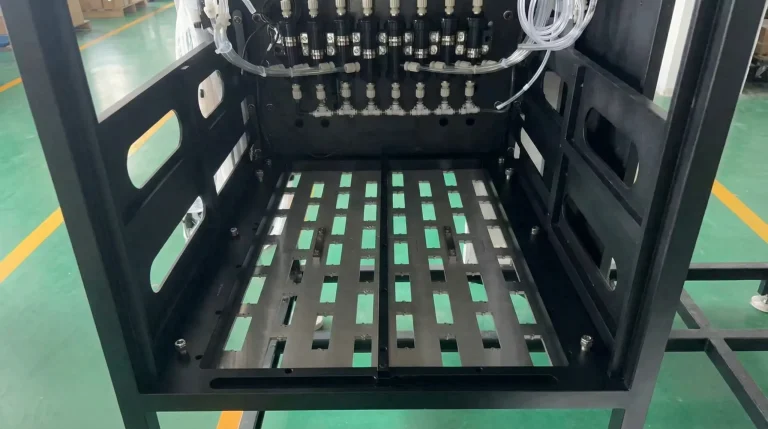
0.01mm Precision Welded Frame

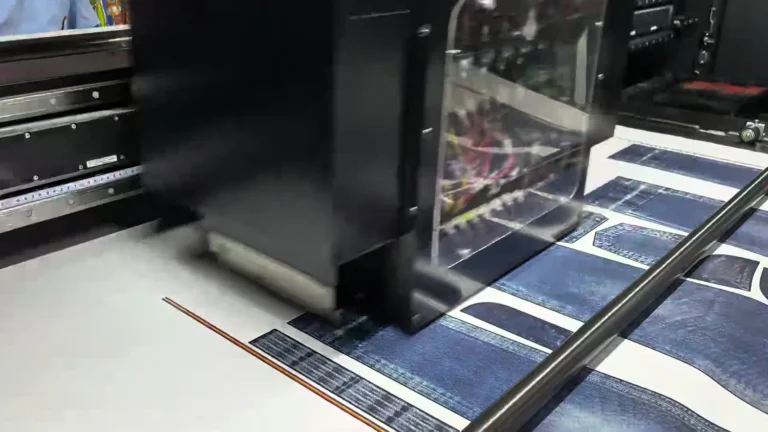
Flimsy screwed frames loosen and vibrate over time. Our pure welded steel chassis and 0.01mm precision head plate guarantee flawless, micro-level droplet placement.

Proprietary Ricoh Boards

We write our own proprietary drive boards specifically tuned for Ricoh textile printing. Since 2013, our R&D extracts 1.48m/s carriage speeds without compromising stability.

Genuine Neostampa Workflow

We integrate licensed Neostampa V10 and Texprint, giving your operators ultimate control over file handling. What you see is exactly what prints.

Dry-Burning Electric or Natural GAS Heating

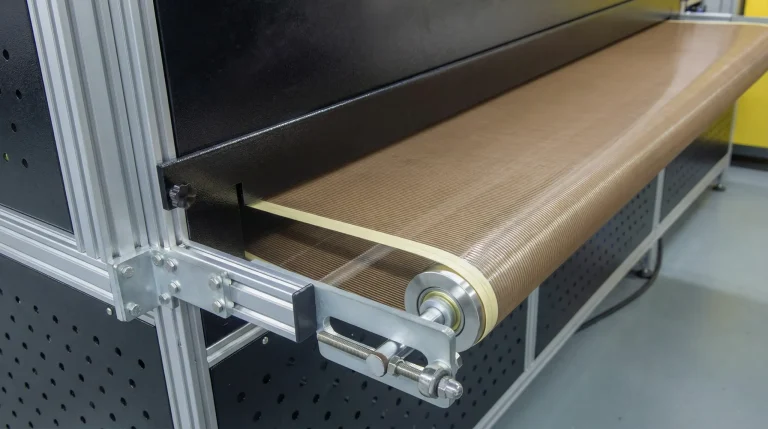
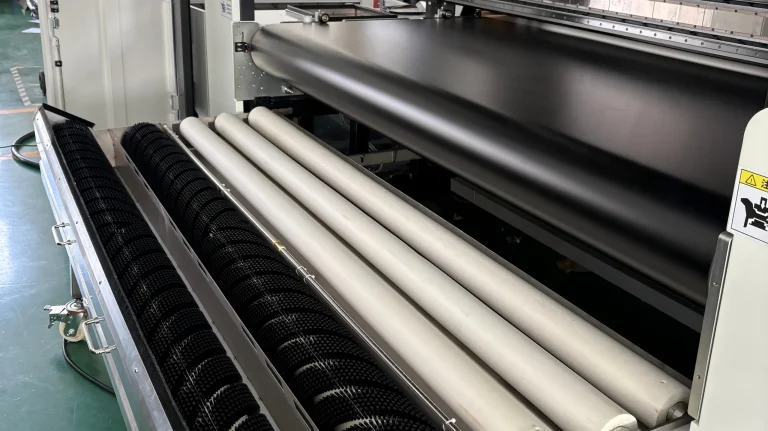
We use robust dry-burning electric tubes for the Teflon belt drying, instead of cheap heating lamps that are notorious for literally burning the adhesive belt.

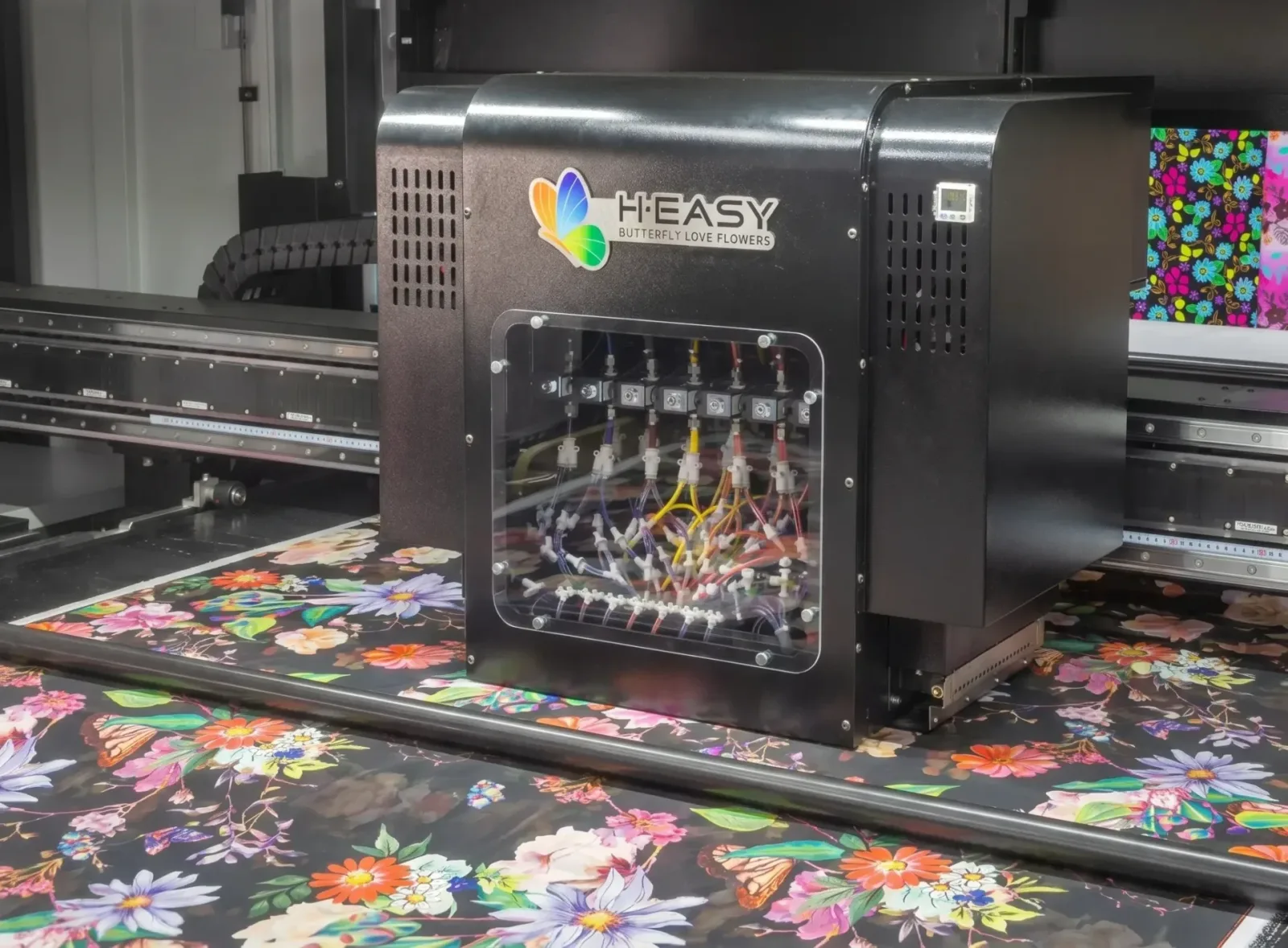
Intelligent Ink & Degassing

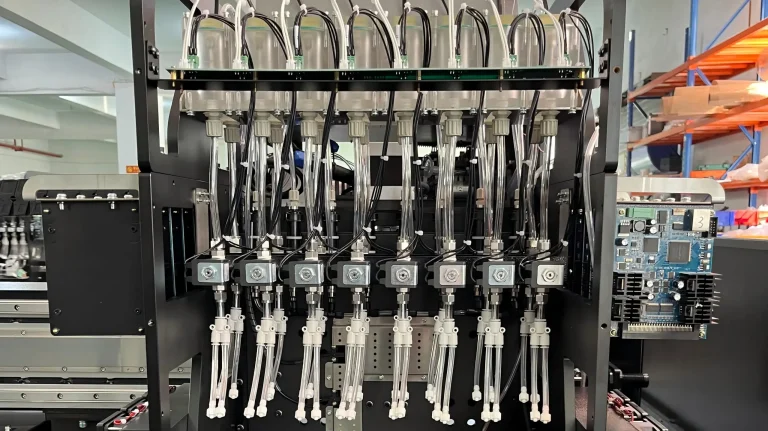
Our automatic negative pressure supply, combined with an integrated degasser, prevents air bubbles and stops clogs before they happen. True continuous yield.

Linked 3-Unit Belt Washing

When printing pauses, the washing unit intelligently delays for a few seconds and then stops, preventing water overflow and maintaining perfect belt hygiene.

From 1.8m Sampling to 3.2m Mass Production

See how textile manufacturers are using H·EASY machines to upgrade from conventional workflows to scalable digital production across apparel, sportswear, and home textile applications.

Waterless Fast-Fashion Apparel

A short-run apparel producer moved 1.5m fashion fabrics to a pigment workflow, reducing wet post-processing and improving turnaround for frequent style changes and smaller order batches.

MACHINE H1816 (Fabric Width: 1.5m)
DAILY OUTPUT ~4400 m/day

Activewear Mill Penetration

A sportswear fabric mill upgraded from transfer-based polyester printing to high-temp direct disperse on 2.0m fabrics, improving penetration, stretch performance, and repeat consistency.

MACHINE H2232 (Fabric Width: 2m)
DAILY OUTPUT ~6500 m/day

Dual-Lane Textile Digital Upgrade

A home textile producer adopted a double-lane reactive setup for repeat-driven orders, combining digital flexibility with production-scale output for bedding and decorative fabric programs.

MACHINE H2632(Fabric Width: 1m * Double line)
DAILY OUTPUT ~20,000 m/day

What to Prepare Before Installation

To support stable machine performance, protect printhead service life, and reduce commissioning risk, your facility should be prepared with the right electrical supply, air system, environmental conditions, and water access before installation.

Electrical & Pneumatic Requirements

  • Power Supply: 380V, 3L+N+G. An independent and reliable earth wire is required.
  • Reference Load (16-Head Configuration): Printer approx. 15kW; electric drying room approx. 20kW. Final load depends on machine configuration and drying setup.
  • Air Supply: 10kg air compressor required. Refrigerated dryer and dry-air filtration are recommended for stable operation.

Environmental & Utility Conditions

  • Temperature: Recommended operating range: 20°C–30°C to help maintain ink stability and reduce nozzle-related issues.
  • Humidity: Recommended relative humidity: 40%–60% to reduce static interference during printing.
  • Water & Drainage: Access to inlet water and drainage should be prepared for the automatic belt washing system.

Transparent B2B Delivery & Commissioning Support

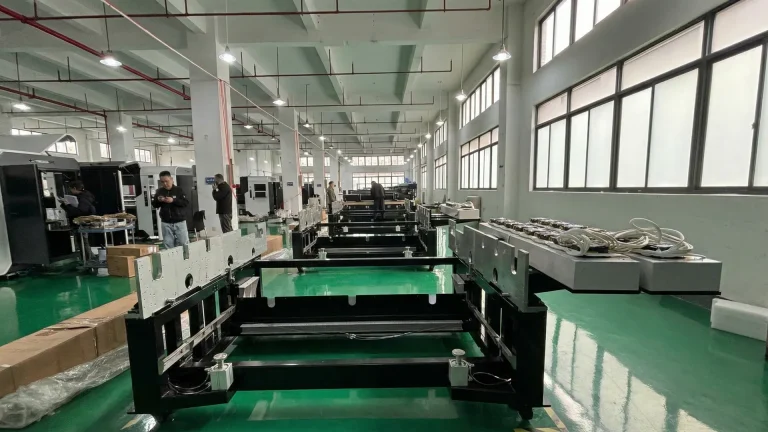
Live Assembly Visibility

Live Assembly Visibility

Overseas buyers can receive workshop visibility during machine assembly, and third-party inspections can be arranged before shipment when required.

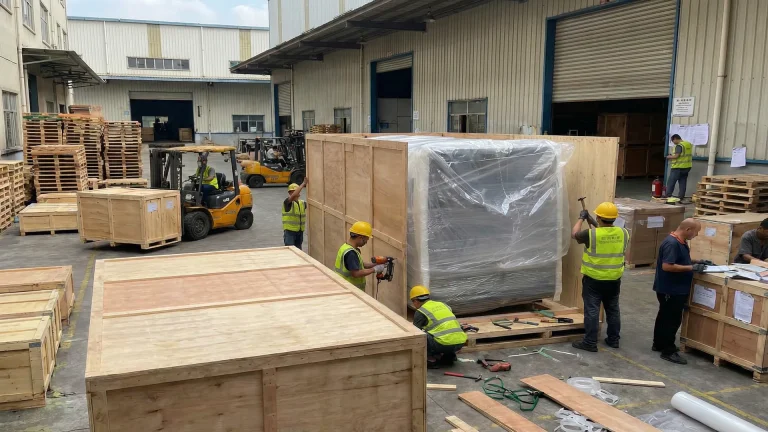
Export Packing Protection

Export Packing Protection

We use heavy-duty export wooden packing designed to protect precision components such as head plates and motion structures during sea freight.

Process Preparation Support

Process Preparation Support

We provide route-specific pre-treatment and production guidance based on fabric type, workflow direction, and production goals.

H Series Digital Textile Printer FAQ

Get clear answers on how to choose between reactive, pigment, and high-temp disperse printing, how to match fabric type with the right H Series model, and how to evaluate width, printhead configuration, production targets, and after-sales support before investment.

If you work with cotton, linen, viscose, modal, or other cellulosic fabrics, reactive printing is usually the best starting point. If you want a simpler workflow and broader fabric compatibility, pigment printing is often easier to evaluate. If you mainly print polyester or polyester-rich textiles, high-temp disperse printing is usually the better route.

If you want stronger color brightness, better wash performance, and a softer hand feel on cotton, linen, rayon, or modal, you should usually start with reactive printing. If you want to simplify production and reduce post-processing, pigment printing can also be considered, but it should be judged against your final product requirements.

If you mainly work with polyester, sportswear, yoga wear, swimwear, or polyester-rich stretch fabrics, high-temp disperse direct printing is usually the more suitable option. It offers better penetration, less white show-through after fabric turnover, and better control in demanding applications than standard low-temperature transfer in many cases.

In some cases, you can switch between reactive, acid, and certain disperse configurations after proper cleaning, but frequent switching is not recommended. If you start with pigment ink, you should usually keep that machine dedicated to pigment because the larger particles are harder to clean completely and can increase the risk of clogging.

Yes, but the result depends on the fabric ground color and the ink route. If you want to overprint on colored fabric, pigment is usually the more practical option. Even then, the printed design will still be affected by the base color, so lighter fabric shades and darker design colors usually give more stable results.

You should choose the printhead based on the result you care about most. If you care more about durability, efficiency, and easier maintenance, Ricoh is often a strong option. If you care more about finer print quality and wider head structure, Kyocera is often considered. If you focus on finer detail and smoother fabrics, Epson-based solutions can also be suitable.

You should choose width based on your main product category. If you work with apparel fabrics, widths around 1.8 m to 2.2 m are usually the main range. If you work with home textiles or wider fabric applications, 2.6 m and 3.2 m are more common. The right width should match your current orders, target market, and fabric roll specifications.

Let's Engineer Your Production Line

Tell us your fabric, your target output, and your facility setup. Our engineers will provide the exact machine recommendation and line planning.

Get Pricing & Engineering Advice

Chat with us 👋