Executive Summary
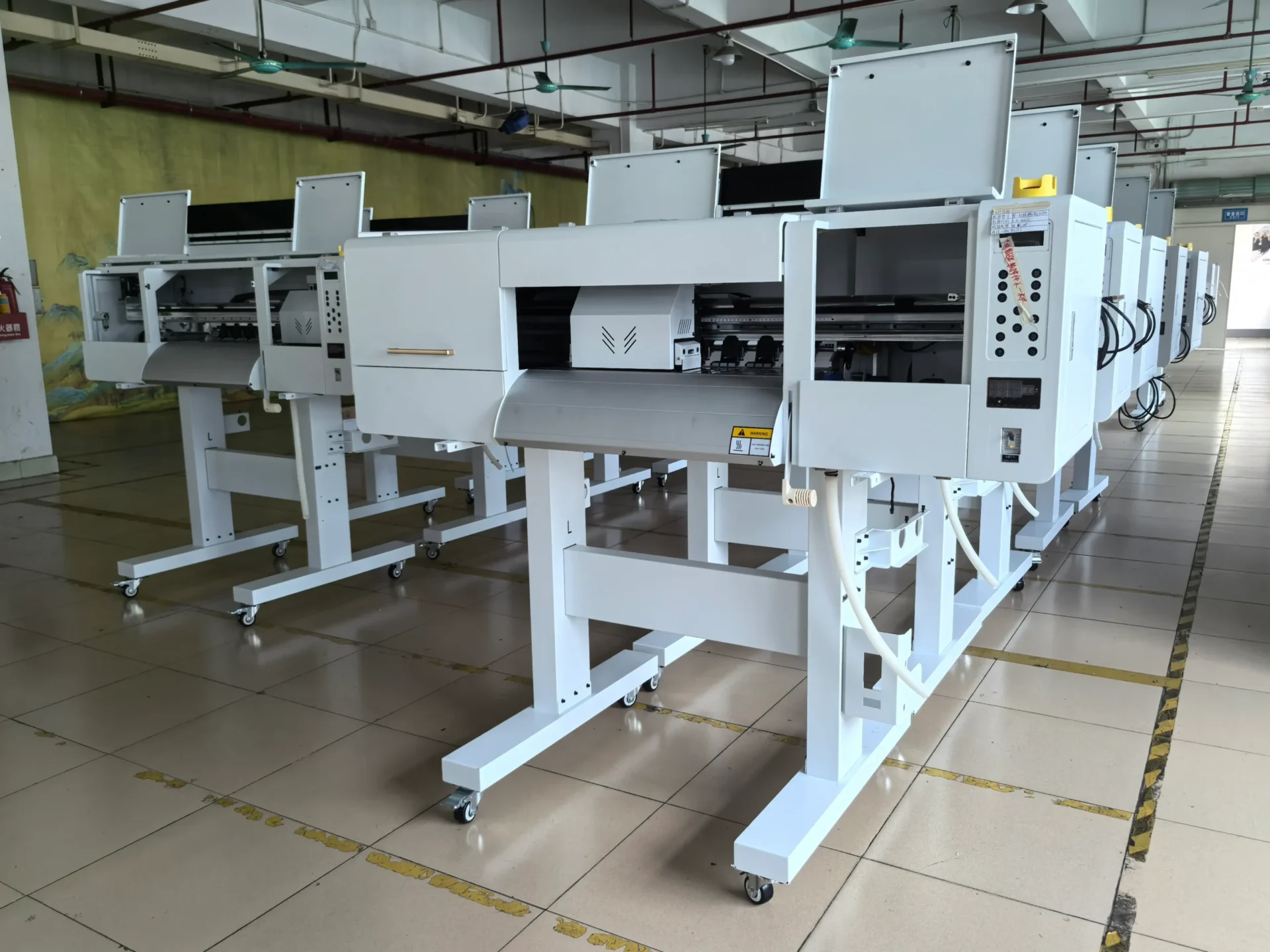
Across the global garment decoration industry, a clear shift is underway: businesses are moving from Direct-to-Garment (DTG) printing toward Direct-to-Film (DTF).
This transition is not driven by the failure of DTG technology, but by its structural limitations when production scales, product diversity increases, and delivery speed becomes critical.
DTF, with its film-based transfer process, offers greater material compatibility, higher production flexibility, and more stable cost structures, making it the preferred solution for growing garment printing operations. Industry data and real-world adoption confirm that DTF is no longer a niche alternative—it is becoming the new standard.
1. DTG Limitations in Scaling Garment Printing Operations
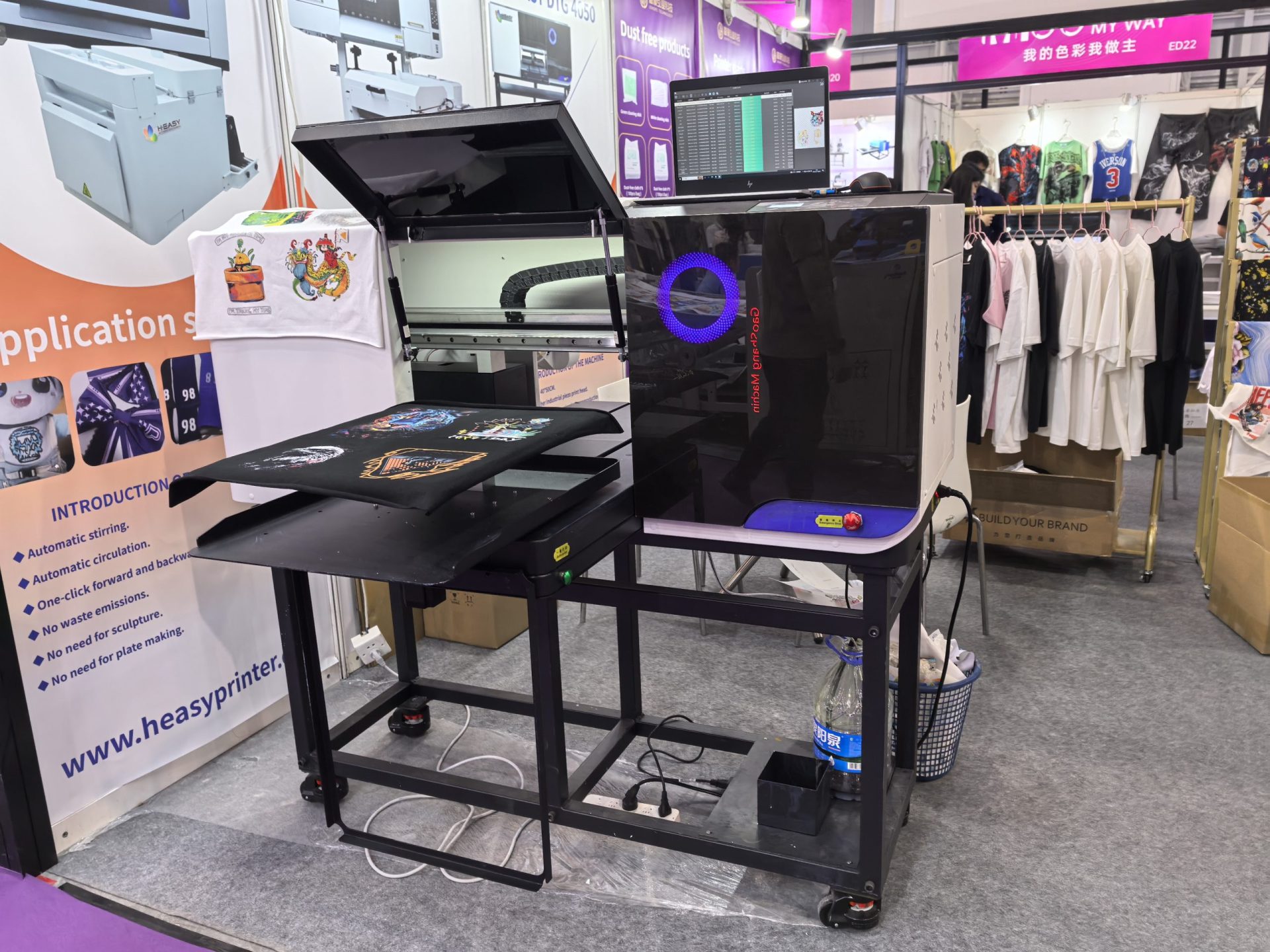
DTG played a pivotal role in digitizing garment printing, enabling short runs, customization, and on-demand production. However, as businesses evolve, DTG increasingly becomes a growth constraint rather than a growth enabler.
1.1 Limited Fabric Compatibility Restricts Product Expansion
DTG performs best on high–cotton-content fabrics. In commercial production environments, this limitation quickly becomes apparent:
- Inconsistent results on polyester and performance fabrics
- Heavy reliance on pre-treatment for blends, nylon, and dark garments
- Minimal applicability for accessories such as caps, bags, or non-flat items
As a result, expanding SKUs or entering new markets often requires additional equipment or process compromises.
1.2 Production Workflow Is Not Designed for Volume Growth
DTG output is highly sensitive to variables such as:
- Pre-treatment uniformity
- Printhead condition and maintenance
- Ambient temperature and humidity
While manageable for low-volume customization, these dependencies become problematic as order volumes rise. Downtime, rework, and labor costs scale faster than output, limiting operational efficiency.
1.3 Print Position and Garment Structure Constraints
DTG printing requires flat, stable surfaces. Practical applications are typically limited to:
- Front chest
- Back panel
Printing on sleeves, pant legs, caps, or irregular garment areas significantly increases complexity and defect rates, restricting creative and commercial flexibility.
1.4 Color Consistency Challenges on Dark Garments
Because DTG inks are absorbed directly into fibers:
- White ink opacity depends heavily on pre-treatment quality
- Brightness and coverage fluctuate between batches
- Long-term color consistency is difficult to guarantee
For brand owners and repeat commercial orders, this inconsistency represents a serious risk.
2. DTF: A System-Level Upgrade, Not a Simple Alternative
DTF is not merely an improved version of DTG. It redefines the production logic of digital garment printing.
2.1 Near-Universal Material Compatibility
By printing onto film first and transferring later, DTF eliminates most fabric-related constraints:
- Cotton, polyester, blends
- Denim, nylon, leather
- Sportswear, workwear, bags, caps, and accessories
This allows a single production system to support multiple product lines.
2.2 Designed for Scalable and Flexible Production
One of DTF’s core advantages is the separation of printing and application:
- Graphics can be printed and stored in advance
- Heat transfer occurs on demand
- Production schedules become more adaptable
This model is ideal for peak seasons, promotions, and fast turnaround requirements.
2.3 More Predictable and Sustainable Cost Structure
From an operational perspective, DTF offers:
- No chemical pre-treatment
- Higher ink and material utilization
- Reduced downtime and maintenance
Although transfer film introduces an additional consumable, overall cost per print becomes more stable and scalable as volume increases.
2.4 Consistency, Durability, and Commercial Reliability
A mature DTF workflow delivers:
- Strong wash resistance
- High opacity and contrast on dark fabrics
- Consistent color reproduction across batches
These characteristics make DTF particularly suitable for brand-level customers and multi-location production.
3. Market Validation: Industry Data Confirms the Shift Toward DTF
The transition from DTG to DTF is not anecdotal—it is supported by independent market research.
According to International Data Corporation (IDC) and its Worldwide Quarterly Industrial Printer Tracker, shipments of DTF systems in Europe, the Middle East, and Africa increased significantly in Q2 2024, while DTG shipments declined during the same period. IDC notes that this mirrors a broader global trend toward DTF adoption.
Roberto Alunni, Senior Research Director at IDC EMEA, identified DTF as a key driver behind the growth of the Direct-to-Shape (DTS) category. Despite temporary supply disruptions earlier in the year, IDC confirms that the shift toward DTF and DTS technologies has been evident since late 2021.
Notably, this growth occurred while the overall industrial printing market remained largely flat, highlighting DTF as one of the few segments demonstrating sustained momentum.
4. How DTF Directly Enables Business Growth
DTF does more than improve print quality—it expands commercial capability.
4.1 Rapid Product Line Expansion
DTF allows printers to move beyond basic T-shirts into:
- Full-range garments
- Accessories and promotional products
- Simultaneous small-batch customization and bulk production
4.2 Improved Profitability Through Efficiency
Higher throughput and reduced rework translate into:
- Faster order fulfillment
- Greater production capacity
- More predictable margins
4.3 Stronger Customer Responsiveness
Whether handling:
- Personalized orders
- Large promotional campaigns
- Difficult fabrics or substrates
DTF enables faster, more reliable responses—strengthening long-term customer relationships.
5. Conclusion: From Equipment Upgrade to Business Model Evolution
DTG helped the garment printing industry complete its first phase of digital transformation.
DTF is enabling the next phase.
For growing garment decoration businesses, adopting DTF is not simply about replacing a machine—it is about:
- Reducing technical constraints
- Increasing operational resilience
- Unlocking new market opportunities
This is why, at critical growth stages, DTF is increasingly becoming the strategic choice rather than an optional upgrade.

printing-1.jpg)