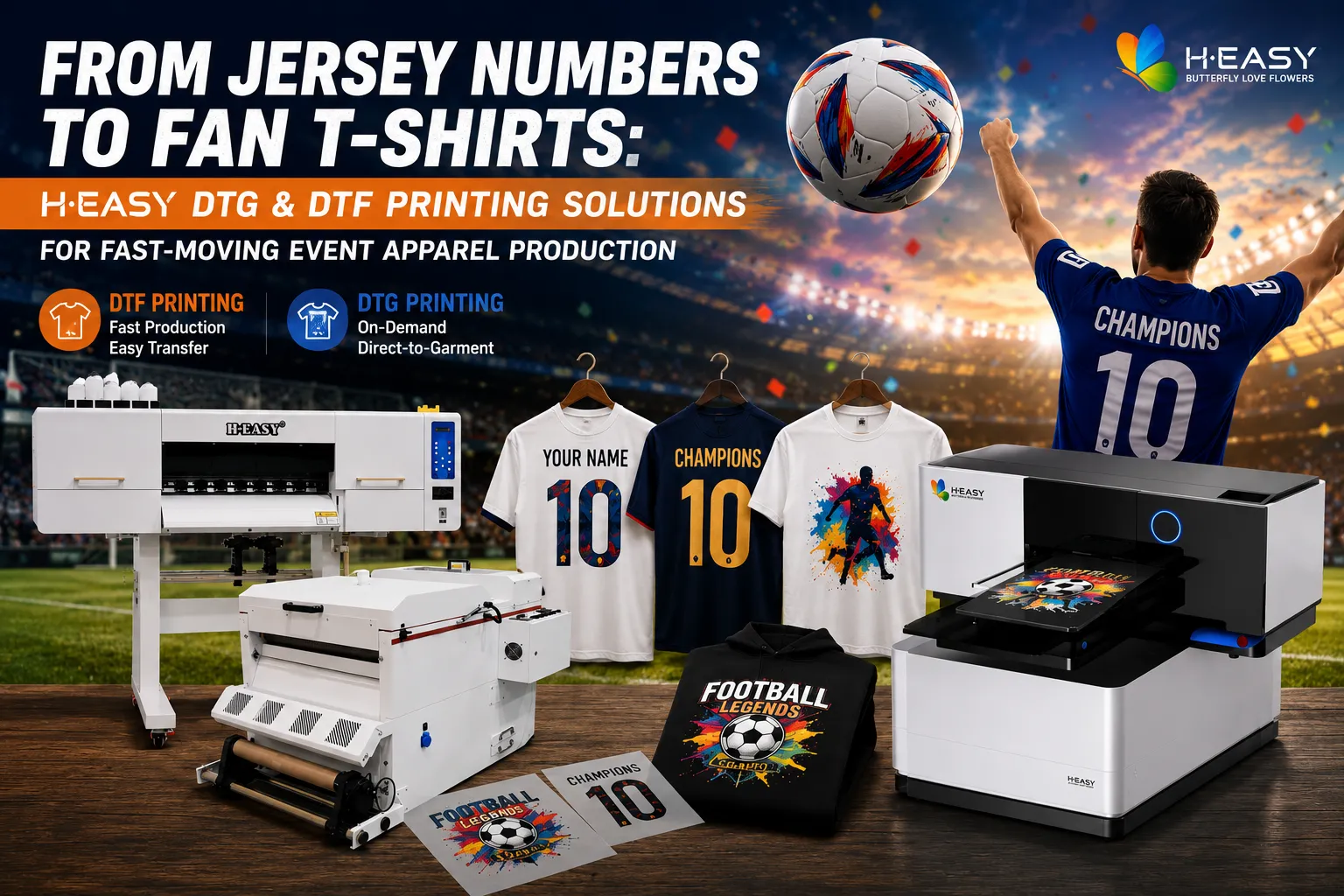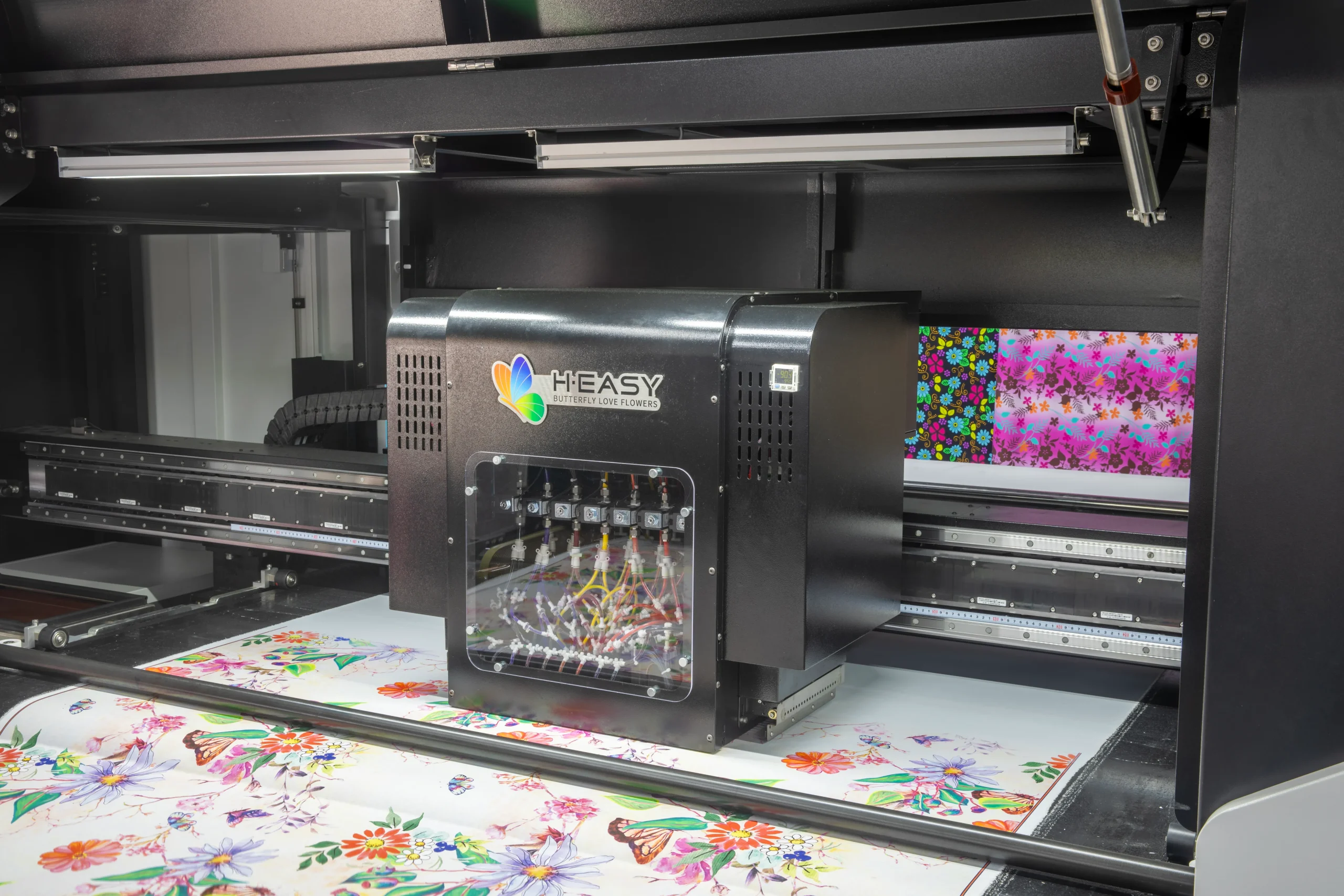
DTF printing offers unmatched flexibility, faster setup, and lower entry costs, making it ideal for customization, small batches, and on-demand production—while screen printing remains the preferred solution for high-volume, single-design orders with long-term durability advantages.
Understanding where each method excels helps printing businesses choose the right workflow, control costs, and scale efficiently.
What Is DTF Printing?
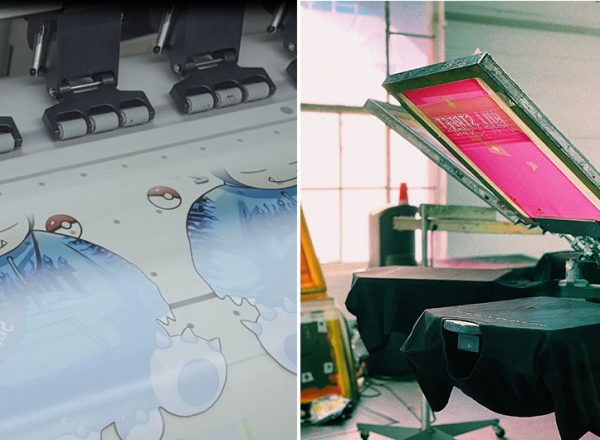
DTF (Direct-to-Film) printing transfers designs onto fabric using PET film, hot-melt adhesive powder, and heat pressing.
Unlike many traditional methods, DTF works across a wide range of fabrics—cotton, polyester, blends, and even specialty materials—without pre-treatment.
This versatility has made DTF a popular choice for startups, customization brands, and fast-turnaround print shops.
What Is Screen Printing?
Screen printing applies ink directly onto garments through prepared mesh screens.
Each color requires its own screen, which increases setup time but delivers consistent results for large production runs.
For decades, screen printing has been the industry standard for mass garment production.
Key Differences Between DTF and Screen Printing
Setup Time & Production Flexibility
DTF Printing
- No screens or plates
- Quick design changes
- Suitable for short runs and samples
Screen Printing
- Requires screen preparation
- Efficient only at scale
- Less adaptable to frequent design updates
Cost Efficiency
DTF Printing
- Lower startup investment
- Predictable cost per print
- Ideal for on-demand business models
Screen Printing
- Higher initial setup cost
- Lower unit cost at high volumes
- Cost-effective only with large orders
Design Capability
DTF Printing
- Supports gradients, fine details, and photo-quality images
- Full-color output with CMYK + white ink
Screen Printing
- Excellent for bold, solid colors
- Less practical for complex artwork
Fabric Compatibility
DTF Printing
- Cotton, polyester, blends, nylon, and more
- No fabric-specific ink systems required
Screen Printing
- Ink selection depends on fabric type
- Some materials require special additives
Durability & Wash Resistance
DTF Printing
- Strong adhesion and elasticity when properly cured
- Performance depends on ink, powder, and heat control
Screen Printing
- Proven long-term durability
- Excellent wash fastness in industrial use
Which One Should You Choose?
Choose DTF printing if your business focuses on:
- Custom apparel and personalization
- Small to medium production runs
- Fast turnaround and multi-fabric compatibility
Choose screen printing if your priority is:
- Large-volume, repetitive designs
- Long production cycles
- Maximum durability for mass distribution
Final Takeaway
DTF and screen printing are not competitors—they are complementary tools.
Modern print shops increasingly combine both, using DTF for flexibility and screen printing for scale.
The most efficient workflow is the one that matches your order structure, not industry tradition.