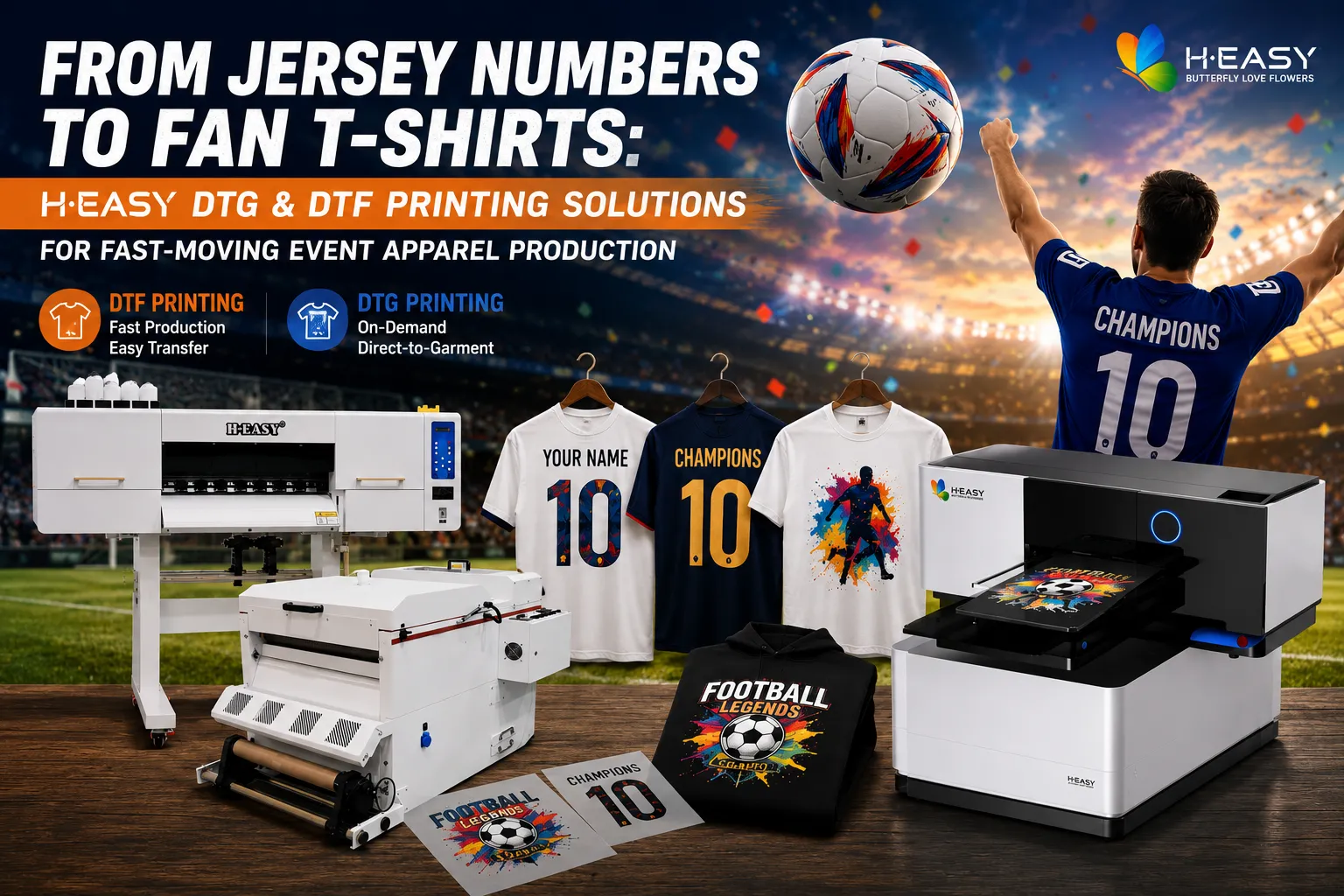
Sublimation is ideal for polyester fabrics and coated products, offering vibrant, durable prints and high-volume production efficiency. DTG (Direct-to-Garment) excels with cotton and other natural fibers, supporting small-batch, high-detail, and customizable designs. Choosing the right method depends on your material, order size, and desired print effect.
As on-demand production and customization reshape the apparel industry, selecting the right printing technology is critical. While both sublimation and DTG can produce high-quality graphics, they differ fundamentally in printing mechanism, material compatibility, color performance, production efficiency, and sustainability. This guide breaks down those differences and offers actionable advice to help you make the best choice for your business.
1. Printing Principles: What Sets Them Apart?
Sublimation Printing
Sublimation printing works by transforming solid dye into gas under heat and pressure.
- The design is first printed onto transfer paper using sublimation ink
- Under high temperature, the dye turns into gas
- The gas penetrates polyester fibers or polymer-coated surfaces
- The dye bonds at a molecular level within the material
Result: The image becomes part of the material itself
Key characteristics:
- No ink layer on the surface → zero hand feel
- No cracking, peeling, or fading easily
- Ideal for full-coverage, edge-to-edge designs
DTG (Direct-to-Garment)
DTG printing is similar to inkjet printing directly onto fabric.
- Water-based pigment ink is sprayed onto the garment surface
- Ink sits on top of the fibers rather than penetrating them
- Heat curing fixes the design
- Dark garments require a white ink underbase and pre-treatment
Result: The design forms a layer on the fabric surface
Key characteristics:
- High-resolution output with excellent detail
- Suitable for complex artwork and photographic prints
- Requires proper fabric absorption and pre-treatment
2. Material Compatibility: The Most Critical Factor
Sublimation Works Best With:
- White or light-colored polyester fabrics (sportswear, uniforms)
- Polymer-coated hard surfaces:
- Mugs
- Metal panels
- Phone cases
- Mouse pads
- Not suitable for cotton or dark fabrics
Reason: The dye must bond with synthetic fibers at a molecular level
DTG Works Best With:
- Natural fibers such as:
- Cotton
- Linen
- Bamboo
- Both light and dark garments (with white ink support)
- Not ideal for most synthetic fabrics
Reason: Pigment ink relies on surface adhesion rather than absorption
3. Color Performance & Durability
Sublimation
- Bright, vivid colors with smooth gradients
- No cracking or peeling even under stretching
- Excellent wash durability with minimal fading
Best for high-performance and long-lasting apparel
Add Your Heading Text Here
- Rich color layers and strong detail reproduction
- Excellent for photographic and artistic designs
- Slight fading may occur after repeated washing
Best for design-heavy and customized products
4. Production Efficiency & Cost Structure
| Factor | Sublimation | DTG |
|---|---|---|
| Equipment Cost | Lower | Higher |
| Ink & Consumables | Moderate | Higher |
| Printing Speed | Fast | Slower |
| Pre-treatment | Not required | Often required |
| Ideal Order Type | Bulk production | Small batch / on-demand |
Key Insight:
- Sublimation = High-efficiency, scalable production
- DTG = Flexible, customization-driven production
5. Sustainability Considerations
Both technologies use eco-friendly inks, but differ in operational impact:
Sublimation
- Minimal water usage
- Efficient for continuous production
- Energy mainly consumed in heat transfer
DTG
- Supports print-on-demand (POD) workflows
- Reduces overproduction and inventory waste
- Better suited for sustainable retail models
6. Application Scenarios: Which One Should You Choose?
Choose Sublimation If You:
- Focus on polyester apparel or coated products
- Produce sportswear, uniforms, promotional textiles
- Handle medium to large volume orders
- Require long-lasting, durable prints
Choose DTG If You:
- Work primarily with cotton garments
- Sell custom T-shirts or fashion apparel
- Handle small batches or one-off orders
- Need high-detail or photographic prints
- Target dark garment printing
7. Advanced Strategy: Combining Both Technologies
Instead of choosing one over the other, many growing businesses adopt a hybrid model:
Sublimation + DTG combination
This allows you to:
- Cover both polyester and cotton markets
- Serve both bulk and customized orders
- Maximize production flexibility and profitability
8. Final Thoughts
There is no universally “better” solution—only the one that fits your business model.
- Prioritize durability and efficiency → Sublimation
- Prioritize flexibility and creative output → DTG
The best decision comes down to your materials, target market, and order structure.