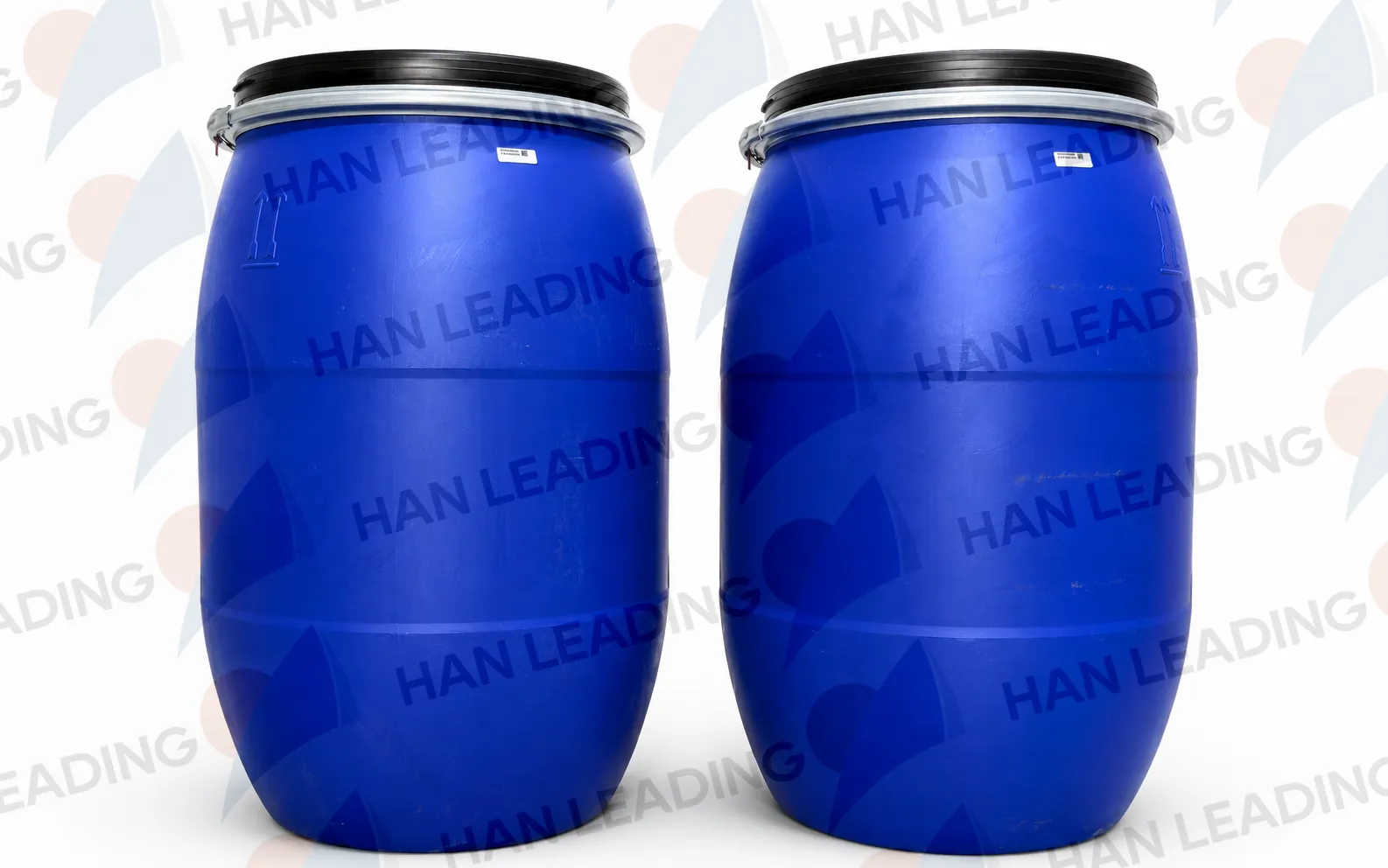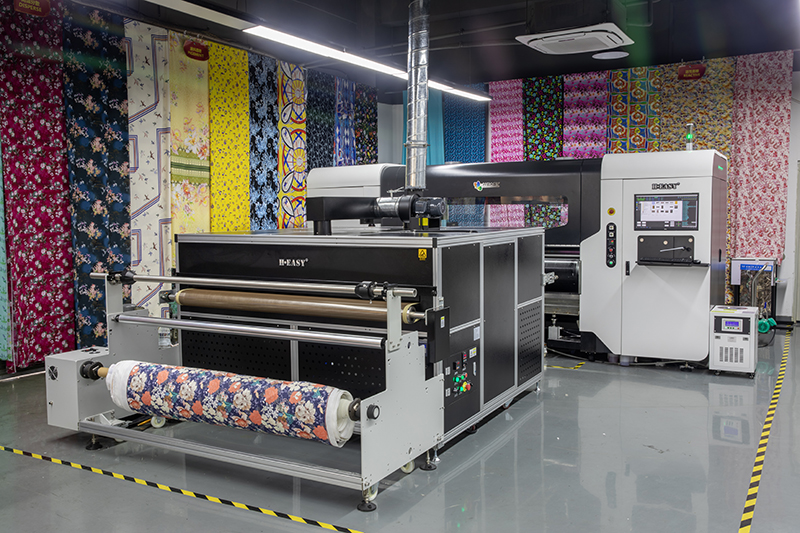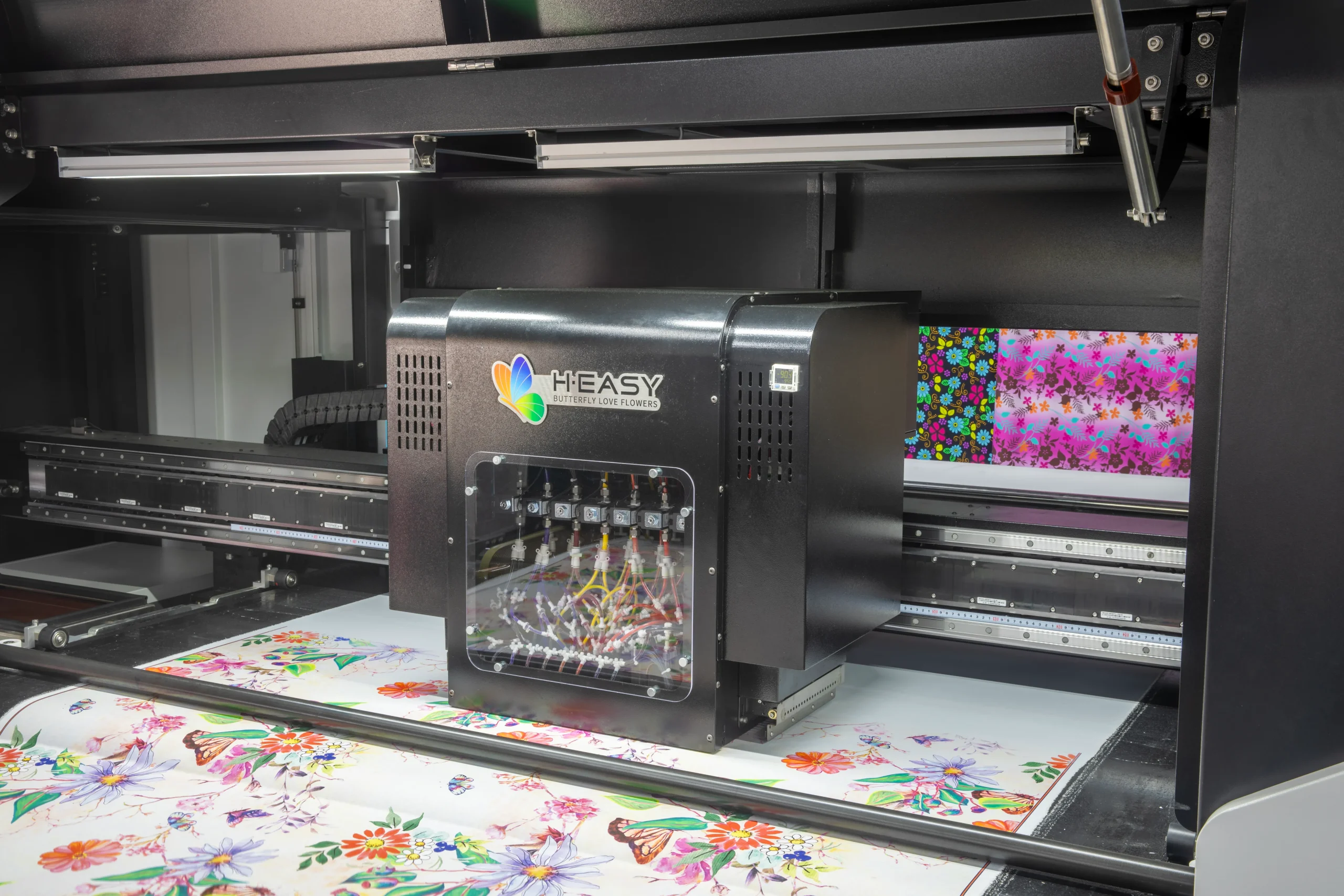
For years, pigment ink printing struggled to gain widespread acceptance in the textile industry. Issues such as poor color vibrancy, stiff hand feel, and low color fastness limited its adoption.
However, the situation is rapidly changing.
Thanks to continuous improvements in ink formulation, printing technology, and process optimization, pigment printing is now making a strong comeback—becoming one of the fastest-growing segments in digital textile printing.
1. The Past Challenges of Pigment Printing
Historically, pigment printing faced several key limitations:
- Rigid hand feel, making fabrics less comfortable
- Dull colors, especially on darker fabrics
- Weak fastness, particularly in washing and rubbing
- High failure rates in early-stage industrial applications
Because of these issues, many factories abandoned pigment solutions after initial trials.
2. What Has Changed? Key Technological Breakthroughs
In recent years, pigment printing has undergone significant improvements:
Improved Ink Formulation
Modern pigment inks now offer:
- Better color saturation
- Enhanced adhesion to fabric
- Improved fastness performance
Process Optimization
Refined workflows such as:
- Controlled pretreatment (sizing)
- Optimized drying and fixation
- Better environmental control (temperature & humidity)
have greatly improved consistency and output quality.
Equipment Advancements
New-generation machines now provide:
- High-precision structures (up to 0.01mm accuracy)
- Stable operation with integrated frame design
- Advanced drive systems for better printhead compatibility
These improvements significantly reduce defects such as banding, color variation, and nozzle clogging.
3. Market Demand Is Driving Growth
Beyond technology, market trends are accelerating adoption.
According to industry data:
- Pigment printing installations now account for around 10% of the digital textile printing market
- Strong growth is observed in regions like Shandong and Guangdong, China
- Demand from new customers continues to increase rapidly
This reflects a clear shift:
Pigment printing is no longer experimental—it is becoming a mainstream production solution.
4. Why Manufacturers Are Choosing Pigment Printing
Simplified Production Process
Unlike reactive or disperse printing, pigment printing:
- Does not require steaming or washing
- Reduces process complexity
- Shortens production cycles
Typical workflow:
Fabric Inspection → (Pretreatment) → Printing → Drying → Fixation
Lower Operating Costs
Pigment printing significantly reduces:
- Water consumption
- Energy usage
- Labor costs
Ink consumption is also predictable, averaging around:
~20g per square meter
Eco-Friendly Production
With increasing environmental regulations, pigment printing stands out:
- Minimal wastewater discharge
- Reduced chemical usage
- Easier compliance with environmental standards
Wide Fabric Compatibility
Pigment inks can print on:
- Cotton
- Polyester
- Silk
- Nylon
- Blended fabrics
This versatility allows factories to handle diverse orders with one system.
Lorem ipsum dolor sit amet, consectetur adipiscing elit. Ut elit tellus, luctus nec ullamcorper mattis, pulvinar dapibus leo.
5. Remaining Challenges (And How They’re Being Solved)
Despite its advantages, pigment printing still has some limitations:
Hand Feel
Pigment prints can feel slightly stiff
Solution: softening treatment & finishing processes
Dark Color Performance
Deep colors may lack depth
Solution: improved ink + multi-pass printing
Fastness Limitations
Still slightly lower than reactive printing in some cases
Solution: optimized fixation (temperature & time control)
Example:
- Fixation at 130–170°C for 4–6 minutes improves performance
6. The Role of Advanced Printing Equipment
Modern pigment printing success is closely tied to equipment innovation.
Key features include:
- Integrated machine frames → improved stability
- Precision printhead mounting → better image quality
- Self-developed driver boards → faster troubleshooting
- Automated systems:
- Ink supply
- Cleaning
- Humidity control
These technologies ensure:
Consistent output + reduced downtime + longer printhead life
7. Future Outlook
Pigment printing is entering a new phase of growth.
With continuous improvements in:
- Ink chemistry
- Equipment precision
- Process control
it is expected to:
- Expand further in fashion and home textile sectors
- Replace traditional processes in eco-sensitive regions
- Become a key solution for on-demand and small-batch production
Conclusion
Pigment ink printing is no longer the “problematic technology” it once was.
Instead, it has evolved into a:
- Cost-effective
- Eco-friendly
- Versatile
solution that meets the demands of modern textile production.
For manufacturers looking to reduce costs, simplify processes, and adapt to market trends, pigment printing is quickly becoming the preferred choice.