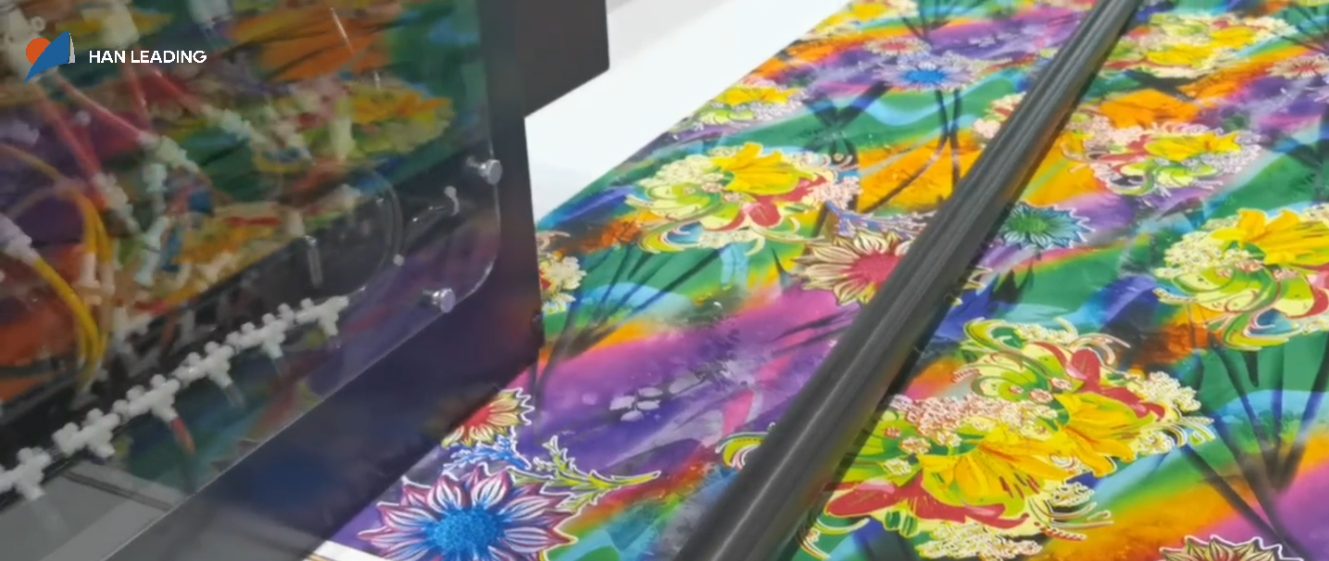
Pigment digital printing is becoming one of the most practical textile printing solutions for factories that want a cleaner, simpler, and more flexible workflow. Compared with reactive, acid, or disperse printing, pigment printing has a shorter production process and usually does not require post-print washing.
This makes it especially suitable for:
- Small-batch production
- Fast delivery orders
- Mixed fabric printing
- Eco-conscious textile manufacturing
Unlike dye-based inks, pigment ink does not chemically bond with the fiber. Instead, tiny pigment particles stay mainly on the fabric surface and are fixed with binders or fixation agents. Because of this, pretreatment, drying, and fixation directly affect color quality, hand feel, and rubbing fastness.
Standard Pigment Digital Printing Workflow
A typical pigment direct-to-fabric printing process includes:
Fabric Inspection → Pretreatment / Sizing → Digital Printing → Drying → Fixation → Softening & Finishing → Fastness Testing
In some factories, certain steps may be simplified or combined. For example, drying and fixation are sometimes integrated into one continuous process. However, understanding each stage is essential for stable industrial production.
Step 1: Fabric Inspection
Before printing begins, the fabric should be carefully checked to ensure it meets production requirements.
Key inspection points include:
- Fabric pH value
- Absorbency
- Weft skew
- Surface cleanliness
- Raw edge condition
Why Fabric Inspection Matters
- pH Value
Improper pH can affect fixation performance and cause color variation or spotting.
- Absorbency
Poor absorbency reduces ink penetration and color yield, making prints appear lighter.
- Weft Skew
Excessive skew may cause fabric wrinkling or feeding problems during printing.
- Surface Cleanliness
Dust, oil, lint, or loose fibers may damage print quality and even scratch the printhead.
For industrial digital printing, fabric condition affects not only print quality but also printhead safety and machine stability.
Step 2: Pretreatment and Sizing
Pretreatment is one of the most important steps in pigment digital printing.
Although some fabrics can be printed directly, pretreatment usually improves:
- Color brightness
- Color yield
- Pattern sharpness
- Production consistency
Purpose of Sizing
Sizing helps:
- Reduce ink spreading
- Control capillary absorption
- Improve edge sharpness
- Support binder film formation
- Keep fabric flatter during printing
A flatter fabric surface also helps prevent printhead scratching and improves feeding stability.
Production Notes
For roll-to-roll production:
- The fabric seam should remain straight
- Fabric tension should stay stable
- The fabric must be evenly dried after sizing
Improper drying can cause:
- Mold
- Yellowing
- Uneven winding
- Fabric deviation during printing
A common reference formula uses approximately 5% pretreatment solution diluted with water, though the exact ratio should be adjusted according to:
- Fabric type
- Ink system
- Hand feel requirement
- Fastness target
Step 3: Digital Printing
Before printing, operators should inspect the machine carefully.
Key checks include:
- Ink level
- Printhead condition
- Nozzle status
- Ink supply system
- Machine cleanliness
Pigment digital printing requires high precision, so printer condition and workshop environment strongly affect production stability.
Recommended Working Environment
Recommended conditions include:
- Temperature: 20°C–30°C
- Humidity: 50%–65%
Low or unstable humidity may increase nozzle clogging risk.
Ink Quality Matters
Good pigment ink should have:
- Low impurity levels
- Stable pH value
- Strong printhead compatibility
- Reliable dispersion stability
Regular maintenance of:
- Ink lines
- Dampers
- Ink tanks
- Printheads
helps reduce clogging and extend printhead life.
Step 4: Drying After Printing
After printing, the fabric must be fully dried before fixation.
Insufficient drying may lead to:
- Floating color
- Uneven color yield
- Poor rubbing fastness
- Staining problems
One reference process recommends:
- 140°C for approximately 5 minutes
However, actual settings depend on:
- Fabric type
- Ink system
- Production speed
- Equipment configuration
Drying is not simply a waiting step. Proper drying prepares the printed layer for stable film formation during fixation.
Step 5: Fixation
Fixation is the core step in pigment printing.
During fixation, heat helps the binder form a film that locks pigment particles onto the fabric surface.
Reference Fixation Conditions
Different systems may require different settings, such as:
- 130°C–150°C for 4–6 minutes
- or 170°C for 4 minutes
The optimal condition depends on:
- Ink formulation
- Binder type
- Fabric structure
- Fabric weight
- Machine speed
- Required fastness level
What Happens If Fixation Is Poor?
Insufficient fixation may cause:
- Color loss after washing
- Poor rubbing fastness
- Floating color
- Unstable performance
Proper fixation is essential for durable textile printing results.
Step 6: Softening Treatment and Hand Feel Improvement
One common challenge of pigment printing is hand feel.
Because pigment particles stay mainly on the fabric surface, heavy binder usage may make the printed area feel stiffer.
Improving Softness
To improve hand feel, factories may use:
- Softening treatment
- Washing processes
- Softer binder systems
However, there is always a balance between:
- Soft hand feel
- Color fastness
- Durability
More binder often improves fastness but increases stiffness. Less binder may improve softness but reduce durability.
Advantages of Pigment Digital Printing
1. Simpler Production Process
Compared with reactive or disperse printing, pigment printing usually requires fewer steps.
Traditional dye printing often includes:
- Sizing
- Printing
- Steaming
- Washing
- Finishing
Pigment printing can often be simplified to:
Pretreatment → Printing → Fixation
2. Reduced Water Consumption
Pigment printing usually does not require post-print washing, helping factories reduce:
- Water usage
- Wastewater discharge
- Environmental treatment costs
This is one of the biggest advantages of pigment textile printing.
3. Wide Fabric Compatibility
Pigment ink can be used on many fabric types, including:
- Cotton
- Polyester
- Nylon
- Rayon
- Silk
- Wool
- Linen
- Blended fabrics
Limitations of Pigment Printing
Pigment printing is not ideal for every application.
Common limitations include:
- Harder hand feel
- Lower color brightness
- Weaker fastness compared with some dye processes
For very smooth polyester or nylon fabrics, achieving strong fastness may require heavier pretreatment or binder usage, which can reduce softness.
In some cases, disperse printing may still be a more suitable solution for polyester applications.
Production Checklist for Better Results
For stable industrial production, factories should:
- Inspect fabric before printing
- Control fabric pH and absorbency
- Use suitable pretreatment formulas
- Keep fabric flat and properly dried
- Check nozzle and printhead condition daily
- Maintain stable workshop temperature and humidity
- Fully dry fabric before fixation
- Test fixation settings before bulk production
- Perform rubbing and washing fastness tests
- Add softening treatment when required
Why Machine Stability Matters
A stable printing process also depends on machine performance.
Industrial pigment printing requires:
- Stable fabric feeding
- Accurate printhead alignment
- Reliable ink supply
- Strong mechanical precision
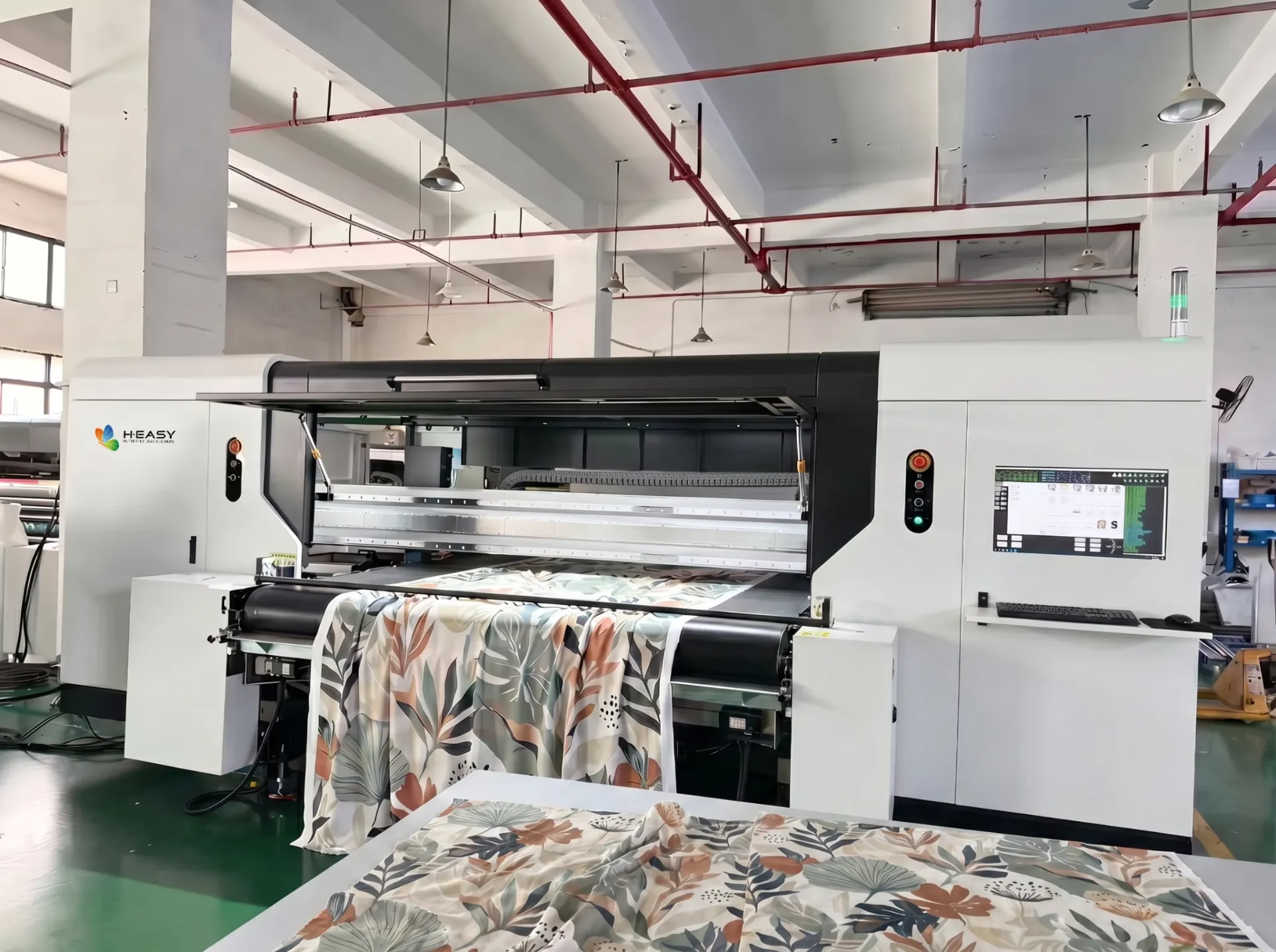
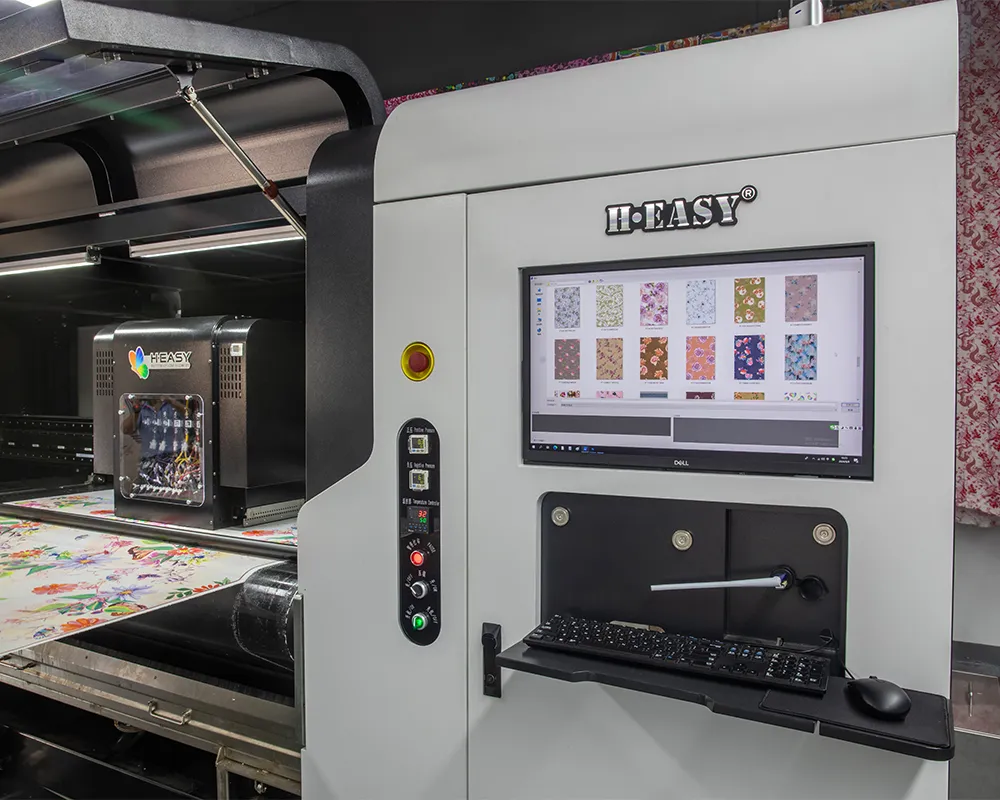
For example, some industrial pigment printer solutions emphasize:
- Integrated machine frames
- High-precision printhead mounting plates
- Stable driver board systems
High mechanical precision helps improve:
- Print consistency
- Registration accuracy
- Long-term production stability
For textile factories, both the printing process and machine platform should be optimized together.
Conclusion
Pigment digital printing is becoming an increasingly important solution for textile factories seeking a cleaner, simpler, and more flexible production process.
From fabric inspection and pretreatment to printing, drying, fixation, and finishing, every step affects final print quality, hand feel, and fastness.
The biggest advantages of pigment printing include:
- Simplified workflow
- Lower water consumption
- Multi-fabric compatibility
- Faster production flexibility
However, achieving stable production still requires careful control of:
- Pretreatment
- Drying
- Fixation temperature
- Workshop environment
- Machine maintenance
With the right pigment printer, matched ink system, and optimized workflow, factories can achieve reliable and efficient direct-to-fabric production for modern textile manufacturing.

printing-1.jpg)