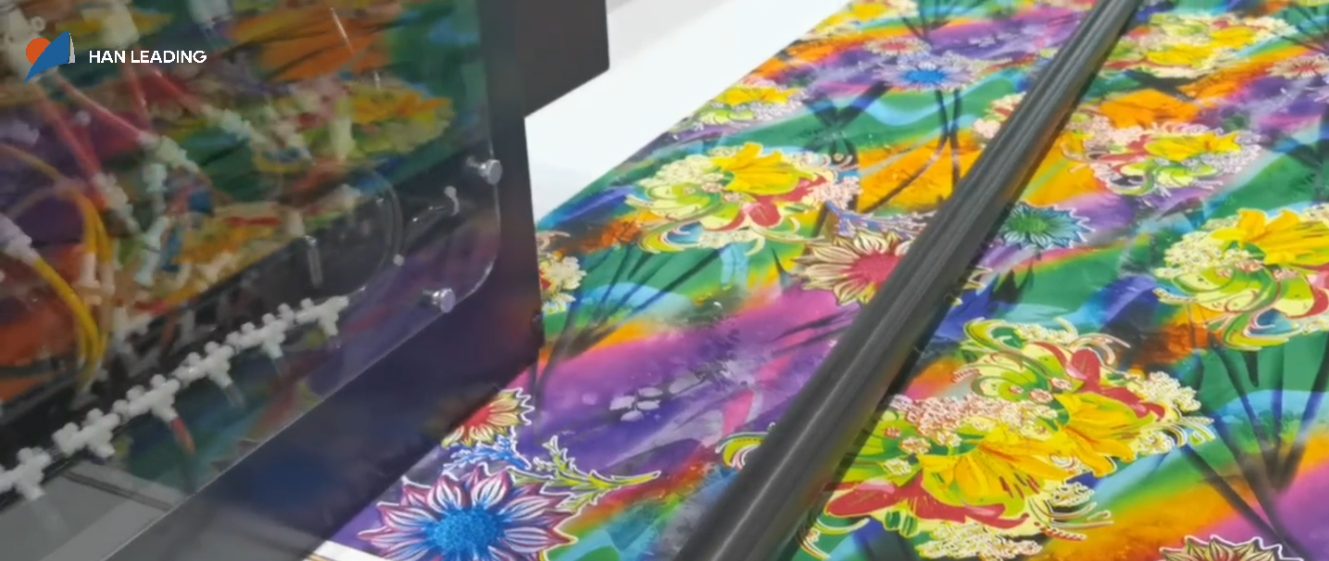
Fabric pretreatment is one of the most critical factors in pigment textile printing—often more important than the printer itself.
In many real production cases, issues such as dull colors, blurry edges, and inconsistent results are not caused by the machine, but by improper pretreatment.
In fact, a large percentage of printing defects originate from this step.
So why does pretreatment matter so much? Let’s break it down.
1. What Is Fabric Pretreatment (Sizing)?
Fabric pretreatment refers to applying a coating layer (sizing) on the fabric surface before printing.
This invisible layer plays a key role in:
- Improving ink adhesion
- Controlling ink spread
- Enhancing color performance
- Stabilizing printing results
Simply put:
Pretreatment determines how ink behaves on fabric.
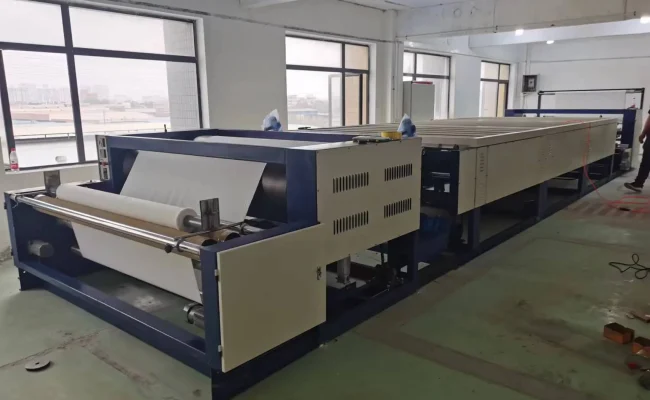
2. How Pretreatment Directly Affects Print Quality
Ink Adhesion & Fixation
Pigment inks rely on surface bonding, not chemical reactions.
If pretreatment is insufficient:
- Ink adhesion becomes weak
- Colors fade easily
- Rubbing fastness decreases
Pretreatment forms the foundation for proper fixation
Ink Penetration & Edge Sharpness
Without proper sizing:
- Ink spreads uncontrollably
- Edges become blurry
- Bleeding and feathering occur
With optimized pretreatment:
- Ink spread is controlled
- Image sharpness improves
- Fine details are preserved
Color Depth & Vibrancy
Under the same printing conditions:
Poor pretreatment → dull, washed-out colors
Proper pretreatment → rich, vibrant colors
Many “ink issues” are actually pretreatment issues
Production Consistency
Uneven pretreatment leads to:
Color variation
Banding
Inconsistent batches
Especially critical for large-scale production
3. Why Different Fabrics Require Different Pretreatment
Fabric properties vary significantly:
Cotton & Linen
- High absorbency
Requires penetration control
Polyester & Synthetic Fabrics
- Low absorbency, smooth surface
Requires stronger adhesion support
Silk & Wool
- Higher surface tension
Requires more precise formulation
Conclusion:
There is no universal pretreatment solution—formulation must match the fabric
4. Common Pretreatment Problems
Uneven Coating
- Causes color inconsistency
- Leads to uneven print results
Incomplete Drying
- May cause mold or defects
- Results in unstable color output
Over-Sizing
- Makes fabric feel stiff
- Affects ink performance
- Increases cost unnecessarily
Ignoring Fabric Conditions
Issues like:
- Incorrect pH
- Poor absorbency
- Surface contamination
All impact final results
5. Key Control Points for Better Pretreatment
To achieve stable printing quality:
- Match formulation to fabric type
- Ensure uniform coating
- Fully dry the fabric
- Maintain stable temperature & humidity
6. Why Pretreatment Matters More Than Equipment
Many manufacturers invest heavily in printers but overlook process control.
In reality:
Most printing problems are process-related, not machine-related
- Good machine + poor pretreatment → unstable output
- Standard machine + optimized pretreatment → consistent quality
Key takeaway:
Pretreatment is the foundation of successful pigment printing
7. Equipment Also Matters—When Paired with the Right Process
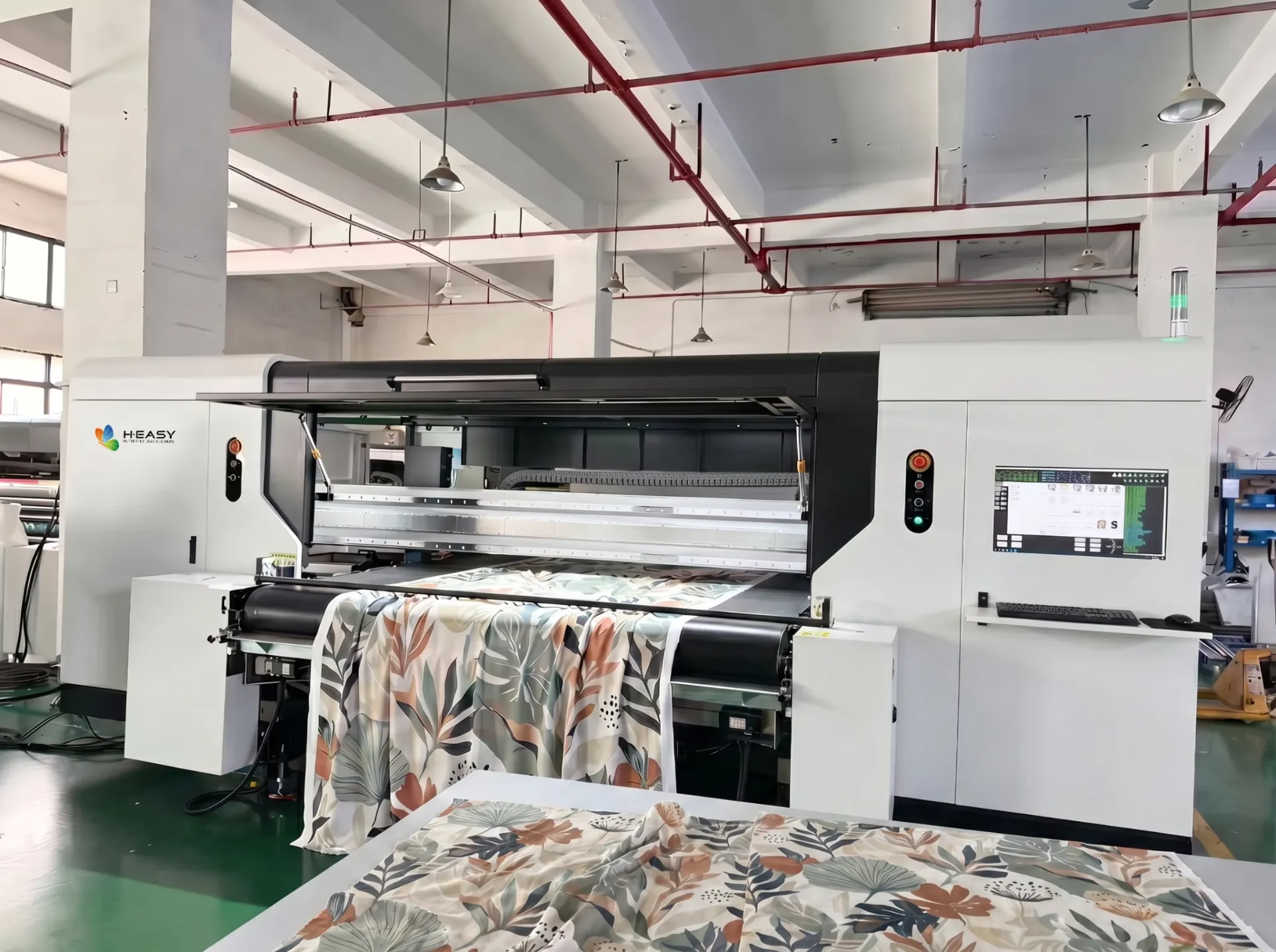
While pretreatment is fundamental, choosing the right printing equipment ensures that your optimized process can be consistently executed at scale.
Here are two recommended configurations for pigment textile printing:
H-1816 – Balanced & Reliable Production
Best for:
- Medium-scale factories
- Stable daily production
- Businesses upgrading from traditional printing
Key advantages:
- Excellent balance between speed and print quality
- Flexible fabric compatibility
- Stable performance for long production runs
Typical output:
- Around 5,000–10,000 meters per day
Ideal for companies looking for a cost-effective and reliable pigment printing solution
H-1832 – High-Speed Industrial Production
Best for:
- Large-scale textile manufacturers
- High-volume continuous production
- Fast turnaround business models
Key advantages:
- Supports up to 32 printheads
- Designed for high-speed industrial output
- Optimized for long-hour, stable operation
Typical output:
- Up to 10,000–20,000 meters per day
Perfect for businesses focused on maximum productivity and scalability
Conclusion
In pigment textile printing, pretreatment is not just a step—it is the core factor that determines printing quality.
By controlling:
Fabric condition
Sizing formulation
Process consistency
manufacturers can achieve:
Better print quality
Higher efficiency
Lower production costs

printing-1.jpg)