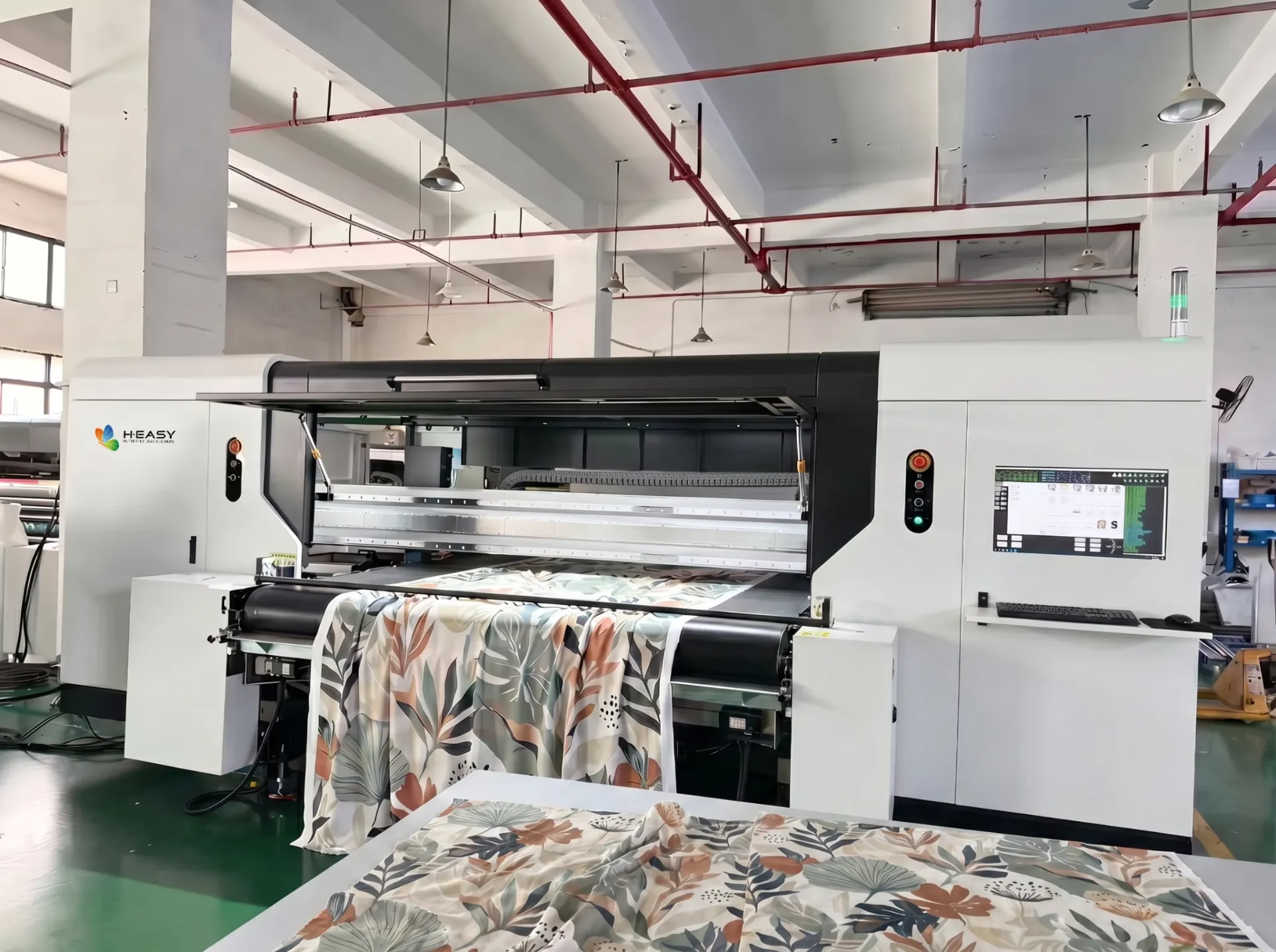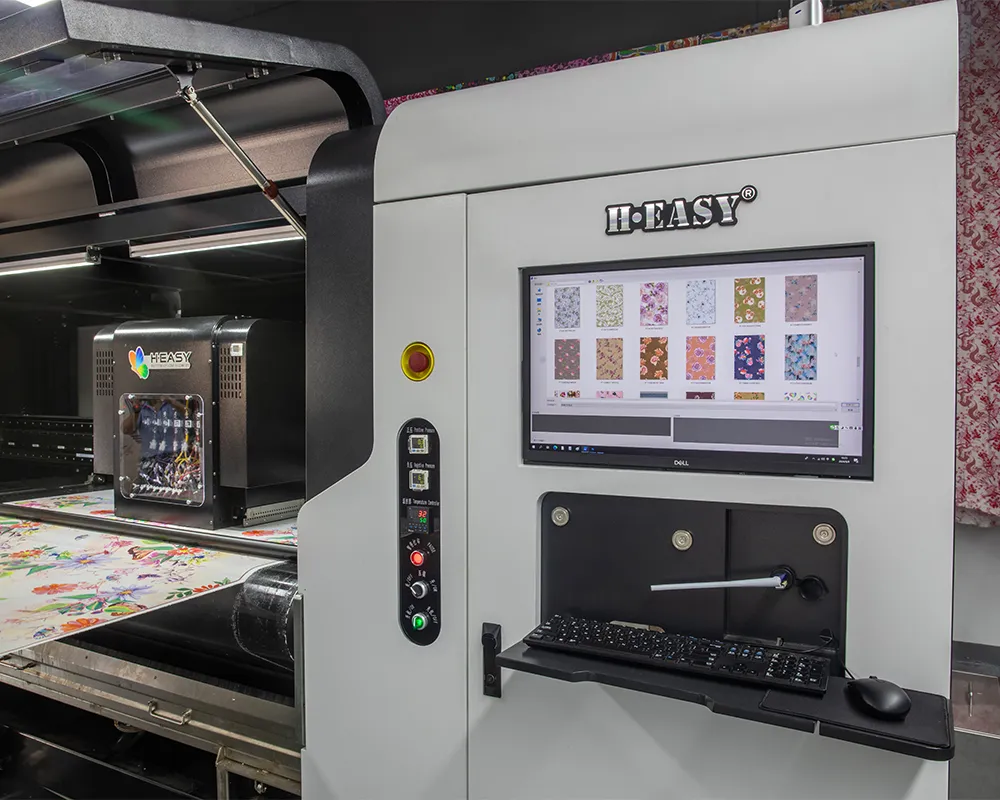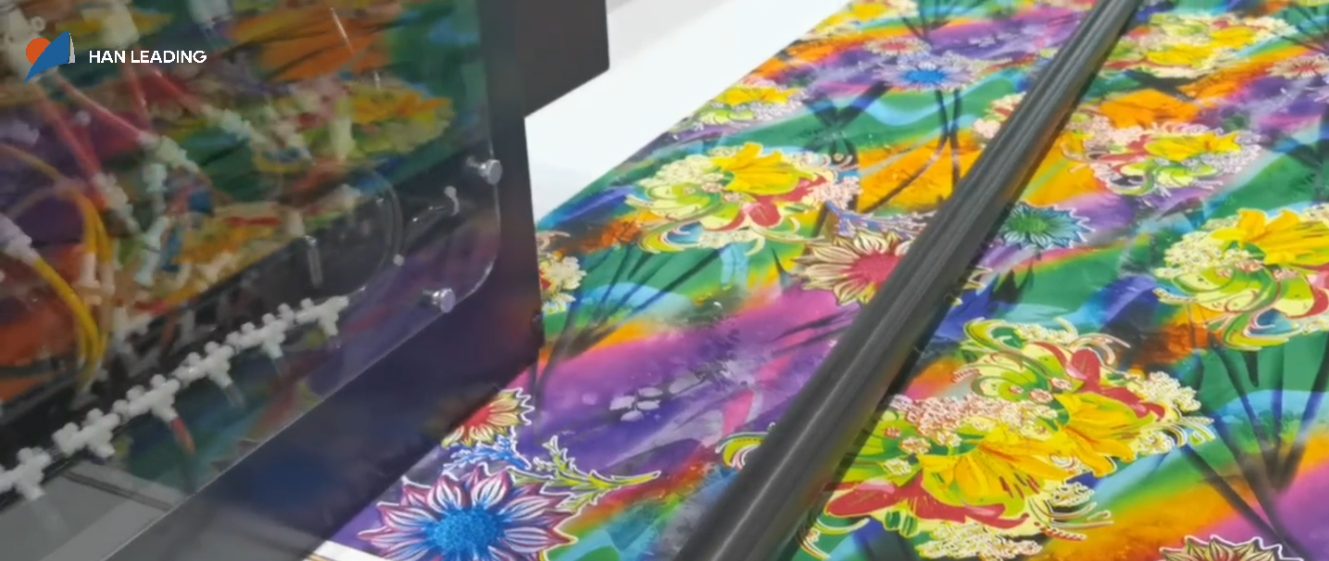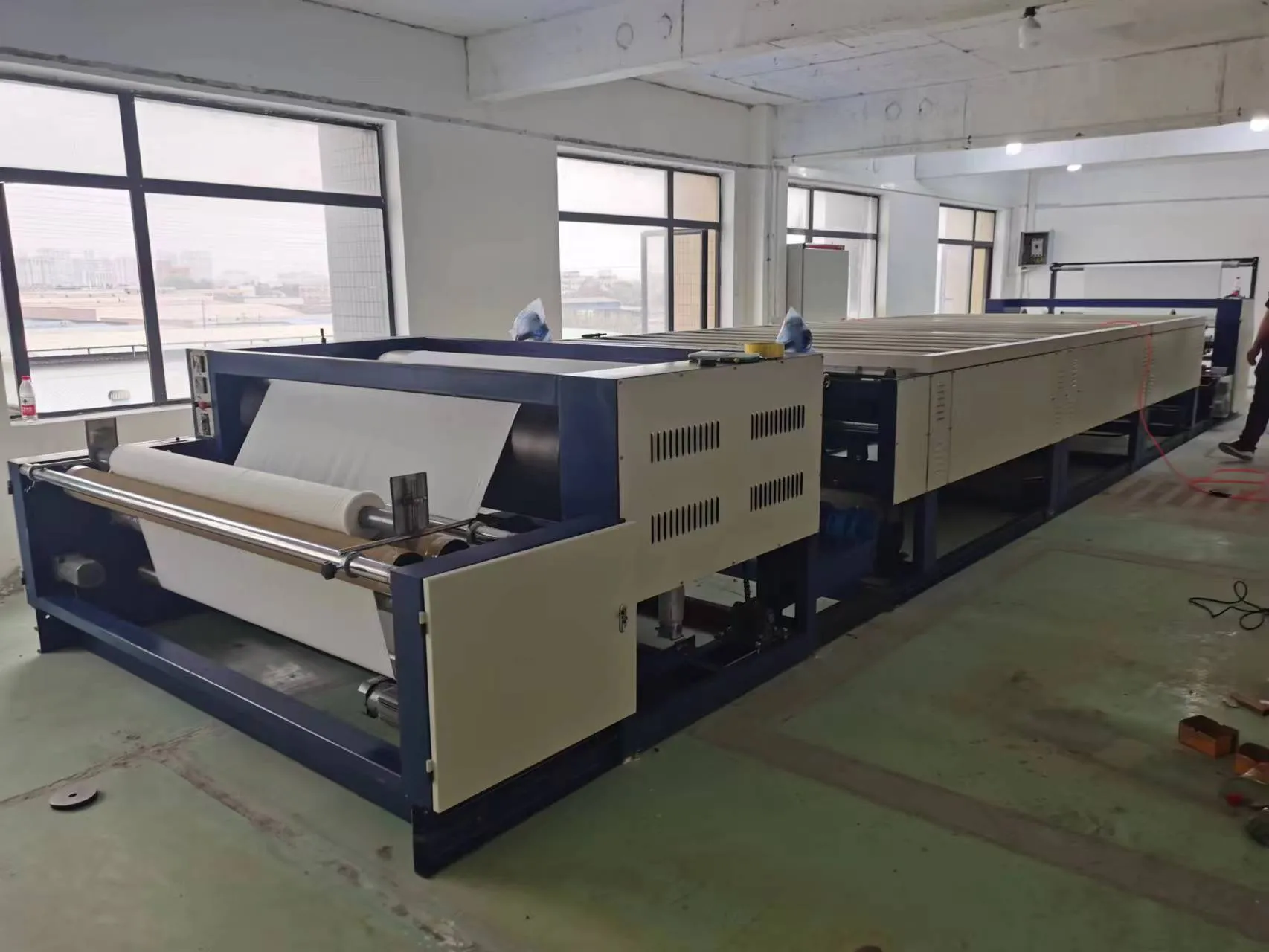
For textile factories, printing cost is not only ink price. Water consumption, wastewater treatment, labor, energy, process time, defect rate, and maintenance all directly affect the final cost per square meter.
This is why no-wash pigment printing is increasingly used as a cost-saving and process-simplifying solution in digital textile production.
Unlike reactive, acid, or disperse printing, pigment printing usually does not require a traditional washing process after printing. The workflow can often be simplified to:
Pretreatment → Printing → Drying → Fixation
In contrast, reactive and other dye-based processes typically require additional steaming, washing, and finishing steps.
What Is No-Wash Pigment Printing?
Pigment ink does not chemically bond with fibers like reactive dye. Instead, pigment particles are fixed onto the fabric surface through binder film formation and heat curing.
A typical process includes:
Fabric inspection → Sizing/pretreatment → Digital printing → Drying → Fixation → Optional finishing (softening if required)
A common fixation reference is:
130–150°C for 4–6 minutes
Some processes may combine drying and fixation to further simplify production.
1. Reduced Water Consumption
The biggest advantage of no-wash pigment printing is water saving.
Traditional dye printing requires multiple washing steps to remove unfixed dye and chemicals. These steps consume large amounts of water and require additional equipment and time.
Pigment printing can eliminate or greatly reduce washing, significantly lowering water usage.
2. Lower Wastewater Treatment Cost
Less washing also means less wastewater.
Wastewater treatment in textile factories includes:
- Chemical treatment
- Electricity usage
- Equipment investment
- Monitoring and compliance costs
By reducing washing processes, pigment printing directly reduces wastewater volume, helping lower both operating cost and environmental pressure.
3. Shorter Production Workflow
No-wash pigment printing simplifies the entire process flow:
Traditional:
Sizing → Printing → Steaming → Washing → Drying → Finishing
Pigment:
Sizing → Printing → Drying → Fixation
This reduces:
- Process time
- Labor requirements
- Production complexity
- Space needed for post-treatment
- Risk of defects during washing
It is especially useful for fast delivery and small-batch production.
4. Lower Labor and Equipment Demand
Fewer processing steps mean fewer operators and less equipment.
Factories can reduce:
- Washing line operation
- Steam processing management
- Additional drying systems
- Quality control points between steps
This simplifies production management and reduces operational cost and error risk.
5. Reduced Fabric Loss and Defect Rate
Washing and post-processing are common sources of fabric damage, color variation, and shrinkage issues.
In pigment printing, eliminating washing helps reduce:
- Color bleeding during washing
- Fabric deformation
- Handling damage
- Process-related defects
However, quality still depends on:
- Pretreatment consistency
- Proper drying
- Stable fixation conditions
- Fabric inspection (pH, cleanliness, absorbency, weft alignment)
6. High Flexibility for Multiple Fabrics
Pigment printing supports a wide range of fabrics, including:
- Cotton
- Linen
- Polyester
- Nylon
- Silk
- Wool
- Blended fabrics
This reduces the need for multiple dye-based production lines, helping factories handle mixed orders more efficiently.
However, for smooth polyester or nylon fabrics, achieving both softness and fastness can be more difficult, and may require additional pretreatment or finishing.
7. Cost Advantage Comes from the Whole Process
Although pigment ink consumption is around 20g/sqm as a reference, ink cost alone does not determine total cost.
The real cost advantage comes from:
- No washing process
- Lower water consumption
- Reduced wastewater treatment
- Shorter production time
- Lower labor demand
- Reduced defect rate
Even if ink cost is not the lowest, total production cost can still be more competitive due to process simplification.
Limitations to Consider
No-wash pigment printing also has limitations:
- Fabric hand feel may be slightly harder than reactive printing
- Color depth may differ depending on process control
- Fastness depends heavily on pretreatment and fixation quality
If softer hand feel is required, additional finishing or softening may still be needed.
Therefore, “no-wash” does not mean “no process control.” Stable pretreatment, ink selection, drying, and fixation are still critical.
Conclusion
No-wash pigment printing reduces production cost mainly by simplifying the workflow and eliminating washing and wastewater treatment processes.
It is especially suitable for:
- Small-batch production
- Fast delivery orders
- Mixed fabric applications
- Flexible textile manufacturing
To achieve stable cost and quality, factories still need a properly matched pigment ink system, controlled pretreatment, and stable fixation process.
When correctly implemented, no-wash pigment printing becomes a practical and efficient solution for modern textile production.