In the fast-growing world of print-on-demand and custom apparel production, Direct to Film (DTF) printing has become one of the most popular technologies for creating vibrant, durable, and flexible garment prints.
From custom T-shirts and hoodies to tote bags, uniforms, and small-batch fashion orders, DTF printing gives businesses a practical way to handle both personalized and bulk production.
However, building a successful DTF printing business is not only about choosing the right printer. Like any production-based business, it also requires clear cost management. One of the most important things every DTF business owner should understand is the true cost per transfer.
Knowing your real cost per transfer helps you set better prices, protect your profit margin, avoid undercharging, and make smarter production decisions.
Why Cost Tracking Matters in a DTF Printing Business
Many beginners only focus on visible consumables such as film, ink, and powder. These are important, but they are only part of the total cost.
A real DTF transfer also involves artwork preparation, RIP software settings, printing, powder shaking, drying, curing, cutting, heat pressing, quality inspection, packaging, machine maintenance, and operator time.
If these costs are not properly tracked, your pricing may look competitive but your profit margin may become very small.
Accurate cost tracking allows you to answer key business questions:
- How much does one transfer really cost?
- Which orders are profitable?
- Are small custom jobs priced correctly?
- Where is waste happening in production?
- Is the machine being used efficiently?
For long-term growth, DTF printing should be managed not only as a printing process, but also as a cost-controlled business system.
Understanding the Main Costs in DTF Printing
The cost of DTF printing is made up of several parts. Some are direct production costs, while others are business operating costs.
Equipment Costs
Equipment cost includes the DTF printer, powder shaker, dryer, heat press, smoke filter, and other machines required to complete the transfer process.
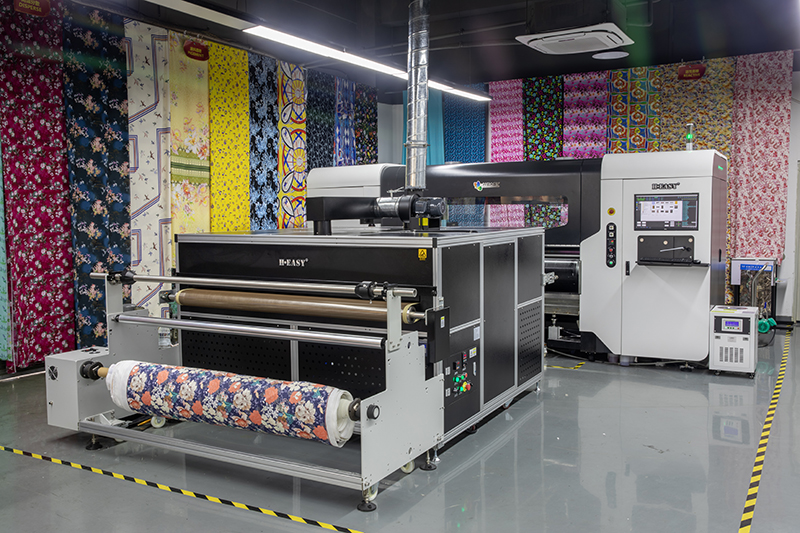
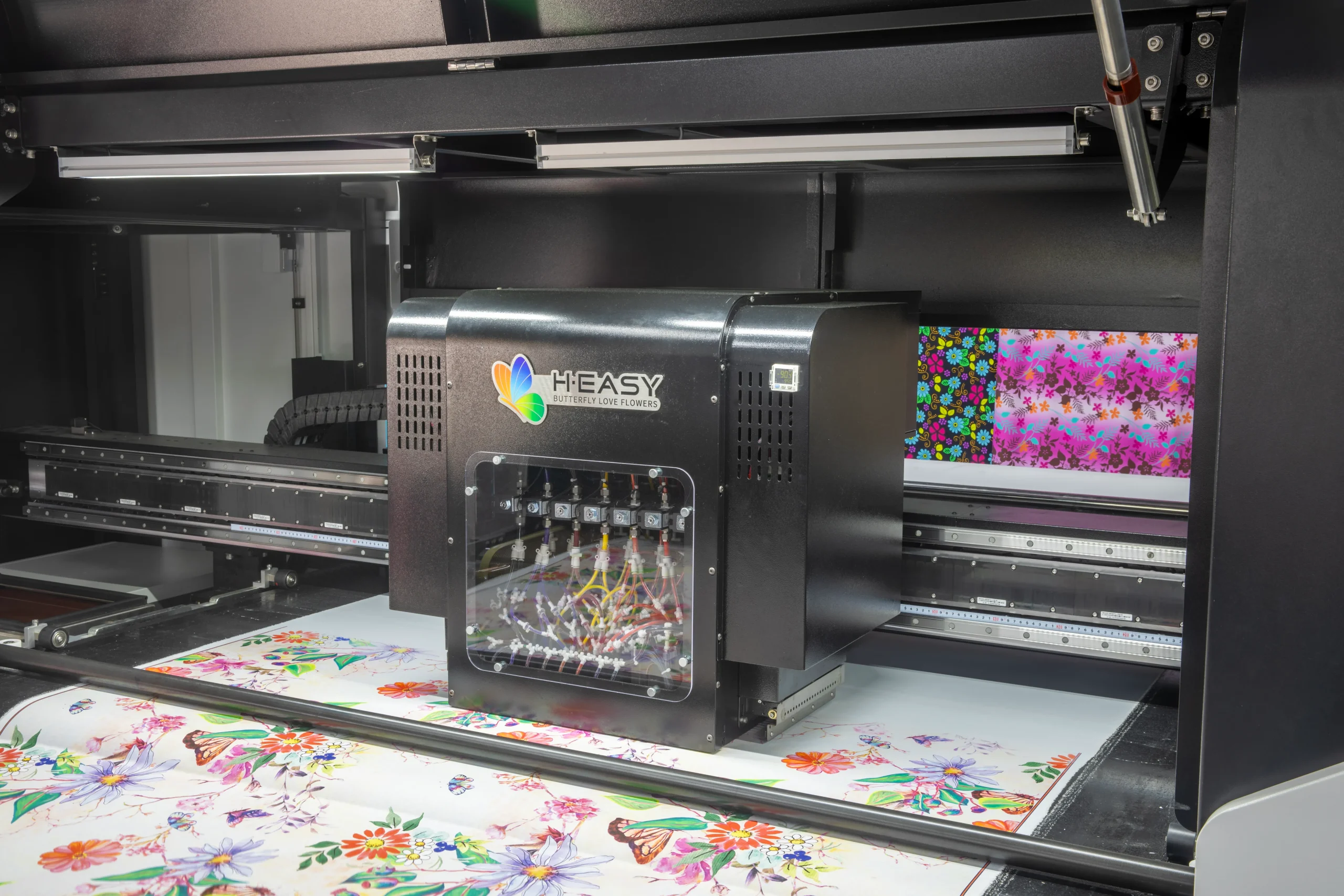
For example, a 60cm DTF printer with dual Epson i3200 printheads, powder shaker, drying system, and heat press can support continuous transfer production for T-shirt customization, garment factory sampling, and transfer sheet production. The provided H·EASY HY-702/704 DTF printer data includes a 60cm print width, dual Epson i3200 A1 printheads, PET transfer film workflow, powder shaker system, and heat press process.
Equipment cost should not be ignored. Even if the machine is already purchased, its value should still be spread across monthly production as equipment depreciation.
Ink and Film
Ink and PET film are two of the most direct costs in DTF printing.
PET film is used for every transfer, so film layout efficiency is very important. If the design is arranged well and the printer width is fully used, film waste can be reduced. If orders are small, irregular, or printed one by one, film waste will increase.
Ink cost depends on the artwork. A simple logo usually consumes less ink, while a large full-color design or high-opacity print uses more. White ink is especially important in DTF printing because it helps designs appear clearly on dark garments, but it can also increase the cost if not managed properly.
This is why artwork should not always be priced only by size. Coverage, color density, and white ink usage should also be considered.
Adhesive Powder and Other Supplies
Hot melt powder is essential for bonding the printed design to the fabric. It affects adhesion, wash resistance, hand feel, and final transfer quality.
Other supplies may include cleaning solution, waste ink containers, protective materials, packaging, and replacement consumables.
Although each item may seem small, they become significant when production volume increases.
Labor Costs
Labor is one of the most underestimated costs in DTF printing.
Even with an automatic powder shaker, operators still need to prepare artwork, check files, manage printing, monitor quality, cut transfers, press garments, inspect finished products, and pack orders.
Small orders usually require more labor per piece because each job needs setup and handling. Bulk orders are usually more efficient because the workflow is more continuous.
For this reason, small custom orders should not be priced the same way as bulk production orders.
Overhead Expenses
Overhead expenses include rent, electricity, utilities, software subscriptions, marketing, customer service, management time, and other business operating costs.
These costs may not be directly attached to one transfer, but they still affect the real cost of running the business.
If overhead is ignored, your pricing may cover materials but fail to cover the full business cost.
Fixed Costs vs. Variable Costs
To calculate the true cost per transfer, it is useful to separate costs into two groups: fixed costs and variable costs.
Fixed Costs
Fixed costs stay relatively stable whether you produce many transfers or only a few.
Examples include:
- Equipment depreciation
- Rent
- Insurance
- Software subscriptions
- Basic labor
- Management expenses
When production volume is low, each transfer carries a higher share of fixed cost. When production volume increases, fixed cost per transfer becomes lower.
Variable Costs
Variable costs change with production volume.
Examples include:
- PET film
- DTF ink
- White ink
- Hot melt powder
- Cleaning solution
- Packaging
- Labor per order
- Test prints and production waste
Variable costs are easier to see, but they still need to be recorded carefully.
A Simple Way to Calculate True Cost Per Transfer
A practical formula for DTF businesses is:
True Cost Per Transfer = Total Monthly Costs ÷ Monthly Successful Transfers
This formula gives a more realistic view of your production cost.
Your total monthly costs should include materials, labor, electricity, maintenance, rent, equipment depreciation, software, packaging, and waste.
Monthly successful transfers should only include transfers that can actually be sold or delivered to customers. Failed prints, test prints, and rework should not be counted as successful output.
This method helps business owners understand whether their pricing is truly profitable.
Benefits of Tracking Cost Per Transfer
Better Pricing Strategy
When you understand your real cost, you can set prices with confidence. You will know when to charge more for complex artwork, small orders, urgent jobs, or high-coverage prints.
This helps prevent undervaluing your work.
More Accurate Budgeting
Clear cost tracking makes budgeting easier. You can forecast material needs, plan monthly expenses, and prepare for machine maintenance or consumable purchases.
This is especially useful when your order volume begins to grow.
Identifying Inefficiencies
If your cost per transfer is higher than expected, it may indicate problems in production.
Possible causes include poor film layout, excessive white ink use, high waste rate, unstable curing, repeated reprints, or inefficient labor arrangement.
By finding these problems early, you can improve workflow and reduce unnecessary cost.
Stronger Competitive Advantage
Accurate cost tracking helps you offer competitive pricing without sacrificing quality or profit.
Instead of simply lowering prices, you can optimize production, reduce waste, and build a more sustainable business model.
Common Challenges in Tracking DTF Costs
Inaccurate Data
If film usage, ink consumption, failed prints, or labor time are not recorded correctly, the final cost calculation will be inaccurate.
A simple daily production record can help improve data accuracy.
Changing Consumable Prices
Ink, film, powder, and spare parts prices may change over time. Supplier pricing, shipping cost, and purchase quantity can all affect your real cost.
It is important to update your cost records regularly.
Lack of Accounting Knowledge
Some printing businesses focus mainly on production and sales, but do not pay enough attention to accounting.
As the business grows, basic financial tracking becomes more important. Using simple accounting software or working with a financial professional can help avoid pricing and cash flow problems.
How to Reduce the Real Cost Per Transfer
Reducing cost does not always mean choosing cheaper consumables. In many cases, better workflow management is more effective.
To reduce the true cost per transfer, DTF businesses can focus on:
- Improving artwork layout to reduce film waste.
- Creating standard templates for common print sizes such as chest logos, full-front prints, back prints, sleeve logos, and neck labels.
- Optimizing white ink settings according to artwork type.
- Maintaining the white ink circulation system and printheads regularly.
- Controlling powder application and curing quality.
- Reducing failed prints and rework.
- Separating pricing for small custom orders and bulk production orders.
- Recording daily output, waste, and material usage.
- A stable production process is one of the most important ways to protect profit.
Why Machine Stability Matters
Machine stability has a direct impact on cost.
An unstable printer may cause nozzle clogging, color inconsistency, poor ink flow, curing problems, and production interruptions. These issues increase waste and reduce efficiency.
A reliable DTF system with stable ink supply, proper drying, quality RIP software, and consistent output can help reduce reprints and improve production efficiency.
For daily production, a 60cm DTF printer with Epson i3200 printheads can offer a good balance between print quality, speed, and business flexibility.
Conclusion
Managing the financial side of a DTF printing business is essential for long-term growth.
The true cost per transfer is not only about film, ink, and powder. It also includes labor, equipment depreciation, maintenance, electricity, packaging, overhead, waste, and business management.
By tracking costs clearly, you can set better prices, protect your profit margin, improve production efficiency, and make smarter business decisions.
DTF printing offers strong opportunities in custom apparel, garment sampling, transfer sheet production, and small-batch manufacturing. But sustainable profit comes from more than good print quality. It comes from stable production, accurate cost tracking, and a pricing strategy based on real business data.