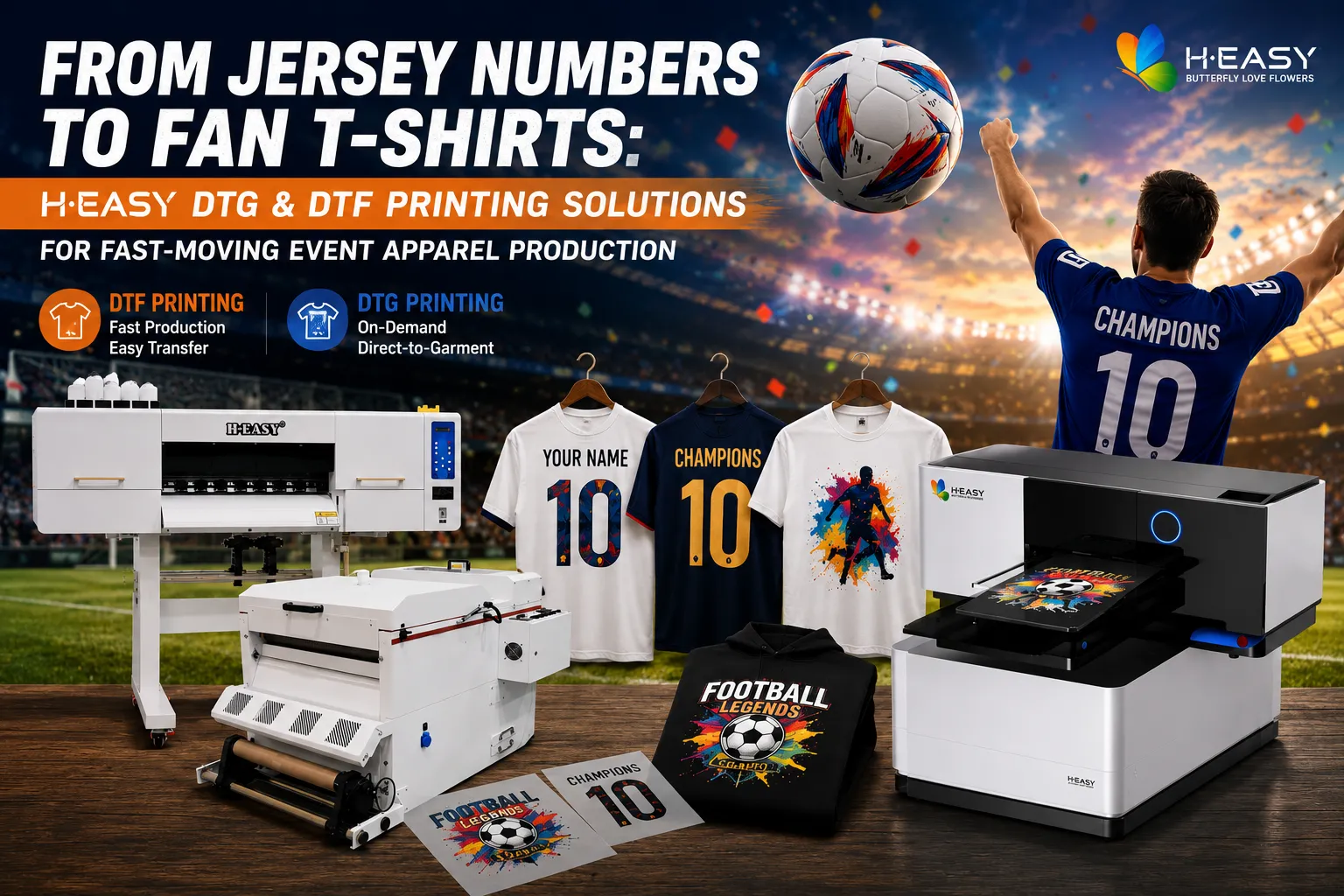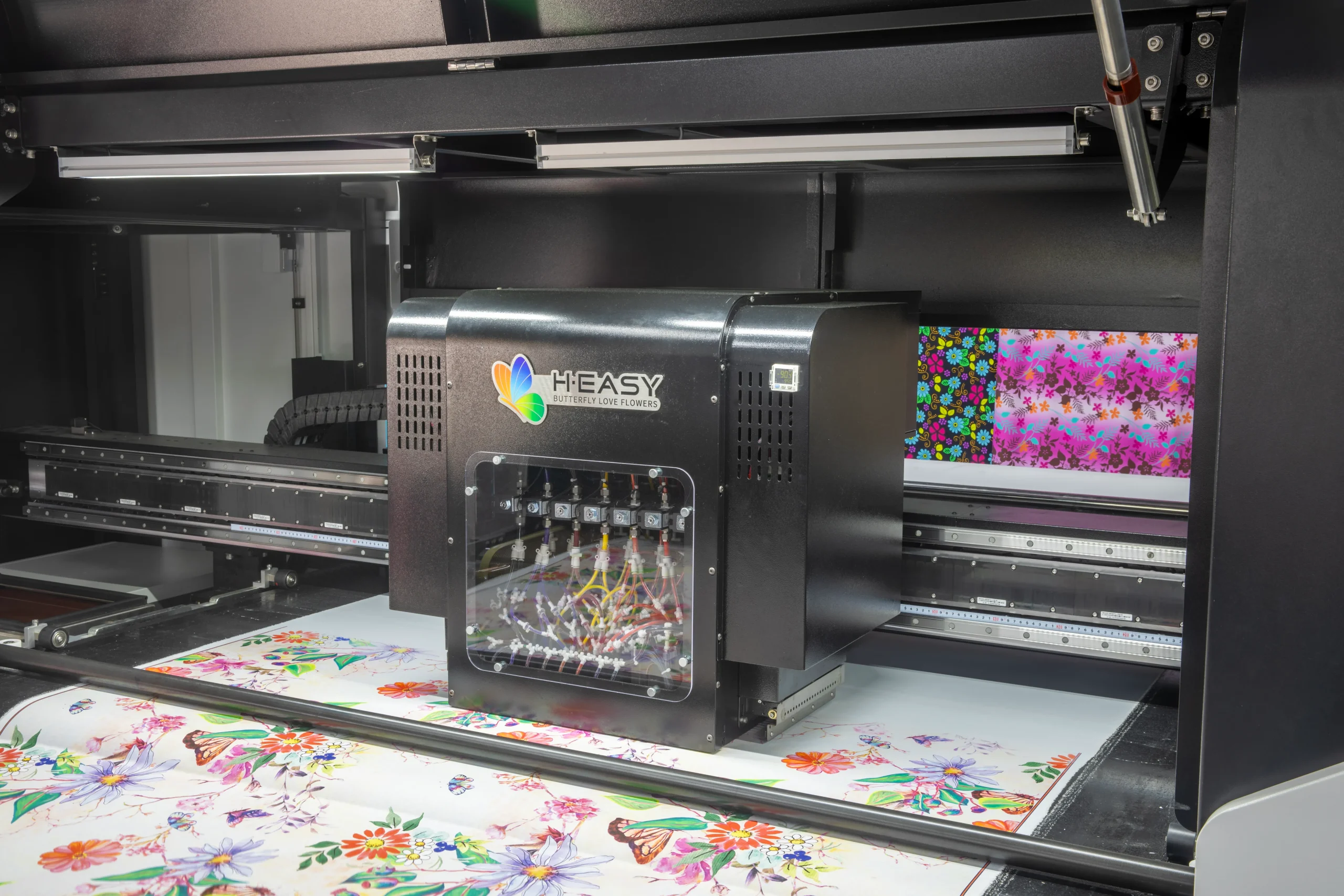
In the fast-growing digital textile printing industry, DTG (Direct to Garment) and DTF (Direct to Film) have become the two most widely adopted technologies. Although both belong to digital printing workflows, they differ greatly in printing principles, application scopes, production efficiency, and overall business value.
For printing factories aiming for higher output, lower production costs, and flexible order handling, understanding these differences is crucial for making the right investment.
This article will analyze DTG and DTF from core working principles, fabric compatibility, cost structure, image durability, environmental impact, and operation complexity—and provide practical application scenarios to guide your selection.
I. Core Technical Principles & Workflow Differences
1. DTG (Direct to Garment) Printing Technology
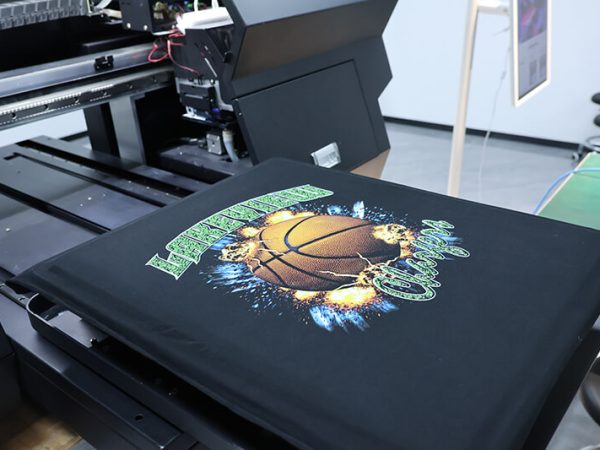
DTG is a direct-on-fabric spray printing method. The printhead jets CMYK+White pigment ink directly into the fabric fibers, followed by heat fixation.
Workflow:
Pretreatment → Drying → Direct Printing → Heat Fixation
Essential Feature: Pigment ink bonds directly with cotton fibers; best suited for cotton-based garments.
2. DTF (Direct to Film) Printing Technology
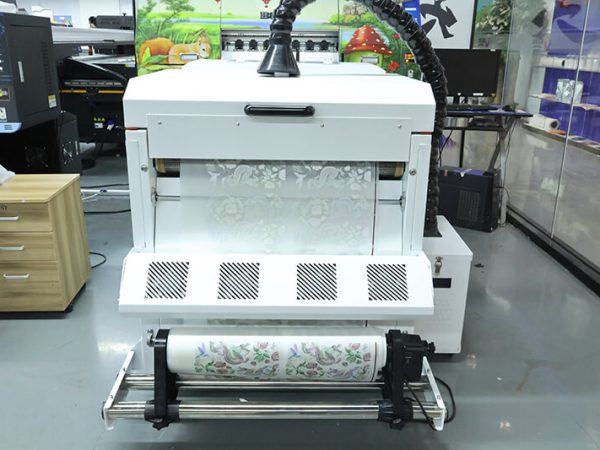
DTF is a film-based print and transfer method. The printer outputs the design on PET film with white ink, applies hot-melt powder, cures the adhesive layer, and then heat-transfers the design onto garments of almost any material.
Workflow:
PET Film Printing → Powder Application → Curing → Heat Transfer
Essential Feature: The design forms a durable film layer, enabling compatibility across most garment materials.
II. Key Application Dimension Comparison
1. Fabric Compatibility: Specialization vs. Versatility
| Dimension | DTG | DTF |
|---|---|---|
| Best for | Cotton fabrics (100% cotton / high-cotton blends) | Almost all textiles: cotton, polyester, blends, nylon, leather |
| Hand feel | Soft, breathable, merges with fabric | Slight film texture, lower breathability |
| Limitations | Requires proper pretreatment for dark garments | Few material restrictions |
Conclusion:
DTG excels in cotton-based high-quality garments.
DTF offers unmatched versatility across multi-material applications.
2. Production Efficiency & Order Adaptability
DTG Strengths:
Optimized for single-piece, on-demand printing
Suitable for customized or premium orders
Slower for large-volume runs due to garment pretreatment and handling
DTF Strengths:
High-volume film production with batch curing
Ideal for factories handling diverse SKUs
Transfer films can be stored—excellent for rush orders
Conclusion:
DTG: high-quality, on-demand production
DTF: high-speed, high-volume, multi-SKU operations
3. Cost Structure Analysis
| Cost Factor | DTG | DTF |
|---|---|---|
| Ink cost | Higher | Lower |
| Labor cost | Moderate (pretreatment needed) | Lower (automated workflows) |
| Equipment cost | Varies | Generally lower |
| Overall production efficiency | Medium | High |
Summary:
DTG has higher single-piece cost, while DTF offers better cost efficiency for bulk production.
4. Print Quality & Durability
| Aspect | DTG | DTF |
|---|---|---|
| Detail reproduction | Excellent | Excellent |
| Softness | Best—becomes part of fabric | Slight film feel |
| Color vibrancy | High | High |
| Wash durability | Good | Very strong |
| Surface appearance | Natural, breathable | Smooth film, sharper edges |
Summary:
DTG is the premium option for cotton T-shirts and fashion apparel.
DTF is ideal for applications prioritizing durability and strong color contrast.
5. Environmental Factors & Operation Difficulty
DTG:
Uses water-based pigment ink
Pretreatment agents require controlled handling
Higher operator skill needed for consistent results
DTF:
Hot-melt powder and curing may emit slight odor
Easier learning curve and lower manpower requirement
More automated and stable for factory operations
Conclusion:
DTG = more environmentally friendly but more technical
DTF = easier to run, lower labor cost
III. Scenario-Based Selection Guide
1. When to Prioritize DTG
Choose DTG if your factory focuses on:
High-end cotton apparel
Fashion, art, or IP-driven merchandise
Premium-quality T-shirts requiring softness & breathability
Short-run customization (1–20 pcs)
Designs needing delicate color gradients
2. When to Prioritize DTF
Choose DTF if your production involves:
Multi-material garment printing
Factories needing large, fast, diverse output
E-commerce sellers with many small orders
Polyester sportswear, hoodies, bags, outdoor wear
Outsourced garment decoration & OEM customers
Preprinting stock to handle rush orders
3. Combined Workflow Strategy (DTG + DTF)
Many advanced factories operate a hybrid workflow:
DTG for high-end cotton apparel
DTF for mass orders & multi-material jobs
DTF film storage for rapid delivery
DTG to maintain premium brand quality
Higher equipment utilization and order flexibility
This combination maximizes the balance of quality, cost, and production stability.
Conclusion: Which One Maximizes Factory Profit?
There is no absolute winner—the right choice depends on your business model:
DTG is the champion of premium cotton printing
DTF is the leader in versatile, high-output, low-cost production
But for most growing factories today:
The most profitable strategy is using both DTG + DTF together.
This hybrid setup enables you to cover all order types, all fabrics, all price tiers—from luxury cotton apparel to bulk daily production—maximizing both revenue and operational flexibility.