Choosing the right digital textile printing machine is one of the most important decisions for any fabric printing business.
With different models offering different printing widths, speeds, printhead configurations, and production capacities, selecting the wrong textile printing machine may lead to low efficiency, higher operating costs, and missed business opportunities.
In this guide, we compare four popular pigment ink printing models:
- H-1808
- H-1816
- H-1832
- H-2632
This comparison will help you choose the most suitable textile printer for your production needs.
What Should You Consider Before Choosing a Textile Printing Machine?
Before comparing models, it’s important to understand the key decision factors:
Production Capacity
How many meters or square meters do you need to print per day?
A sampling studio and a large fabric printing factory require very different levels of output.
Fabric Width
Are you printing garments, fashion fabrics, curtains, bedding, or wide home textiles?
The required printing width will help determine whether you need a standard textile fabric printing machine or a wider industrial model.
Print Quality vs Speed
Do you prioritize fine detail or high output?
Business Type
Your business stage is also important. A startup may need a cost-effective entry-level direct to textile printer, while a mature factory may require high-speed industrial production equipment.
Overview of H·EASY Pigment Textile Printing Machines
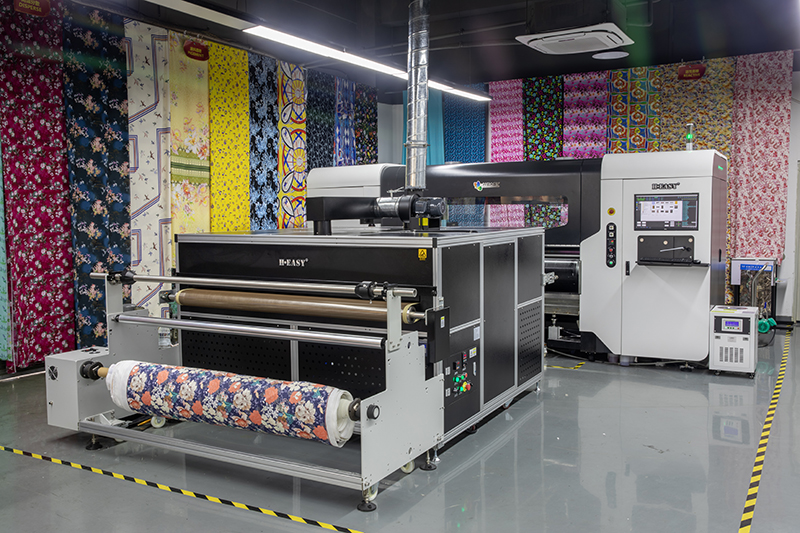
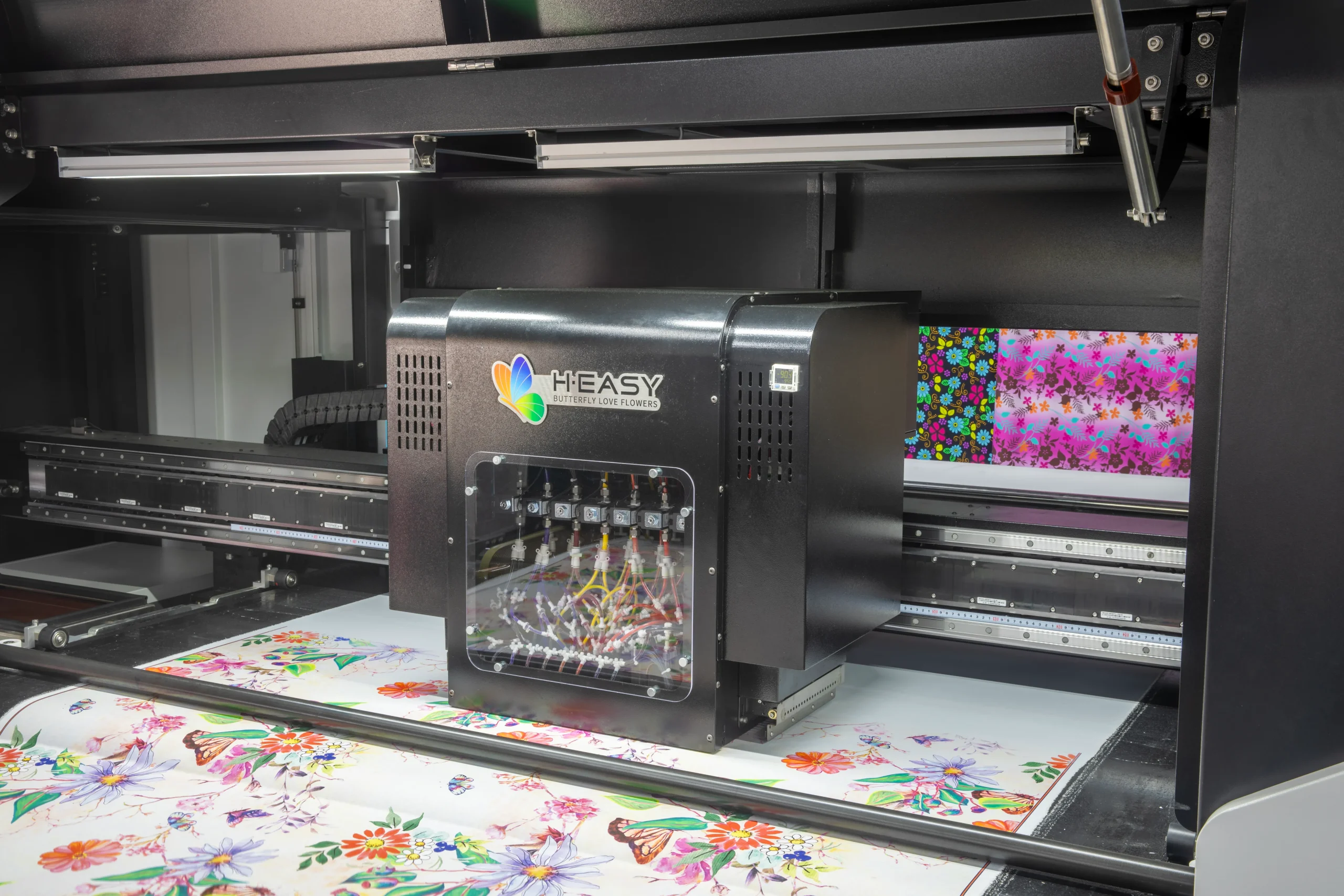
H·EASY pigment printers are designed for direct-to-fabric printing and are suitable for a wide range of textile applications.
Compared with traditional textile printing methods, a pigment printing textile machine offers a simpler workflow and broader fabric compatibility. It can be used for cotton, polyester, silk, linen, viscose, blended fabrics, and many other materials.
Key advantages include:
- Direct-to-fabric printing process
- No steaming or washing required
- Lower water consumption
- Reduced wastewater discharge
- Stable color performance
- Suitable for short runs, customization, and bulk production
H·EASY pigment textile printing machines are also built with industrial-level mechanical and electronic systems, including:
- Integrated frame structure for higher precision and stability
- 0.01 mm high-precision printhead base for improved print accuracy
- Self-developed driver boards for better compatibility and faster troubleshooting
These features make H·EASY a practical choice for factories looking for reliable digital textile printing machine solutions.
H-1808 Textile Printer – Entry-Level & Sampling Solution
The H-1808 is an entry-level textile printer designed for startups, sampling studios, and small-batch fabric printing businesses.
It is suitable for companies that are just entering the digital textile printing industry and want to test pigment printing workflows before investing in larger production lines.
Best For:
- Startups
- Sampling studios
- Small batch production
- Custom fabric printing
- New pigment printing projects
Key Features:
- Compact machine structure
- Lower initial investment
- Suitable for testing new patterns and fabrics
- Easy to operate and maintain
- Good balance between cost and production flexibility
Production Capacity:
The H-1808 can reach approximately 2,500–5,000 meters per day, depending on pass mode, fabric type, pattern coverage, and production schedule.
Recommended Use:
Choose the H-1808 if you need a cost-effective textile fabric printing machine for sampling, small orders, product development, or flexible customization.
H-1816 Digital Textile Printing Machine – Balanced Mid-Range Choice
The H-1816 is one of the most popular H·EASY models because it offers a strong balance between speed, quality, and investment cost.
For many growing textile factories, this digital textile printing machine provides enough capacity for stable daily production without requiring the highest-level industrial investment.
Best For:
- Growing fabric printing factories
- Medium-volume production
- Stable daily orders
- Fashion fabrics
- Apparel and home textile suppliers
Key Features:
- Balanced printing speed and image quality
- Mature pigment printing solution
- Multiple width options, including 1.8 m, 2.2 m, and 2.6 m
- Suitable for continuous production
- Good cost-performance ratio
Production Capacity:
The H-1816 can reach approximately 5,000–10,000 meters per day, depending on the selected configuration and production mode.
Recommended Use:
Choose the H-1816 if your business has moved beyond sampling and needs a reliable textile printing machine for regular daily production.
H-1832 Printing Textile Machine – High-Speed Industrial Production
The H-1832 is designed for high-speed industrial production. It is suitable for factories that handle bulk textile orders and require higher daily output.
With support for up to 32 printheads, this printing textile machine is built for continuous production and higher efficiency.
Best For:
- Large textile factories
- Bulk fabric order production
- High-speed pigment printing
- Continuous production lines
- Factories upgrading from mid-range machines
Key Features:
- High-speed printing performance
- Up to 700 sqm/h in 2-pass mode
- Supports 32 printheads
- Optimized for continuous operation
- Suitable for large-volume fabric printing
Production Capacity:
The H-1832 can reach approximately 10,000–20,000 meters per day, depending on print mode, fabric width, and production arrangement.
Recommended Use:
Choose the H-1832 if your main goal is maximum productivity and your factory needs a high-performance direct to textile printer for mass production.
H-2632 Textile Fabric Printing Machine – Wide Format & Maximum Output
The H-2632 is designed for wide-format and high-volume textile printing applications. It is especially suitable for home textile manufacturers and large-format fabric production.
If your business prints curtains, bedding, wide decorative fabrics, or other large-width materials, this textile fabric printing machine offers stronger production capacity and wider application coverage.
Best For:
- Home textile manufacturers
- Curtain printing factories
- Bedding fabric production
- Wide-format textile printing
- Industrial-scale fabric printing plants
Key Features:
- Wide printing format
- Highest production capacity among the four models
- Industrial-level configuration
- Suitable for large-width fabric applications
- Built for high-volume production
Production Capacity:
The H-2632 can reach approximately 30,000–60,000 meters per day, depending on configuration, fabric width, printing mode, and actual production conditions.
Recommended Use:
Choose the H-2632 if your factory needs wide-format textile printing equipment for large-volume home textile or industrial fabric production.
H-1808 vs H-1816 vs H-1832 vs H-2632: Quick Comparison
| Model | Positioning | Best For | Production Capacity | Recommended Business Type |
|---|---|---|---|---|
| H-1808 | Entry-level textile printer | Sampling and small orders | 2,500–5,000 m/day | Startups and studios |
| H-1816 | Mid-range digital textile printing machine | Stable daily production | 5,000–10,000 m/day | Growing factories |
| H-1832 | High-speed printing textile machine | Bulk production | 10,000–20,000 m/day | Large factories |
| H-2632 | Wide-format textile fabric printing machine | Home textiles and large-width fabrics | 30,000–60,000 m/day | Industrial-scale production |
Not sure which model fits your business?
1 Pass vs 2 Pass: How to Balance Speed and Quality
When choosing a textile printing machine, you also need to consider the printing pass mode.
1 Pass Printing
1 pass printing is designed for higher speed and larger output. It is suitable for simple patterns, large production orders, and projects where efficiency is the main priority.
2 Pass Printing
2 pass printing provides better image quality, smoother color transitions, and stronger ink coverage. It is more suitable for fashion fabrics, detailed patterns, and products with higher visual requirements.
Recommendation:
For fashion fabrics and detailed designs, 2 pass printing is usually recommended.
For bulk production and high-efficiency orders, 1 pass printing can help increase daily output.
Why Pigment Printing Is a Smart Choice for Textile Businesses
Pigment printing has become an increasingly popular solution in digital textile production because it simplifies the entire workflow.
Compared with traditional dye-based textile printing processes, pigment printing does not require steaming or washing. This helps reduce water consumption, labor requirements, and post-treatment complexity.
A pigment digital textile printing machine is especially suitable for factories that need flexibility across different fabrics, including cotton, polyester, silk, linen, viscose, and blended materials.
Main advantages include:
- Simple production workflow
- Lower water consumption
- Reduced wastewater discharge
- Wide fabric compatibility
- Suitable for short runs and mass production
- Lower post-processing requirements
- Faster order turnaround
For textile factories looking for a more flexible and efficient production method, pigment textile printing equipment is a practical long-term investment.
Final Recommendation: Which Textile Printing Machine Should You Choose?
The best textile printing machine depends on your production scale, fabric type, order volume, and business development stage.
If you are a startup or sampling studio, the H-1808 textile printer is a practical entry-level choice.
If you are a growing factory with stable daily orders, the H-1816 digital textile printing machine offers a strong balance of speed, quality, and cost.
If your factory focuses on bulk production and higher output, the H-1832 printing textile machine is better suited for industrial-scale productivity.
If you produce wide-format home textiles, curtains, bedding, or large-width fabrics, the H-2632 textile fabric printing machine is the best choice for maximum capacity.
Simple Selection Guide:
- Startup / Sampling: H-1808
- Growing Factory: H-1816
- Mass Production: H-1832
- Industrial Scale / Wide Format: H-2632
Choosing the right H·EASY textile printing machine can help your business improve production efficiency, reduce operating costs, and handle more fabric printing opportunities with confidence.