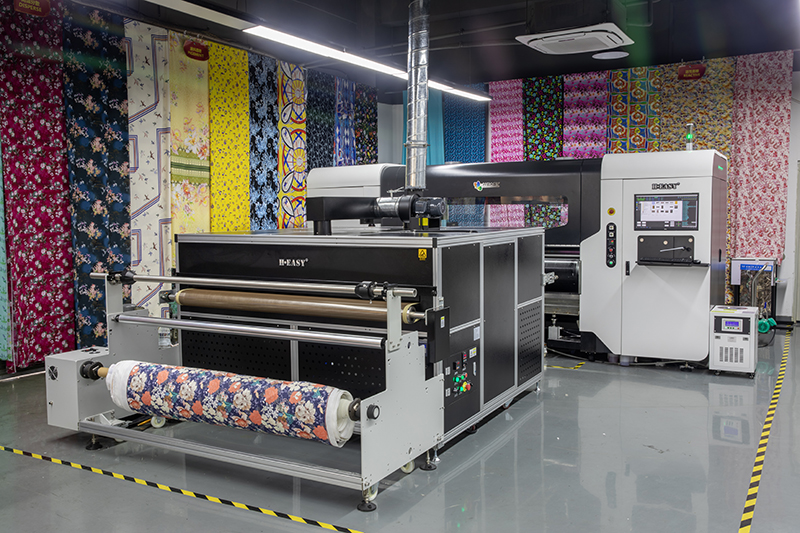
In today’s apparel, home textile, e-commerce and custom fabric markets, order structures are changing quickly. In the past, many factories mainly handled large-volume orders with fewer styles and longer delivery cycles. Today, more customers need:
small batches, multiple designs, fast sampling, quick reorders and shorter delivery times.
These are fast-turnaround orders.
For textile printing factories, fast-turnaround orders look flexible, but they are not always easy to produce. They require fast design switching, short setup time, a simple process, wider fabric compatibility, stable production and reliable delivery.
This is why pigment digital textile printers are becoming a practical solution for many factories. Compared with traditional printing and some dye-based digital printing processes, pigment digital printing offers a shorter workflow, no traditional screen-making, wider fabric adaptability and, in many standard cases, no traditional washing process.
Why Is Pigment Digital Printing Suitable for Fast-Turnaround Orders?
| Fast-Turnaround Requirement | Pigment Digital Printing Advantage |
|---|---|
| Frequent design changes | Digital files can be printed directly without screen-making |
| Small-batch orders | Lower setup pressure for sampling and test orders |
| Short delivery time | Simpler workflow reduces waiting time |
| Multiple fabric types | Suitable for cotton, linen, rayon, blends and more |
| Quick e-commerce reorders | Approved designs can be printed again quickly |
| Lower wastewater pressure | Usually no traditional washing process |
| Flexible production | Supports sampling, small batches and medium-volume orders |
The pigment process is Fabric Inspection → Pretreatment → Digital Printing → Color Fixation, which means fabric inspection, pretreatment, digital printing and fixation.
Compared with processes that require steaming and washing, this shorter workflow is more suitable for fast-paced production.
What Are Fast-Turnaround Textile Orders?
Fast-turnaround orders are not simply “small orders.” They represent a new supply chain rhythm.
They usually have these characteristics:
- smaller order quantities;
- frequent design updates;
- short sampling time;
- quick customer approval;
- fast repeat orders;
- multiple fabrics and patterns;
- tight delivery deadlines;
- higher demand for production flexibility.
Common fast-turnaround orders include:
- e-commerce apparel printing;
- small-batch home textile fabrics;
- streetwear limited editions;
- designer fabric development;
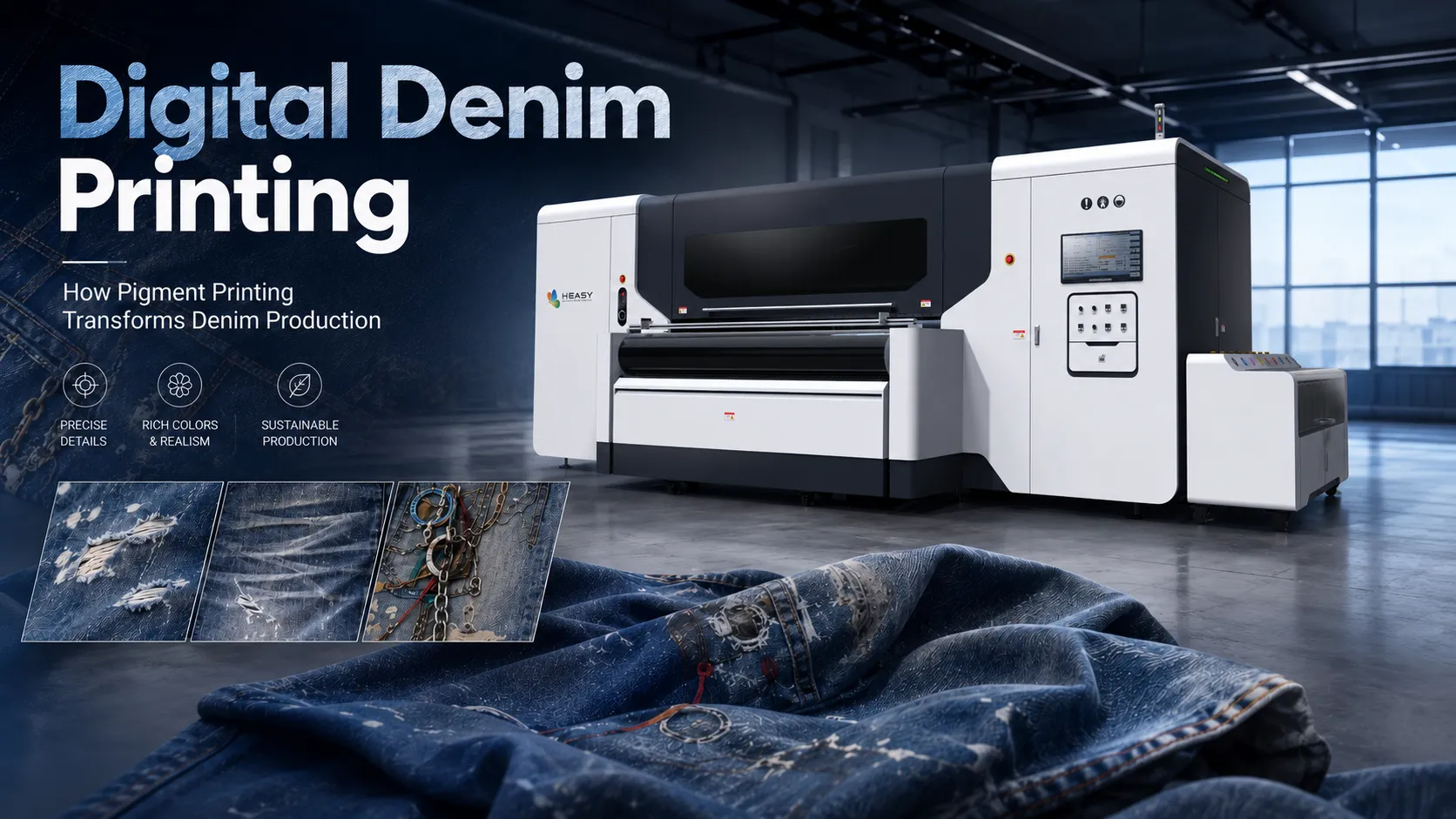
- digital denim printing;
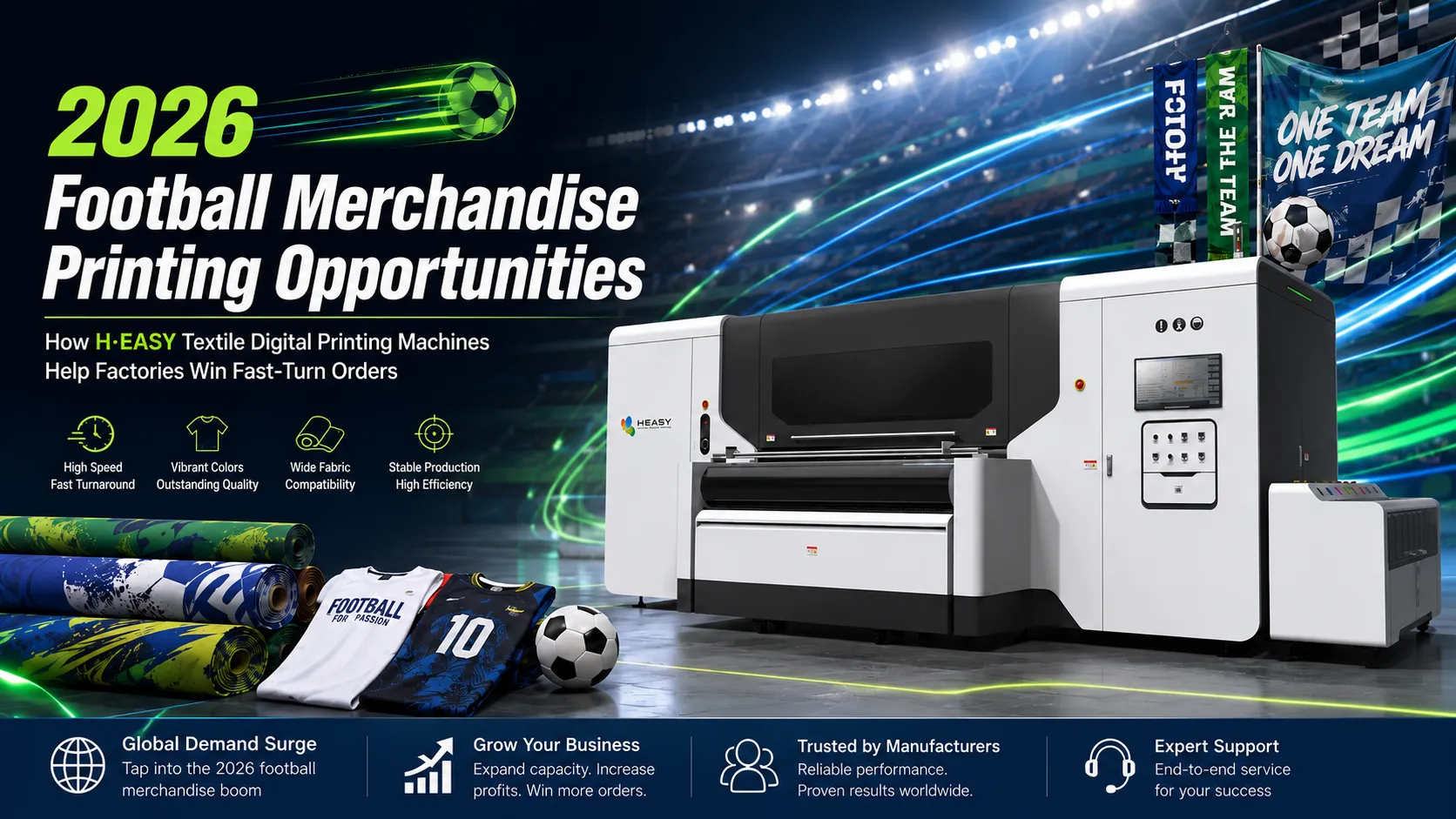
- sports event merchandise;
- customized textile products;
- cross-border e-commerce fabric orders.
The key is not only production volume. The real challenge is reaction speed.
1. No Screen-Making Means Faster Design Switching
Traditional screen printing is efficient for large repeated orders, but it becomes less flexible when designs change frequently.
Every new pattern may require screen-making, paste adjustment, trial printing and approval. For small orders of dozens or hundreds of meters, setup cost can become too high.
Pigment digital printing uses a digital workflow. After the artwork is processed by RIP software, it can be printed directly onto fabric without traditional screen-making.
This allows factories to handle:
- new sample development;
- frequent pattern changes;
- small test orders;
- quick reorders;
- multiple designs in one production batch.
For e-commerce sellers, fast fashion brands and designer labels, this flexibility is highly valuable.
2. Shorter Workflow Supports Faster Delivery
Fast-turnaround orders cannot afford long production processes.
If an order must go through sizing, printing, steaming, washing, drying and finishing, the production cycle becomes harder to compress.
Reactive, disperse and acid printing process is:
Sizing → Printing → Steaming → Washing and Finishing
Pigment printing process is:
Sizing → Printing → Fixation.
This means pigment printing has a shorter workflow and less post-processing pressure.
For fast-turnaround orders, a shorter workflow can bring direct benefits:
- faster sampling;
- more flexible scheduling;
- less waiting time in post-treatment;
- shorter production cycles;
- more small orders handled in the same period.
Of course, pigment printing still requires proper pretreatment, drying and fixation. After printing, the fabric ink should be fully dried before the next process; otherwise, unstable color yield and floating color may occur.
3. Wide Fabric Compatibility Reduces Process Switching
Fast-turnaround orders often involve more than one fabric.
One customer may need cotton. Another may need cotton-linen. A third may require rayon, blended fabric, decorative fabric or denim-style fabric.
If every fabric requires a different dye system, production management becomes more complicated.
Pigment ink is more flexible because it is less dependent on one specific fiber reaction. Cotton, silk, polyester, nylon, rayon, blended fabric, wool and linen are possible fabric applications.
This makes pigment digital printing suitable for many fast-turnaround applications:
| Fabric Type | Fast-Turnaround Application |
|---|---|
| Cotton | T-shirts, kidswear, tote bags, casualwear |
| Linen | Home décor, designer fabrics, vintage-style apparel |
| Rayon / Viscose | Dresses, shirts, womenswear |
| Cotton-polyester blends | Casualwear, e-commerce apparel, home textiles |
| Cotton-linen blends | Decorative fabric, home products, lifestyle apparel |
| White denim base fabric | Digital denim, washed and distressed effects |
| Decorative fabric | Curtains, cushions, tablecloths, small-batch home textiles |
Reactive printing has advantages on natural fibers, while pigment printing has advantages on blended fabrics as blended materials become more common in the market.
4. Better Fit for Small-Batch and Multi-Design Orders
The core of fast-turnaround production is not just “small quantity.” It is usually:
many designs, many fabrics, many batches and many customers.
For traditional printing, more designs mean more screens, more setup work, more cleaning and higher preparation cost. Pigment digital printing allows factories to switch designs through digital files, reducing the difficulty of multi-design production.
This makes it suitable for:
- sample orders under 50 meters;
- 100–500 meter small-batch orders;
- mixed-design production;
- e-commerce test styles;
- streetwear limited collections;
- digital denim patterns;
- small home textile collections;
- seasonal and event-based products.
For printing factories, the value of a pigment digital textile printer is not only that it can print. The real value is that it helps make small and mixed orders easier to schedule, produce and deliver.
5. Usually No Traditional Washing, Less Post-Processing Pressure
In many textile printing processes, washing takes time, water, labor and equipment capacity.
For fast-turnaround orders, washing can become a bottleneck. If order quantity is small and designs change frequently, repeated washing and post-processing may reduce production efficiency.
One major advantage of pigment printing is that, in many standard workflows, it usually does not require traditional washing.
Pigment ink advantage: “no need to wash, less sewage, reduce cost”.
For fast-turnaround orders, this can help:
- reduce post-treatment waiting;
- lower wastewater treatment pressure;
- shorten delivery time;
- reduce dependence on washing equipment;
- improve small-batch production efficiency.
However, if the customer requires a softer hand feel, softening or washing may still be added. A washed finish may be needed when a softer hand feel is required.
6. Ideal for E-Commerce Testing and Quick Reorders
E-commerce orders often follow this model:
small test order → sales feedback → quick reorder
This model works well with pigment digital printing.
Once the design is digitized and approved, the factory can quickly print the same artwork again. It can also adjust color, layout or pattern according to market feedback.
For example:
- a digital denim pattern is first printed in a small batch;
- a fan T-shirt is tested with dozens of pieces;
- a home textile pattern is sampled before bulk order;
- a designer collection begins with a few fabric designs;
- a cross-border e-commerce SKU is tested before restocking.
If the sample is approved, repeat production can start quickly.
7. Helps Improve Machine Utilization
Large-volume orders are important, but they are not always stable throughout the year. In slower seasons, machines may be underused if a factory only depends on large orders.
Fast-turnaround orders are usually smaller, but they may come more frequently and from more customer types. A stable pigment digital textile printer can help factories accept a wider range of orders.
The same machine may be used for:
- apparel fabrics;
- home textile fabrics;
- digital denim effects;
- blended fabrics;
- e-commerce small orders;
- brand sampling;
- event-based products.
This helps improve machine utilization and reduces dependence on one large customer or one single product category.
8. Fast-Turnaround Orders Require Stable Equipment
Although pigment digital printing is suitable for fast-turnaround orders, not every machine can handle them well.
Fast orders leave little room for downtime. If the printer has nozzle clogging, fabric skew, color difference, banding, insufficient drying or rework, the whole order may be delayed.
A reliable pigment digital textile printer for fast-turnaround orders should have:
- stable machine frame;
- high-precision printhead alignment;
- reliable ink supply system;
- stable belt feeding;
- matched pretreatment process;
- proper drying and fixation;
- mature RIP color management;
- long-time production stability;
- technical and after-sales support.
This is why factories should not only compare price and speed. They should also evaluate long-term stability and process support.
How H·EASY Pigment Digital Textile Printers Support Fast-Turnaround Orders
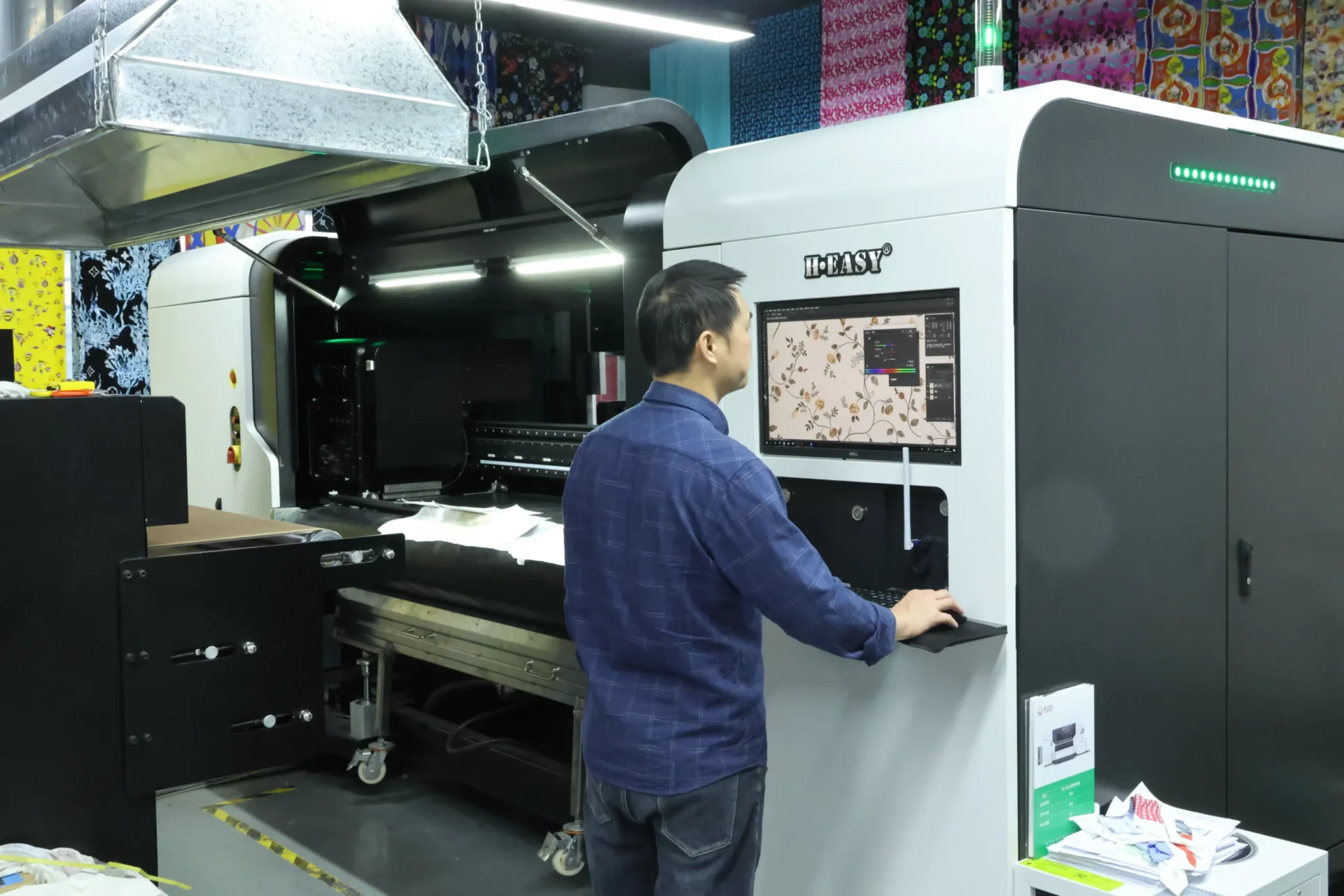
H·EASY textile digital printing machines are designed to help factories build more flexible production capability.
1. Integrated Frame for Continuous Production Stability
The machines use an integrated frame structure, helping improve mechanical accuracy, reduce precision problems caused by traditional multi-part assembly and support production stability.
For fast-turnaround orders, stable equipment helps reduce rework and downtime.
2. High-Precision Head Bottom Plate for Pattern Consistency
The H·EASY head bottom plate uses wire-cutting processing technology, with minimum cutting size reaching about 0.01mm, helping ensure printing accuracy.
For multi-design, small-batch orders, pattern clarity and repeatability are important.
3. Independently Developed Driver Board
Han Leading began developing Ricoh printhead driver boards in 2014 and has continued optimizing compatibility for Gen5, Gen5e and Gen6 printheads.
Pigment ink contains particles and requires stable matching between ink, printhead, waveform, board and ink supply system. Mature printhead-board compatibility helps reduce unstable production factors.
4. Ink Tested with the Machine
The ink has been tested with the machine to achieve good printing results.
For fast-turnaround orders, stable ink performance helps reduce clogging, color variation and cleaning downtime.
5. Pretreatment and Post-Treatment Support
Different fabrics need different pretreatment formulas. Complete formulas can be provided after customers purchase the machine, and testing support can also be provided according to fabric and effect requirements.
This is especially important for fast-turnaround orders because fabrics and designs change frequently.
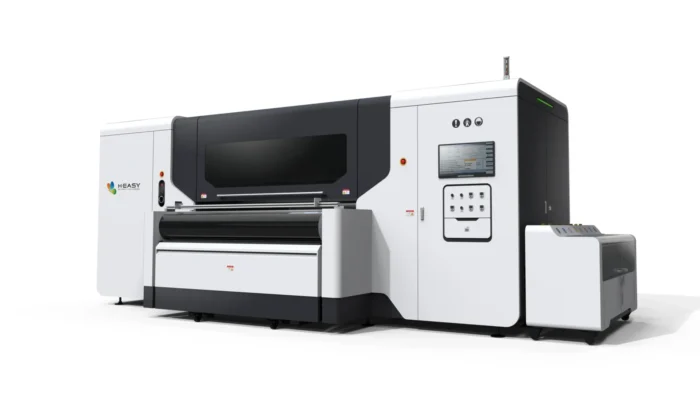
H·EASY Model Recommendations
Different order structures require different machine directions:
| Production Need | Recommended Direction |
|---|---|
| Sampling, small batches, e-commerce orders | H·EASY H1808 |
| Medium-volume apparel fabric orders | H·EASY H1816 |
| Multi-style mixed production | H·EASY H1816 |
| Higher-capacity fast-turnaround production | H·EASY H1832 |
| Home textiles or wider fabric orders | Customized solution based on width requirement |
For factories entering the fast-turnaround pigment printing market, H1808 is suitable for sampling and small-batch production. H1816 is better for stable apparel fabric and medium-volume orders. H1832 is suitable for factories with higher order volume and stronger delivery requirements.
What to Confirm Before Buying a Pigment Digital Textile Printer
Before investing in a machine, factories should confirm:
- Are the main orders apparel, home textiles, denim or blended fabrics?
- What is the typical order quantity per batch?
- Do customers frequently change designs?
- Should sampling and bulk production be done on the same machine?
- Is there a pretreatment and fixation workflow?
- What are the requirements for hand feel, fastness and color brightness?
- Is softening or washing needed?
- What is the target daily output?
- Is the production environment stable enough?
- Can the supplier provide process and after-sales support?
These questions help determine whether H1808, H1816, H1832 or a customized wider solution is more suitable.
Conclusion
Pigment digital textile printers are suitable for fast-turnaround orders because they match the key changes in today’s textile supply chain: small batches, multiple designs, fast sampling, quick reorders and flexible production.
Compared with traditional printing, pigment digital printing does not require traditional screen-making, making design switching faster. Compared with some more complex dye-based textile processes, pigment printing has a shorter workflow and usually does not require traditional washing. It also supports a wide range of fabrics, making it practical for e-commerce apparel, digital denim, home textile sampling, brand development and blended fabric orders.
However, fast-turnaround production requires more than a printer. It depends on a complete system: machine structure, printheads, ink, pretreatment, drying, fixation, color management and after-sales support.
H·EASY pigment digital textile printing solutions help factories build more flexible and stable production capability through integrated frame design, high-precision head bottom plate, independently developed driver boards, tested ink compatibility and pretreatment support.
FAQ
Because it supports direct digital file printing, fast design switching, small-batch production and a shorter workflow compared with many traditional textile printing processes.
In most standard pigment printing workflows, traditional washing is usually not required. The common process is sizing, printing and fixation. However, softening or washing may be added if a softer hand feel is required.
Pigment printing can be used on cotton, linen, rayon, blended fabrics, wool, silk, and selected polyester or nylon fabrics, but testing is recommended before bulk production.
H1808 is suitable for sampling and small batches, H1816 is suitable for medium-volume apparel fabric production, and H1832 is suitable for higher-output production.