Pigment ink can be printed on a wide range of fabrics, including cotton, linen, rayon, viscose, blended fabrics, polyester, nylon, wool and silk. Unlike reactive, acid or disperse dye printing, pigment ink does not depend mainly on a chemical reaction with one specific fiber type. Instead, pigment particles are fixed onto the fabric surface through pretreatment, binder, drying and heat fixation.
This makes pigment digital printing a flexible solution for textile factories that handle different fabric types, small-batch orders and fast-changing designs.
For H·EASY pigment ink printing solutions, common printable fabrics include cotton, silk, polyester, nylon, rayon, blended fabric, wool and linen. However, different fabrics still require different pretreatment, fixation and quality testing before bulk production.
Quick Answer: Suitable Fabrics for Pigment Ink Printing
| Fabric Type | Suitability | Common Applications |
|---|---|---|
| Cotton | Very suitable | T-shirts, casual wear, home textiles |
| Linen | Suitable | Fashion, home décor, washed-style products |
| Rayon / Viscose | Suitable with pretreatment | Dresses, shirts, lightweight garments |
| Blended Fabrics | Highly suitable | Cotton-polyester, cotton-linen, polyester-viscose |
| Polyester | Possible, but needs evaluation | Decorative fabrics, blended products |
| Nylon | Possible, but testing required | Jackets, sportswear, nylon blends |
| Wool | Possible with careful control | Scarves, coats, fashion fabrics |
| Silk | Possible, but often process-dependent | Scarves, premium fashion |
| Velvet / Fleece | Depends on fiber composition | Test before bulk production |
| Toweling Fabric | Usually not recommended | Reactive printing is often more suitable |
Why Pigment Ink Works on Many Fabrics
Traditional textile dye inks are usually fiber-specific. Reactive ink is mainly used for cotton, linen, modal, and viscose. Disperse ink is commonly used for polyester. Acid ink is often used for nylon, wool, and silk.
Pigment ink works differently. It is fixed mainly through surface adhesion and film formation. In a typical pigment process, the fabric goes through sizing, printing, and fixation, while reactive, acid, and disperse printing often require steaming, washing, and finishing.
This is why pigment ink is especially useful for factories that process many fabric types. It reduces the need to switch between multiple dye systems for different materials.
Cotton Fabric
Cotton is one of the most common fabrics for pigment digital printing. It has good absorbency, a soft hand feel, and wide market demand.
Pigment ink can be used for cotton T-shirts, casual wear, children’s clothing, homewear, tote bags, curtains, and bedding fabrics. For cotton printing, pretreatment and fixation are important. Good pretreatment helps improve color yield and pattern sharpness, while proper fixation improves rubbing fastness.
For factories producing cotton knitwear or woven cotton fabrics, pigment printing is attractive because it can simplify the workflow and reduce washing requirements.
Linen and Cotton-Linen Fabrics
Linen and cotton-linen blends are also suitable for pigment printing, especially for natural, vintage, and washed-style products.
Pigment printing on linen is often used for a washed or aged style, which is popular in some European and American markets. However, linen products may need special attention to fastness and hand feel, especially if the final product will be washed many times.
For fashion brands and home décor products that want a natural texture, pigment ink can create a unique visual effect on linen fabrics.
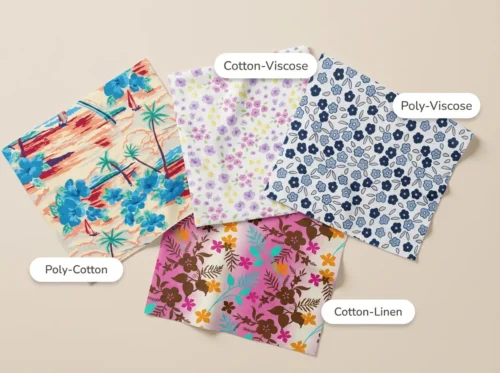
Blended Fabrics
Blended fabrics are one of the strongest application areas for pigment ink printing.
Common blended fabrics include:
- cotton-polyester;
- cotton-linen;
- polyester-viscose;
- rayon-spandex;
- wool-polyester;
- nylon-spandex;
- cotton-spandex.
Blended fabrics combine different fibers in one material. This can make dye-based printing more complicated because different fibers may require different dye chemistry.
Pigment ink is more flexible because it does not rely only on one fiber reaction. The Q&A materials also mention that pigment printing has advantages for blended fabrics, especially as blended materials become more common in the textile market.
For factories handling multi-fabric and multi-SKU orders, pigment printing can simplify production planning.
Rayon, Viscose, Modal and Tencel
Rayon, viscose, modal and Tencel are regenerated cellulose fabrics. They are widely used in dresses, shirts, women’s fashion and lightweight garments.
These fabrics can be printed with pigment ink, but pretreatment should be controlled carefully. Too much pretreatment or ink may affect softness, while too little may reduce color depth or pattern sharpness.
For lightweight rayon or viscose, sampling is important before bulk production.
Polyester Fabric
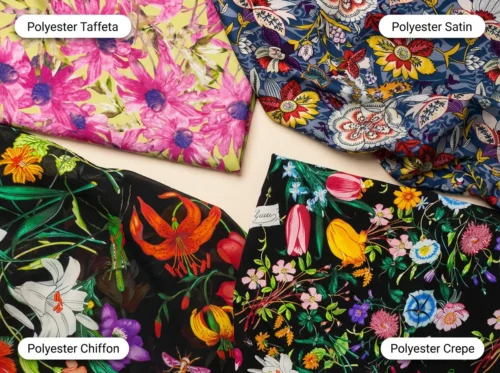
Pigment ink can be printed on polyester, but polyester is not always the most cost-effective choice.
For pure polyester, disperse printing is often more suitable, especially for sportswear and products requiring strong wash fastness and soft hand feel. The Q&A materials mention that smooth and thin polyester fabrics can be difficult for pigment printing because fastness and softness are hard to balance. If more binder is used to improve fastness, the fabric may become harder.
Pigment printing may be considered for polyester blends, decorative fabrics, short-run orders or special design effects.
Nylon and Nylon-Spandex Fabrics
Nylon is often used in jackets, yoga wear, swimwear and functional sportswear. Nylon-spandex fabrics are popular because of their elasticity and comfort.
Pigment printing can be tested on nylon and nylon blends, but acid or disperse printing may be more suitable for some applications. For nylon-spandex, factories should test stretch recovery, rubbing fastness, washing performance and hand feel after fixation.
Wool and Wool Blends
Wool and wool-blend fabrics can be printed with pigment ink, but they require careful handling.
Wool often has surface fibers, higher material value and stricter quality requirements. The Q&A materials mention that wool printing is less common because wool fibers can be hard and long, and many wool products are used for high-value coats or formalwear.
For wool-polyester blends, scarves, coats or decorative fashion fabrics, pigment printing can be tested, but bulk production should only begin after sampling.
Silk Fabric
Silk can be printed with pigment ink, but the best process depends on the final product requirement.
In many markets, reactive or acid printing is still commonly used for silk because of hand feel, brightness and traditional process acceptance. The Q&A materials mention that silk printing in the Chinese market is mostly done with reactive processes because of cost and process efficiency.
Pigment printing may still be useful for small-batch silk products, special design effects or applications where a simpler process is preferred.
Velvet, Fleece and Hairy Fabrics
For velvet, fleece and pile fabrics, the printing process depends on fiber composition.
If the velvet is silk-cotton blended, pigment printing may be considered. If it is polyester velvet, disperse direct printing is usually more suitable.
Hairy fabrics also need careful fabric feeding and printhead height control to reduce the risk of printhead rubbing.
Fabrics That Need Extra Testing
Pigment ink is flexible, but some fabrics require caution.
Very thin polyester or nylon: These fabrics may become hard if too much pretreatment or binder is used.
Toweling fabric: Towels are usually not ideal for pigment printing because they need repeated washing and rubbing. The Q&A materials suggest that toweling fabric is more suitable for reactive printing.
Dark or colored fabric: Pigment ink can be printed on colored fabric, but the base color will affect the final result. Light-colored bases are easier to control. Darker patterns in the same color family usually perform better.
How H·EASY Pigment Printers Support Different Fabrics
For textile factories, fabric compatibility is not only about ink. The printer must also provide stable feeding, accurate printhead alignment, reliable ink supply and mature process support.
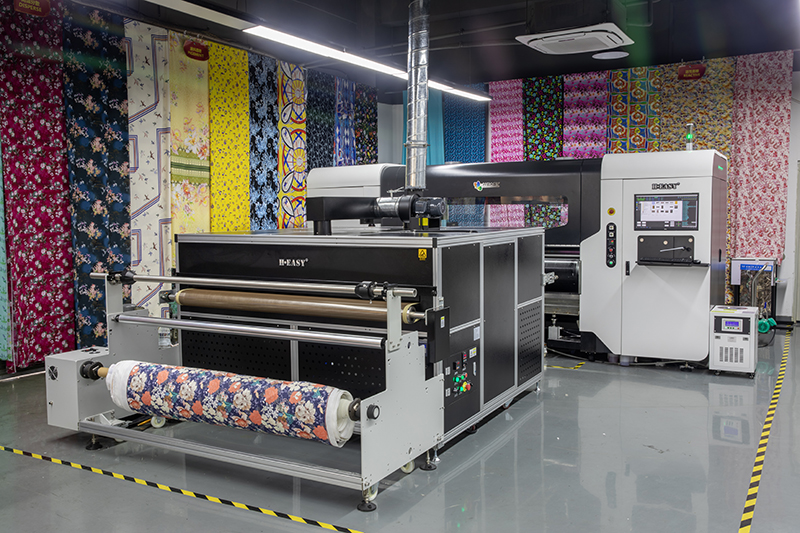
H·EASY pigment ink printers are designed for industrial direct-to-fabric production and can support cotton, linen, blended fabrics, rayon, wool blends and other textile materials.
Integrated Frame for Stable Production
H·EASY machines use an integrated frame structure to improve mechanical accuracy and long-term production stability. A stable structure helps reduce printing deviation during continuous printing.
High-Precision Printhead Bottom Plate
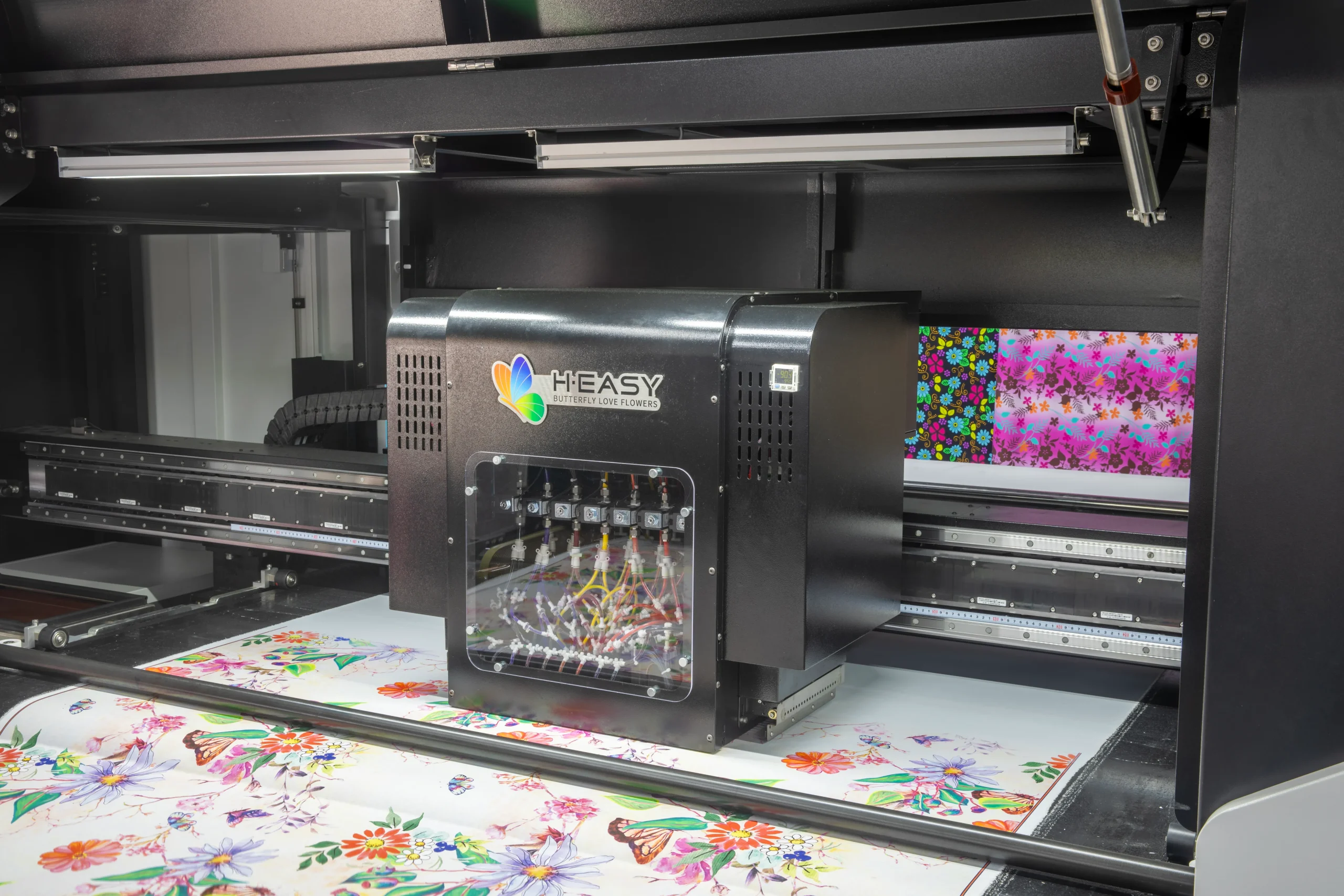
The printhead bottom plate supports accurate printhead alignment, which is important for multi-head textile printing. Better alignment helps improve pattern clarity and reduce printing defects.
Ricoh Gen5 / Gen6 Printhead Options
For pigment applications, Ricoh printheads are a mature and practical option. Ricoh Gen5 offers good penetration and mature application experience, while Ricoh Gen6 provides higher efficiency and better fineness compared with Gen5.
The Q&A materials also recommend Ricoh solutions for pigment printing when customers focus on production efficiency and mature application performance.
Matched Ink, Board and Process
H·EASY pigment printing is a complete solution, not just a machine. It combines printer structure, Ricoh printhead application, driver board adaptation, pigment ink, pretreatment, drying and fixation.
This is important because different fabrics need different process settings. Cotton, linen, blended fabrics, rayon, polyester blends and wool blends may all require different pretreatment and fixation control.
Conclusion
Pigment ink can be printed on many fabric types, including cotton, linen, rayon, viscose, blended fabrics, polyester, nylon, wool and silk. Its wide compatibility comes from its surface-fixing mechanism, which makes it less dependent on one specific fiber type.
In practical production, cotton, linen and blended fabrics are often strong applications for pigment ink printing. Polyester, nylon, silk, wool, velvet and very thin synthetic fabrics should be tested before bulk production.
For factories handling multiple fabric categories, H·EASY pigment ink printers provide a flexible direct-to-fabric printing solution. With an integrated frame, high-precision printhead alignment, Ricoh Gen5 / Gen6 printhead options and matched pigment printing process, H·EASY helps textile factories achieve stable, efficient and flexible fabric printing production.