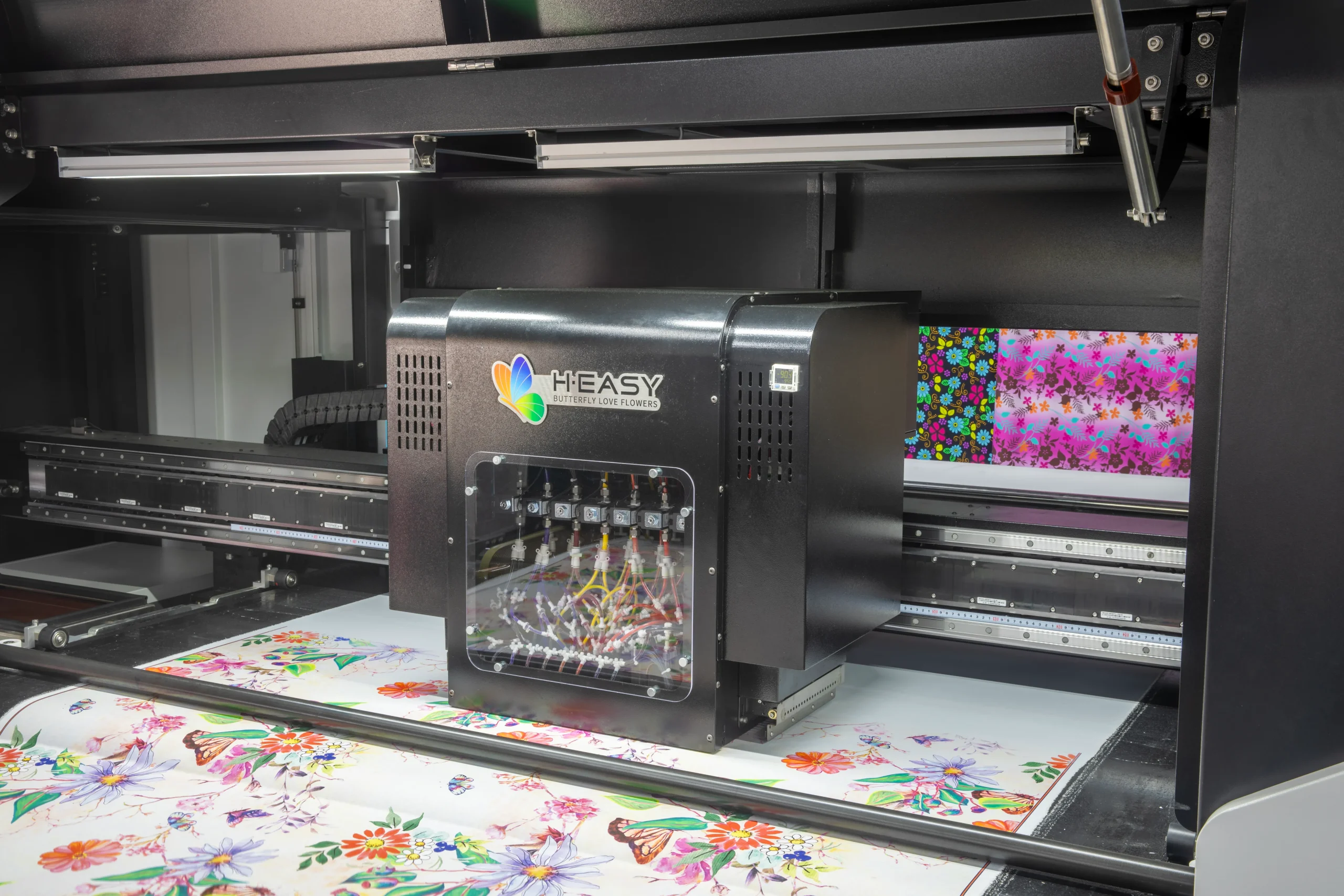
Small-batch textile production is becoming more important in the global fabric printing market. Fashion brands, garment factories, home textile suppliers, and fabric wholesalers are facing more short-run orders, faster design changes, and higher demand for flexible production.
For many factories, traditional printing methods are not always efficient for small orders. They may require screens, long setup time, complex pretreatment, steaming, washing, and larger minimum order quantities.
This is why pigment printer in textile production is gaining attention. With the right pigment inkjet printer, factories can print different designs, fabrics, and order sizes with a shorter workflow and more flexible production planning.
If your factory is looking for the best pigment ink printer for small-batch textile production, the key is not only print speed. You should also consider fabric compatibility, process simplicity, ink stability, machine structure, printhead solution, drying and fixation, and after-sales support.
Why Is Textile Pigment Printer Good for Small Batches?
Pigment ink printer is suitable for small-batch textile production because it offers:
| Advantage | Value for Small-Batch Production |
|---|---|
| Shorter workflow | Usually sizing, printing, and fixation |
| No traditional washing in most cases | Less water use and fewer post-processing steps |
| Wide fabric compatibility | Works on cotton, linen, rayon, blended fabrics, and more |
| Easy design switching | Suitable for multi-pattern and custom orders |
| Lower setup complexity | No screen-making like traditional printing |
| Faster sampling and delivery | Good for fast fashion and test orders |
| Flexible machine choices | 8-head, 16-head, and 32-head options for different production scales |
In the provided Q&A materials, pigment printing is summarized as sizing → printing → fixation, while reactive, disperse, and acid printing usually require sizing, printing, steaming, washing, and fixing.
What Is Pigment Ink Printing?
Pigment ink printing is a digital fabric printing method that uses pigment particles to create patterns on fabric. Unlike reactive, acid, or disperse inks, pigment ink does not mainly rely on a chemical reaction with one specific fiber type. Instead, pigment particles are fixed onto the fabric surface through pretreatment, binder, drying, and heat fixation.
This makes textile pigment printing suitable for many fabric categories, especially when a factory needs to process different materials in short runs.
A typical pigment process includes:
Fabric Inspection → Pretreatment / Sizing → Digital Printing → Drying → Fixation → Finishing if needed
H·EASY pigment process materials also describe the process as fabric inspection, pretreatment, digital printing, and color fixation, with some factories combining drying and fixation into one process.
1. Pigment Printing Reduces Process Complexity
Small-batch production needs speed and flexibility. If every order requires complicated process adjustment, screen preparation, long washing procedures, and heavy after-treatment, the cost per meter becomes difficult to control.
Pigment printing helps simplify this workflow.
For many pigment print fabric applications, the process can be shorter than reactive, acid, or disperse printing. In many standard cases, pigment printing does not require traditional washing, which helps reduce water use, sewage discharge, labor pressure, and production time.
The H·EASY pigment solution materials list the advantages of pigment ink as a simple process, stable color, no need to wash, less sewage, lower cost, wide fabric application, and high sunlight fastness.
For small-batch textile production, this is especially valuable because factories can move from sampling to production more quickly.
2. It Supports More Fabric Types in One Production System
Small-batch orders often involve different fabrics. One customer may need cotton fabric, another may need linen, and another may request blended fabric or rayon.
If a factory uses fiber-specific dye processes, it may need to switch between reactive ink, disperse ink, or acid ink depending on the material. This increases process complexity.
Pigment ink is more flexible. H·EASY pigment ink solution materials mention that pigment ink can be used for many fabrics, including cotton, silk, polyester, nylon, rayon, blended fabric, wool, and linen.
This wide compatibility makes pigment printing useful for factories that handle:
- cotton T-shirts and casual wear;
- linen home décor fabrics;
- rayon and viscose fashion fabrics;
- cotton-polyester blended fabrics;
- cotton-linen blended fabrics;
- sample rolls and test orders;
- multi-design fabric collections.
For a factory that wants to print many different short-run orders, choosing a flexible digital fabric printer is often more practical than building separate production lines for each ink system.
3. It Is Especially Useful for Blended Fabrics
Blended fabrics are becoming more common in apparel and home textile production. Cotton-polyester, polyester-viscose, cotton-linen, rayon-spandex, and wool-polyester fabrics all combine different fiber properties.
This can make dye-based printing more complicated because different fibers may require different dye chemistry.
Pigment ink is less dependent on one specific fiber reaction, so it is often easier to apply to mixed-fiber fabrics. The Q&A materials mention that reactive printing has advantages for natural fibers such as cotton, linen, and modal, while pigment printing has advantages for blended fabrics as blended materials become more common.
For small-batch orders, this matters because factories often cannot afford long process testing for every blended fabric order. Pigment printing provides a more flexible starting point.
4. It Makes Design Switching Easier
Traditional textile printing is efficient for large-volume repeated patterns, but it is not always ideal for frequent design changes.
Small-batch textile production often includes:
- seasonal patterns;
- limited-edition designs;
- personalized fabric orders;
- customer sample development;
- fast fashion collections;
- online brand testing;
- small MOQ fabric production.
A digital textile printer using pigment ink can switch designs directly through digital files. This means the factory can print different patterns without screen-making or long setup changes.
For brands and factories that need faster response, this is one of the biggest advantages of digital pigment printing.
5. It Helps Reduce Water and Wastewater Pressure
Many textile factories are under pressure to reduce water use and wastewater discharge. Traditional reactive, acid, or disperse printing often requires washing after steaming or fixation, which increases water consumption and wastewater treatment costs.
Pigment printing usually does not require traditional washing in standard production. The Q&A materials also highlight that pigment printing is more convenient from an environmental perspective because reactive printing includes a washing step that may face more environmental restrictions.
For small-batch production, this is important because frequent order changes can make water-intensive processes less efficient. Pigment printing allows factories to produce shorter runs with less post-processing pressure.
6. It Can Shorten Sampling and Order Approval
In small-batch textile production, sampling speed is critical. Customers often want to see color, hand feel, fabric effect, and pattern scale before confirming bulk production.
Pigment printing is useful because it supports faster sample development and easier pattern changes. A factory can adjust artwork, color profile, ink volume, and fabric selection without preparing new screens.
For small brands or fast fashion customers, this improves approval speed and helps reduce the risk of overproduction.
A stable printing on fabric machine also helps ensure that sample results can be repeated during production. This is why machine structure, printhead alignment, and ink stability are important when choosing the best pigment ink printer for small-batch orders.
7. It Is More Suitable for Multi-SKU Production
Small-batch textile production is often not just “small quantity.” It is usually many SKUs, many designs, many fabrics, and short lead times.
Pigment printing allows factories to build a more flexible production model:
| Production Need | How Pigment Printing Helps |
|---|---|
| Many patterns | Digital file switching |
| Many fabric types | Wider fabric compatibility |
| Short delivery time | Simpler workflow |
| Small MOQ | Less setup burden |
| Fast sampling | Easier design adjustment |
| Lower water pressure | Usually no washing process |
| Flexible production planning | Suitable for mixed orders |
For factories moving from traditional bulk production to flexible digital production, this is a major advantage.
8. The Right Machine Still Matters
Pigment printing is suitable for small batches, but the machine must be stable. A low-quality textile printing machine may cause nozzle clogging, banding, color difference, unstable feeding, or poor drying, which can increase waste and delay delivery.
When choosing the best pigment ink printer for small-batch production, factories should check:
- machine frame stability;
- printhead solution;
- ink compatibility;
- fabric feeding system;
- RIP software;
- drying and fixation matching;
- maintenance support;
- after-sales service;
- ability to support different fabrics.
The H·EASY pigment solution materials mention three technical advantages: integrated frame, high-precision head bottom plate, and independently developed driver board. The head bottom plate uses wire-cutting processing technology with a minimum cutting size of about 0.01mm, helping ensure printing accuracy.
For short-run production, this stability is important because every order may have different fabric, color, and pattern requirements.
9. Why H·EASY Is a Practical Choice for Small-Batch Pigment Printing
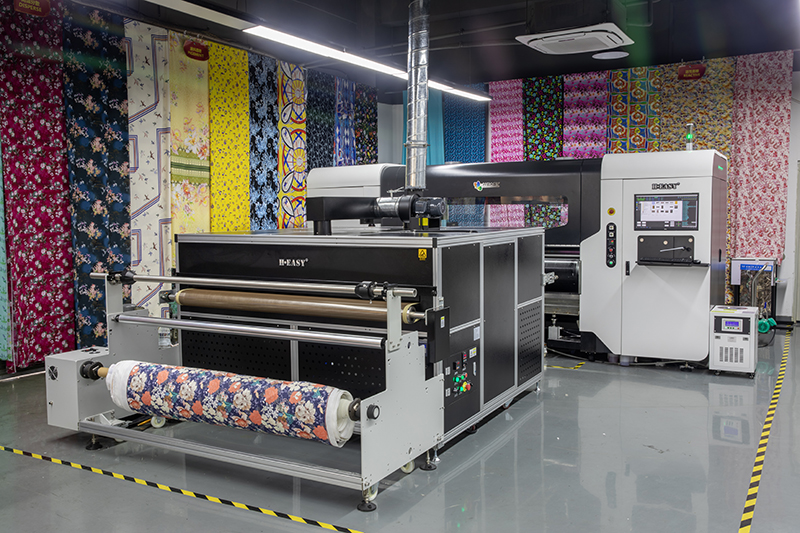
For factories looking for the best pigment ink printer for flexible textile production, H·EASY offers direct-to-fabric pigment printing solutions designed for industrial use.
H·EASY machines are suitable for factories that need:
- flexible small-batch production;
- cotton and blended fabric printing;
- pigment print fabric sampling;
- short-run garment fabric printing;
- no-wash pigment printing workflows;
- stable digital fabric production;
- medium to high production scalability.
Han Leading developed Ricoh printhead driving boards in 2014 and has continued optimizing compatibility for Gen5, Gen5e, and Gen6 printheads. The materials also state that H1808, H1816, and H1832 support G5/G6 printheads with universal board compatibility.
H·EASY H1808: Flexible Entry Choice
H·EASY H1808 is suitable for factories entering pigment digital printing or handling small-to-medium fabric orders. It is a practical pigment inkjet printer for sampling, short-run production, and flexible fabric orders.
H·EASY H1816: Balanced Small-Batch to Industrial Production
H·EASY H1816 is suitable for factories that need both flexibility and productivity. It is a balanced choice for garment fabric factories, cotton fabric suppliers, blended fabric producers, and customers who want to move from sampling to regular production.
H·EASY H1832: Higher Capacity for Growing Orders
H·EASY H1832 is suitable for factories that already have stable order volume and need stronger delivery capacity. It supports higher-output textile pigment printing while still keeping the advantages of digital production.
10. How to Choose the Best Pigment Ink Printer for Small Batches
The best machine depends on your order structure.
| Factory Situation | Recommended Direction |
|---|---|
| New to pigment printing | Start with H·EASY H1808 |
| Mainly sampling and short runs | H·EASY H1808 |
| Need flexible garment fabric production | H·EASY H1816 |
| Want balance between cost and productivity | H·EASY H1816 |
| Growing into bulk production | H·EASY H1832 |
| Many fabrics and SKUs | Choose a stable pigment inkjet printer with strong process support |
| Need larger home textile width | Consider customized wider solutions |
For most small-batch textile production, H1808 or H1816 is usually more practical than directly choosing the largest machine. The goal is to match investment, order volume, fabric type, operator skill, and production workflow.
11. Process Control Is Still Important
Even though pigment printing is simpler, it still requires process control.
A good small-batch pigment printing workflow should include:
- Fabric inspection
- Correct pretreatment or sizing
- Stable digital printing
- Complete drying
- Proper fixation
- Softening or finishing if required
- Fastness testing before bulk production
H·EASY process materials mention that fabric inspection should check pH value, absorbency, weft skew, and cleanliness. These factors can affect color fixation, color difference, spots, printing speed, and final quality.
For small orders, process mistakes are costly because there may be little extra fabric for reprinting. A stable fabric printing equipment solution helps reduce waste and improve first-pass success rate.
12. Pigment Printing Limitations to Consider
Pigment printing has many advantages for small-batch production, but it is not perfect for every fabric or every product.
Possible limitations include:
- hand feel may be harder than reactive printing;
- colors may be less bright than reactive printing in some cases;
- fastness depends heavily on pretreatment and fixation;
- very smooth or thin synthetic fabrics need testing;
- high softness requirements may need softening or washing;
- poor drying may cause floating color or unstable fixation.
The H·EASY pigment solution materials also list disadvantages such as poorer hand feel, darker color, and weaker fastness compared with some dye-based processes.
This is why sampling is essential before bulk production, especially for apparel fabrics with high hand-feel requirements.
Conclusion
Pigment ink printing is highly suitable for small-batch textile production because it supports flexible design changes, wider fabric compatibility, simpler workflow, lower washing requirements, faster sampling, and better multi-SKU production planning.
For factories looking for the best pigment ink printer, the right choice should not be based only on price or speed. A good pigment ink printer should combine stable machine structure, mature printhead application, tested ink compatibility, reliable drying and fixation, and practical process support.
H·EASY H1808, H1816, and H1832 provide different options for small-batch, medium-volume, and growing industrial production. For factories producing cotton, linen, rayon, blended fabrics, garment fabrics, and home textiles, H·EASY offers a practical digital textile printer solution for flexible and efficient pigment printing.