
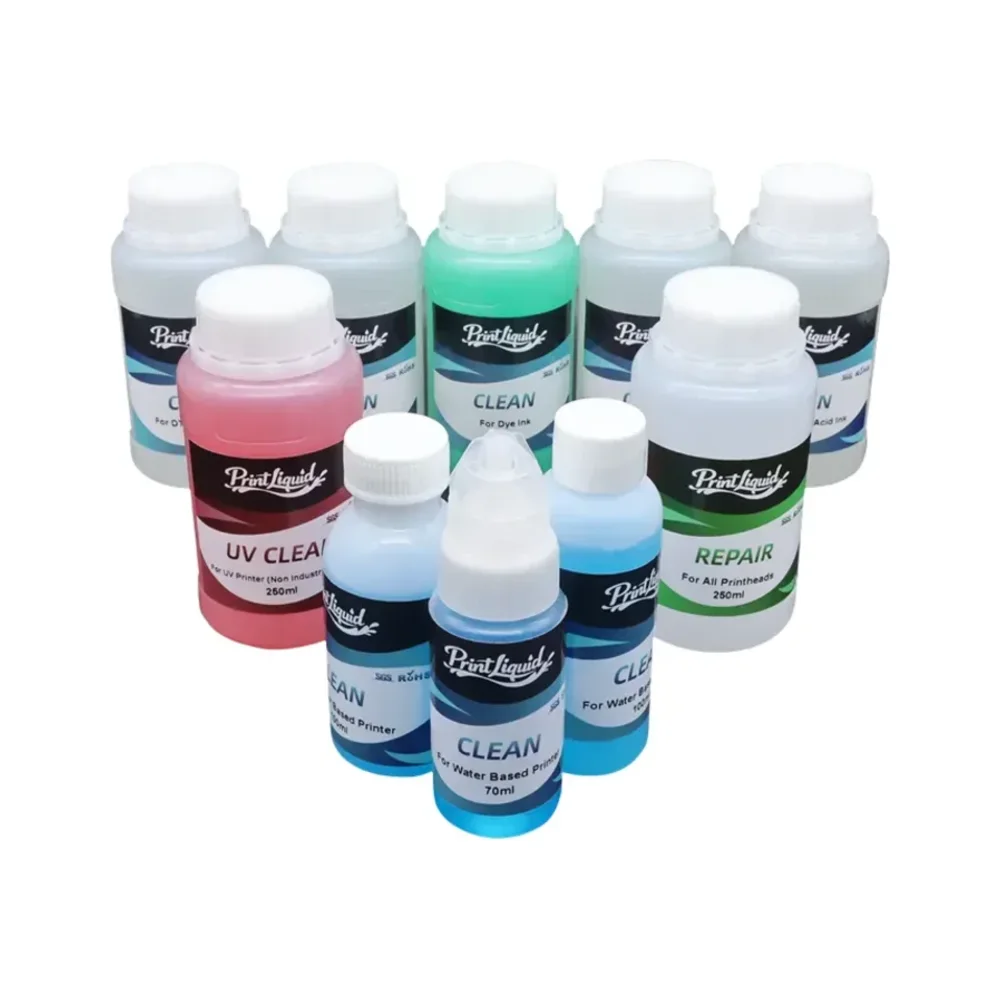
Printhead Cleaning Solution
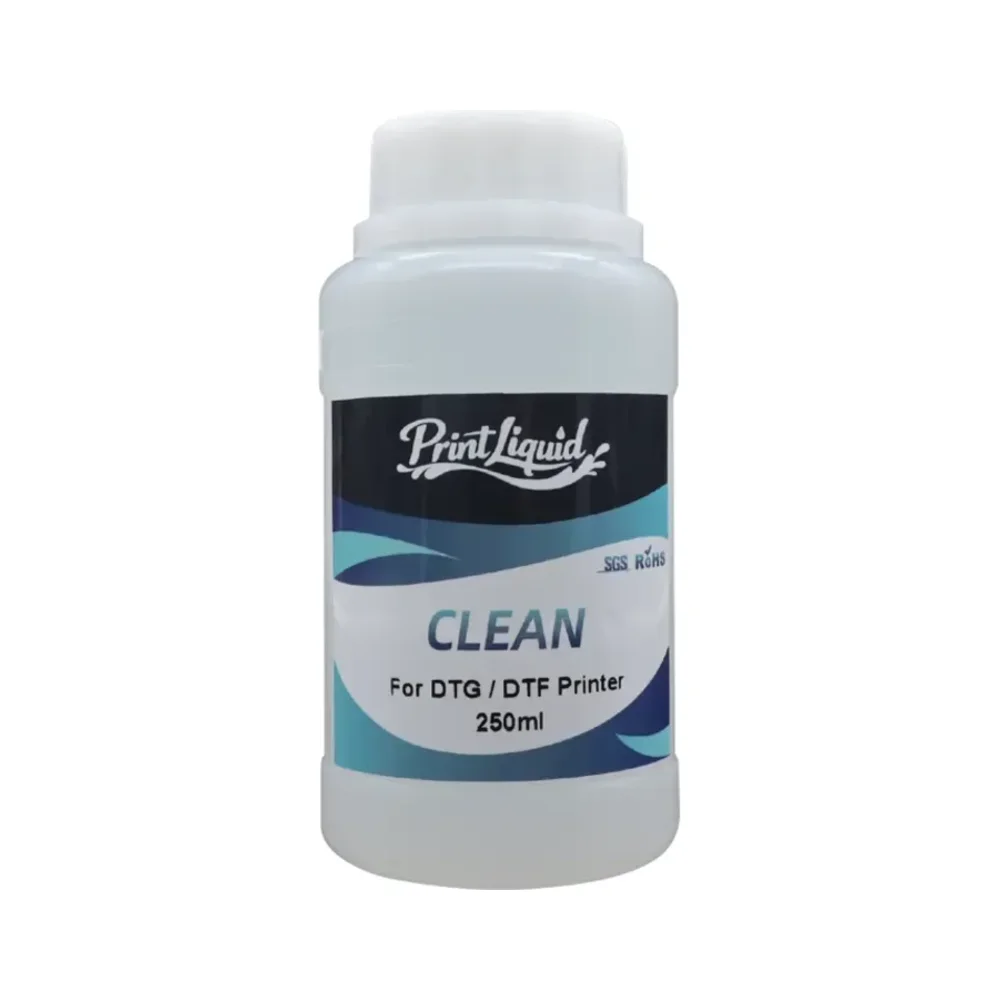
One formula per ink family, in 250 ml bottles. The wrong one gels ink inside the path.
- DTF
- DTG
- R2R reactive
- R2R disperse
- R2R pigment
- Sublimation
- UV-DTF
- Bottle size
- 250 ml
- Range
- One formula per ink family, plus a REPAIR fluid
- Samples
- Free sample available to test on your own machine
What it runs on
Compatibility with your exact machine, printhead and the ink currently in it is confirmed at quotation. Changing chemistry without a correct flush damages printheads.
Stated properties
| Product line | Print Liquid CLEAN, ink-matched solvent |
|---|---|
| Water-based formulas | DTF/DTG, reactive/acid, disperse/sublimation, pigment, dye |
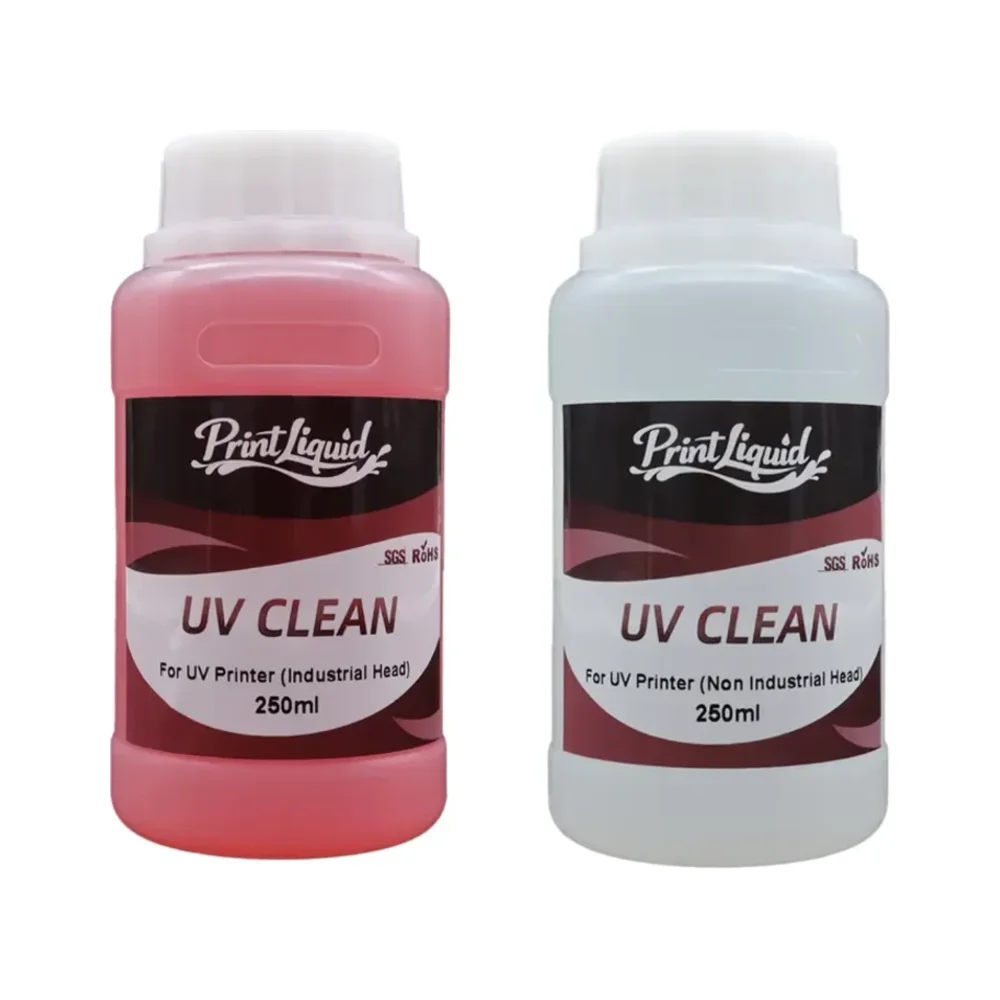
| UV formulas | UV CLEAN for industrial heads, and for non-industrial heads |
| Companion fluid | Print Liquid REPAIR, for all printheads |
| Net volume | 250 ml per bottle |
Source: Manufacturer technical data sheet - Transcribed from the published product documentation for this range, read 2026-08-11. Properties not listed above are not published, because we have no source for them.
Match the fluid to the ink, not to the machine
Cleaning solution dissolves dried and part-cured ink out of the places ink touches: the nozzle plate, the dampers, the lines and the capping station. It is the consumable that decides how long a set of printheads lasts, and the one most often bought on price.
The thing worth getting right is the pairing. Each ink family dries differently, so each has its own formula, and the wrong pairing does not simply work less well - it can gel ink inside the ink path instead of dissolving it. That failure turns a routine maintenance job into a head replacement, which is why the range is organised by chemistry rather than by machine.
| Your machine | Ink in the path | Formula |
|---|---|---|
| HY-401, HY-702 | DTF | CLEAN for DTF/DTG |
| HY-4050 | DTG | CLEAN for DTF/DTG |
| HY-Series R2R | Reactive or acid | CLEAN for reactive/acid |
| HY-Series R2R | High-temp disperse | CLEAN for disperse/sublimation |
| HY-Series R2R | Pigment | CLEAN for pigment |
| HY-1704 / HY-2004 | Sublimation | CLEAN for disperse/sublimation |
| HY-401 30UV | UV | UV CLEAN, non-industrial head |
| HY-7590 UV flatbed | UV | UV CLEAN, industrial head |
A machine that changes chemistry changes formula with it. That is the case people forget: the fluid that was correct last month is the wrong one the day after a changeover.
The changeover case is the dangerous one
Routine maintenance is the common use, and the low-stakes one. The high-stakes use is an ink changeover, when a machine moves from one chemistry to another and the path still holds the old ink. Putting new ink into an unflushed path is the fastest way to lose a set of heads, and it is entirely avoidable.
If you are planning a changeover - a roll-to-roll line moving from reactive to disperse, say - tell us both chemistries when you order, not just the one you are moving to. The fluid is quoted against the pair.
How it is used
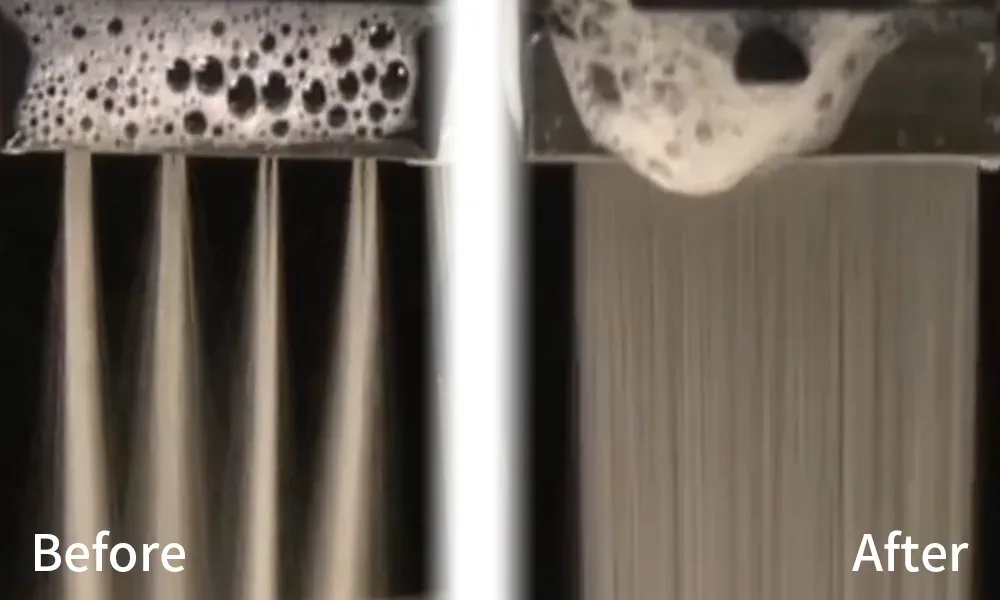
The manufacturer’s method is a syringe flush rather than a soak:
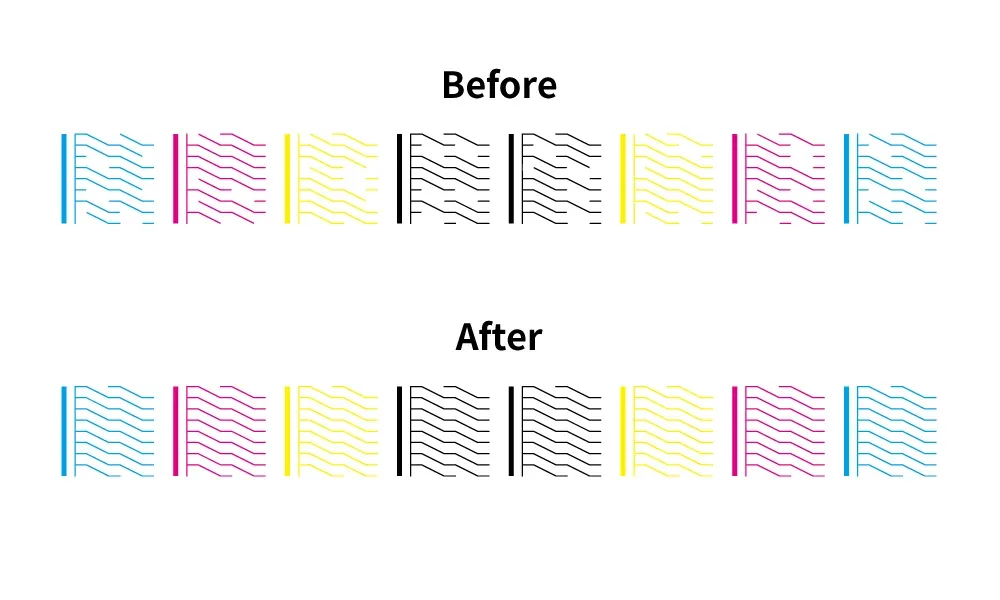
- Print a test strip and identify which channel is dropping lines.
- Remove the head and rinse each channel with distilled water until it runs clear.
- Draw 30-50 ml of the ink-matched solution and push it through the blocked channel, inlet to outlet.
- For stubborn clogs, soak and repeat until the water line at the nozzle is complete.
- Blow air through to clear all fluid, then wipe the nozzle plate with a lint-free cloth.
- Re-ink to resume, or apply protective fluid if the head will sit idle.
Maintenance beats recovery every time. A fluid used on schedule is cheap; one used to rescue a neglected nozzle plate often is not, because by then some nozzles do not come back. The DTF printer maintenance checklist sets out the daily, weekly and monthly routine that keeps this work rare.
What we can state, and what we cannot
Formula families, pack size and the flush method come from the manufacturer’s own published product documentation. Composition, dilution, soak times and shelf life are not published there and are not invented here.
The bottles carry SGS and RoHS marks and the manufacturer states the range is certified. We do not restate that as a bare fact on this page, because a mark without a certificate number, its scope and its validity date is not something a buyer can check. If your tender needs certified compliance, ask and we will send the certificate itself.
A free sample is available so the formula can be tested on your own machine before you commit. Pricing, minimum order, the safety data sheet and the dangerous-goods classification for your shipping route are confirmed at quotation.
Shipping and safety documentation
Safety data sheet
Available on request
Dangerous goods
Confirmed per shipping route at quotation
Minimum order and lead time
Quoted per destination and quantity. Tell us your machine model and monthly consumption.
Frequently asked questions
Is one cleaning fluid right for every ink?
No, and this is the mistake that costs printheads. Each ink family dries differently and needs a solvent formulated for it: DTF/DTG, reactive/acid, disperse and sublimation, pigment, dye, and UV each have their own. The wrong fluid can gel ink inside the ink path rather than dissolving it, turning a maintenance job into a head replacement.
Which formula matches my machine?
It follows the ink, not the machine. A DTF or DTG printer takes the DTF/DTG formula; a roll-to-roll printer takes the formula for the chemistry currently loaded - reactive/acid, disperse or pigment; a sublimation printer takes the disperse formula; a UV or UV-DTF printer takes UV CLEAN, in the industrial-head or non-industrial-head version. The table below maps our own machines to the right one.
How is it actually used on a clogged head?
The manufacturer's method is a syringe flush: identify the blocked channel with a test strip, remove and rinse the head with distilled water until it runs clear, then push 30-50 ml of the ink-matched solution through the channel from inlet to outlet. Severe clogs are soaked and repeated. Purge the fluid with air, wipe the nozzle plate with a lint-free cloth, then re-ink.
Can cleaning solution recover a dead printhead?
It recovers nozzles blocked by dried ink. It cannot repair electrical failure or physical damage to the nozzle plate, and soaking a head that is not designed for it causes its own damage. If a head has been dry for weeks, treat recovery as a possibility rather than a plan.
How much should we keep on the shelf?
At least two bottles, and more on pigment and white-ink lines, which clog fastest. A cleaning fluid that arrives three days after the clog has already cost you the production those three days were worth.
Tell us your machine and your monthly volume
We quote consumables against a specific machine, printhead and ink set, not from a catalogue line, because that is the only way the answer is useful.