
Textile ink routes: reactive, pigment and high-temp disperse
Three production ink routes cover the fibre spectrum: reactive for cellulosics, pigment for waterless fast-fashion, high-temp disperse for polyester.
Match the wrong route to a fabric and the cost lands in production: rejected wash-fastness batches, white fibre edges on stretched knits, or a steaming line the factory was never built for. This reference maps each fibre to its proven route so you qualify it once.
Compare the three textile ink routes
Start with fibre type, then compare fixation, water use, fastness and the finishing line already available in the factory.
| Decision factor | Reactive Ink | Pigment Ink | High-Temp Disperse |
|---|---|---|---|
| Primary Fabric | Cotton, Linen, Viscose, Silk | Cotton, Blends, Knits | Polyester, Synthetics |
| Wash Fastness | Grade 4–5 | Grade 2–3 | Grade 4–5 |
| Light Fastness | Grade 3–4 | Grade 5–6 | Grade 5–6 |
| Post-Processing | Steam + Multi-wash | Thermal Cure Only | Bake / Steam + Wash |
| Water Consumption | High | Zero | Medium |
| Machine Sharing | Yes - with Disperse | No - dedicated only | Yes - with Reactive |
| Stretch Performance | Moderate | Moderate | Excellent - zero white edge |
| Fixation Method | Steam 102–103°C | Oven 130–150°C | Bake ≥170°C or Steam 130°C |
| Typical production fit | Natural fibres · Soft hand · Repeated washing | Printed denim · Blends · Low-water short runs | Stretch polyester · Deep penetration · Performance textiles |
Three routes, fully expanded
Use the anchors to move directly to the chemistry, facility requirements, process steps and operating metrics for each route.
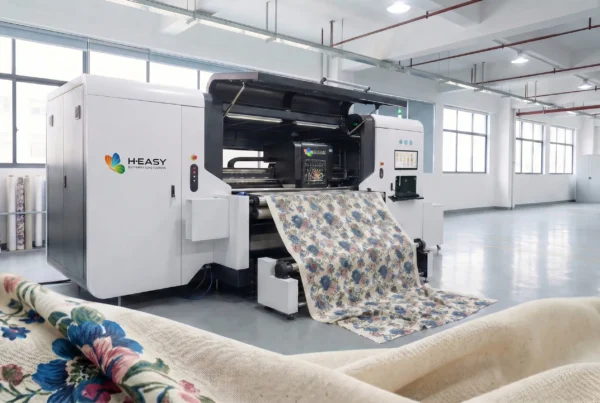
Reactive Ink
The Gold Standard for Premium Natural Fibers
Reactive dye forms a permanent covalent bond directly with cellulosic fibre hydroxyl groups. Unlike surface-adhesion methods, this bond becomes part of the fibre itself - delivering Grade 4–5 wash fastness and genuinely soft hand feel that high-end fashion and home textile export programs demand.
- Cotton
- Linen
- Viscose / Rayon
- Silk blends
- Modal
- Bamboo fibre
Wash Fastness
Covalent fiber bond withstands repeated commercial washing. Meets the wash durability requirements of European and US apparel export programs.
- Wash: Grade 4–5
- ISO 105-C06
- Light: Grade 3–4
Facility Requirements
- Industrial steam generator - continuous 102–103°C
- Wastewater treatment system (unfixed dye discharge)
- Water softener recommended for steam equipment longevity
- H·EASY provides full line-planning before delivery
The Complete Reactive Route - Step by Step
- Fabric Inspection
pH · weft slope · cleanliness
- Fabric Sizing
Pre-treatment paste application
5% solution ratio - Digital Printing
Dye deposited - not yet fixed
20–30°C · 50–65% RH - Pre-Drying
Ink fully dried before steaming
Must be 100% dry - Steaming
Covalent bond activation
102–103°C · 10–15 min - Thorough Washing
Removes all unfixed dye
Multi-stage wash required - Drying and Setting
Final finishing and softening
- Finished Fabric
Grade 4–5 wash fastness
Ultra-soft hand feel
- Print Environment: 20–30°C
- Humidity: 50–65%
- Steaming: 102–103°C / 10–15 min
- Power: 15 kW (16-head) / 30 kW (32-head)
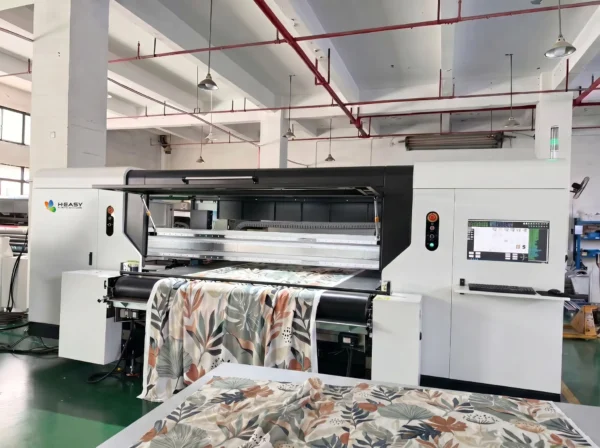
Pigment Ink
The Waterless, Fast-to-Market Solution
Pigment ink binds to the fabric surface through a binder chemistry system - completely eliminating steaming lines and large-scale washing infrastructure. Advances since 2020 have resolved historic issues of rigid hand feel and poor fastness. Pigment printing now accounts for approximately 10% of the global digital printing market, with rapid growth in Shandong, Guangdong, and international markets.
- Cotton
- Linen
- T/C Blends
- Poly-Cotton
- CVC
- Knitted fabrics
Fastness Performance
Superior light fastness makes pigment the preferred route for curtains, home furnishings, and any application where UV durability outweighs wash cycle requirements. Results depend on correct thermal curing parameters.
- Light: Grade 5–6
- No wash · No wastewater
Sustainability Advantage
- Zero process water consumption during production
- No steam boiler infrastructure required
- No wastewater treatment system needed
- Ideal for water-scarce regions and green certification programs
The Lean Pigment Route - Step by Step
- Fabric Inspection
pH · weft slope · cleanliness
- Fabric Sizing
Optional pre-treatment
Often omitted for knits - Digital Printing
Pigment + binder on surface
20–30°C · 50–65% RH - Drying
100% dry before curing
Drying room required - Thermal Fixation
Binder activates - locks pigment
130–150°C · 4–6 min - Softening Treatment
Improves hand feel if required
Optional - project-specific - Finished Fabric
No wash · No wastewater
Light: Grade 5–6
- Print Environment: 20–30°C
- Humidity: 50–65%
- Fixation: 130–150°C / 4–6 min
- Ink consumption: ~20 g/m²
- Power: 15 kW (16-head) / 30 kW (32-head)
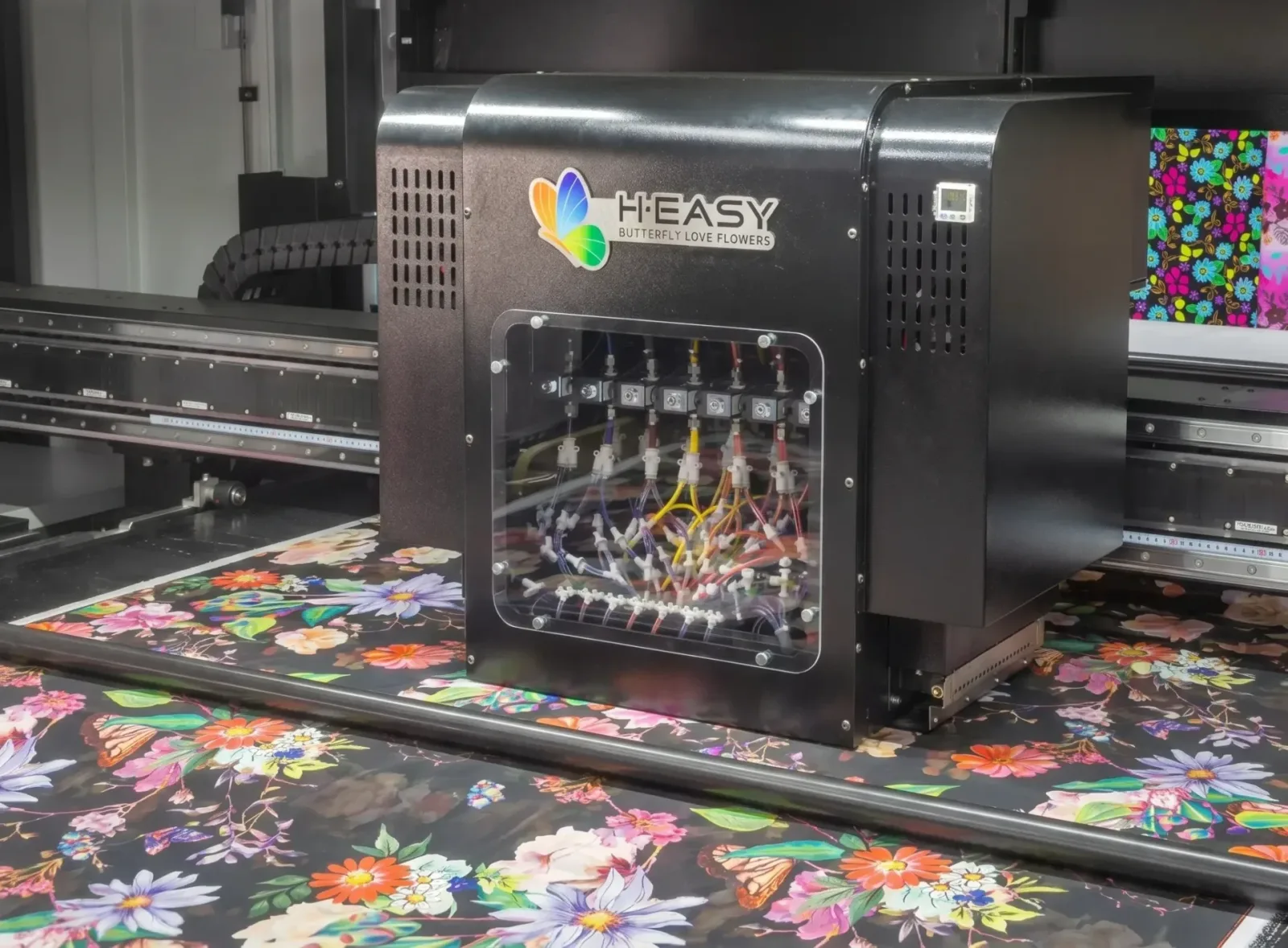
High-Temp Disperse
Industrial-Grade Polyester Penetration
High-temperature direct disperse ink is forced deep into the polyester fibre core under elevated heat - achieving penetration depth that transfer-based and low-temp methods cannot replicate. H·EASY pioneered this technology through the DragonPlay Digital project (11 units, Shaoxing), the first factory in China to achieve mass-scale high-temp disperse direct printing. For stretch fabrics and sportswear, this is the correct industrial route.
- Polyester Satin
- Performance Knits
- Polyester Chiffon
- Stretch Synthetics
- Polyester Crepe
- Chemical fibre fabrics
Performance vs. Transfer Printing
Transfer printing is faster to set up but faces fundamental limitations: re-sublimation risk under heat, limited suitability for raised-surface fabrics, and surface-only penetration that shows white fibre edges when stretched.
- Zero white edge on stretch
- Light: Grade 5–6
Fixation Method Guide
- Baking ≥170°C - Best for smooth polyester, satin, chiffon. Consistent temperature, no moisture variables.
- Steam at 130°C - Better for knit structures and thicker constructions where moisture-assisted penetration is needed.
- ≥170°C bake · OR · 130°C steam
The High-Temp Direct Disperse Route - Step by Step
- Fabric Inspection
Fibre content · surface · pH
- Fabric Sizing
Controls ink spread on polyester
Prevents surface bleeding - Digital Printing
Direct - no transfer paper
20–30°C · 50–65% RH - Pre-Drying
Fully dry before fixation
Required before baking - Baking or Steaming
High heat drives ink into fibre core
≥170°C bake · OR · 130°C steam - Washing and Final Fixing
Removes surface dye
Export-grade quality - Setting and Softening
Final finishing if required
Optional - Finished Fabric
Zero white edge on stretch
Light: Grade 5–6
- Print Environment: 20–30°C
- Humidity: 50–65%
- Baking: ≥170°C
- Steam option: 130°C
- Power: 15 kW (16-head) / 30 kW (32-head)
Continue from process to production
Use the technical guides for deeper context, then review the R2R platform when the fabric, ink and finishing route are defined.
Review the R2R fabric printer platformOnce the route is chosen, the consumables for each of them from reactive, disperse and pigment inks to film and maintenance fluids, are listed with the brand and maker of every item stated.
Which route should I choose?
Use fibre composition as the first filter, then validate fastness, hand feel and the available finishing equipment.
Cellulosic fabrics
Choose reactive for cotton, linen and viscose when soft hand feel and Grade 4–5 wash fastness lead the brief.
Review home-textile routesCotton and blends, waterless
Choose pigment when the mill needs thermal curing without steaming, washing or process wastewater.
Review waterless pigmentPolyester and stretch
Choose high-temp disperse for polyester, synthetics and stretch work where penetration and zero white edge matter.
Review sportswear routes
Ink-route questions from fabric buyers
Can one machine run reactive and high-temp disperse ink?
The comparison lists reactive and high-temp disperse as shareable configurations, but that does not mean routine ink swapping. In some cases, a machine can switch between reactive and certain disperse configurations after proper cleaning; frequent switching is not recommended, and factories often dedicate one machine per ink chemistry to avoid cross-contamination. Pigment remains a dedicated-only route.
Which textile ink route uses no process water?
Pigment is the zero-water route in the comparison. Its flow uses drying and thermal fixation at 130–150°C for 4–6 minutes, with no wash or wastewater step.
Which route is best for polyester sportswear?
High-temp disperse is the route for polyester and synthetics. It provides excellent stretch performance with zero white edge, using ≥170°C baking or 130°C steam fixation.
Which ink route is used for cotton, linen and viscose?
Reactive is the primary route for cotton, linen and viscose when Grade 4–5 wash fastness and a soft hand feel are required. Pigment is the alternative for a waterless cotton or blend workflow.
How do the three post-processing routes differ?
Reactive uses steam plus multi-stage washing. Pigment uses thermal curing only. High-temp disperse uses baking or steam followed by washing.
- 300+printers shipped worldwide
- 70+countries served
- 42+patents held
- 11 unitsDragonPlay Digital: China's first mass-scale high-temp disperse line
Match your fabric to an ink route
Send the fibre composition, width, target output and finishing capability for a route review.