Pigment vs Reactive Printing: How to Choose
There is no universal winner between pigment and reactive printing. Pigment provides a heat-fix, no-wash route for qualified cotton and blend programs; reactive uses steaming and washing for compatible cellulose programs. Choose by testing the same fabric against the required color, hand feel, fastness, throughput, utilities and total process cost.
What’s the difference between pigment and reactive printing?
| Pigment | Reactive | |
|---|---|---|
| Bond mechanism | Binder system on fabric surface | Covalent bond with cellulose (cotton) |
| Wash step | Not required | Required to remove unfixed dye |
| Starting fabric scope | Qualified cotton and blends | Compatible cellulose constructions |
| Color and hand feel | Verify on the target construction | Verify on the target construction |
| Published process route | Pretreat, print, heat-fix | Pretreat, print, steam, wash, dry |
| Water boundary | No production wash stage | Includes wash-stage water and effluent |
Is pigment or reactive printing more efficient?
Pigment’s workflow is structurally shorter than reactive:
- No steaming chamber
- No multi-stage washing line
- No final drying after wash
- No finish treatment after wash
Removing stages changes floor space, equipment, labor and handling requirements. Quantify those differences in the proposed line. See pigment textile printing process for the step-by-step pigment workflow.
Is pigment or reactive printing cheaper?
Do not compare the ink price alone. Compare equivalent saleable output:
| Cost line | Include in both route models |
|---|---|
| Ink and pretreatment | Measured use × current supplier price |
| Water and treatment | Every applicable pretreat, wash, cleaning and wastewater stage |
| Energy | Drying, steaming, washing and fixation loads that apply |
| Labor and equipment | All stages, maintenance and occupied floor space |
| Yield | Setup waste, defects and rework per accepted m² |
There is no responsible universal per-m² figure without a defined fabric, coverage, production volume and local utility cost. For a useful comparison, calculate ink, pretreatment, energy, labor, water, wastewater treatment and equipment depreciation for the same job. The result can differ by mill because existing equipment, utility tariffs, labor, treatment capacity and utilization are local inputs.
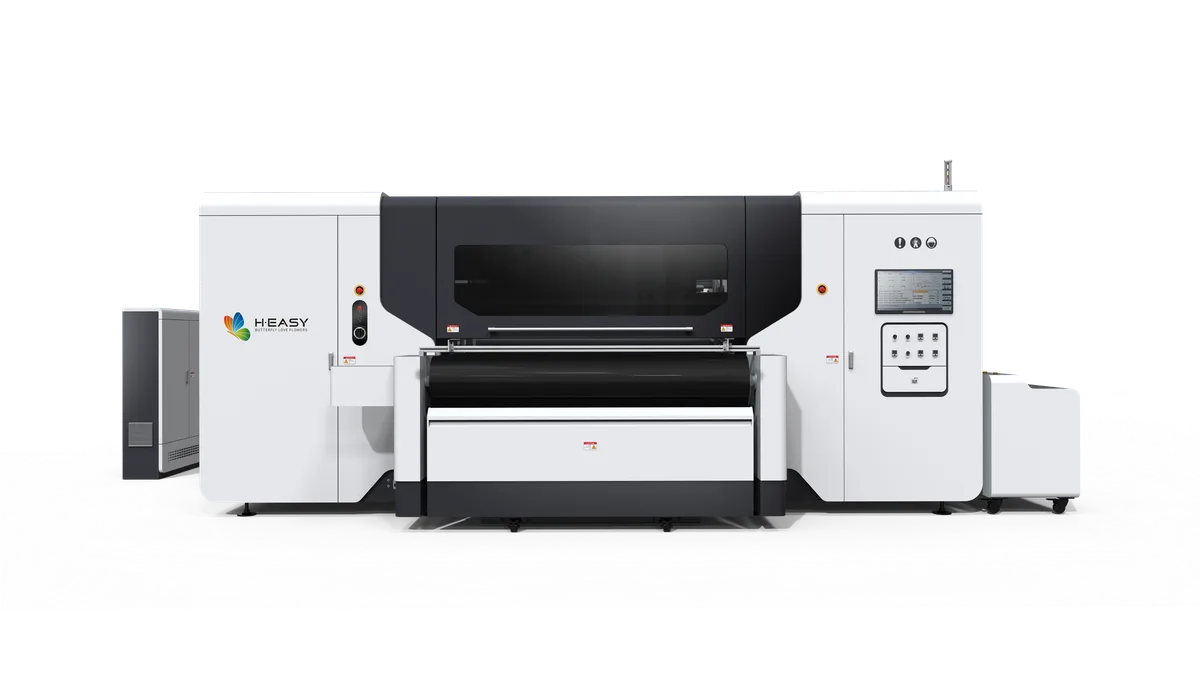
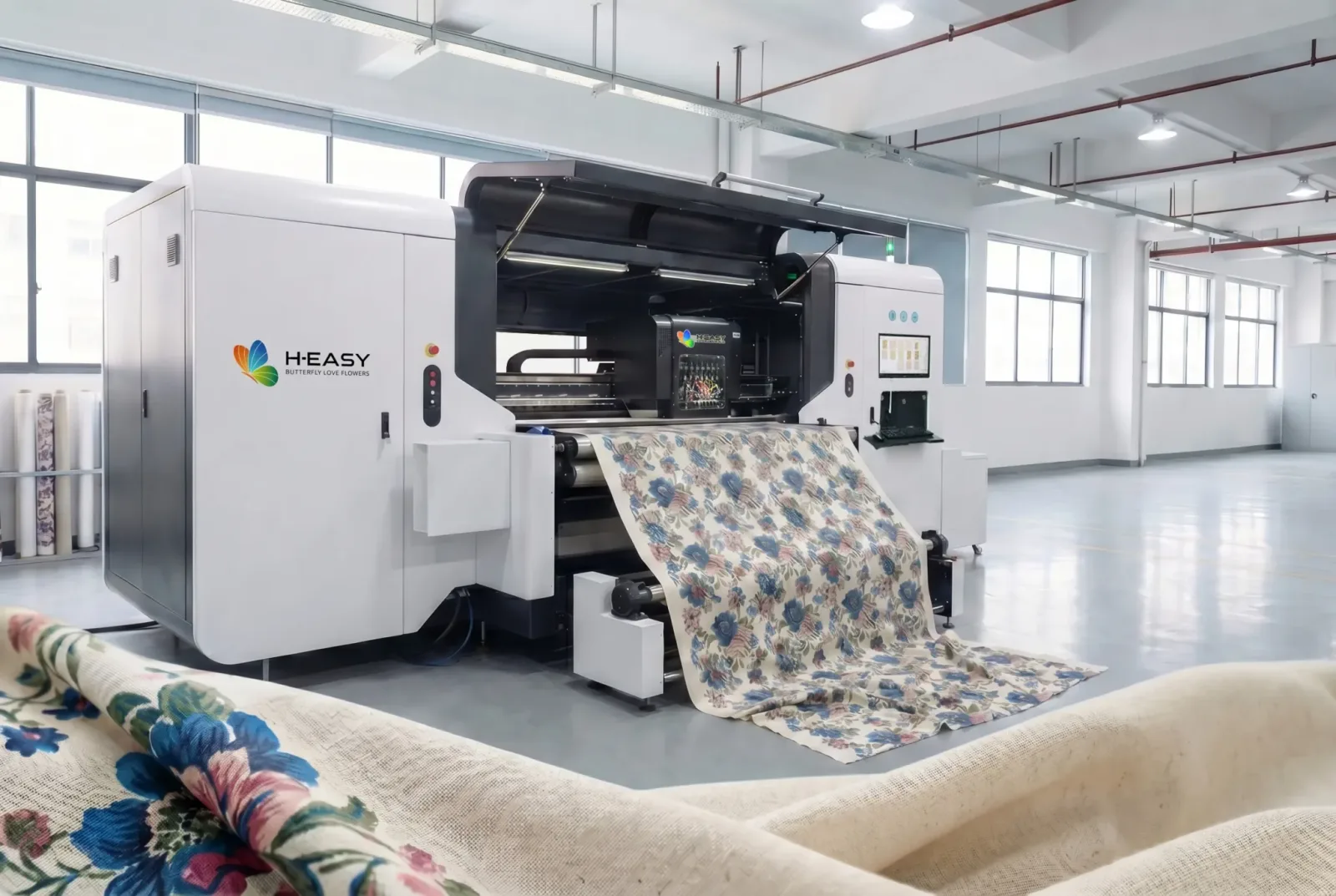
The HY-Series is available for pigment and reactive production routes. Machine selection is only one part of the line: qualify the ink, fabric, pretreatment, fixation and finishing plan against the buyer’s acceptance standard. See how production acceptance is documented before quotation.
Which is more sustainable: pigment or reactive?
Compare sustainability at the complete-line boundary. The pigment route has no production wash stage, while the reactive route includes steaming, washing and drying. A site assessment should still count pigment pretreatment and cleaning, the actual energy source, wastewater treatment, chemistry documentation and saleable yield. Do not convert a shorter route into a universal water, carbon or compliance percentage without measured site data.
Application scenarios
| Application | Route to qualify first |
|---|---|
| Cotton with an established steam-and-wash line | Reactive |
| Cotton or blends where a no-wash route is required | Pigment |
| Premium silk / wool fashion | Acid or another fabric-qualified route |
| Polyester sportswear or soft signage | Disperse or sublimation |
| Mixed-fibre home textiles | Pigment or a fibre-qualified alternative |
For matching fabric to ink choice, see how to choose the right fabric printing process.
Limitations and improvements
Qualification should compare at least:
- Color - approved target, gamut, dark tones and repeatability
- Hand feel - before and after the complete fixation or wash route
- Fastness - the buyer’s required wash, rub and light test methods
- Production - throughput, waste, maintenance and changeover constraints
- Utilities - energy, water, wastewater and floor-space requirements
Equipment
For pigment textile printing (and reactive, and disperse, and acid) at industrial scale, see the HY-Series R2R printers - 1.8–2.6 m Ricoh Gen6 platforms available for four ink-workflow configurations. Confirm the intended chemistry and finishing equipment before quotation; family-level compatibility is not a promise of routine ink switching on one installed machine.
Conclusion
Choose pigment when the tested no-wash route best meets the job and factory constraints. Choose reactive when the tested cellulose route and available steam-and-wash line produce the required result. The defensible decision is a documented production sample and complete-line cost comparison, not a market prediction.
Comparing beyond these two ink chemistries? Compare all textile printing technologies by substrate and workflow.