How to Choose the Right Fabric Printing Process for Your Textile Material
The shortest version: match the ink chemistry to the dominant fibre. Reactive for cotton-class. Disperse for polyester. Acid for silk, wool and nylon. Pigment is a route to qualify for blends or when workflow simplicity matters more than fibre-specific optimization. This guide walks each match.
The fibre → ink mapping
| Fabric | Primary process | Why |
|---|---|---|
| Cotton, linen, rayon, viscose | Reactive | Covalent bond with cellulose → route for deep color and soft hand |
| Polyester | Disperse (sublimation) | Dye diffuses into polyester → durable, no-feel color |
| Silk, wool | Acid | Ionic bond with protein fibre → bright color, good hand |
| Nylon | Acid | Ionic attraction to protonated amino end groups in polyamide |
| Blends | Pigment | Surface binder → works on any fibre mix |
| Mixed-fabric production | Pigment | One ink, one workflow, multiple fabric types |
Cotton-class fibres (cotton, linen, rayon, viscose)
Primary choice: Reactive printing
Reactive dye forms a covalent bond with the hydroxyl groups in cellulose. The bond is permanent at the molecular level - the dye becomes part of the fibre. This delivers:
- High color saturation
- Soft hand (no surface coating)
- Wash fastness that must be verified against the required test method
The trade-off: reactive printing requires the full wash-and-steam workflow (sizing, print, steam, wash, dry, fix, finish). That’s expensive in water, energy and labor.
Alternative: Pigment printing - a shorter workflow and broader fabric flexibility. Compare color depth, hand and fastness on the target construction.
Polyester and synthetic fabrics
Primary choice: Disperse printing (sublimation)
Disperse dye sublimates under heat, enters the polymer and diffuses through the amorphous regions inside polyester fibres. The result has no surface coating; wash fastness and outdoor durability still depend on the dye, process and end-use test.
Disperse printing is the standard for:
- Sportswear and swimwear (polyester / polyester-spandex)
- Soft signage (polyester banners)
- Polymer-coated rigid substrates (mugs, phone cases, panels)
Disperse only works on polyester (or polyester-coated substrates). It washes out of cotton.
Silk, wool, and selected nylon
Primary choice: Acid printing
Acid dye forms ionic bonds with protein fibres (silk, wool) and with protonated amino end groups in polyamide fibres such as nylon. Acid printing can give bright colors with good hand; qualify fastness and finishing for the specific fibre and end use.
Blended fabrics
Primary choice: Pigment printing
Blends create a problem for fibre-specific inks. A 50/50 cotton-polyester blend means:
- Reactive only bonds to the cotton side → washes out from polyester
- Disperse only bonds to the polyester side → washes out from cotton
- Acid doesn’t bond to either of these fibres
Pigment ink addresses this by bonding to the fabric surface via a binder system, not via fibre-specific dye chemistry. A single qualified route can cover constructions such as:
- Cotton-polyester
- Polyester-viscose
- Cotton-linen
- Cotton-nylon
- Knit blends
- Wool blends
See why pigment ink works on blended fabrics for the mechanism in detail.
When to use pigment even on pure fibres
Pigment isn’t only for blends. Choose pigment over the fibre-specific options when:
- Workflow simplicity matters - no wash, fewer steps, lower defect rate
- No-wash production is required - environmental compliance, tight water budgets
- Mixed-fabric daily output - one workflow, many fabrics
- Fast-fashion / small-batch / high-SKU turnaround
- Cost-per-m² is the constraint - compare the complete pigment and fibre-specific routes for the same approved output
See pigment vs reactive - which is the future for the market direction.
Equipment that handles all four processes
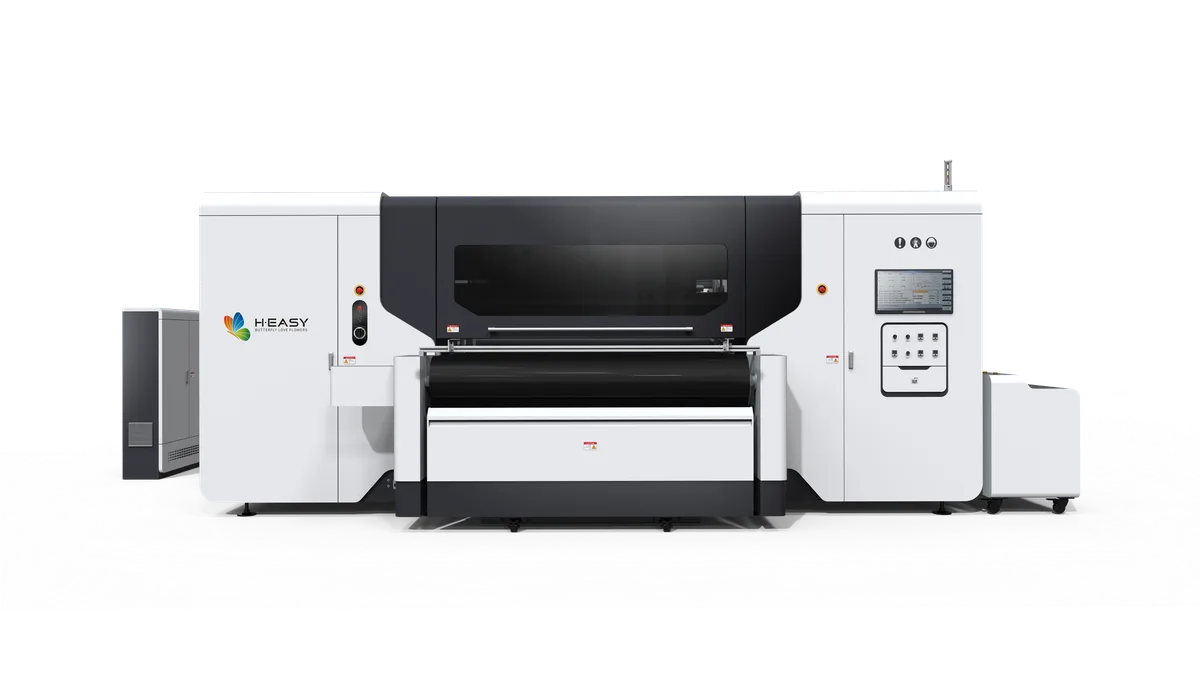
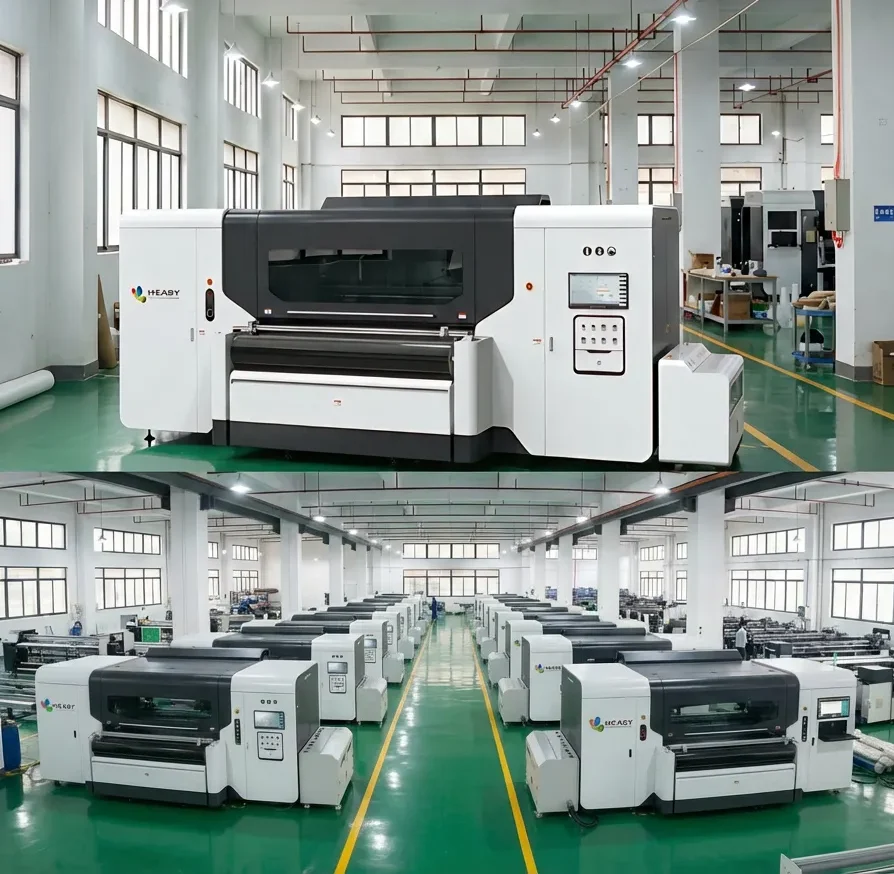
The HY-Series R2R printers run reactive, disperse, acid AND pigment workflows on the same machine class. A factory dedicating machines to ink chemistry (one machine per ink to avoid cross-contamination during cleaning) can cover the full fabric range without buying purpose-built single-ink machines.