How H·EASY Digital Textile Printing Machines Support Factory Transformation
Introduction: Traditional Printing Factories Are Standing at a Turning Point
Many traditional textile printing factories are facing the same question: production capacity still exists, customers still exist, and the team still has years of printing experience, but the original growth model is becoming narrower.
In the past, rotary screen printing, flat screen printing, and other traditional processes were built around large-volume orders, fewer designs, and longer production cycles. Today, apparel brands, e-commerce sellers, designer labels, and customized textile buyers are asking for smaller batches, more designs, faster sampling, and quicker reorders.
For these factories, the question is no longer simply whether they should move into digital printing. The real question is how to transform, where to start, and what kind of digital textile printing machine can reduce the risk of transition.
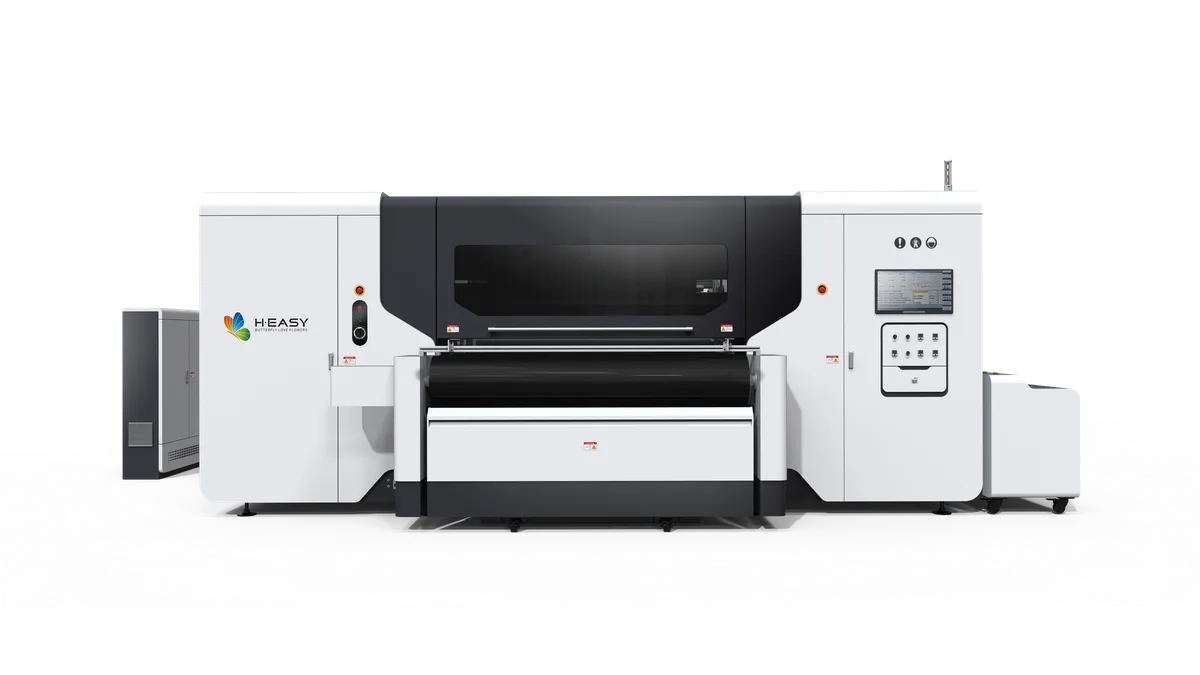
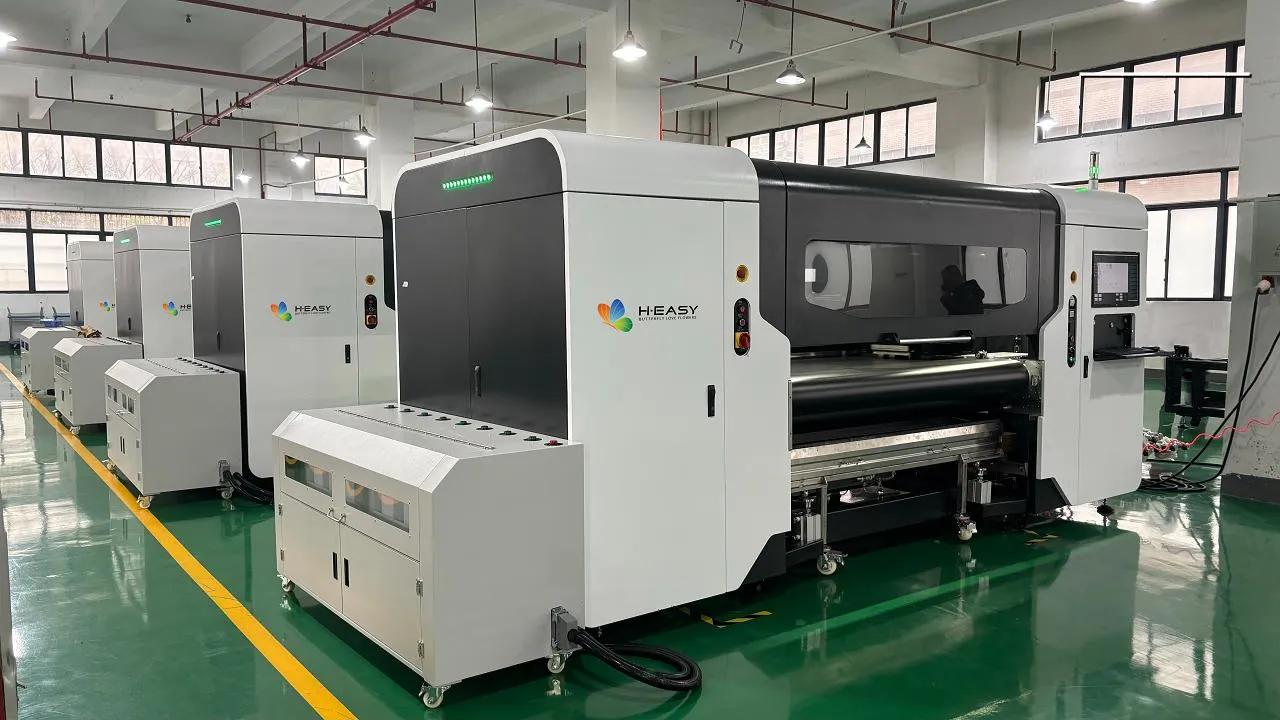
H·EASY digital textile printing machines help traditional printing factories build flexible digital capacity alongside existing production lines, allowing them to handle small-batch, multi-design, and fast-response orders without immediately abandoning traditional large-volume production.
Quick Answer: How Does H·EASY Help Traditional Printing Factories Transform?
| Transformation Pain Point | How H·EASY Helps |
|---|---|
| Traditional bulk orders are becoming harder to maintain | Build flexible digital capacity for small-batch, multi-design, and fast-response orders. |
| Factories are unsure which digital route to choose | Recommend equipment direction according to fabric type, order structure, and application market. |
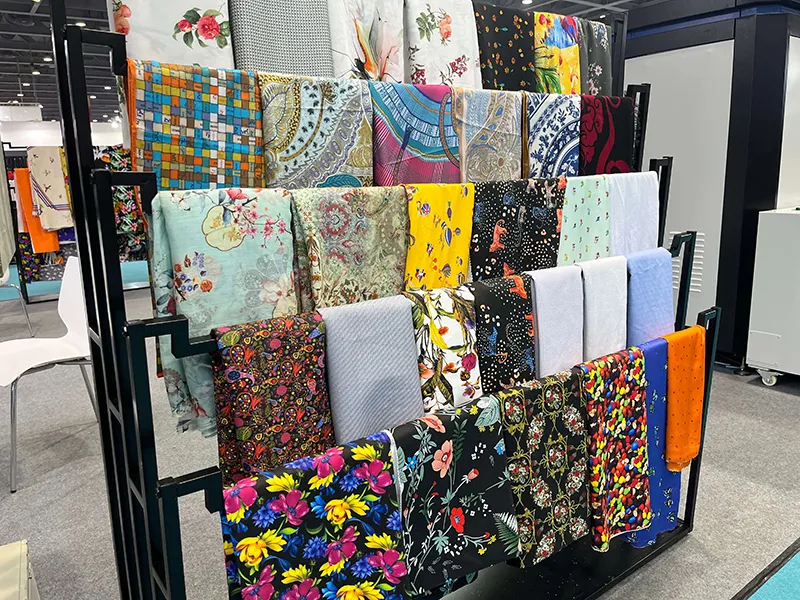
| Concern about buying a machine without enough suitable orders | Match digital printing applications such as apparel, home textiles, digital denim, baby textiles, and customized fabrics. |
| Concern about unstable production after installation | Provide support around ink compatibility, pretreatment, drying, fixation, color management, and operation training. |
| Concern about nozzle clogging and maintenance cost | Use stable machine structure, matched ink systems, controlled ink supply, and maintenance guidance to reduce production risk. |
| Concern about replacing traditional lines too quickly | Support a hybrid model: traditional printing for stable bulk orders, digital printing for flexible and high-mix orders. |
1. The Real Challenge: Capacity Remains, but the Order Structure Has Changed
Many traditional printing factories are not failing because they have no production ability. Some factories can reduce the number of lines but still maintain output through night shifts, experienced operators, and efficient production scheduling. The deeper issue is that the market is changing faster than traditional production logic.
Traditional printing remains competitive for:
- large-volume orders;
- fixed patterns;
- longer production cycles;
- repeat orders;
- stable, low-unit-cost production.
However, more customers now need:
- dozens or hundreds of meters per order;
- multiple designs at the same time;
- sample first, bulk order later;
- quick reorders after online sales;
- fast design changes;
- low-inventory production.
In this environment, screen-making, paste preparation, color adjustment, washing, and changeover time become expensive when the order is small. Digital printing does not replace every traditional process, but it fills the gap where traditional printing is less flexible.
2. Transitioning to Digital Printing Is Not Only About Buying a Machine
Many traditional factories entering digital textile printing first ask, “Which machine should we buy?” This is important, but it is not the first question. The first question should be: “What fabrics and orders do we want to serve?”
Before choosing a machine, factories should clarify:
- Are the main fabrics polyester, cotton, linen, rayon, nylon, blends, or home textile fabrics?
- Are customers mainly placing bulk orders or small-batch fast-response orders?
- Does the factory already have pretreatment, drying, fixation, steaming, washing, or finishing equipment?
- Will the factory produce apparel, digital denim, baby textiles, sportswear, home textiles, or customized fabrics?
- Can existing operators learn digital printing workflow and daily maintenance?
- Will the supplier support ink, printhead, pretreatment, color management, and after-sales training?
Digital textile printing is a complete production system: machine, printhead, ink, RIP software, pretreatment, drying, fixation, finishing, color management, and service support must work together.
3. Choosing the Right Digital Printing Route for Existing Customers
A successful transition starts with matching the digital process to the factory’s existing customer base and fabric categories. The right choice is not always the biggest machine or the lowest-price machine. It is the machine and process combination that fits the factory’s real orders.
| Customer Order Type | Suggested Digital Printing Direction |
|---|---|
| Polyester sportswear, flags, and event fabrics | Disperse or sublimation-related digital printing solutions, depending on fabric and fastness requirements. |
| Cotton, linen, rayon, and other natural fibers | Reactive or compatible direct-to-fabric printing processes, depending on the quality requirement and finishing workflow. |
| Blended fabrics, e-commerce apparel, small-batch multi-design orders | Pigment or other direct-to-fabric digital printing solutions, depending on hand feel and fastness testing. |
| Digital denim and distressed visual effects | Digital direct printing for white or light denim base fabrics, combined with suitable pretreatment and finishing tests. |
| Home textile decorative fabrics | Choose the process according to fabric type, width, color requirement, and bulk consistency target. |
| Baby and children’s textiles | Focus on hand feel, washing performance, rubbing fastness, printhead protection, and process stability. |
4. Five Ways H·EASY Digital Textile Printing Machines Support Transformation Customers
4.1 Build Flexible Capacity Without Removing Traditional Strengths
Traditional printing factories do not need to replace all existing lines at once. A more practical path is to build a digital printing module beside the traditional production system.
In this model:
- traditional printing continues to handle stable bulk orders;
- digital printing handles sampling, small batches, multi-design orders, and fast reorders;
- the factory expands order capability without losing its traditional production advantages.
This hybrid model helps factories serve both large-volume customers and flexible, high-mix customers.
4.2 Reduce Trial-and-Error in New Processes
The most common transformation risk is not that the machine cannot print. It is that the process cannot run consistently. Factories may face color variation, unstable pretreatment, poor fixation, printhead issues, rework, or unclear order pricing.
H·EASY supports customers with process guidance, including ink compatibility, pretreatment direction, drying and fixation suggestions, RIP color management, and machine maintenance training. This reduces the time and material waste that often appear when factories explore digital printing alone.
4.3 Improve Long-Term Production Stability
For transformation customers, stable production is more important than a perfect sample. A factory needs repeatable quality, consistent feeding, low downtime, and predictable maintenance.
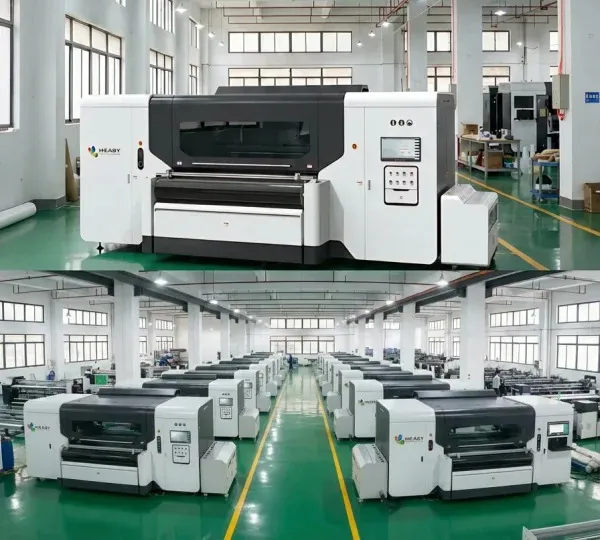
H·EASY digital textile printing machines are built around stable structure, precise printhead installation, and controlled ink delivery. Stable machine design helps reduce image shifting, fabric deviation, color inconsistency, rework, and maintenance interruptions.
4.4 Control Consumables and Maintenance Cost
Many factories underestimate the long-term cost of digital printing. Real production cost includes ink, pretreatment, cleaning loss, rejected fabric, printhead maintenance, color correction, labor, energy, and equipment utilization.
H·EASY helps customers think beyond purchase price. A matched machine, ink, and maintenance system helps reduce nozzle clogging, unstable color, excessive cleaning, and unnecessary downtime.
4.5 Move from “Equipment Purchase” to “Digital Production Operation”
Traditional printing factories often have strong production experience, but digital printing requires a different management model. Factories need to decide which orders are suitable for digital production, how to price small orders, how to classify fabrics, how to save process parameters, and how to turn sampling into repeat production.
H·EASY helps customers build a production logic around the machine, not just complete machine delivery.
5. Typical Digital Printing Applications for Traditional Factory Transformation
| Application Direction | Why It Fits Transformation Customers |
|---|---|
| E-commerce apparel orders | Small batches, many styles, frequent changes, and quick reorders. |
| Digital denim | Printed vintage, washed, whisker, distressed, and customized effects for fashion and e-commerce markets. |
| Baby and children’s textiles | Multiple patterns, high quality expectations, soft fabrics, and repeatable production needs. |
| Home textile small-batch customization | Curtains, cushions, decorative fabrics, bedding, and sample collections with lower inventory pressure. |
| Designer and brand sampling | Fast sample approval, low minimum quantities, and flexible design adjustment. |
| Sportswear and event fabrics | Seasonal, event-driven, multi-design fabric orders. |
6. Traditional Printing and Digital Printing Should Work Together
For most traditional factories, digital transformation does not mean cutting off all traditional lines immediately. A healthier strategy is to treat digital vs traditional textile printing as complementary processes.
| Order Type | More Suitable Production Method |
|---|---|
| Large-volume, fixed-pattern orders | Traditional printing |
| Small-batch, multi-design orders | Digital printing |
| Fast sampling | Digital printing |
| Popular designs after market testing | Digital printing first; traditional printing can join when volume becomes stable |
| Highly personalized orders | Digital printing |
| Stable long-run low-cost orders | Traditional printing |
7. H·EASY Model Selection for Different Transformation Stages
Traditional printing factories should not start by chasing the highest configuration. The better approach is to choose equipment according to existing customers, fabric width, order volume, and expected growth path.
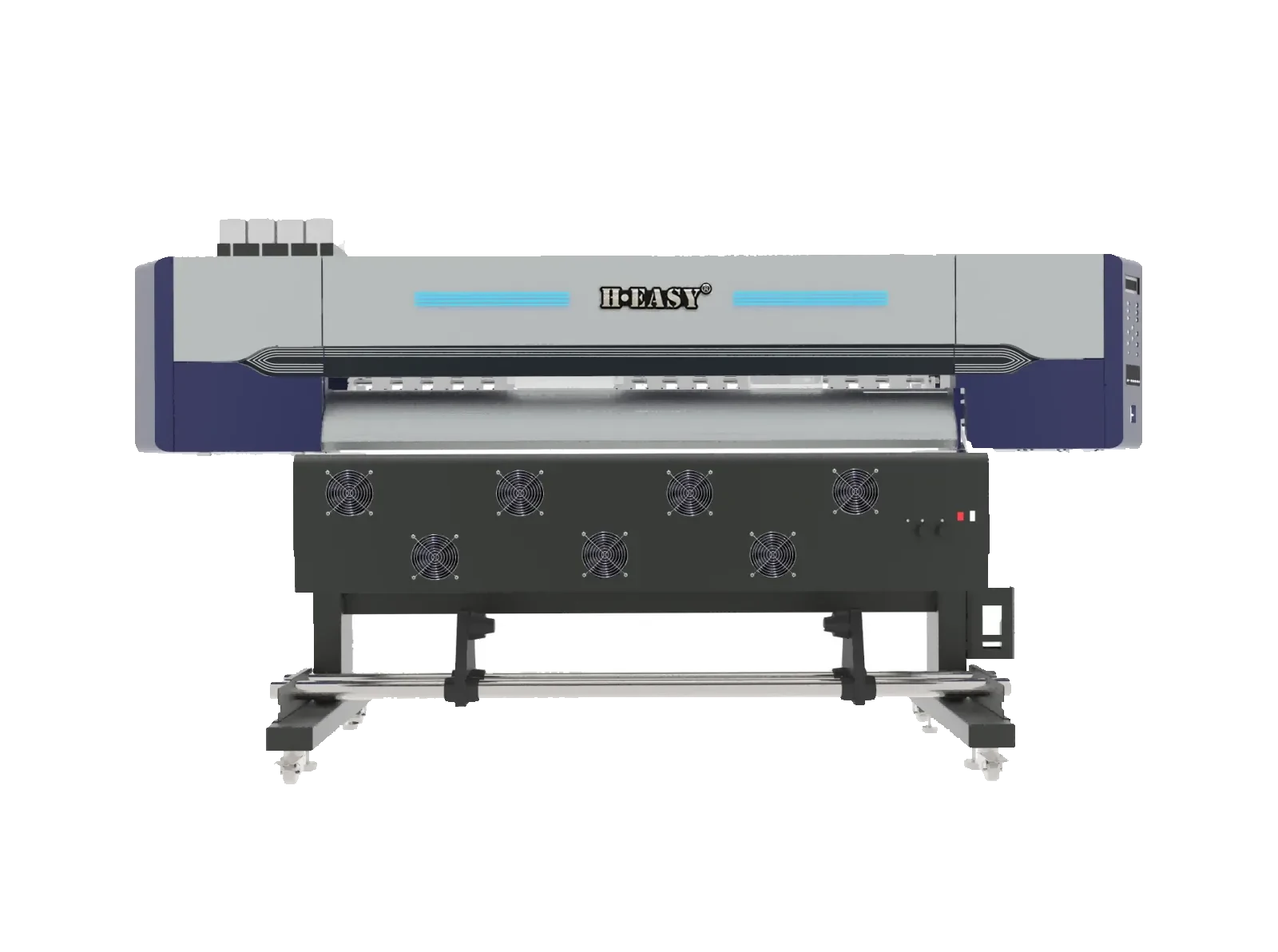
H·EASY currently provides textile digital printing machines from 1.8 m to 3.2 m, with configurations from 8 to 96 Ricoh Gen6 printheads. This allows factories to choose from sampling, small-batch, medium-volume, wide-format, and high-capacity production directions.
| Model | Print Width | Printheads | 2-pass Speed | 3-pass Speed | Best-Fit Direction |
|---|---|---|---|---|---|
| HY-1808 | 1.8 m | 8 x Ricoh Gen6 | 170 m²/h | 120 m²/h | Entry-level digital transformation, sampling, small batches, e-commerce test orders. |
| HY-1816 | 1.8 m | 16 x Ricoh Gen6 | 330 m²/h | 200 m²/h | Small-to-medium garment fabric production and fast-response orders. |
| HY-1824 | 1.8 m | 24 x Ricoh Gen6 | 450 m²/h | 300 m²/h | Medium-volume apparel fabrics and multi-design production. |
| HY-2232 | 2.2 m | 32 x Ricoh Gen6 | 650 m²/h | 450 m²/h | Higher-capacity garment fabrics, baby textiles, and wider-width orders. |
| HY-2632 | 2.6 m | 32 x Ricoh Gen6 | 650 m²/h | 450 m²/h | Wider apparel or home textile fabric production. |
| HY-3264 | 3.2 m | 64 x Ricoh Gen6 | Confirm on quotation | Confirm on quotation | 3.2 m wide-format and high-capacity production projects. |
| HY-3296 | 3.2 m | 96 x Ricoh Gen6 | Confirm on quotation | Confirm on quotation | High-capacity wide-format textile production, configured according to project requirements. |
Note: The speed values above are reference values from the current H·EASY model comparison. Actual production output depends on fabric type, ink system, artwork coverage, pass mode, color requirements, pretreatment, drying, fixation, and quotation configuration.
8. What Should a Traditional Factory Confirm Before Buying a Digital Textile Printing Machine?
Use this textile printer buying checklist when evaluating the production route and equipment configuration:
- Do existing customers already have demand for small batches, multiple designs, or fast sampling?
- What are the main fabrics: cotton, polyester, nylon, blended fabrics, home textiles, or specialty fabrics?
- Does the factory already have pretreatment, drying, fixation, steaming, washing, or finishing equipment?
- Is the goal sampling, small-batch production, medium-volume production, or high-capacity production?
- Can the factory accept a process testing period before stable bulk production?
- Does the supplier provide ink and process support?
- Is there a dedicated operator for machine operation and daily maintenance?
- Are there clear digital printing order sources?
- How will traditional lines and digital lines divide production tasks?
- Is the transformation a trial, an expansion, or a full production upgrade?
9. Why Choose H·EASY as a Digital Transformation Partner?
For traditional printing factories, choosing a digital textile printing machine is not only an equipment decision. It is also a production strategy decision.
H·EASY supports factories with:
- multiple model options from 1.8 m to 3.2 m;
- Ricoh Gen6 printhead configurations from 8 to 96 heads;
- stable machine structure for long-term production;
- ink and machine compatibility support;
- process guidance for fabric applications;
- operator training and after-sales technical support;
- equipment direction matched to the customer’s real order structure.
For transformation customers, the value of H·EASY is not only supplying machines. It is helping factories reduce trial-and-error and build a stable digital production system.
Conclusion: H·EASY Helps Traditional Printing Factories Reduce Transformation Risk
Traditional printing factories are facing a new market reality. Large-volume production is still valuable, but the market is increasingly asking for smaller batches, more styles, faster delivery, and more flexible fabric applications.
Digital textile printing has become an important direction for traditional factories that want to expand beyond the limits of screen-based production. However, successful transformation requires more than purchasing a machine. It requires the right process route, suitable model selection, stable ink and machine matching, pretreatment and finishing support, color management, and daily maintenance.
H·EASY digital textile printing machines help factories build flexible digital production capacity while keeping traditional bulk production advantages. With updated models such as HY-1808, HY-1816, HY-1824, HY-2232, HY-2632, HY-3264, and HY-3296, H·EASY provides scalable solutions for different transformation stages, helping factories reduce risk and enter digital textile printing with a clearer production path.
Printers matched to this guide