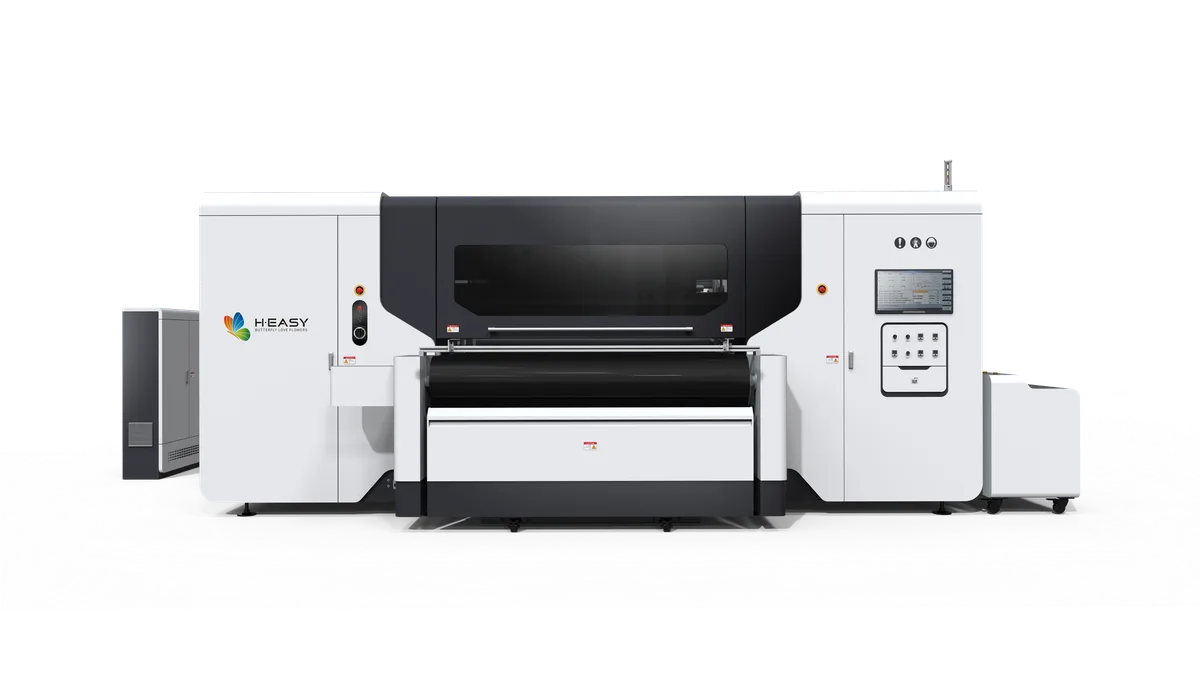
Digital vs Traditional Textile Printing: How to Choose
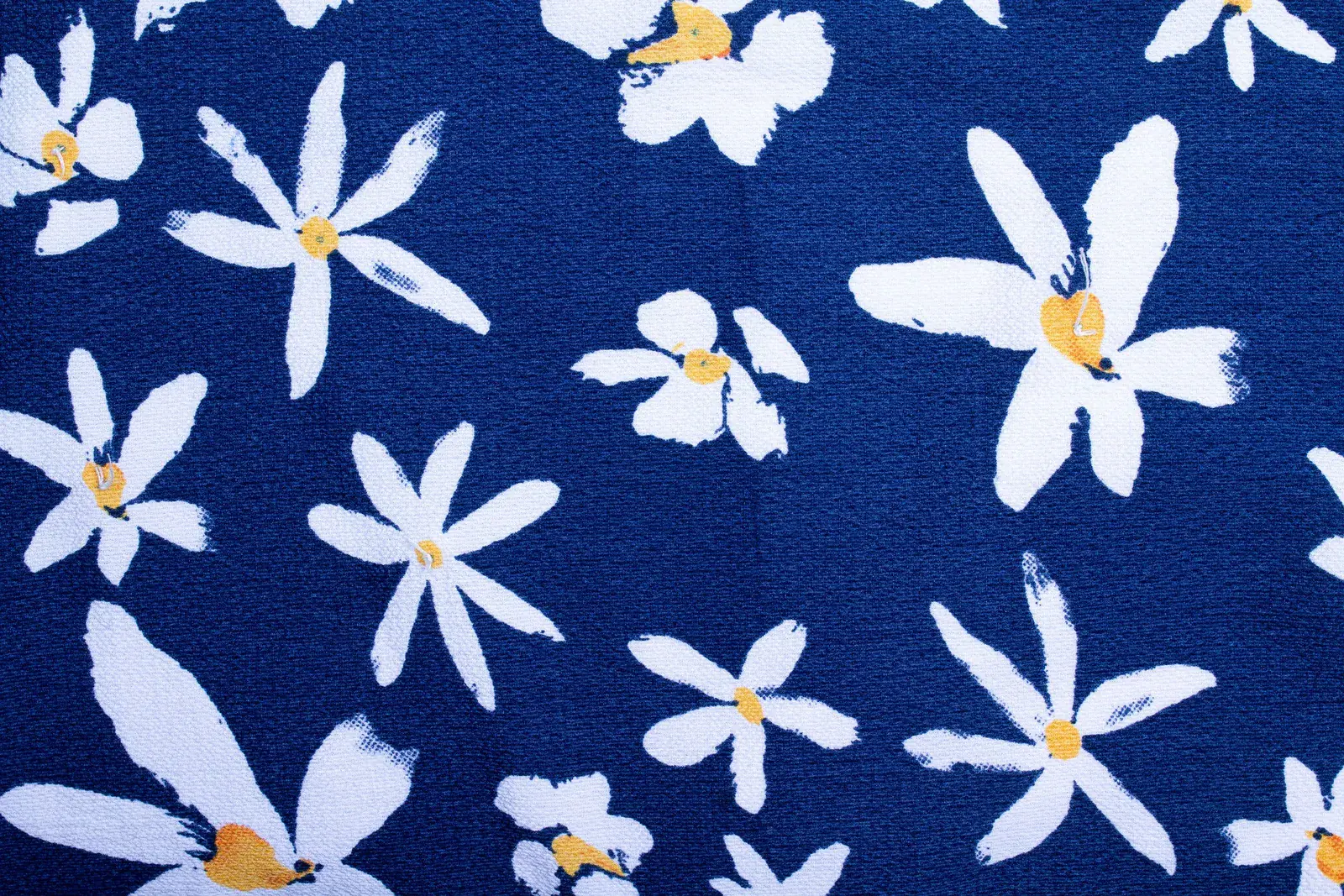
Digital textile printing is usually the stronger choice when artwork changes often, the order mix is uncertain, or the design contains gradients and fine detail without a stable set of screens. Flat or rotary screen printing can remain the stronger choice for established repeat designs, specialty paste effects, and lines built for sustained production. The decision is not “modern versus obsolete.” It is a choice between two image-deposition systems inside a larger textile chemistry and finishing workflow.
Compare the complete route from artwork through approved finished fabric. A printer-only comparison hides the steps that often decide quality, capacity, cost, water use, and repeatability.
Define what is being compared
In digital textile printing, a RIP converts the artwork into drop instructions and printheads jet ink without a physical image screen. In traditional flat or rotary screen printing, separated artwork becomes a stencil, and a squeegee or doctor blade pushes color paste through the open areas onto the fabric.
Both families have multiple variants. A reactive inkjet line and a pigment inkjet line do not share the same preparation or finishing chain. A flat-screen table and a continuous rotary-screen line do not share the same changeover or capacity profile. State the exact routes before comparing them.
| Decision area | Digital inkjet | Flat or rotary screen |
|---|---|---|
| Image carrier | Digital file and RIP data | Prepared physical screen or stencil |
| Artwork change | File and color-management change | New or revised separations and screens may be required |
| Design character | Fine detail, gradients, photographic and frequently changing work | Stable repeats, spot colors, controlled paste deposits and specialty effects |
| Repeat constraint | Set by file, printer, media handling, and downstream cutting | Set by screen circumference or frame and production setup |
| Color control | Profile, ink limits, nozzle state, fabric lot and finishing | Paste preparation, screen deposit, registration, fabric lot and finishing |
| Fabric chemistry | Still requires an ink-to-fibre match | Still requires a paste/dye-to-fibre match |
| Finishing | Depends on ink route; may include fixation, washing and drying | Depends on paste route; may include fixation, washing and drying |
| Strong order pattern | Variable artwork, sampling, shorter or uncertain repeats | Stable repeat designs and established continuous production |
The table identifies tendencies, not guaranteed economics. Qualified output per shift depends on the actual line, fabric, coverage, changeovers, finishing bottlenecks, and acceptance standard.
Where digital printing changes the workflow
Screens no longer carry the image
Removing the physical screen changes prepress and changeover. The factory does not need to make, store, retrieve, clean, or remake an image screen for every design. A corrected file can enter the controlled RIP workflow without repeating the screen-making sequence.
That is especially useful when the design library is large, individual jobs are uncertain, or sampling must happen before demand is known. It also shifts the control burden toward file versioning, RIP settings, profiles, nozzle condition, and digital asset approval.
Complex color transitions do not require another physical screen
Inkjet builds the image from controlled drops. Gradients, tonal transitions, fine lines, and photographic content can be expressed without assigning each visual transition to another physical stencil. Designers gain flexibility, but the printable result still depends on source resolution, gamut, ink limits, fabric surface, pretreatment, and finishing.
“The file contains the color” is not a color-management system. The mill still needs a defined input space, a profile for the fabric and ink route, controlled viewing, and an approved production sample.
Variable and staged production becomes practical
A digital queue can place different files or colorways into successive jobs without building a new physical image carrier. This supports sampling, personalized or regional variants, replenishment, and staged production closer to confirmed demand.
The benefit disappears if file approval, fabric preparation, RIP nesting, finishing, or inspection cannot keep pace. Digital flexibility should be measured across the whole line, not only at the print carriage.
Where screen printing remains strong
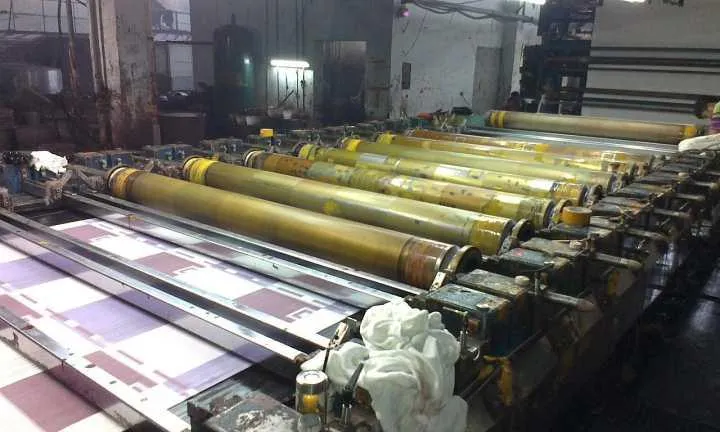
Screen printing is a mature production system, not simply a problem that inkjet replaces. Once a screen set, paste system, registration, fabric, and finishing route are stable, the line can repeat the same design with an established operating method.
The screen controls a physical deposit. That can be valuable for spot colors, opaque or specialty pastes, and effects where deposit character is part of the approved result. A mill with working screen preparation, color kitchen, printing, fixation, washing, and inspection capacity may already have an efficient route for stable programs.
Its trade-off appears when designs or colorways change. Separations, screen preparation, storage, cleaning, registration, paste management, and changeover must be included in the production plan.
Digital printing also has constraints
The ink and head form a controlled system
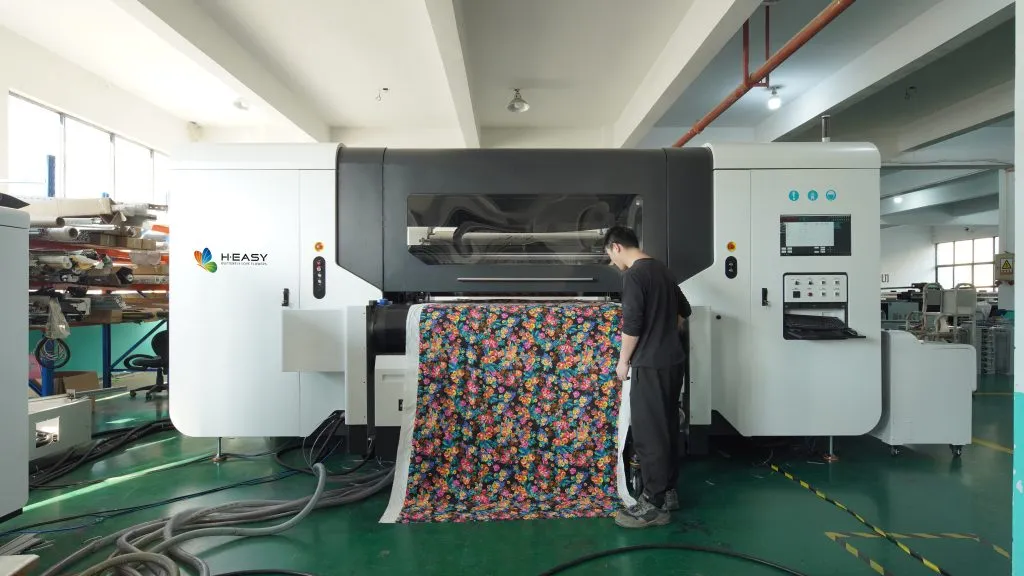
Inkjet depends on stable drop formation and placement. Nozzle loss, deflection, air in the ink path, contamination, unsuitable viscosity, head-to-fabric gap, or unstable room and material conditions can affect the print. Use the ink, maintenance fluid, operating window, and recovery procedure approved for the installed head and machine.
Fabric transport affects registration
Stretch, skew, wrinkles, unstable tension, surface hair, and changing fabric height can move the landing point or threaten a head strike. A roll printer must control the textile before digital detail becomes sellable detail.
Ink cost is only one part of the route
Inkjet ink may be evaluated differently from a prepared screen paste, but a fair comparison also includes screens, paste left after a job, cleaning, changeover, fabric preparation, failed output, labor, fixation, washing, drying, inventory, and utilization. No universal cost crossover applies to every mill.
The fibre and ink route do not disappear
Digital describes how image data reaches the fabric; it does not identify the bonding chemistry. The fibre still determines the viable ink route:
- reactive systems are associated with cellulose-class fibres and their preparation, fixation, and wash route;
- disperse systems are associated with suitable polyester and controlled heat fixation or transfer;
- acid systems are used with compatible protein fibres and selected nylon;
- pigment systems use a surface binder and can serve a broader fibre mix, with their own pretreatment and curing requirements.
Screen printing also uses dye or pigment systems with route-specific preparation and finishing. Changing the image-deposition method does not make an incompatible ink bond to a fibre.
The fabric process selection guide explains the fibre-to-ink decision, while the R2R ink workflow guide maps the surrounding production steps.
Environmental claims need a process boundary
Digital printing can avoid screen making and reduce some screen-washing and leftover-paste activities. It may also place ink according to the file rather than flooding a screen. Those are process differences, not proof that every digital route is waterless, waste-free, or environmentally superior.
Reactive and acid routes can still require preparation, steaming, washing, and drying. Disperse routes require controlled heat. Pigment routes use binders and curing. Printer cleaning, rejected fabric, ventilation, wastewater where present, energy, consumable packaging, and end-of-life handling all belong in the boundary.
Compare measured inputs and outputs for the actual routes under consideration. Do not use the word “digital” as an environmental certificate.
Match the process to the order pattern
Digital inkjet is a strong candidate when:
- the same fabric receives many designs or colorways;
- sampling and production must use a closely controlled file workflow;
- repeats are short, uncertain, or replenished against demand;
- gradients, photographic content, or fine variable detail matter;
- screen storage, preparation, and frequent changeover would dominate the job.
Screen printing is a strong candidate when:
- the design and repeat remain stable over an established production program;
- spot colors, paste deposit, opacity, penetration, or a specialty effect is central to approval;
- the mill already has a qualified screen, color-kitchen, print, and finishing route;
- continuous output on that stable setup matters more than frequent artwork changes.
A hybrid plant can use digital for development, sampling, variant-heavy work, and selected production, while retaining screen capacity for stable programs or effects that the approved digital ink set does not reproduce.
Run a fair production trial
Use the actual production fabric and an artwork set that exposes each process:
- solids and difficult brand colors;
- fine positive and reversed lines;
- gradients and photographic detail;
- repeat joins and registration marks;
- low- and high-coverage areas;
- any required specialty effect.
Run each candidate through its full preparation, print, fixation, washing where required, drying, and finishing route. Inspect sellable color, repeat and registration, hand, penetration, edge quality, staining, distortion, and the buyer’s required care performance.
Record changeover work, material use, stoppages, rejected output, qualified throughput, and the actual finishing constraint. Keep both the approved sample and the settings that produced it. This converts a marketing comparison into a factory decision.
The current R2R textile printer range is the relevant digital equipment path. Use the contact form to share the fibre, construction, roll width, ink route, artwork mix, repeat pattern, current screen workflow, finishing equipment, and acceptance tests. That evidence is enough to decide whether digital, screen, or a hybrid route fits the production plan.