Why Pigment Digital Printing Is Growing Fast: Five Key Drivers
Pigment digital printing is growing because five drivers are advancing together: process technology, flexible order requirements, environmental scrutiny, factory investment and industry-wide comparison. The practical signal is not that pigment is ready for every fabric. It is that buyers can now evaluate a more complete fabric-to-fixation system and define evidence for an industrial trial.
This five-driver analysis addresses industrial adoption. For a broader overview of renewed interest in the chemistry, read why pigment ink printing is making a comeback.
What is pigment digital printing?
Pigment digital printing places pigment particles on the fabric surface and uses a binder system to help keep the color in place. A typical production route is:
Fabric inspection -> pretreatment -> digital printing -> drying or heat fixation -> quality inspection
The printer is only one part of that route. Fabric construction, pretreatment, ink limits, color profile, drying and fixation can all influence color, hand feel, fastness and repeatability. This is why industrial evaluation should treat the route as one qualified system.
| Growth driver | Why it matters | What a factory should verify |
|---|---|---|
| Process technology | Ink, pretreatment, color and fixation can be controlled as one recipe | Repeatability on representative fabric lots |
| Flexible order needs | Digital files support design changes without a physical screen for each design | Changeover time, repeat quality and saleable output for the intended job mix |
| Environmental scrutiny | Some pigment routes can avoid post-print washing used in dye workflows | Water, energy, chemistry, waste and yield across the complete route |
| Factory investment | Industrial use depends on the complete workflow, not only the print engine | Installed scope, operators, acceptance tests, training and support |
| Industry comparison | Exhibitions bring machinery, chemistry and workflow options into one evaluation cycle | A production trial after the demonstration |
Driver 1: process technology is becoming a qualified system
The most useful technical progress is not one isolated printer or ink claim. It is better coordination between printhead control, pigment ink formulation, pretreatment, color management, drying and fixation.
Peer-reviewed research shows why those variables should be evaluated together:
- A study of pigment inkjet pretreatments reported changes in color gamut and crockfastness under the tested conditions.
- Research on pigment color reproduction identified fabric, machine behavior, ink limits, dot gain and profile generation as variables in the printed result.
- Research into binder-free pigment ink for cotton without pretreatment shows a formulation direction, but it does not prove that every commercial ink or fabric can omit binder or pretreatment.
For buyers, the relevant outcome is a documented process window. The supplier should record the fabric, pretreatment, ink, profile, printing mode and fixation conditions that produced the approved result. The guide to fabric pretreatment in pigment printing explains the first part of that control chain.
Driver 2: flexible demand changes how productivity is measured
When a factory’s order mix includes smaller batches, more designs or quicker artwork changes, peak printer speed is not enough. The complete workflow must also control setup, changeovers and repeat production.
A useful flexible-production trial should:
- Load a representative fabric lot and record its preparation state.
- Print production artwork at the intended coverage and quality setting.
- Record pretreatment, ink, profile, pass and fixation conditions.
- Repeat the job after a planned artwork or fabric change.
- Compare color, hand feel, fastness, defects and saleable output.
This converts “flexibility” from a marketing description into a testable factory requirement. A quick sample is useful for screening, but industrial approval requires a result that operators can reproduce.
Driver 3: environmental requirements raise the evidence bar
Pigment printing is often considered where a factory wants to examine a shorter process route. Heat fixation may replace the post-print washing used in some dye workflows, which can remove a wet stage from the route. That possibility should be measured rather than assumed.
Compare both routes with the same fabric, design, quality target and output boundary. Record:
- pretreatment chemistry and application waste;
- water use and wastewater at each stage;
- printing, drying and fixation energy;
- cleaning, ventilation and maintenance requirements;
- rejected fabric and final saleable yield.
Environmental scrutiny can therefore accelerate evaluation without proving a universal sustainability result. The guide to no-wash pigment printing and production cost shows how to compare process stages without relying on an unsupported savings percentage.
Driver 4: enterprise investment covers the complete workflow
An industrial pigment project includes more than a print engine. Depending on the selected route, the investment scope may include fabric inspection, pretreatment, color management, drying or fixation, quality control, maintenance, training and service.
Before comparing proposals, make every supplier define the same scope:
- equipment, utilities and environmental conditions;
- fabric, ink and pretreatment responsibilities;
- commissioning samples and acceptance tests;
- operator roles and maintenance intervals;
- documentation, training and spare-parts planning;
- support channels and escalation after installation.
Only after the scope is fixed can a factory compare cost or return on investment responsibly. There is no reliable universal payback figure for an undefined fabric mix, utilization level and quality standard.
Driver 5: exhibitions accelerate comparison
International textile machinery exhibitions give buyers one place to compare equipment, ink, pretreatment, automation and service approaches. ITMA’s official innovation focus includes advanced materials, automation and digital manufacturing, sustainability and circularity. These themes are relevant to pigment printing system design.
An exhibition demonstration is not a production qualification. A displayed sample may use selected fabric, artwork and settings. Ask five questions before moving the system onto a shortlist:
- Which fabric, pretreatment, ink and fixation route made the sample?
- Which settings and operator actions were required?
- Which hand-feel, rub, wash and color methods were used?
- Can the result be repeated on buyer-provided fabric and artwork?
- Which demonstrated components and services are included in the proposal?
The exhibition’s value is faster comparison. The factory should still run a recorded production trial before approval.
Applications need separate qualification
The source brief identifies apparel, home textiles, denim and blended fabrics as relevant application directions. One successful sample does not qualify all four.
| Application | What the trial should verify |
|---|---|
| Apparel | Color, hand feel, dry and wet rub performance, wash method, stretch or seam behavior and lot repeatability |
| Home textiles | Fabric width and handling, long-roll consistency, fixation uniformity, inspection and application-specific fastness |
| Denim programs | Surface and weave variation, dark-tone reproduction, abrasion, the intended garment-wash route and final hand feel |
| Blended fabrics | Fiber composition, pretreatment uniformity, color balance, hand feel and end-use fastness on each construction |
Use the pigment textile printing process guide to define the stages, then set acceptance limits for the actual fabric and end use.
Three future development directions to watch
1. Wider and more stable process windows
Future technical work is likely to keep targeting color range, hand feel, fastness, jetting stability and repeatable fixation. Buyers should translate each claimed improvement into a test method and tolerance on their own fabric.
2. Cost optimization through process control
Cost improvement depends on the complete system: ink use, pretreatment, equipment utilization, cleaning, defects and saleable output. Standardized recipes and changeover records make those variables easier to compare, but they do not create a universal cost result.
3. Application expansion through separate recipes
Expansion into new fabrics or products requires new qualification, not one universal setting. The useful deliverable is a controlled recipe for each fabric construction, artwork range and finishing requirement.
Connecting the trend to a pigment printing project
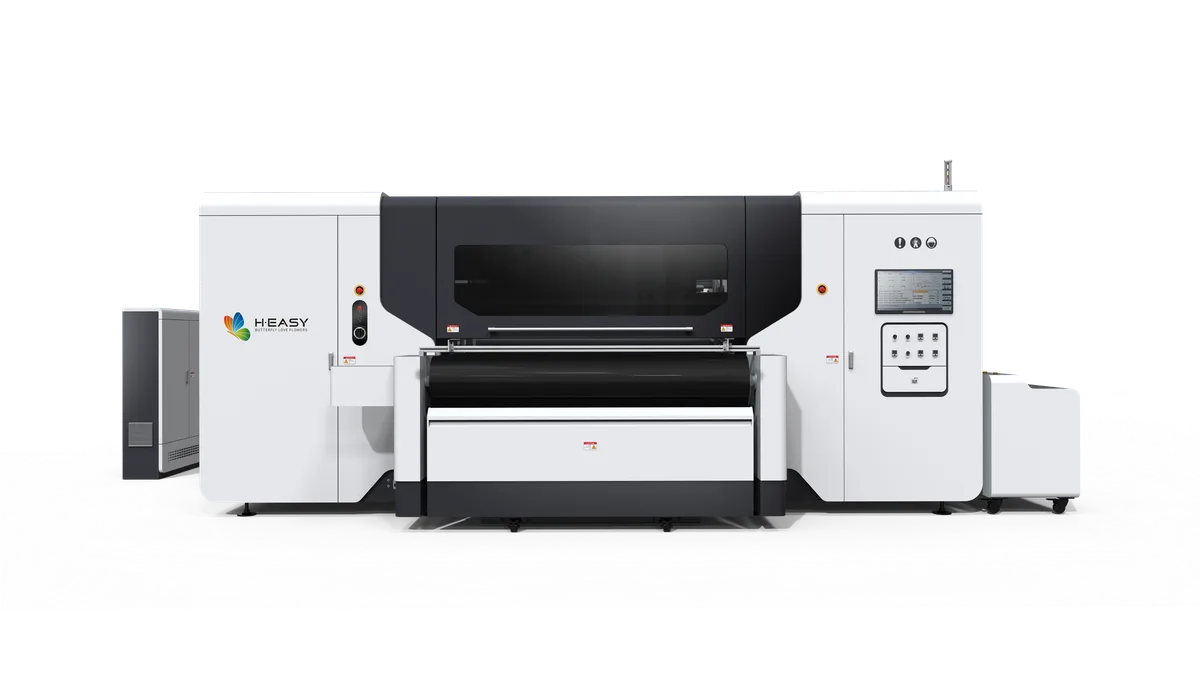
The current HY-Series direct-to-fabric printer family lists pigment as an available ink route. That family-level compatibility is not a promise that every configuration, fabric or result is already qualified.
Start with the intended fabric width, application and production pattern. Then request a pigment trial that records the complete fabric-to-fixation route. Use the fabric printing process selection guide to compare pigment with other ink routes before fixing the machine scope.
Conclusion
Pigment digital printing is growing because process development, flexible order requirements, environmental scrutiny, investment planning and industry comparison are reinforcing one another. These drivers justify a structured trial; they do not replace one.
The factories best prepared for industrial adoption will document the complete system: stable equipment, suitable ink and pretreatment, controlled color and fixation, repeatable quality tests, trained operators and defined support.
Discuss your fabric, application and acceptance tests with the technical team.