
Why Pigment Ink Printing Is Making a Comeback in the Textile Industry
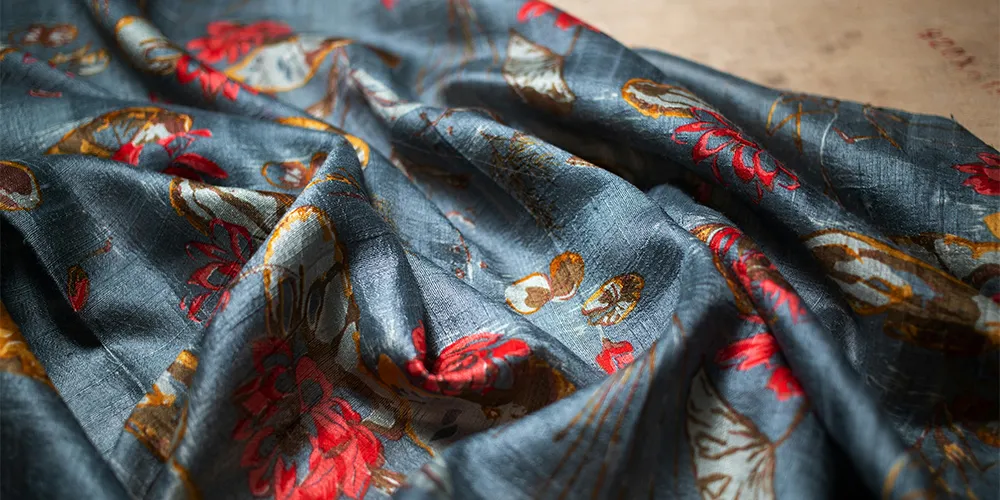
Pigment ink printing is being reevaluated for industrial programs where a qualified no-wash route, flexible fabric coverage and shorter processing may matter. Tighter environmental scrutiny and improvements in ink, binder, pretreatment and fixation have raised interest, but this article does not have a current primary source for a global market-share percentage. Treat growth as a qualification question, not a universal forecast.
What changed
Pigment ink isn’t new - it’s been around for decades, used historically on screen-printed T-shirts and similar lower-fidelity garment work. What changed in the last 5–10 years:
- Ink chemistry - finer pigment dispersion, modern polyurethane and acrylic binders, surfactant systems that hold the ink in inkjet printheads without clogging.
- Process knowledge - better understanding of pretreatment chemistry and heat-fix energy management means modern pigment prints hit acceptable color depth and softness.
- Environmental pressure - tightening regulations make the no-wash workflow a structural advantage, not a nice-to-have.
- Fast-fashion economics - shorter production cycles favor pigment over the multi-step reactive process.
The four drivers
1. Environmental regulation
Against the published reactive route, pigment’s structural difference is no post-print dye wash-off stage. Reactive printing uses washing to remove unfixed dye and process chemicals; the published pigment route uses heat fixation. A complete environmental comparison must still include pretreatment, cleaning, energy, ventilation, waste and saleable yield. Disperse and acid routes have their own process boundaries and should be compared separately.
For mills in jurisdictions with strict wastewater regulation, this isn’t a cost optimization - it’s a permission-to-operate factor.
2. Simplified workflow
Compare:
| Step | Reactive | Pigment |
|---|---|---|
| Sizing | ✓ | ✓ |
| Printing | ✓ | ✓ |
| Steaming | ✓ | - |
| Washing | ✓ | - |
| Drying | ✓ | ✓ |
| Fixation | ✓ | ✓ |
| Finishing | ✓ | Optional, per approved route |
The published pigment route removes reactive steaming and dye wash-off; final drying and finishing depend on the approved line. Quantify the resulting floor space, equipment, operator time and defect exposure instead of assuming a fixed number of eliminated stages.
3. Cost reduction
Do not infer total cost from ink price or stage count alone. Compare pigment and reactive routes for the same approved fabric, artwork and output, including chemistry, utilities, labor, equipment, waste and saleable yield; see how much does pigment ink printing cost per square meter.
4. Market demand
Fast-fashion and small-batch / high-SKU production reward fast turnaround. Pigment’s shorter cycle and broader fabric compatibility both serve that demand. Apparel brands moving toward print-on-demand models particularly favor pigment because they can run mixed-fabric SKUs through one process.
Remaining limitations
Pigment isn’t replacing reactive everywhere:
- Premium cotton fashion still favors reactive for deeper color saturation and softer hand
- High-end silk still favors acid for color brilliance and soft drape
- Brand-specified contracts often still call for reactive explicitly
The historical limitations - rigid hand, dull color, weak fastness - have narrowed dramatically but haven’t fully closed. Pigment vs reactive is now a trade-off rather than a quality gap.
Equipment innovation
Industrial pigment proposals must define the complete configured route: ink supply, pretreatment, environmental control, drying or fixation, maintenance and acceptance testing. The HY-Series R2R printers are 1.8–2.6 m Ricoh Gen6 platforms available in reactive, disperse, acid and pigment workflow configurations. Family-level compatibility does not mean routine ink switching on an installed machine; factories commonly dedicate a machine to one chemistry to avoid cross-contamination.
Outlook
Pigment remains a route worth evaluating where a factory needs a qualified no-wash process, flexible order handling or relief from a reactive wash-line constraint. Do not turn those drivers into a market-share forecast or a universal cost and sustainability result. Require dated market evidence for growth claims and production evidence for the intended fabric.