How Much Does Pigment Ink Printing Cost per Square Meter?
There is no responsible universal all-in cost per square meter for pigment textile printing. A useful figure must be built from a representative sample and the factory’s own ink, pretreatment, energy, labor, machine, maintenance and waste costs. The calculation below shows what to measure before pricing a production job.
All-in cost breakdown
| Cost line | Input to collect |
|---|---|
| Ink | Measured kg/m² × supplier price/kg |
| Pretreatment | Measured solution use × chemistry cost |
| Drying / fixation energy | Metered energy use × local tariff |
| Labor / machine time | Operator and machine cost ÷ saleable m² |
| Maintenance / waste | Period cost and scrap ÷ saleable m² |
| Total | Sum the five lines for the sampled job |
Cost line details
Ink
Measure ink consumed by a representative production sample, convert the result to kg/m², then multiply by the current supplier price per kg. See how much pigment ink is used per square meter of fabric for the measurement and calculation method.
Light-coverage and full-coverage artwork can produce different measured ink use. Use the ink, profile, print mode and fabric selected for the real order rather than a generic market baseline.
Pretreatment
Include the chemistry plus the water, energy and labor used to apply and dry it. Qualify pretreatment with the intended fabric and ink system; do not assume that a result or dosage transfers between constructions.
Drying and fixation
After printing, the pigment route requires qualified drying and heat fixation. Use the ink or chemistry supplier’s validated window and confirm the result on the intended fabric. Energy use depends on:
- Heat source (electric vs natural gas)
- Fabric thickness and weight
- Line speed and machine type
Labor and machine time
Operator labor at the printer, plus the depreciation of the printer itself amortized over produced m². At full utilization, machine depreciation drops; at low utilization, it climbs sharply.
Maintenance and waste
Printhead replacement amortization, ink filter changes, scheduled service, scrap and defect rework.
Cost variance levers
| Lever | Effect on the calculation |
|---|---|
| Heavy / dark coverage artwork | Raises measured ink consumption |
| Low machine utilization | Spreads fixed machine cost over fewer saleable m² |
| Ink selection | Changes the supplier-price input |
| Local energy tariff | Changes drying and fixation cost |
| Operator experience | Changes output, waste and rework |
Comparison with traditional methods
The published pigment route omits the steaming and washing stages used by reactive printing. Model the water, wastewater treatment, energy, labor and equipment associated with every applicable stage, then compare equivalent saleable output. Do not infer the winner from ink price or workflow length alone. See how no-wash pigment printing reduces production cost for the full process comparison.
Production hardware
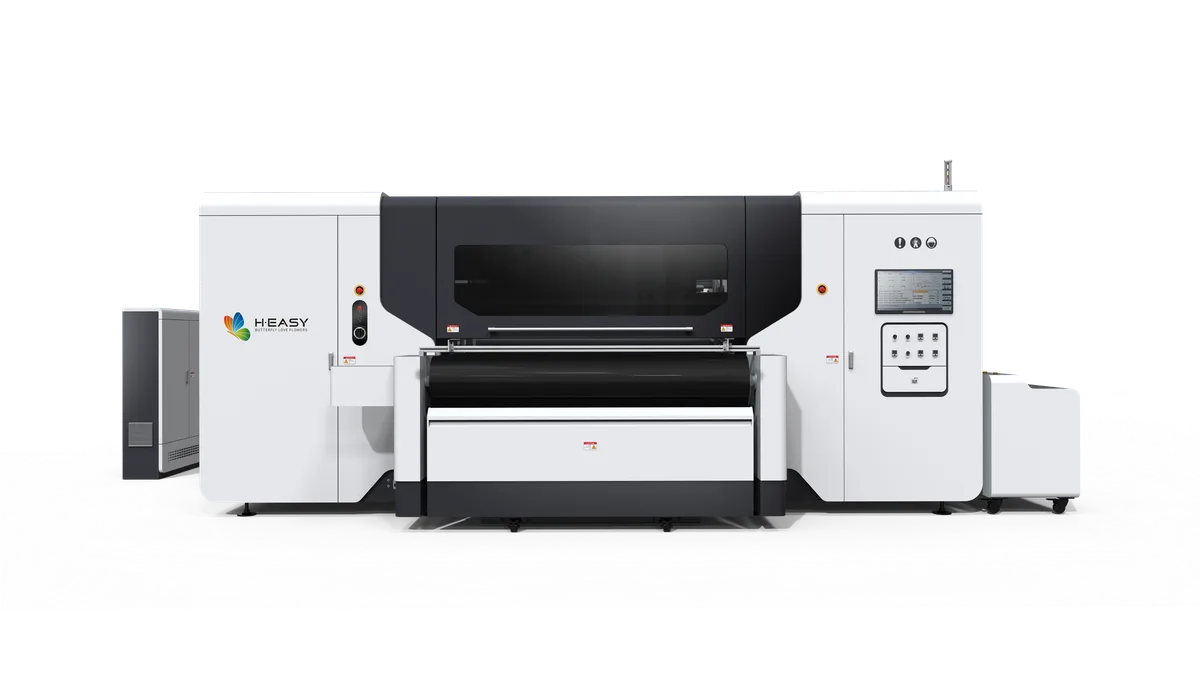
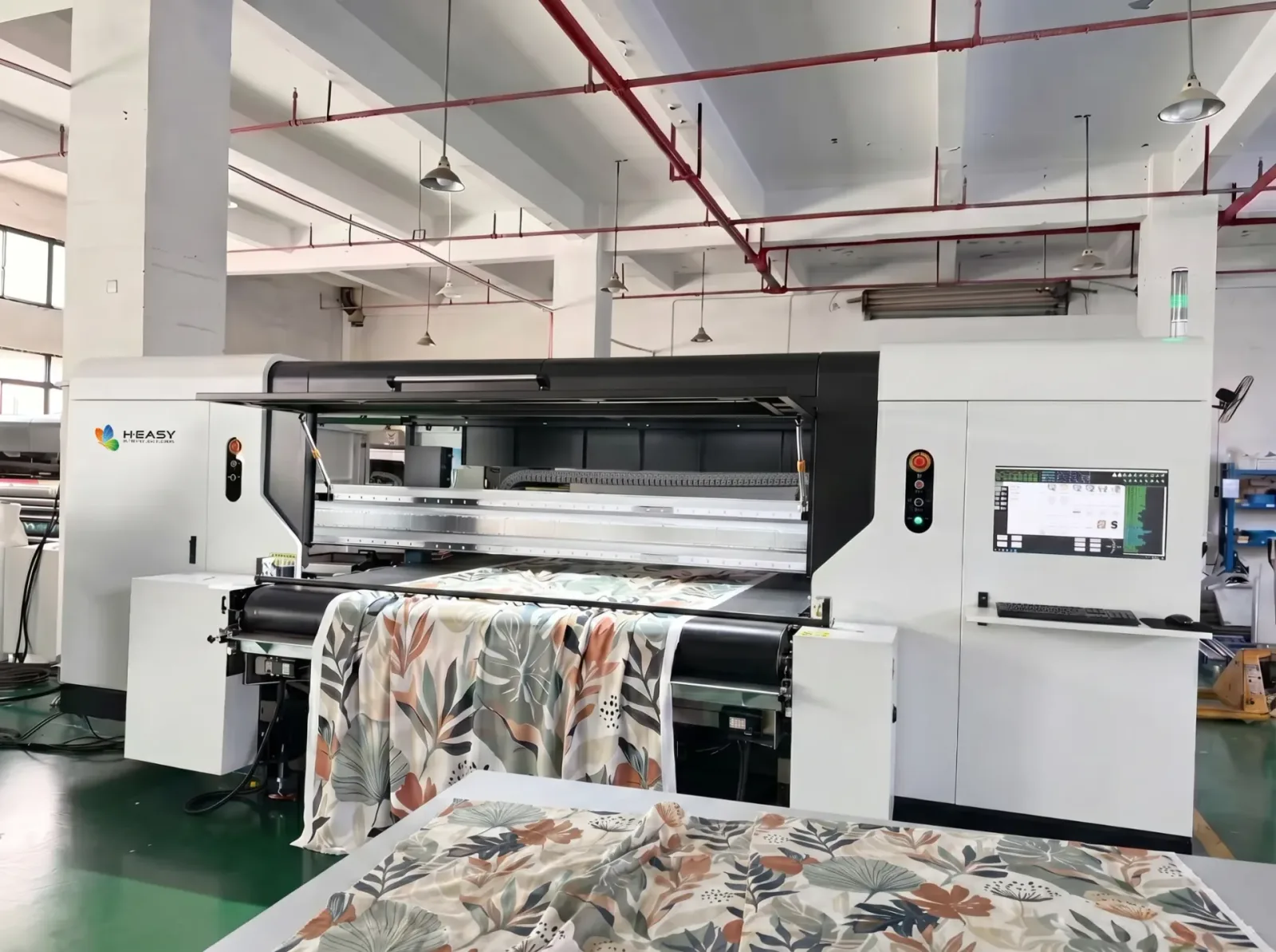
For industrial pigment printing, see the HY-Series R2R printers
- 1.8–2.6 m Ricoh Gen6 platforms with reactive, disperse, acid and pigment ink workflows. Higher utilization spreads fixed machine cost over more saleable output; lower utilization increases the machine-cost share.
Conclusion
Coverage, machine utilization and energy cost are three major variables in a pigment-printing cost model. Build the per-m² number from a representative sample and your factory’s current inputs, not a generic headline price.