DTF vs UV-DTF Printing: Differences, Applications and Complete Guide
DTF prints on PET film and heat-presses the transfer onto fabric. UV-DTF prints on an A film, UV-cures the ink, laminates with a B film, then cold-transfers onto hard substrates. The choice is driven by substrate, not preference - they target different materials. This post is the application decision tree; for the full DTF workflow see the complete DTF guide.
Quick comparison
| DTF | UV-DTF | |
|---|---|---|
| Ink | Water-based pigment | UV-curable |
| Cure | Heat (adhesive powder) | UV (LED) |
| Transfer | Heat-press | Cold lamination |
| Substrate | Soft / fabric | Hard / rigid / curved |
| Finish | Soft hand, slight texture | Embossed, 3D, glossy |
| Equipment | Printer + shaker + dryer + press | Printer (+ optional laminator) |
| Outdoor durability | Limited | High |
Consumables
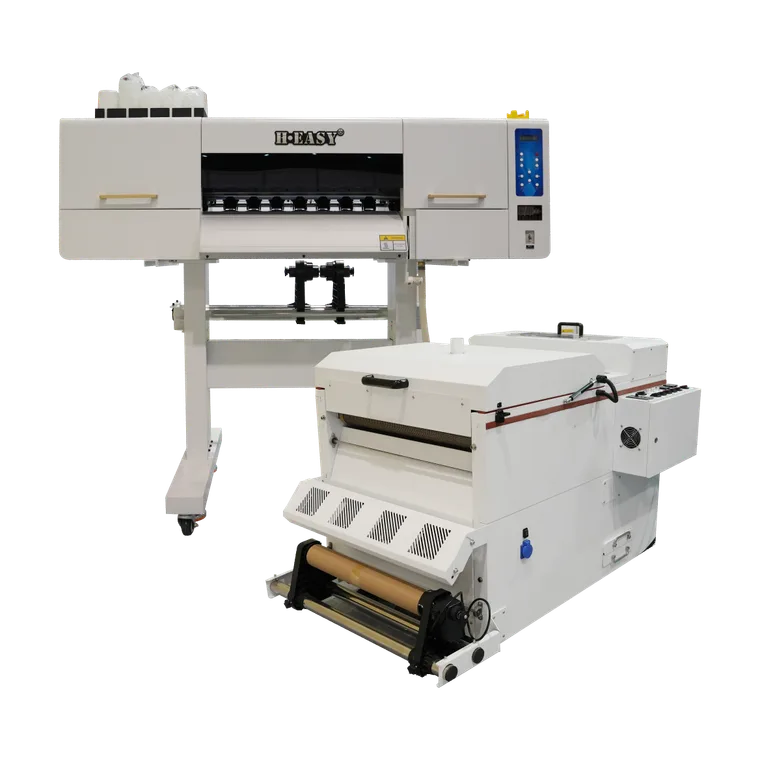
DTF needs: PET transfer film, hot-melt adhesive powder, water-based CMYK + white ink, heat press. UV-DTF needs: UV-curable ink (CMYK + W + V), A film (print layer) and B film (transfer layer) - no powder, no oven, no heat press.
Workflow side-by-side
DTF: artwork → print on PET film → apply powder → cure → heat-press onto fabric → peel.
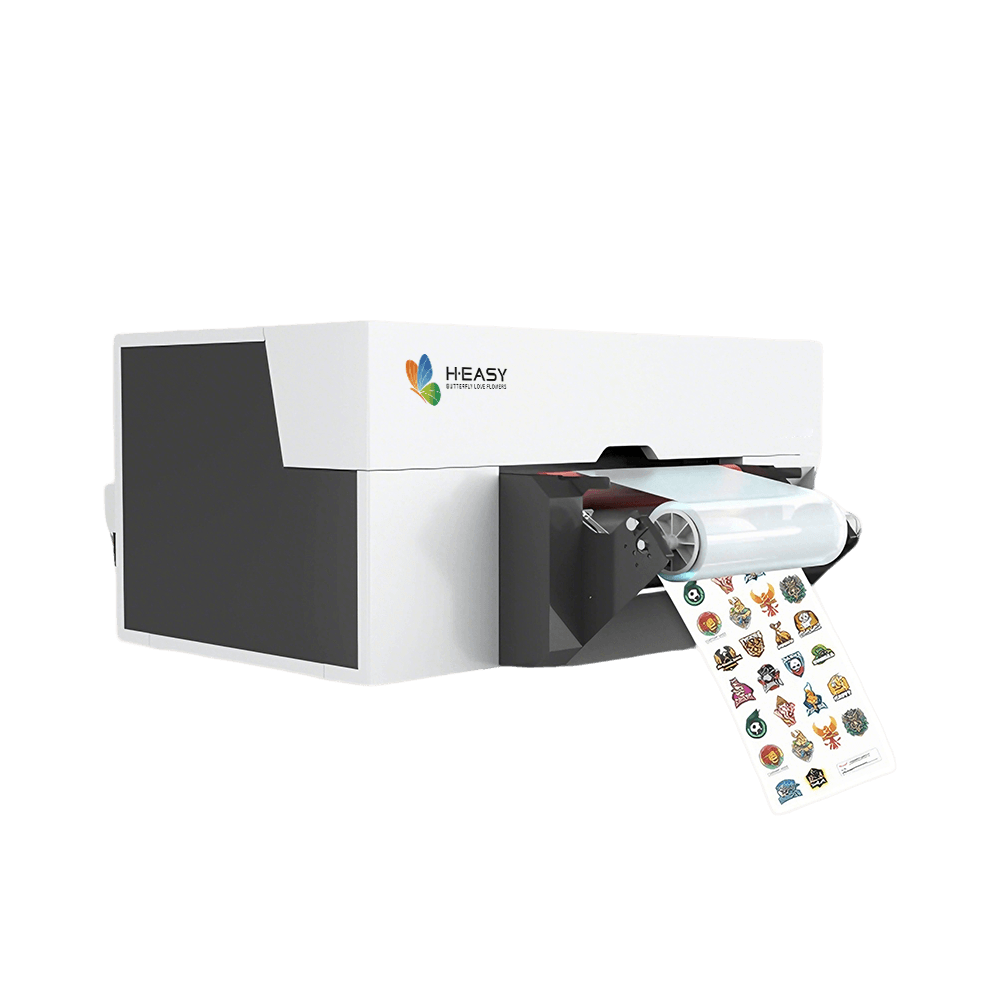
UV-DTF: artwork → print on A film → UV-cure → laminate to B film → cut design → apply to substrate → peel.
Application categories
| Application | Use |
|---|---|
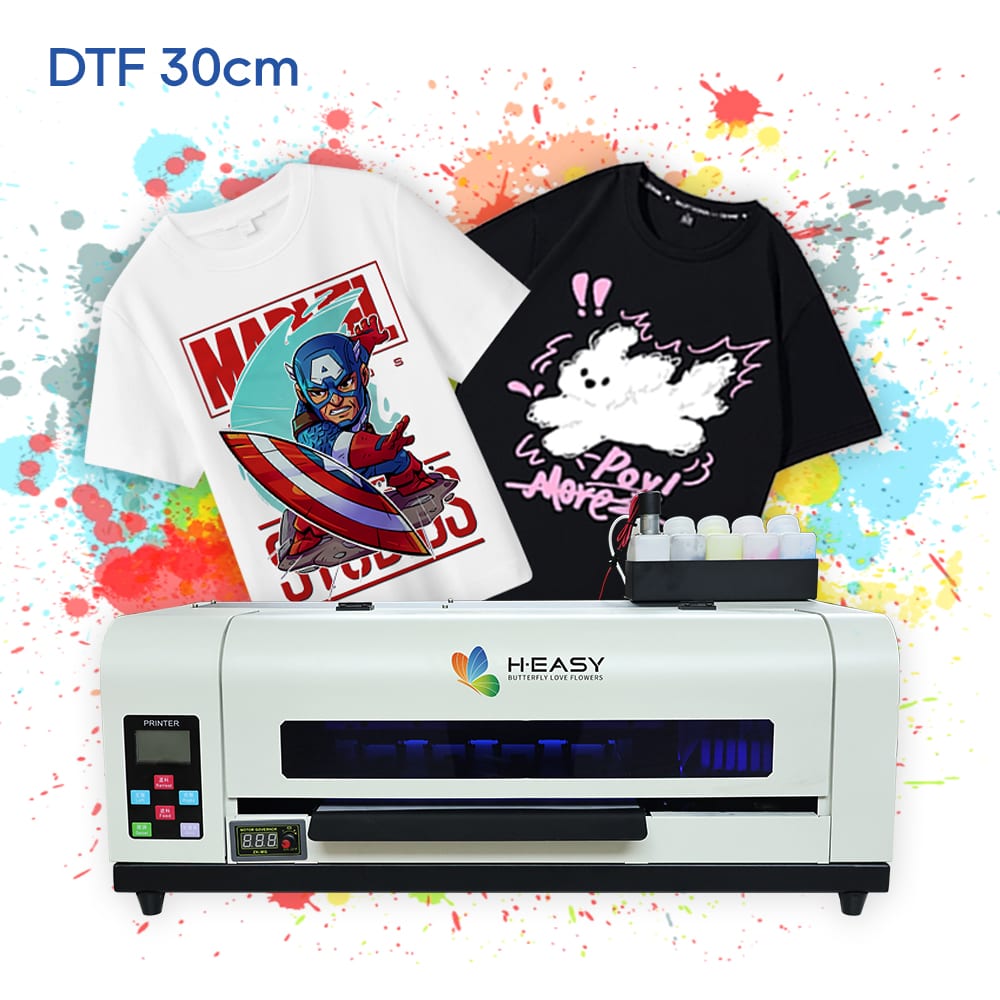
| T-shirts, hoodies, jeans, hats, dresses | DTF |
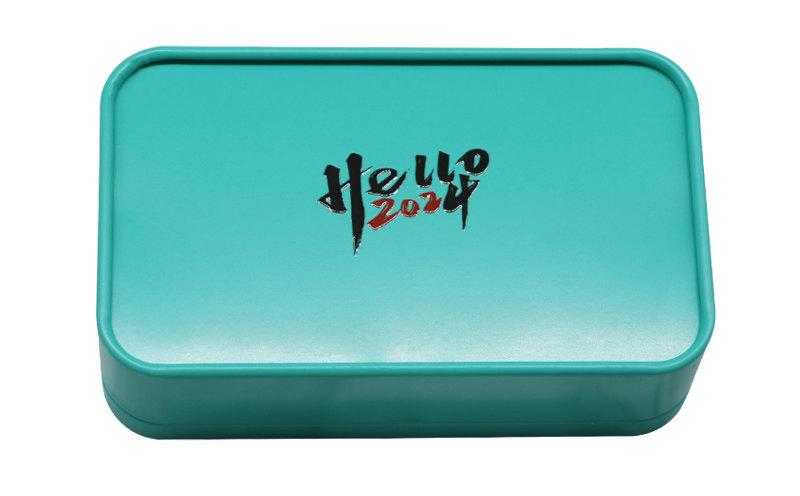
| Glass panels, ceramic tiles, mugs, bottles | UV-DTF |
| Tote bags, soft accessories | DTF |
| Phone cases, luggage, packaging boxes | UV-DTF |
| Sportswear (synthetic) | DTF |
| Signage, nameplates, gifts | UV-DTF |
How to choose
- Soft fabric, apparel, daily wash → DTF.
- Hard, non-porous, curved or outdoor → UV-DTF.
- Mixed product line → both processes, treated as complementary, not competing.
For DTF, see the HY-401 30cm or HY-702 60cm. For UV-DTF, see the HY-401 30UV.
Related production guides
Deciding across the wider line-up? Compare all textile printing technologies by substrate, workflow and production fit.
Printers matched to this guide