
How Long Does a DTF Printer Really Last?
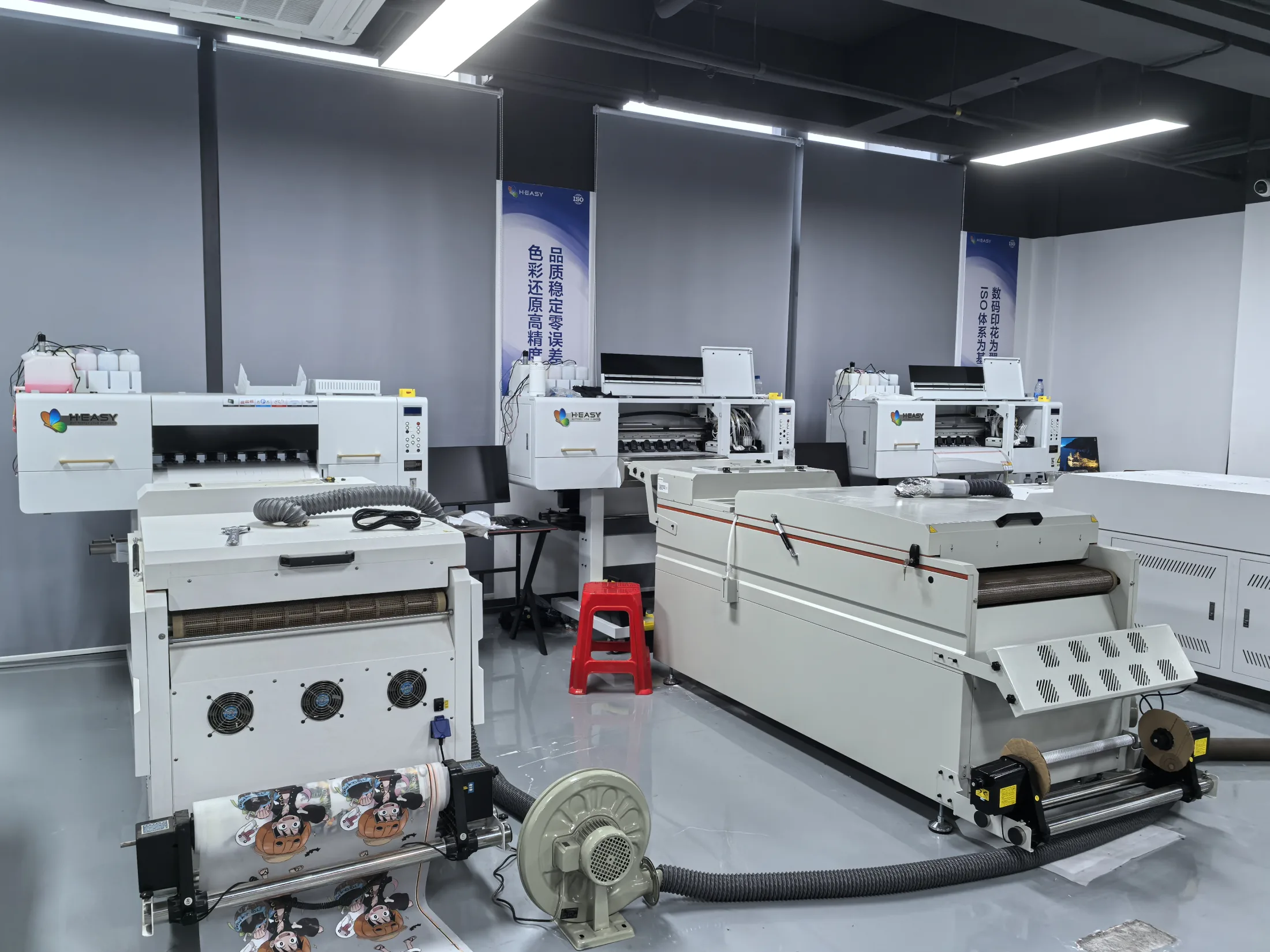
If you are spending $5,000, $15,000, $50,000 or more on a DTF printer, one question matters immediately:
How long will this machine actually last?
There is no single answer such as “five years” or “ten years.”
A DTF printer is made up of many systems:
- printheads;
- dampers;
- pumps;
- ink tubes;
- capping stations;
- electronic boards;
- motors;
- linear rails;
- heating systems;
- powder shakers;
- dryers;
- conveyor belts.
Some parts may work for many years. Others are normal wear items that need replacement much sooner.
Printer lifespan is not the same as printhead lifespan.
A well-maintained machine can remain productive for years while individual components are replaced along the way.
Quick Answer: How Long Can a DTF Printer Last?
| Printer Type | Reference Economic Service Life | Typical Use |
|---|---|---|
| Entry-Level DTF | About 1–3 years | Startups, sampling, market testing |
| Commercial DTF | About 3–5+ years | Stable orders, regular production |
| Production-Oriented DTF | About 4–7+ years | Continuous production, higher daily output |
These are not warranty periods.
Actual lifespan depends on:
- daily operating hours;
- print volume;
- white ink usage;
- ink quality;
- temperature and humidity;
- maintenance;
- operator skill;
- spare-parts availability;
- technical support.
A lower-cost printer with good maintenance may outlast a more expensive machine that is poorly maintained.
1. The Printer Is Not “Dead” Just Because a Printhead Fails
This is one of the biggest misunderstandings in DTF.
A printhead is an important and expensive component, but it is still a replaceable part.
Think of a car. A car may need new tires, brake pads, batteries and bearings. That does not mean the entire vehicle has reached the end of its life.
The same is true for a DTF printer.
During normal production, you may eventually replace:
- printheads;
- dampers;
- capping tops;
- wipers;
- filters;
- pumps;
- ink tubes;
- heating elements;
- conveyor belts;
- fans;
- bearings.
The more useful question is:
After replacing normal wear parts, is the machine still stable and economical to run?
If the frame, motion system, electronics and major mechanical structure remain healthy, the printer can continue to have production value.
2. Why Two Printers with the Same Printhead Can Have Very Different Lifespans
Many DTF printers use similar industry-standard parts.
Two machines may even use the same i3200 printhead.
But that does not mean they are built to the same standard.
Long-term reliability also depends on:
- frame rigidity;
- carriage design;
- linear rail installation;
- board quality;
- power supply;
- white ink circulation;
- negative-pressure control;
- anti-static design;
- thermal management;
- cable routing;
- powder control;
- maintenance access;
- spare-parts support.
Same Printhead ≠ Same Printer
This difference becomes more obvious when a printer moves from occasional use to daily production.
3. Printheads: The Wear Part You Should Budget for First
For many DTF users, the printhead is the most worrying component.
That makes sense because it directly affects:
- nozzle condition;
- white ink coverage;
- color output;
- banding;
- print quality;
- production speed.
For common i3200-class printheads, around 1–2 years can be used as a budgeting reference in production environments.
But this is not a guaranteed lifespan.
A well-maintained printhead may last longer. A poorly maintained one may fail much sooner.
What Shortens Printhead Life?
Ink Drying: Long idle periods or poor nozzle protection can allow ink to dry around the printhead.
White Ink Sedimentation: White ink contains titanium dioxide pigment, which naturally tends to settle.
Poor Filtration: Blocked filters can restrict ink before it reaches the printhead.
Damper Problems: A damaged or clogged damper can cause unstable ink flow.
Air in the Ink System: Air bubbles can create temporary or repeated nozzle loss.
Dirty Capping Stations and Wipers: Poor sealing and dirty cleaning parts can quickly affect nozzle condition.
Head Strikes: Raised film, debris or incorrect print height can physically damage a printhead.
One serious collision may cost more than months of routine maintenance.
4. Why White Ink Is One of the Biggest DTF Maintenance Challenges
White ink is essential to DTF.
It is also one of the main reasons DTF printers require disciplined maintenance.
Titanium dioxide pigment is heavy and naturally tends to settle when left static.
That means buyers should not ask only:
Which printhead does this printer use?
They should also ask:
How does the printer manage white ink?
A good DTF white ink system should address:
- circulation;
- stirring;
- filtration;
- pressure control;
- dampers;
- tube condition;
- capping;
- shutdown protection.
Many “printhead problems” actually begin somewhere earlier in the ink-delivery system.
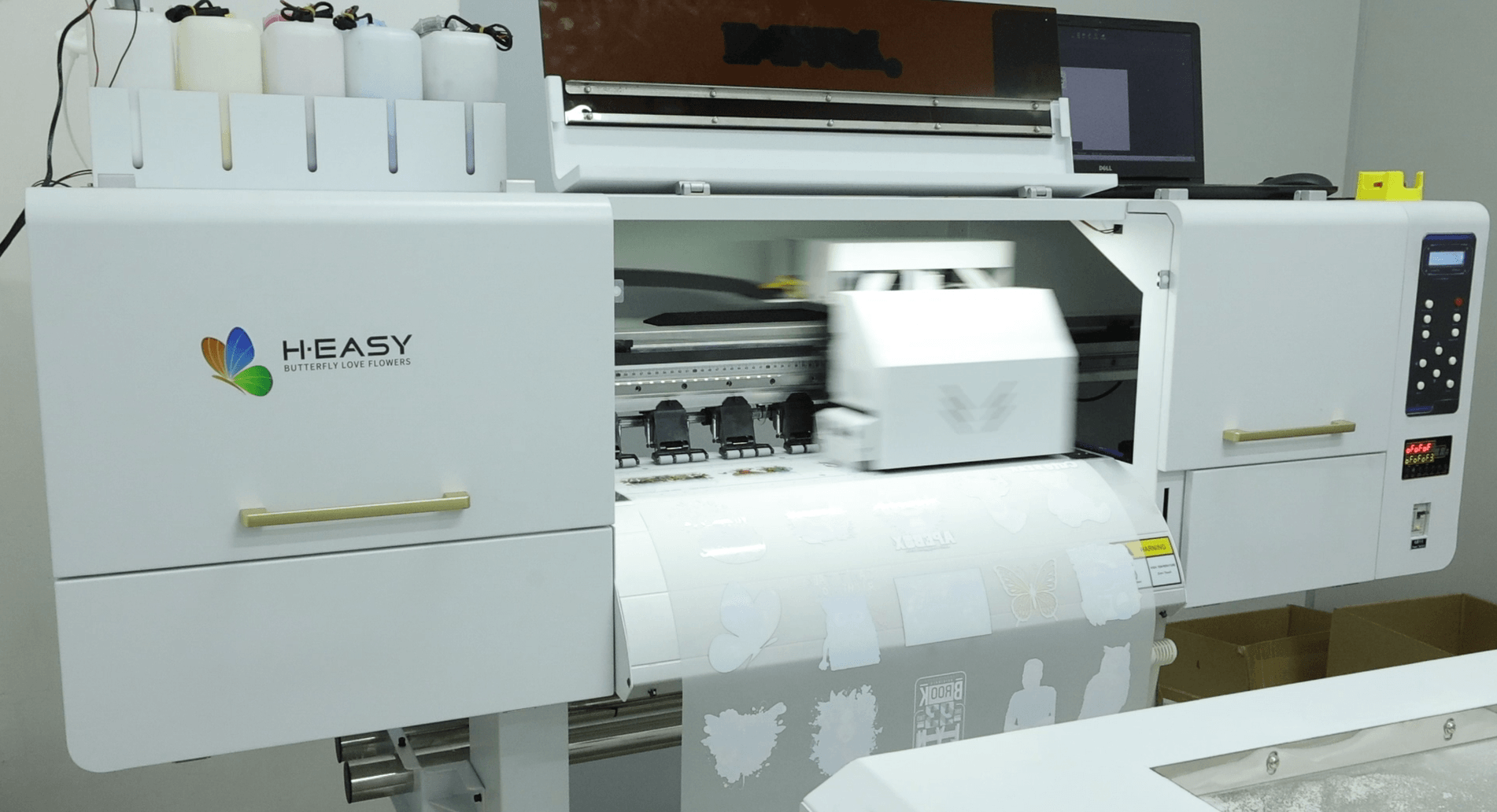
5. How the H·EASY HY-702 Addresses White Ink Management
The H·EASY HY-702 is a 60 cm production DTF printer designed for regular production rather than occasional desktop printing.
Its current configuration includes:
| Item | HY-702 |
|---|---|
| Print Width | 600 mm / 60 cm |
| Printheads | 2 × i3200-A1 |
| Ink | CMYK + White |
| White Ink System | HyCIRC™ continuous circulation |
| 4-Pass Reference Speed | 22 m²/h |
| 6-Pass Reference Speed | 15 m²/h |
| Powder Shaker | Integrated inline system |
| Application | Production DTF transfer printing |
The HyCIRC™ white ink circulation system keeps white ink moving through the system to help reduce pigment settling during production and idle periods.
This does not make the printer maintenance-free.
Printheads, dampers, caps, filters and other wear parts still need regular inspection and replacement.
The advantage is that white ink management becomes more controlled and predictable.
6. Cheap Parts Can Cause Expensive Failures
Some of the most important DTF maintenance items are also the cheapest.
Examples include:
- dampers;
- capping tops;
- wipers;
- filters;
- ink tubes;
- pumps.
Ignoring a small wear part can eventually damage a much more expensive printhead.
Ink Tubes: They can harden, swell, crack or become contaminated.
Dampers: They can restrict ink flow and cause nozzle instability.
Capping Tops: A weak seal can reduce printhead moisturizing and suction.
Wipers: A dirty or deformed wiper can spread contamination across the nozzle plate.
Replace inexpensive wear parts before they create expensive failures.
7. The Dryer and Powder Shaker Also Have a Lifespan
A DTF production line is more than the printer.
Printer → Powder Application → Powder Removal → Curing → Heat Transfer
So the dryer and powder shaker also contain wear components.
Heating Elements
Infrared heaters, quartz tubes and other heating elements have rated operating lives.
For example, a heater rated for 5,000 hours and used for around 2,000 hours per year would theoretically reach that operating time after about 2.5 years.
Real lifespan can be shortened by:
- thermal cycling;
- powder contamination;
- vibration;
- poor ventilation;
- unstable voltage.
Conveyor Systems
The belt itself may last several years, but other components can wear first:
- bearings;
- tension systems;
- tracking systems;
- motors;
- drive parts.
The entire curing system should therefore be included in your maintenance budget.
8. Why Integrated Workflow Matters in Production DTF
As order volume increases, printing, powdering and curing should not operate as completely separate production islands.
The HY-702 combines the printer with an inline powder-shaking and curing workflow.
Print PET Film → Apply Powder → Remove Excess Powder → Cure → Heat Press
The benefit is not only convenience.
It also helps reduce:
- unnecessary film handling;
- operator dependency;
- inconsistent powder application;
- workflow interruptions.
For a business moving from desktop DTF to regular daily production, the system around the printer becomes increasingly important.
9. What Is the Economic Lifespan of a DTF Printer?
Physical lifespan is only part of the answer.
A more useful concept is:
Economic Service Life
In other words:
When does it stop making financial sense to keep repairing the machine?
Entry-Level DTF: About 1–3 Years
Best suited for:
- startups;
- sampling;
- low-volume production;
- market testing.
The printer may still physically work after three years, but repair costs, lower output and outdated workflow may make replacement more economical.
Commercial DTF: About 3–5+ Years
Best suited for:
- stable orders;
- e-commerce printing;
- garment customization;
- medium daily production.
Many users upgrade these machines before they completely fail because their business now requires more speed, more automation, lower labor or better white ink management.
Production-Oriented DTF: About 4–7+ Years
At this level, the printer should be treated as a production asset.
The key questions become:
- Can it run consistently?
- Can wear parts be replaced easily?
- Are spare parts available?
- Is technical support still available?
- Can the machine still meet current order volume?
The purchase price alone does not determine whether a machine is truly industrial.
10. When Has a DTF Printer Reached the End of Its Useful Life?
A printer does not need to be completely dead.
Its economic life may be over when:
Repair Costs Keep Rising
If printheads, boards, pumps, power supplies and dryer parts repeatedly need replacement, continued repair may stop making sense.
Downtime Affects Delivery
A machine that can be repaired every week is still technically usable.
Machine Is Running ≠ Machine Is Productive
Output No Longer Matches Orders
A printer may work perfectly but still be too slow for the business.
Spare Parts Are No Longer Available
If boards, cables or software support disappear, even a minor failure can make the machine uneconomical to repair.
11. How Can You Make a DTF Printer Last Longer?
If there is one answer above all others:
Maintain It Properly.
Daily Checks
- nozzle test;
- capping station;
- wiper;
- white ink circulation;
- ink levels;
- film feeding;
- abnormal noise;
- powder contamination.
Periodic Checks
- dampers;
- filters;
- ink tubes;
- pumps;
- encoder strip;
- linear rails;
- bearings;
- dryer temperature;
- fans;
- powder shaker.
Before Long Shutdowns
Follow the supplier’s shutdown procedure.
The printer stops, but white pigment remains static in the system for a long time.
Maintenance should therefore be treated as part of production, not something done only after a fault appears.
For a more detailed maintenance routine, see our DTF Printer Maintenance Checklist for practical guidance on keeping your printer clean, reducing clogging risks, and maintaining consistent print quality.
12. The Production Environment Also Affects Printer Life
A DTF printer should not be treated like an office printer.
Its environment affects:
- ink;
- printheads;
- electronics;
- static electricity;
- film;
- powder;
- bearings.
Temperature
Excessive heat can affect ink behavior and electronics.
Humidity
Low humidity increases static risk. High humidity increases condensation risk.
Powder and Dust
Powder can enter rails, fans, bearings and electrical areas.
A well-planned DTF workshop should control the powder and curing environment as much as possible.
13. What Should You Ask a DTF Supplier Before Buying?
Do not ask only:
How fast is the printer?
Also ask:
- What is the printhead replacement cost?
- Which parts are normal consumables?
- Are common spare parts kept in stock?
- Can local technicians replace common components?
- How is white ink circulated?
- What daily maintenance is required?
- What happens if the printer is stopped for seven days?
- What technical support is available after installation?
- Can the printer and powder shaker be serviced separately?
- Will spare parts still be available several years later?
These questions often matter more to long-term cost than a small difference in purchase price.
14. Do Not Compare DTF Printers by Purchase Price Alone
Suppose:
Machine A: $10,000
Machine B: $20,000
Machine A appears much cheaper.
But real cost should include:
- Purchase Price;
- Printheads;
- Dampers;
- Pumps;
- Filters;
- Maintenance;
- Downtime;
- Labor;
- Dryer Repairs;
- Electricity;
- Rejected Prints;
- Technical Support.
This is the:
Total Cost of Ownership
A cheaper machine that stops production frequently may cost more over time than a higher-priced system that runs reliably.
15. Where HY-702 Fits
The HY-702 is designed for businesses moving beyond smaller desktop DTF systems into a 60 cm production workflow.
It is worth considering if your business now needs:
- regular daily DTF production;
- 60 cm print width;
- higher sustained output;
- continuous white ink management;
- inline powder application;
- integrated curing;
- fewer manual handoffs;
- more predictable production.
It is particularly relevant for:
- DTF print shops;
- garment decorators;
- e-commerce apparel suppliers;
- transfer manufacturers;
- contract garment printers;
- factories expanding from desktop DTF.
For occasional printing or very small order volumes, a smaller machine may still make more economic sense.
16. HY-702 Should Be Evaluated as a Complete Production System
The HY-702 is not simply:
a 60 cm printer + two printheads
Its production value comes from the complete workflow:
60 cm Printing + Dual i3200-A1 Printheads + HyCIRC™ White Ink Circulation + Inline Powder Shaking + Curing Workflow + Maintenance + Technical Support
That is why a production buyer should not ask only:
How fast is it?
A better question is:
Will this system still be practical to run, maintain and repair after thousands of production hours?
That question is much closer to the real meaning of machine lifespan.
Conclusion: A DTF Printer Is a Production Platform, Not a Machine You Use Until It Dies
A DTF printer is made up of parts with different lifespans.
Printheads will eventually need replacement.
Dampers, caps, wipers, filters and pumps will wear.
Heating elements, conveyor belts and bearings will also age.
But:
Replacing normal wear parts does not mean the printer itself has reached the end of its life.
What really determines long-term production value is:
- Machine Structure;
- Component Quality;
- White Ink Management;
- Workflow Design;
- Maintenance;
- Spare Parts;
- Technical Support.
As a practical reference:
- Entry-Level DTF: about 1–3 years of economic service life;
- Commercial DTF: about 3–5+ years;
- Production-Oriented DTF: about 4–7+ years.
But the most important question is not:
Can this printer last seven years?
It is:
In year three, five or seven, can this printer still be maintained, repaired and used profitably?
For businesses moving into regular 60 cm DTF production, the H·EASY HY-702 provides a more production-oriented approach with dual printheads, continuous white ink circulation and an integrated powder-shaking workflow.
Maintenance Is Part of Production.
A machine lasts longer not because you use it less.
It lasts longer because you use it correctly, maintain it consistently and have access to the parts and support needed to keep it productive.
Planning to move from desktop DTF to 60 cm production?
H·EASY can help evaluate your daily output, garment types and production workflow to determine whether the HY-702 matches your requirements.