
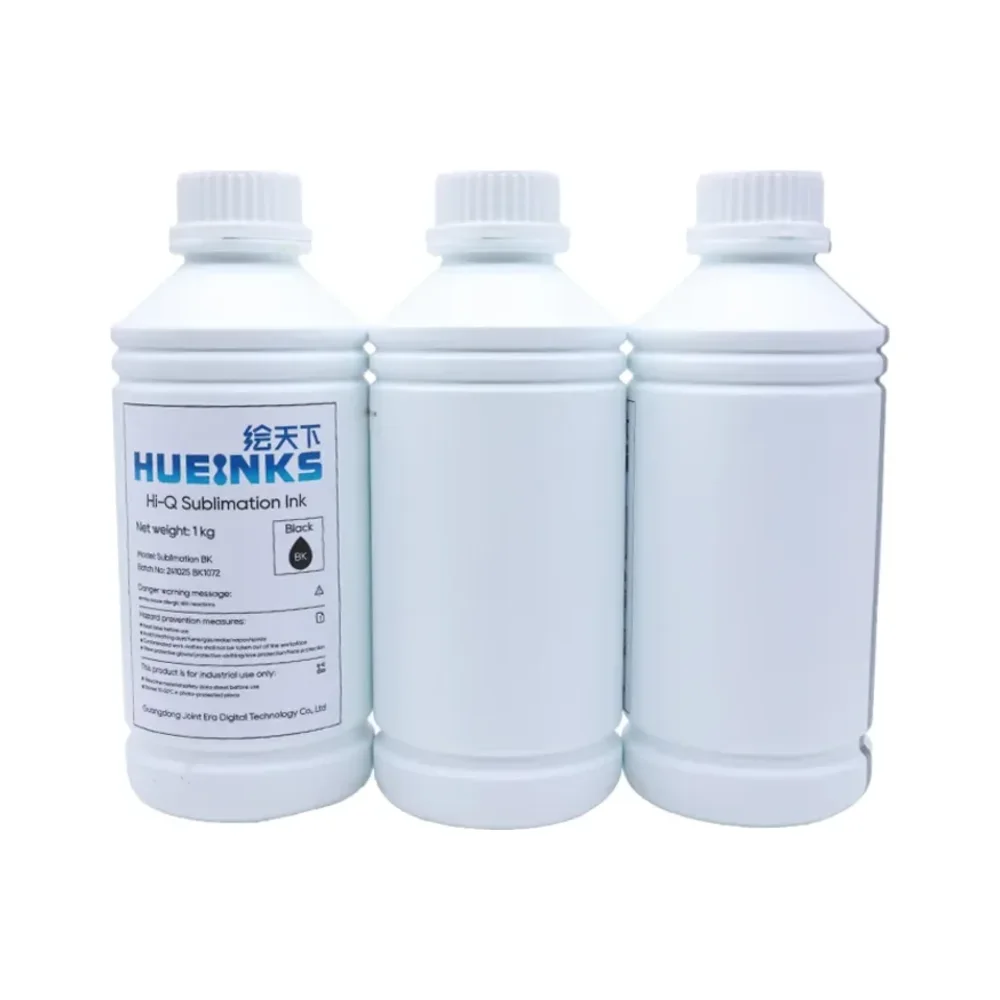
Hi-Q Sublimation Ink, 1 kg
Transfer-paper route for polyester and hard-surface blanks. 1 kg bottles.
- Sublimation
- Bottle size
- 1 kg net weight
- Model code
- Sublimation prefix, one code per colour (e.g. Sublimation BK)
- Colours
- Cyan, magenta, yellow, black
What it runs on
Compatibility with your exact machine, printhead and the ink currently in it is confirmed at quotation. Changing chemistry without a correct flush damages printheads.
Machines
- HY-1704
- HY-2004
Printheads
- Epson i3200-A1
Stated properties
| Ink chemistry | Disperse dye for paper transfer (sublimation) |
|---|---|
| Net weight | 1 kg per bottle |
| Storage | 10-30 °C, in a light-protected place |
| Handling | Industrial use only; read the safety data sheet before use |
| Hazard statement | May cause allergic skin reactions |
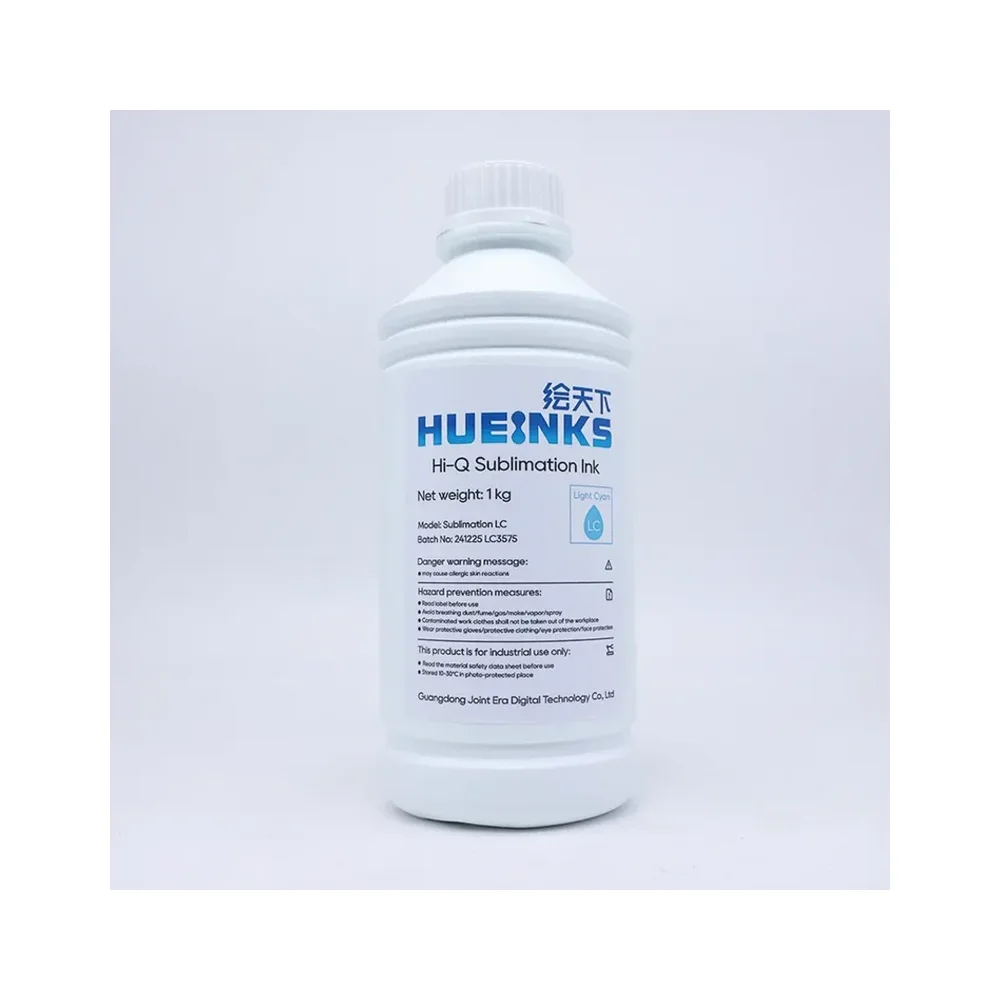
Source: Product packaging label - Transcribed from the product label photographed 2026-08-10; model code read from the Sublimation BK black bottle. Properties not listed above are not published, because we have no source for them.
What it prints
Output from this route on production fabric. Your own substrate is sampled before you commit to volume.

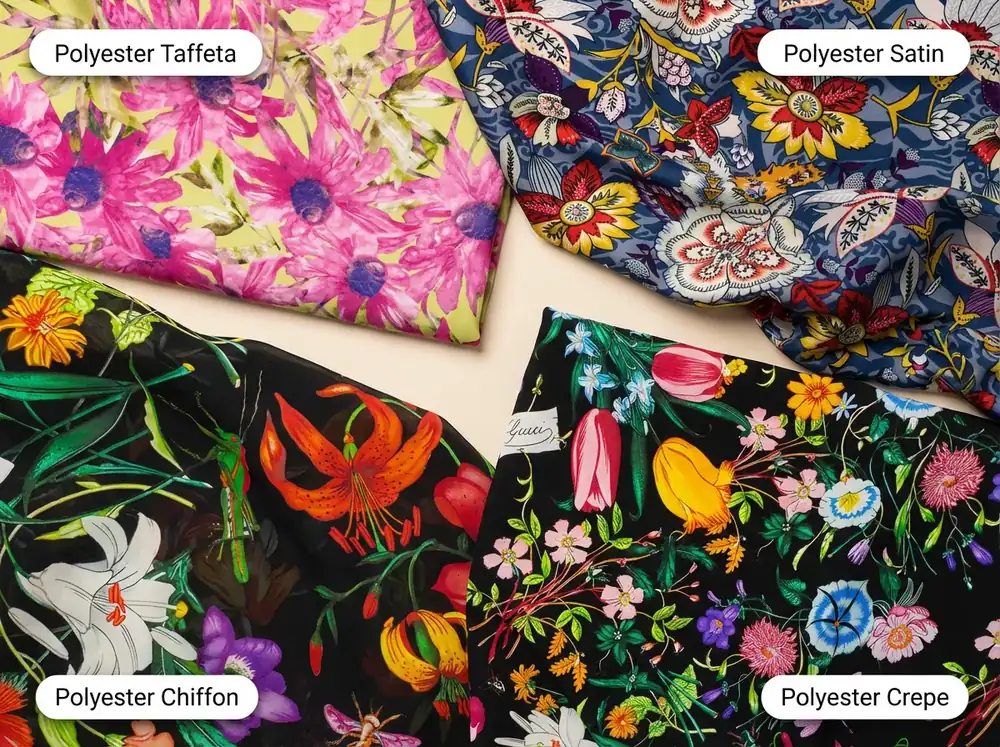
What sublimation ink is for
Sublimation is the transfer route for polyester. The image is printed onto transfer paper, then heat presses it across into the fabric or the coated surface, where the dye enters the polymer and leaves no film on top. Nothing sits on the surface to crack or peel, which is why the route holds up on sportswear and why it prints hard blanks - mugs, panels, cases - that no direct-to-fabric process can handle.
The limit is the substrate. Sublimation needs polyester or a polyester coating; on untreated cotton it does not bond at all, and on blends the colour comes out at roughly the polyester ratio.
Sublimation, or direct-to-fabric disperse?
Both are disperse chemistry. The difference is the paper. Sublimation prints to paper and presses across, so it carries a paper cost and a press step per job but handles cut pieces and rigid items easily. High-temp disperse prints straight onto the roll and removes both, which is what makes it the volume route for fabric. Mills usually end up running direct-to-fabric for roll goods and keeping sublimation for blanks and cut-piece work.
The ink routes and processes guide sets out the full picture, and sublimation vs DTG covers the garment-side decision.
What we can state, and what we cannot
The table above is transcribed from the product label: packaging, model code, storage window and hazard statement. Transfer temperature, dwell time, colour gamut and shelf life are not on the label and are not published here. Press settings in particular are a function of your paper, your fabric and your press, and are set during commissioning rather than quoted as a universal figure.
Qualifying the ink before volume
- Confirm compatibility with your machine’s heads and the ink currently in it.
- Print your own blanks and your own fabric, with the transfer paper you intend to buy - paper coating changes the result as much as the ink.
- Set press time and temperature against your own press, measured.
- Wash-test finished garments before committing to volume.
The HY-1704 and HY-2004 sublimation printers are the platforms this ink is supplied for.
Supply
HUEINKS is one of our own ink brands, specified by us and qualified against our own machines before it is sold alongside them. Sublimation ships in its own 1 kg bottle rather than the 5 kg container the roll-to-roll inks use, so the figures above come from that bottle’s own label.
Pricing, lead time, minimum order and the dangerous-goods classification for your shipping route are confirmed at quotation.
Shipping and safety documentation
Safety data sheet
Available on request
Dangerous goods
Confirmed per shipping route at quotation
Minimum order and lead time
Quoted per destination and quantity. Tell us your machine model and monthly consumption.
Frequently asked questions
What can sublimation actually print on?
Polyester and polyester-coated surfaces. The dye needs a polymer to enter, so it works on polyester fabric, poly-coated mugs, phone cases, metal panels and similar blanks, and it does not work on untreated cotton. Blends print at the polyester ratio - a 50/50 gives roughly half the colour depth of 100% polyester.
Sublimation or DTG for garments?
Different jobs. Sublimation suits all-over polyester sportswear and hard blanks; DTG suits cotton garments and short runs on dark fabric. Our comparison of the two is linked below.
Which machines does this ink pair with?
The HY-1704 and HY-2004 sublimation printers, which carry four Epson i3200-A1 heads. Compatibility with any other platform, and with the ink already in a machine, is confirmed at quotation.
Why 1 kg bottles rather than 5 kg?
Sublimation runs use less ink per job than direct-to-fabric roll printing, and smaller bottles keep an opened container from sitting too long. The 5 kg format applies to the roll-to-roll reactive, disperse and pigment lines.
Tell us your machine and your monthly volume
We quote consumables against a specific machine, printhead and ink set, not from a catalogue line, because that is the only way the answer is useful.