The Ultimate Guide to DTF Film: How to Achieve Smooth, Durable, Vibrant Prints
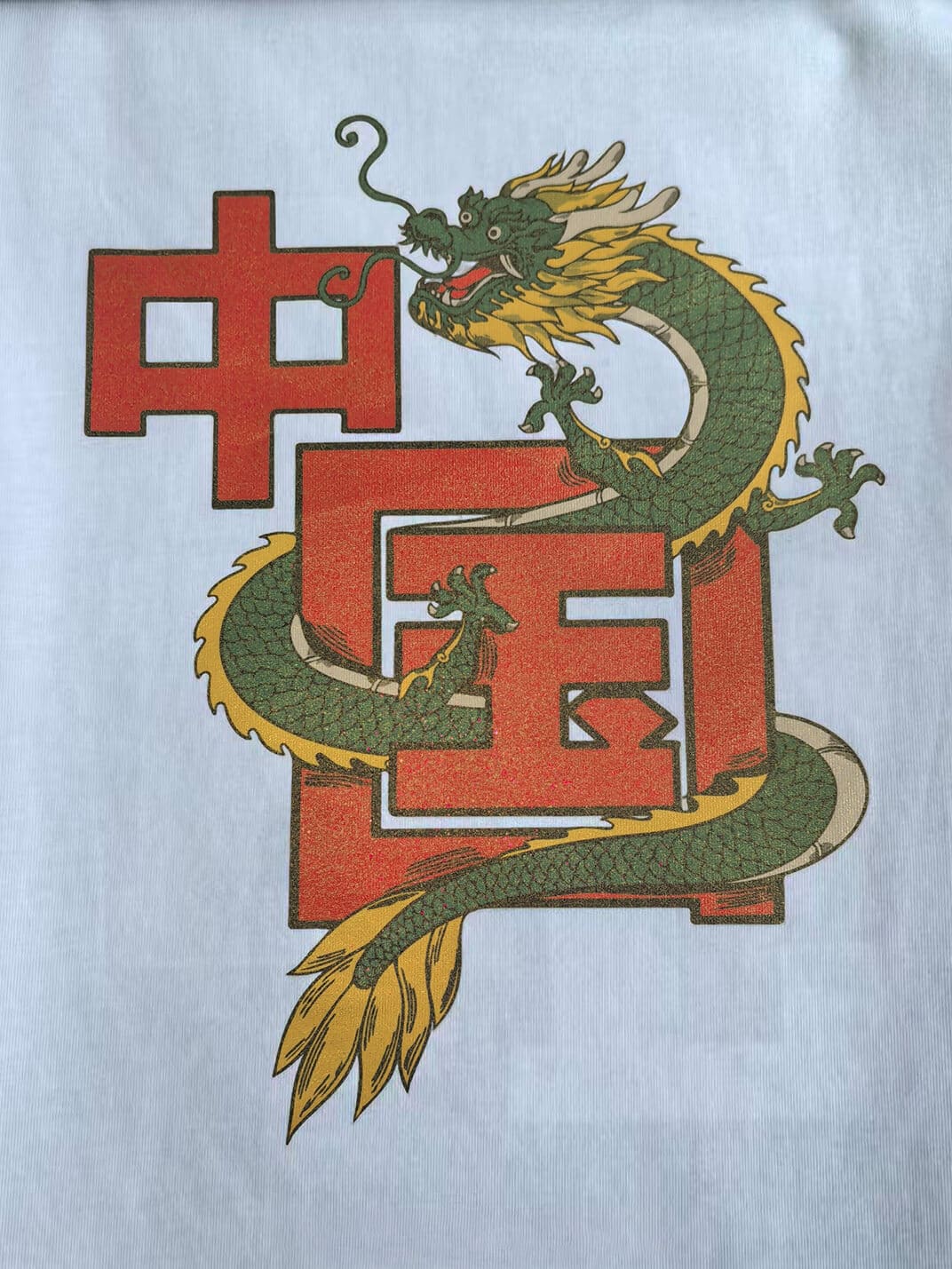
DTF film is the foundation of the DTF transfer process - it’s the substrate ink lands on, the carrier the powder bonds through, and the surface that peels away after heat-press. 75 μm film is a common production starting point, not a universal optimum. Storage, peel and press conditions must come from the paired film and powder TDS. This guide covers what makes good film, what fails on bad film, and how to specify it.
What is DTF film?
DTF film is a PET (polyethylene terephthalate) sheet with a special coating that receives water-based pigment ink and releases cleanly during heat-press transfer. The coating determines:
- Ink receptivity (no bleed, no bead)
- Peel behavior (hot, warm or cold)
- Adhesive-powder bonding consistency
- Final print finish (matte or gloss)
Film structure and functional properties
Production-grade DTF film is more than “PET + coating”. Depending on the supplier, the following functions may be delivered by separate layers or a combined coating stack:
- PET base layer - dimensional stability and feed reliability
- Release / separation layer - controls peel force
- Ink receptive coating - accepts water-based ink without bleeding
- Anti-static layer - prevents dust attraction and printhead arcing
- Smoothness control - keeps ink dot placement accurate
Poorly controlled films can show inconsistent peeling, ink bleed, film shift and poor registration. Do not use a claimed layer count as the acceptance criterion; verify coating uniformity, release force, static behavior and lot repeatability.
Film thickness
| Thickness | Use case |
|---|---|
| 70 μm | Supplier-specific thin-film option; qualify feed and curl |
| 75 μm | Common production starting point; qualify on the actual printer |
| 80 μm | Supplier-specific heavier option; qualify carriage clearance and feed |
| 100 μm | Specialty option; confirm the intended effect and handling |
Peel types
| Peel type | When to peel | Qualification requirement |
|---|---|---|
| Cold peel | After the transfer reaches the TDS-defined cool state | Verify bond, finish and cooling time |
| Warm peel | Within the TDS-defined warm window | Verify temperature and operator timing |
| Hot peel | Immediately only when the film is specified for it | Verify release and edge integrity |
| Universal | At each peel state explicitly permitted by its TDS | Do not assume every hot, warm and cold window works |
A qualified universal-peel film can widen the operator window, but the paired film, powder, fabric, press and post-press cycle still determine the result.
Compatibility
Production-grade DTF film is compatible with all common DTF printheads, including XP600, Epson i3200-A1 and i3200-U1. See:
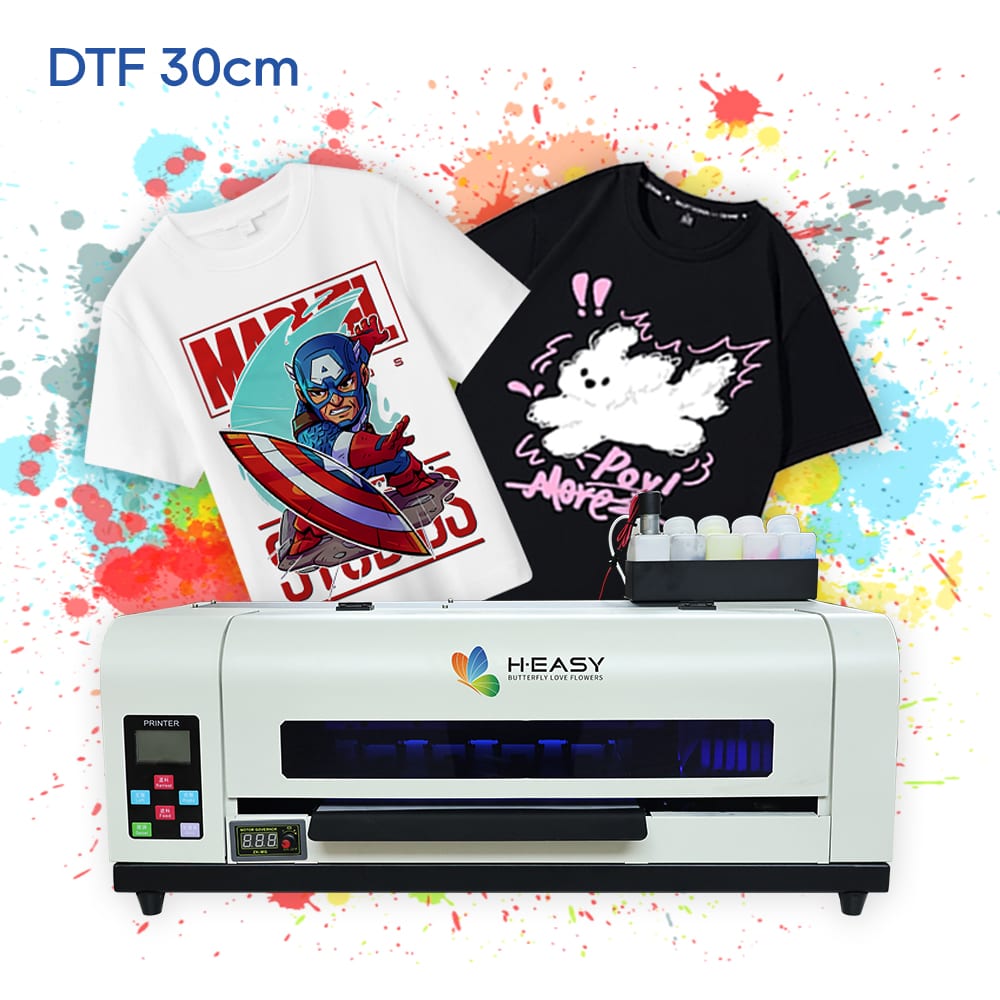
- HY-401 30cm DTF (XP600) - desktop sampling
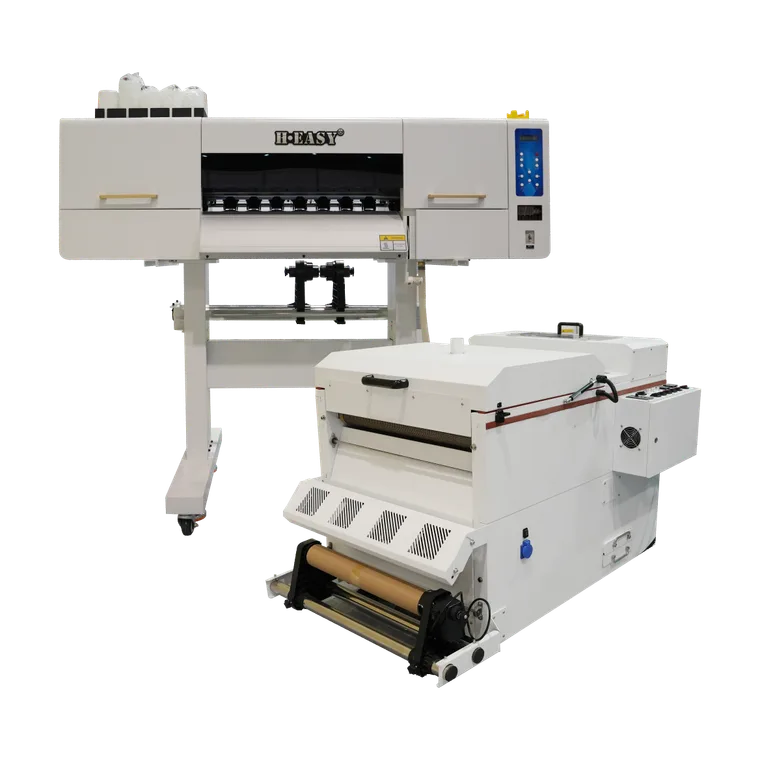
- HY-702 60cm DTF (dual i3200-A1) - production
Storage and shelf life
- Temperature: supplier-labeled range
- Humidity: supplier-labeled range
- Light: away from direct sunlight
- Orientation: stored flat or rolled per supplier spec
- Original packaging: keep sealed until use
Out-of-spec storage causes coating delamination, inter-sheet sticking, and unpredictable powder-adhesion behavior - the kind of failures that appear mid-run with no obvious cause.
Common defects and their root causes
| Defect | Likely cause |
|---|---|
| Inconsistent peeling | Mixed peel types in stock, or coating defects |
| Ink bleeding | Low-grade single-coat film, or out-of-spec humidity |
| Film shifting on platen | Static buildup, anti-static layer failure |
| Poor registration | Film dimensional instability under heat |
| Patchy powder adhesion | Coating inconsistency, or moisture in storage |
Conclusion
DTF film looks like a commodity but performs like a precision substrate. Start evaluation with a documented film specification, which may include a 75 μm grade, and require coating and lot control from the supplier. Store it within the labeled range. Match peel behavior to the paired TDS and confirm the full transfer cycle on representative fabric before production.
For machines optimized for DTF film handling and white-ink reliability, see the HY-401 and HY-702.
Printers matched to this guide