
Iranian Textile Printer Adds H·EASY HY-1816 Pigment Capability for Blends
- Iran
- Textile printing
- HY-Series Direct-to-Fabric R2R Printers
- Sep 18, 2026
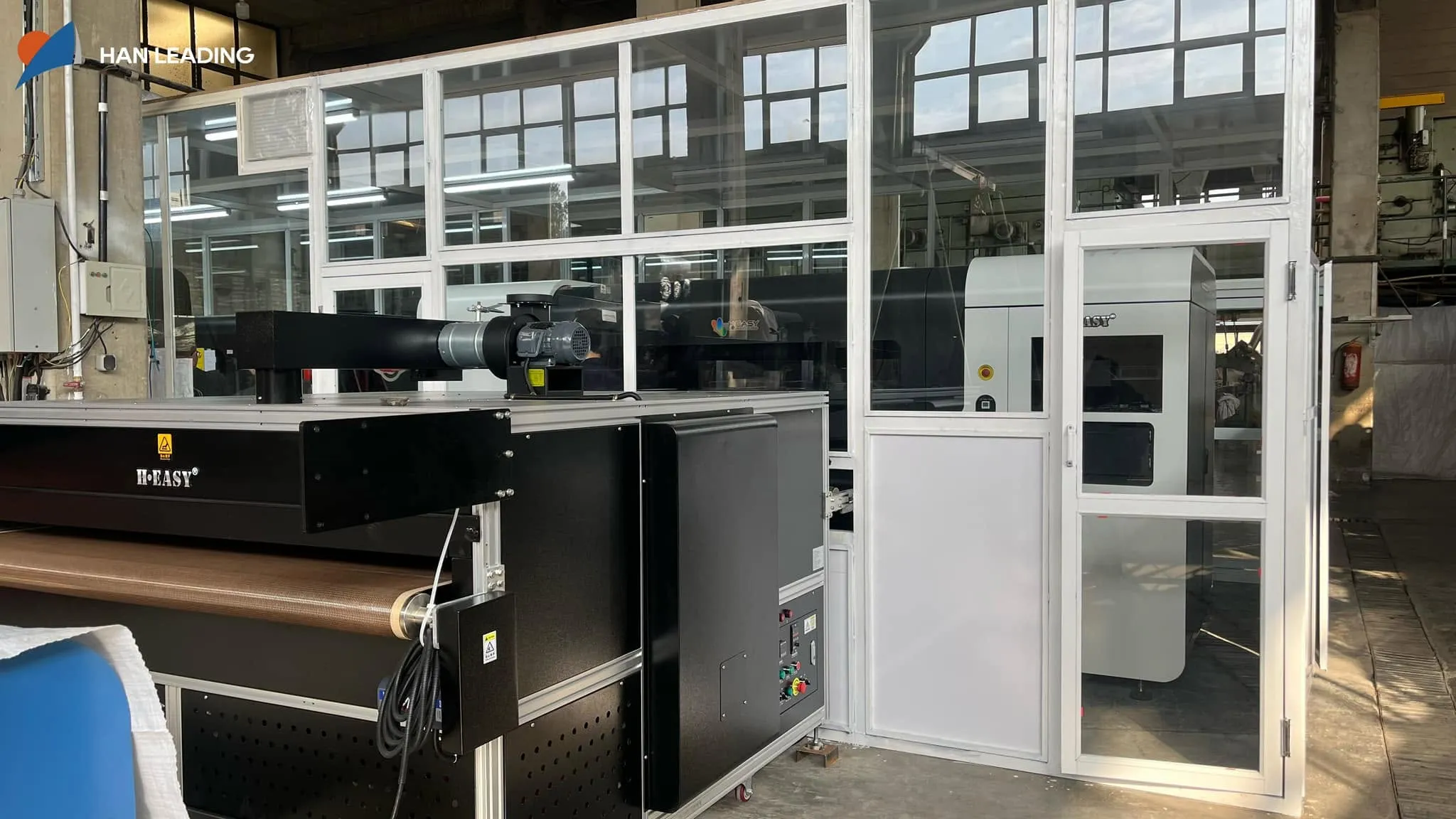
Deployment results
| Machine installed | Printing routes |
|---|---|
| 1 × HY-1816 | Pigment |
At ITMA 2023, an Iranian textile printer visited the H·EASY booth three times in five days.
By the third visit, he had already decided to buy from another supplier.
What changed his decision was not another discussion about price. It was a closer look at the orders his existing production line could–and could not–handle.
The customer already had an established reactive printing operation for cotton fabrics. But blended-fabric orders were becoming a growing part of his business. Instead of replacing the reactive line that was already serving his cotton customers, the solution was to add a second digital printing route.
He selected one H·EASY HY-1816 pigment digital textile printer to expand the factory’s production capability for blended fabrics.
Case Snapshot
| Item | Details |
|---|---|
| Customer | Iranian textile printer (name withheld) |
| Existing Process | Reactive printing for established cotton-fabric orders |
| New Requirement | A complementary route for blended-fabric opportunities |
| Machine Installed | 1 × H·EASY HY-1816 |
| New Process | Pigment direct printing |
| Decision Point | ITMA 2023 |
| Confirmed Outcome | HY-1816 installed at the customer’s factory |
Customer Background
An Established Reactive Printer Facing a New Order Mix
The customer was not new to textile printing.
His factory already operated a reactive printing process, serving established customers and producing cotton fabrics at volume.
The challenge was coming from a different direction.
More blended-fabric inquiries were appearing in the factory’s order book. These orders did not fit the customer’s existing reactive production route, which meant the factory needed another process option if it wanted to expand the range of orders it could accept.
The objective was therefore not to replace a working reactive production line.
It was to add a complementary production capability.
The Decision at ITMA 2023
Three Visits in Five Days
The first conversations with H·EASY took place at ITMA 2023.
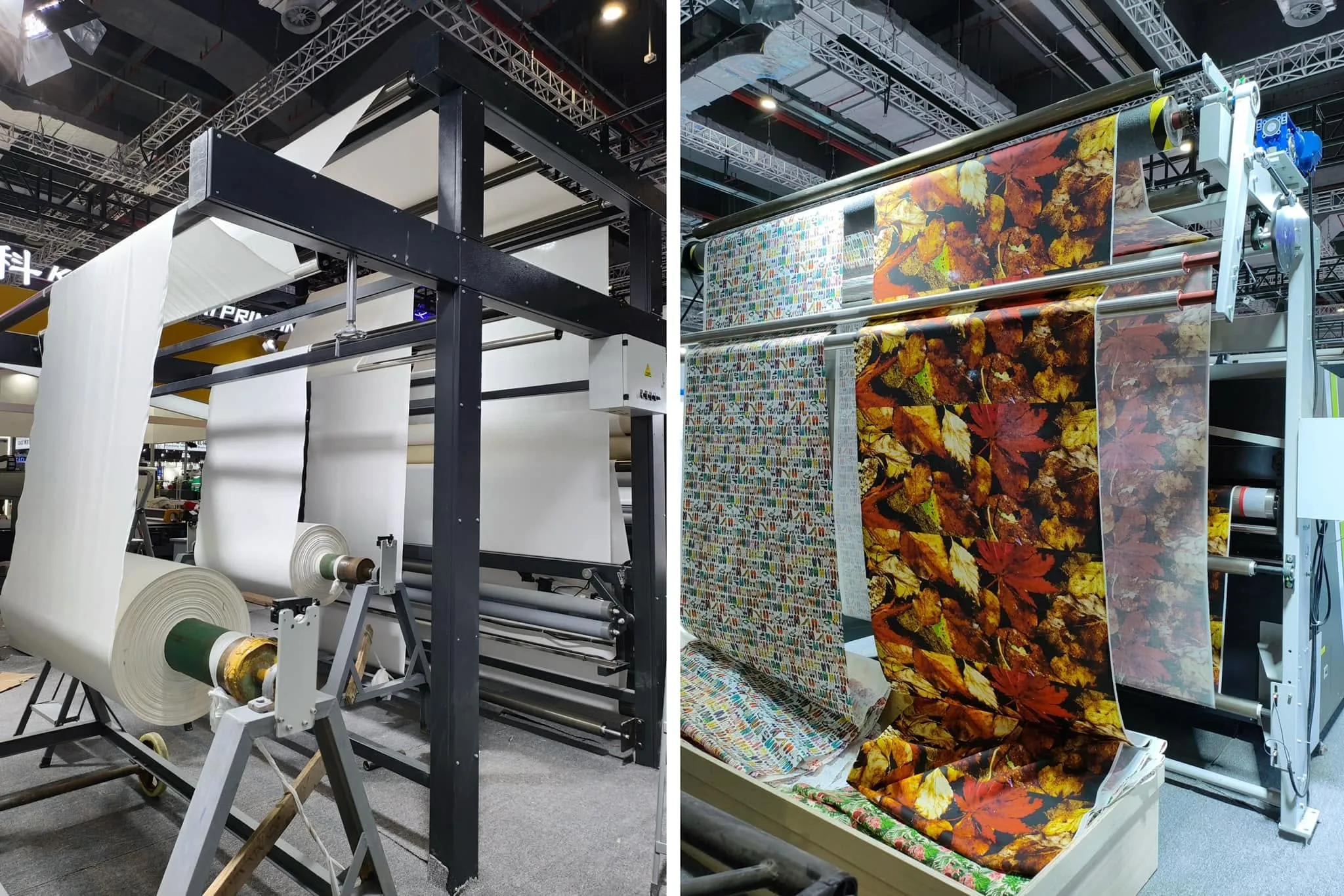
Day 1 – First Visit
Like many visitors during the opening stage of a major textile exhibition, the customer initially stopped at the H·EASY booth for a general look at the equipment and solutions on display.
There was no immediate purchase decision.
Day 2 – Performance and Price
He returned the following day.
This time, the discussion moved further into machine performance, configuration and price.
After the conversation, he continued comparing other digital textile printing machines at the exhibition.
Day 4 – He Had Chosen Another Supplier
On his way out of the exhibition, the customer passed the H·EASY booth again.
He stopped to explain that he had decided to purchase from another supplier.
Instead of restarting the discussion around price, the H·EASY team asked for another ten minutes to understand what the factory actually needed the new machine to do.
That changed the conversation.
The Real Requirement: Not Another Reactive Line
The customer explained that his existing factory production was based on reactive printing.
Its core business included cotton fabrics, established customers and volume production.
But blended fabrics were becoming increasingly important in incoming orders.
The issue was therefore not simply whether one machine was faster or cheaper than another.
The more important question was:
What production capability was missing from the customer’s existing factory?
The existing reactive line could continue doing what it already did well.
The new machine needed to help the factory handle a different category of orders.
That led the discussion toward pigment direct printing.
Why Pigment Printing Made Sense
Pigment digital printing gave the customer another production route for blended fabrics, complementing the factory’s existing reactive operation.
Instead of treating digital transformation as a replacement project, the factory could operate the two processes for different order requirements.
| Existing Production Route | New Production Route |
|---|---|
| Reactive printing | Pigment direct printing |
| Existing cotton production | blended-fabric applications |
| Established volume orders | Additional order categories |
| Existing production capability | Complementary digital capability |
This allowed the customer to preserve the value of the existing reactive line while expanding the range of fabrics and orders the factory could evaluate for production.
A Second Look at the HY-1816
From Price Comparison to Production Fit
Once the production requirement became clear, the customer returned to the HY-1816 and evaluated the machine in more detail.
The discussion covered areas including:
- Ricoh Gen6 printhead configuration;
- ink delivery and ink-path design;
- adhesive-belt fabric transport;
- drying;
- pigment printing workflow;
- suitability for the customer’s intended blended-fabric applications.
The machine was no longer being evaluated simply against another printer on the exhibition floor.
It was being evaluated against a specific gap in the customer’s existing production system.
Following the discussion, the customer placed a USD 5,000 deposit at the H·EASY booth.
Machine Selected
H·EASY HY-1816 Pigment Digital Textile Printer
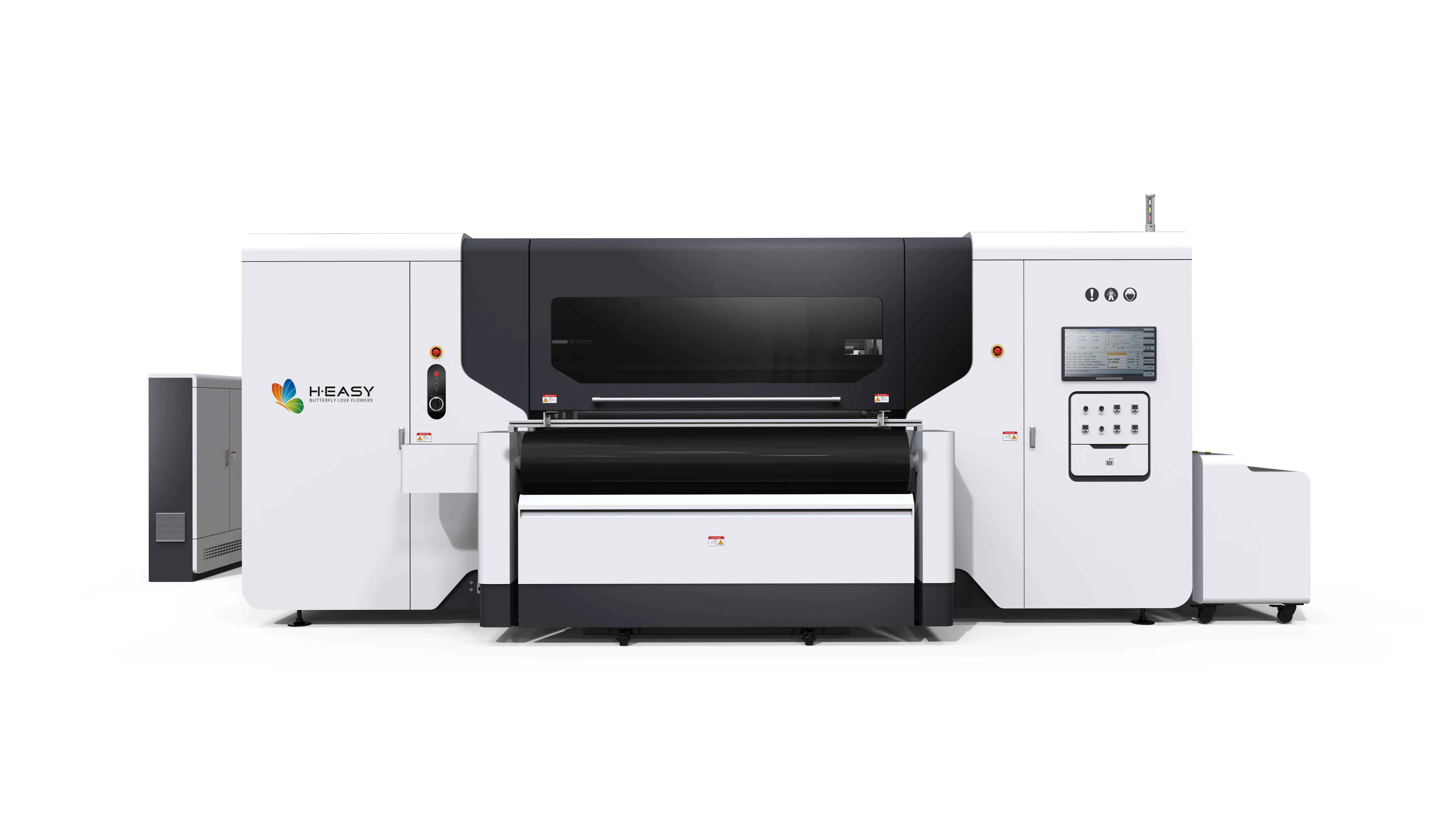
The customer selected one HY-1816 configured for pigment direct-to-fabric printing.
| Item | Configuration |
|---|---|
| Machine | H·EASY HY-1816 |
| Quantity | 1 unit |
| Print Width | 1.8 m |
| Printheads | 16 × Ricoh Gen6 |
| Printing Process | Pigment direct printing |
| Target Fabrics | blended fabrics |
| Reference Speed | Up to 330 m²/h at 2-pass; 200 m²/h at 3-pass |
Note: Speed figures are machine reference values. Actual production output depends on fabric, artwork coverage, pass mode, ink configuration, pretreatment, drying, quality requirements and operating conditions.
These HY-1816 machine-model reference figures are not measured output at this customer’s factory or guaranteed production. See the HY-Series machine range for model specifications.
From Exhibition Decision to Factory Installation
The purchase decision at ITMA was only the beginning of the project.
The HY-1816 was subsequently delivered and installed at the customer’s factory.
This created two complementary production routes:
Existing reactive line → reactive printing for its established applications
HY-1816 → pigment direct printing for blended-fabric applications
The objective was not to force all orders through one process.
It was to give the factory more flexibility to select a production route according to fabric and order requirements.
ITMA Customer Visit
Evaluating Fabrics Before the Purchase
Before making the final decision, the customer spent time at the H·EASY booth reviewing printed fabric samples and discussing the applications he wanted to develop.
The footage documents the customer evaluating textile samples during the ITMA exhibition, when the discussion shifted from comparing machines to identifying the right production route for his factory.
Customer reviewing printed fabric samples at the ITMA booth.
The footage does not document production output at the customer’s factory.
Factory Installation
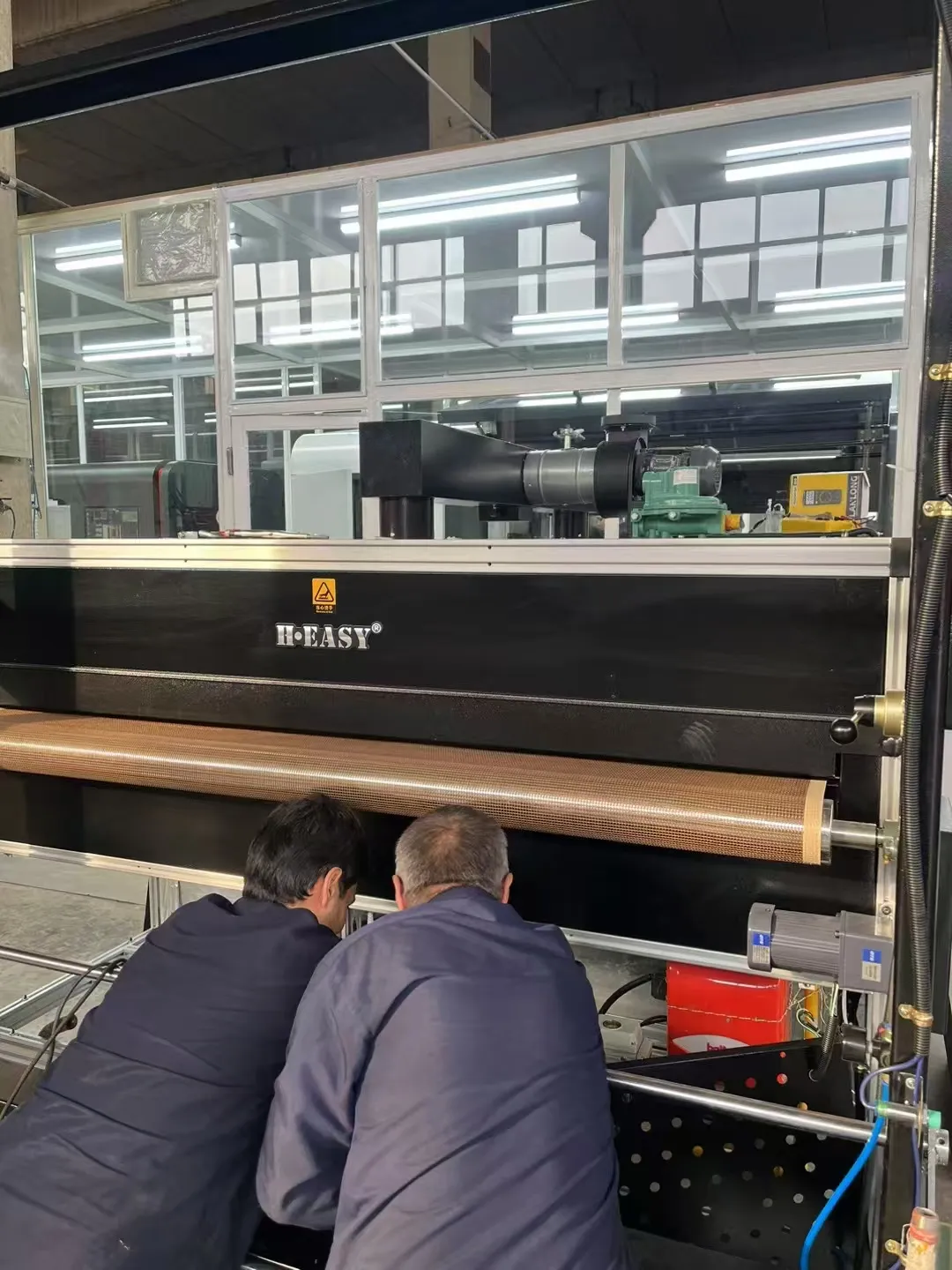
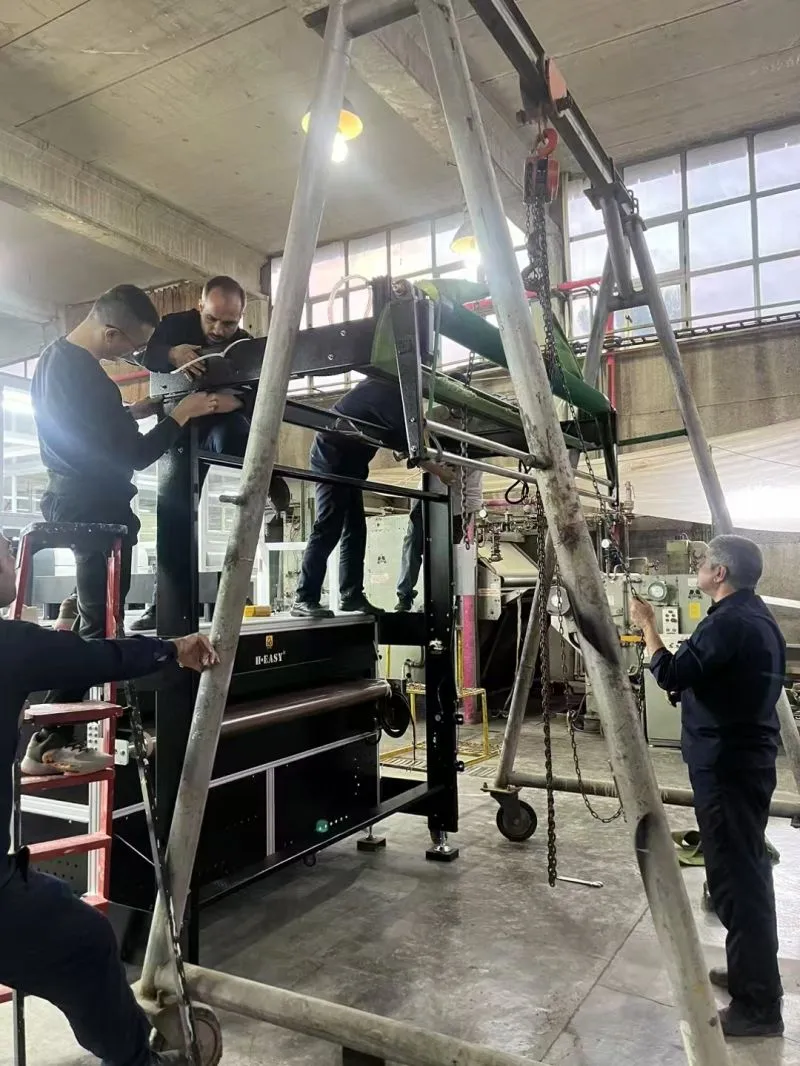
The two photographs above document installation activity at the customer’s factory in Iran.
Why the HY-1816 Fit This Project
1. A Complement to the Existing Reactive Line
The HY-1816 did not require the customer to abandon an established reactive process.
Instead, pigment printing added another production option for orders that did not fit the existing route.
2. Blended-Fabric Capability
The customer’s requirement was driven partly by increasing demand for blended fabrics.
A pigment printing route expanded the range of fabric applications the factory could evaluate while continuing to serve its established cotton business.
3. Flexible Digital Production
Digital printing removes traditional screen-making from the image-generation stage, making design changes, sampling and smaller production runs easier to manage.
4. Industrial Production Configuration
With a 1.8 m print width and 16 Ricoh Gen6 printheads, the HY-1816 provides a production-oriented configuration rather than functioning only as a sampling machine.
5. A Lower-Risk Expansion Path
The project demonstrates a practical way to expand digital capability:
keep the process that already works, then add the process needed for the orders the factory cannot currently serve.
The Result: Two Processes for Different Orders
The most important outcome of this project is not that pigment replaced reactive printing.
It did not.
The customer’s existing reactive production continues to serve the applications it was built for, while the HY-1816 provides an additional pigment printing route for blended-fabric opportunities.
| Production Need | Production Route |
|---|---|
| Existing reactive applications | Reactive line |
| Blended-fabric opportunities | HY-1816 pigment printing |
| Different order requirements | Select the appropriate process |
For this factory, digital expansion was not about choosing one process and abandoning another.
It was about building a broader production system.
What This Case Shows
A textile factory considering a new digital printing machine does not always need a faster version of what it already owns.
Sometimes the more important question is:
Which orders are we currently unable to produce?
For this Iranian customer, answering that question changed the purchase decision at ITMA.
The factory already had reactive production capability. Adding the H·EASY HY-1816 created a complementary pigment route for blended fabrics, allowing the business to address a wider range of customer requirements without immediately replacing its existing production system.
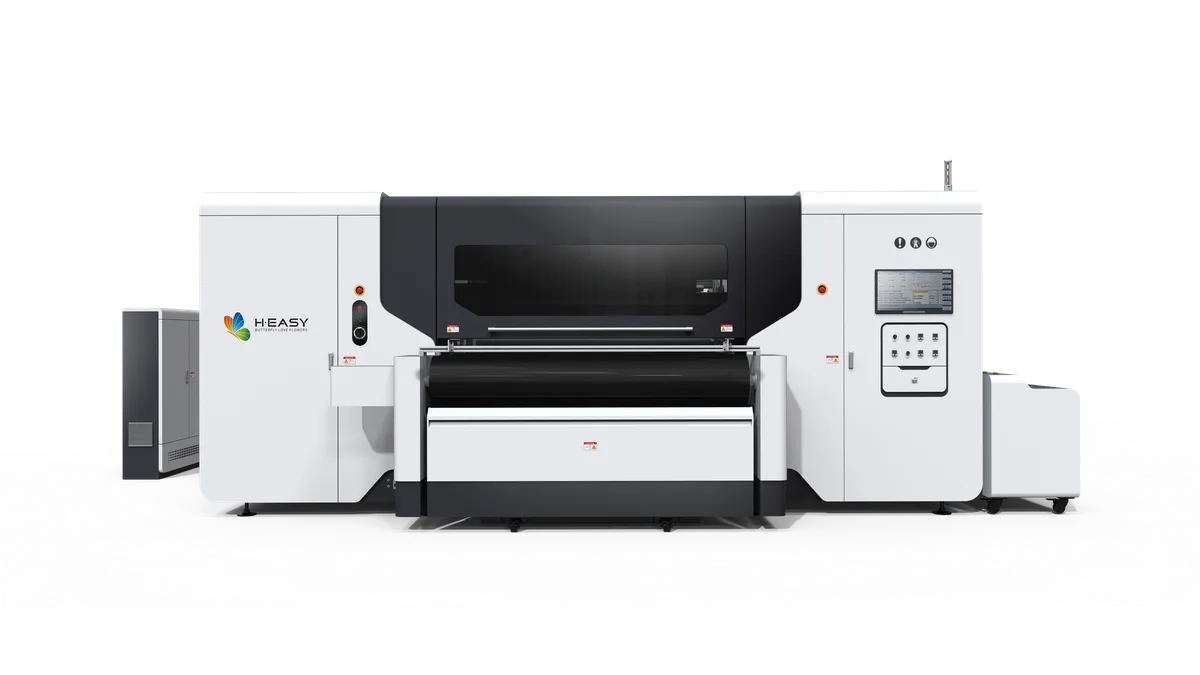
1.8m to 2.6m standard R2R printers (3.2m HY-3264/HY-3296 on request), 8 to 96 Ricoh Gen6 heads and model-specific 2-pass / 3-pass references for silk, cotton, polyester and home textiles.
View specifications →More deployments
Planning a similar line?
Tell us your fabric, output target and market. We reply with a configured recommendation, lead time and budget within one business day.