
From First Evaluation to 1 Million+ Meters with H·EASY HY-1816
- Bangladesh
- Textile weaving
- HY-Series Direct-to-Fabric R2R Printers
- Sep 17, 2026
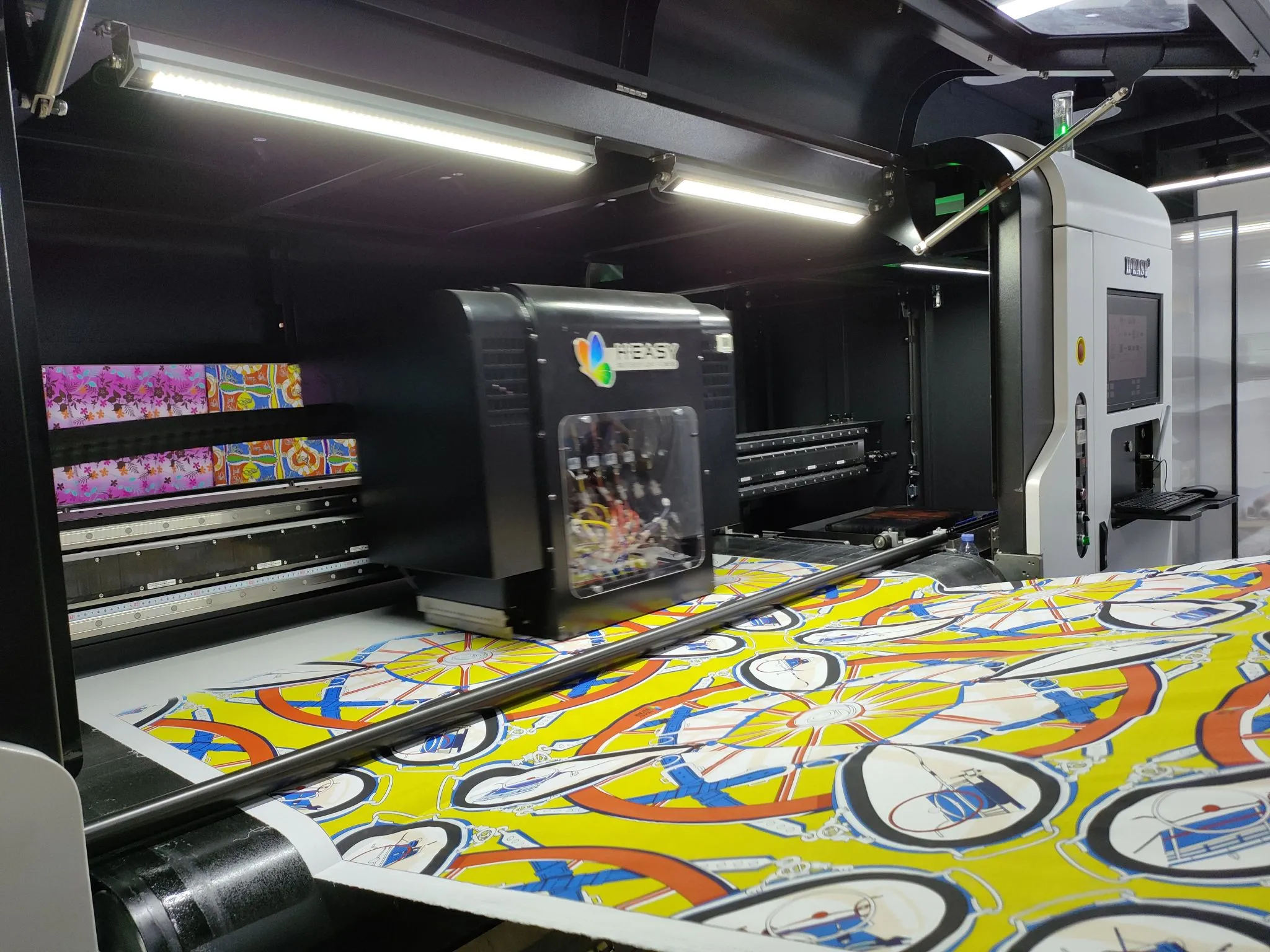
Deployment results
| Machine installed | Machine counter |
|---|---|
| 1 × HY-1816 | 1M+ m |
A Bangladesh weaving company had never owned a digital textile printer before. After months of evaluation, factory visits, and cotton reactive-printing tests, it chose one HY-1816. About one year later, the machine counter had passed one million meters.
Case Snapshot
| Item | Content |
|---|---|
| Customer | Bangladesh weaving company |
| Process | Reactive direct printing |
| Fabric | Cotton |
| Machine | HY-1816 |
| Print mode used | 2-pass |
| Production record | More than 1 million meters shown on the machine counter |
The counter reading is a machine record, not a measurement of inspected or sellable fabric output.
A First-Time Digital Printer Buyer
The customer was an established weaving company in Bangladesh, but it had never owned a digital textile printer. It understood textile production; digital printing introduced different questions about printhead technology, machine stability, process compatibility, maintenance, and long-term reliability.
For a factory buying its first digital printer, the decision was not simply about speed or price. The machine had to prove that it could work in real production.
The First Concern: Why Ricoh?
The First Question Was the Printhead
The first enquiry came by email. When the purchasing manager learned that the printer used Ricoh industrial printheads, he was cautious: Ricoh-based textile printers were unfamiliar in his local market, so he preferred to wait.
The local Bangladesh partner saw a reason to investigate that unfamiliar technology. The question became the starting point for a longer evaluation process.
From First Email to First Machine
Step 1: Initial Enquiry
The customer initially hesitated because Ricoh printheads were unfamiliar in the local textile-printing market.
Step 2: January 2025 Factory Visits in Bangladesh
During the DTG exhibition period in Dhaka, the supplier’s team spent a day with the local partner and visited three textile factories.
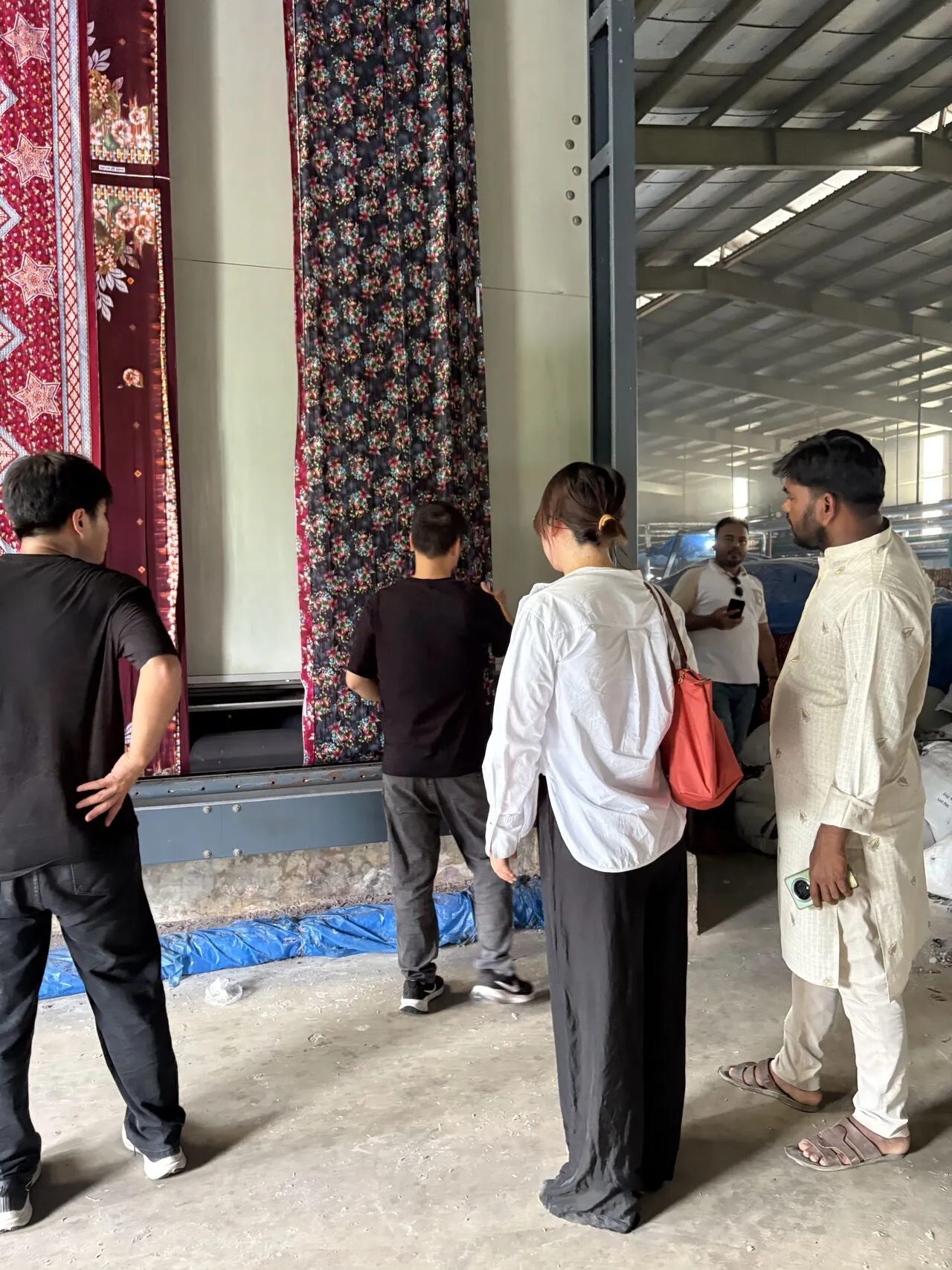
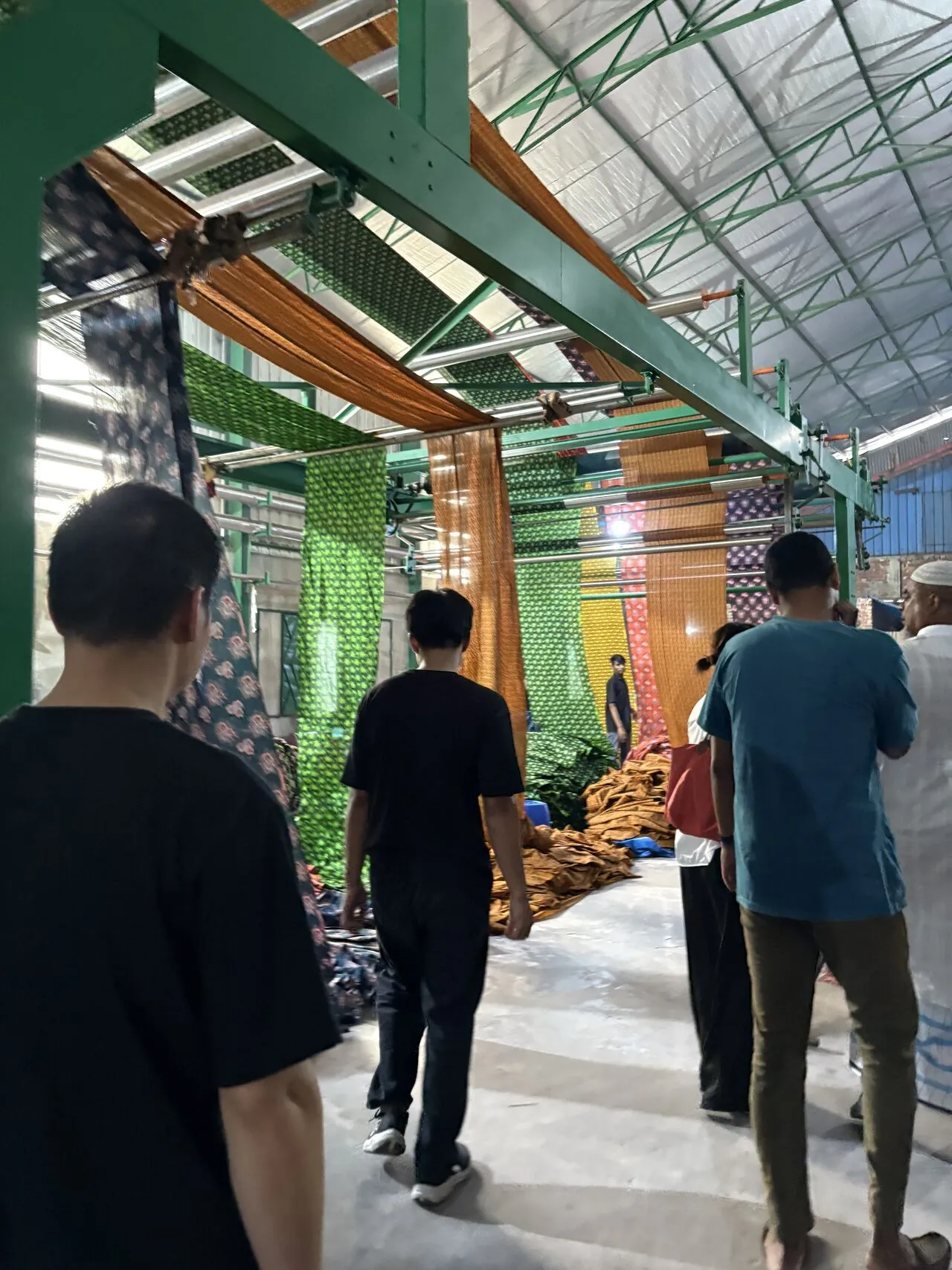
Step 3: June 2025, Six Visitors and Four Factory Visits
The Bangladesh partner brought three prospective customers (six people in total) to evaluate the supplier’s machines in China. The group visited four factories already using that equipment.
The video records the Bangladesh group’s factory visits during its evaluation.
Step 4: Cotton Reactive Printing Test
The visitors brought cotton fabric for testing. The final factory they visited operated both reactive and high-temperature disperse workflows. Because their samples were cotton, the evaluation focused on reactive direct printing. All three prospective customers were satisfied with the test results and initially considered HY-2232.
Step 5: One Customer Decided to Start Smaller
After returning to Bangladesh, two companies delayed their plans. The weaving company moved forward, choosing one HY-1816 rather than a HY-2232 as its first digital textile printer.
Why HY-1816?
Starting with a Controlled First Investment
For a factory without a previous digital-printing machine, the HY-1816 offered a more controlled entry into digital textile production.
| Specification | HY-1816 |
|---|---|
| Printheads | 16 × Ricoh Gen6 |
| Effective print width | 1800 mm |
| Print mode used by this customer | 2-pass |
| Reference 2-pass speed | 330 m²/h |
| Process in this case | Reactive direct printing |
| Fabric | Cotton |
The 330 m²/h figure is a machine-model reference, not this customer’s measured production speed. The customer prioritized establishing a stable reactive-printing workflow and gaining operating experience over maximizing machine size on the first purchase.
For this Bangladesh weaving company, HY-1816 was its first digital textile printer. Instead of starting with a larger 32-head machine, the customer chose a configuration that could support real production while keeping the first investment more controlled.
16 Ricoh Gen6 Printheads
HY-1816 is equipped with 16 Ricoh Gen6 industrial printheads and supports reactive direct printing on cotton fabric.
330 m²/h Reference Speed in 2-Pass
The published 330 m²/h in 2-pass is a machine-model reference for production planning, not a measured or guaranteed output at this customer site. Print quality and sellable output must be qualified with the intended fabric and artwork.
Stable Adhesive-Belt Fabric Feeding
The adhesive belt system helps keep cotton fabric flat and stable during continuous printing, supporting more consistent fabric movement and image output.
Automated Ink and Printhead Management
Automatic negative-pressure ink supply, carriage lifting and printhead capping, together with an operator-triggered negative-pressure cleaning routine, help simplify daily operation and maintenance.
Built for Reactive Cotton Production
With an 1800 mm effective print width, adjustable printhead height and support for reactive ink, HY-1816 provides a practical entry point for factories building their first digital cotton printing line.
Why Reactive Direct Printing for Cotton?
Reactive printing is suited to cotton because the dye bonds with cellulose fibers during fixation. With appropriate process control, it can produce vivid colors, a soft hand feel, and good wash fastness. Combining the process with digital printing offers several practical advantages:
- Shorter preparation: No traditional screen-making is required, which can shorten sampling and order preparation.
- Detailed patterns: Digital printing can reproduce fine patterns and gradients on cotton.
- Design flexibility: Digital files can be changed without preparing new screens for each pattern or colorway.
- Flexible orders: The workflow supports samples, custom designs, and multiple styles.
- Less preparation material: On-demand inkjet printing can reduce screen and printing-paste preparation waste.
- Potentially less waste in selected stages: Compared with conventional screen printing, avoiding screens and excess paste may reduce waste in those stages; this is not a claim about the complete process’s environmental footprint.
The HY-1816 uses 16 Ricoh Gen6 printheads and adhesive-belt fabric feeding for this customer’s 2-pass reactive direct-printing workflow on cotton.
From Installation to Real Production in Bangladesh
The customer installed and commissioned its HY-1816 at its factory in Bangladesh. The video follows the machine’s arrival and setup, then shows the printer running on patterned fabric in the customer’s production environment.
For this weaving company, the HY-1816 was its first digital textile printer. The footage documents the transition from installation and commissioning to factory use.
One Year Later: More Than 1 Million Meters
About one year later, a service engineer returned to the customer’s factory to replace a dryer motor. During that visit, the machine counter was checked: it showed more than one million meters.
That figure is the machine’s counter reading. It should not be interpreted as a verified quantity of inspected or sellable fabric.
A Careful Purchase Can Still Become a High-Volume Production Machine
The journey from first enquiry to first machine took roughly eighteen months. The customer evaluated the printheads, visited operating factories, tested its own cotton, compared configurations, and chose a smaller model to control its first investment. About a year later, that machine’s counter had passed one million meters.
- Verify before buying: See machines running in real factories.
- Start at the right scale: This customer chose HY-1816 rather than immediately buying a larger model.
- Scale based on production experience: Build digital-printing capability after proving the process internally.
Machine Configuration
| Item | Specification |
|---|---|
| Model | HY-1816 |
| Printheads | 16 × Ricoh Gen6 |
| Effective print width | 1800 mm |
| Maximum resolution | Up to 2400 DPI |
| Reference 2-pass speed | 330 m²/h |
| Reference 3-pass speed | 200 m²/h |
| Fabric conveyance | Adhesive belt |
| RIP software options | Neostampa / Texprint |
The speeds above are published HY-1816 model references, not measured results from this customer’s installation. Explore the HY-Series direct-to-fabric printer for the model range and process options.
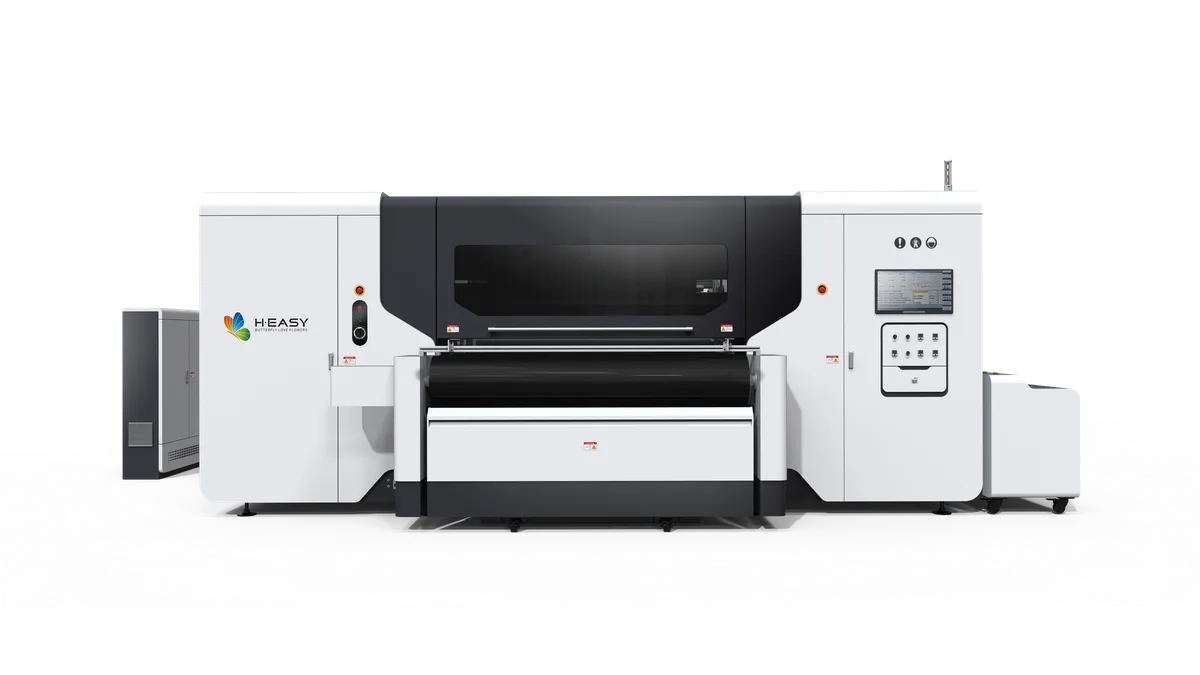
1.8m to 2.6m standard R2R printers (3.2m HY-3264/HY-3296 on request), 8 to 96 Ricoh Gen6 heads and model-specific 2-pass / 3-pass references for silk, cotton, polyester and home textiles.
View specifications →More deployments
Planning a similar line?
Tell us your fabric, output target and market. We reply with a configured recommendation, lead time and budget within one business day.