
Already Running a Screen Printing Business? Start Digital Transformation with Your Existing Orders
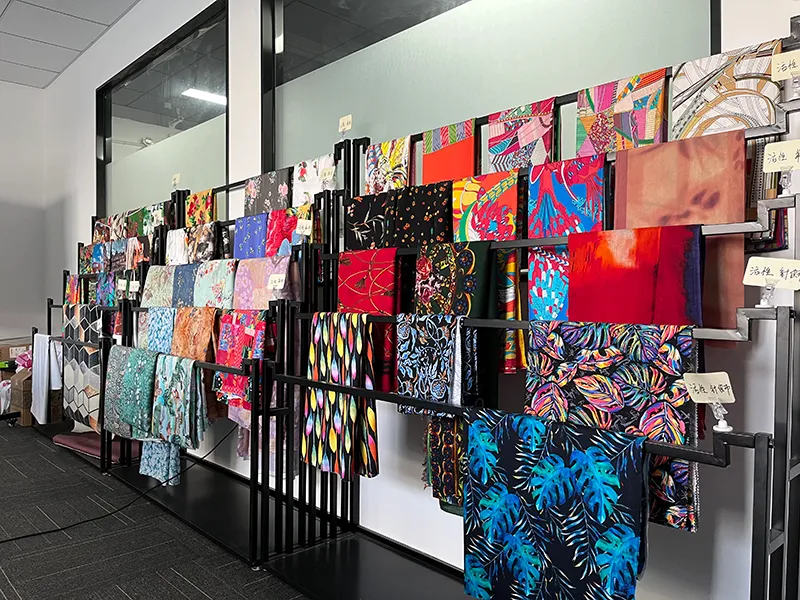
More traditional screen printing factories are beginning to explore digital printing.
The reason is not that screen printing has suddenly lost its value. The real change is happening in the order structure:
- order quantities are becoming smaller;
- customers need more designs in the same order;
- sampling and product-testing cycles are becoming shorter;
- e-commerce replenishment is becoming faster;
- personalized products are increasing;
- dark, light and mixed-fabric garments may appear in the same production schedule.
For factories that already have screen printing equipment, trained workers, established customers and production experience, moving into digital printing does not mean replacing the existing production system.
The first question should be:
Which current orders still fit screen printing well, and which orders are beginning to exceed what screen printing handles most efficiently?
Equipment selection comes after that.
Analyze the orders first, then choose the process. Use digital printing to fill an existing production gap before expanding digital capacity.
Quick Answer: Which Orders Should a Screen Printing Factory Move to Digital First?
| Current Order Structure | Recommended Direction |
|---|---|
| One design, large quantity, stable repeat orders | Continue using screen printing |
| Sampling, short runs and multiple designs | Consider digital printing |
| Cotton T-shirts, hoodies and branded apparel | Evaluate DTG |
| Cotton, polyester and blended garments | Evaluate DTF |
| Polyester sportswear, cycling wear and team uniforms | Evaluate sublimation |
| Cotton, blended or polyester fabric rolls | Select the appropriate roll-to-roll digital process |
| Small test order followed by rapid replenishment | Build digital fast-response capacity |
| Stable and increasing digital order volume | Consider higher-capacity or multi-station equipment |
Screen printing and digital printing are not simply replacements for each other.
A more practical production model is often:
Screen printing for stable bulk orders, and digital printing for sampling, small batches, multiple designs and urgent replenishment.
1. Screen Printing Still Has Value — What Has Changed Is the Order Structure
Screen printing has remained important because it is still highly effective for certain types of production.
It usually performs well when an order has:
- a fixed design;
- a large quantity per style;
- a predictable production plan;
- frequent repeat orders;
- sufficient lead time;
- enough volume to absorb screen-making and setup costs.
For example, if a customer regularly orders:
1 design × 5,000 pieces
screen printing may still be the more suitable production route.
But more orders now look like:
20 designs × 20–50 pieces per design
or:
30 pieces for testing → 100-piece replenishment → another 300 pieces based on sales
In this kind of order, the time and cost of screen preparation, color setup, screen changes and production preparation become more significant.
The real question is therefore not:
Can screen printing still produce the order?
It is:
Can the existing screen printing line still produce the customer’s new order structure efficiently?
Digital printing is most valuable when it enters the areas where traditional production becomes less flexible.
2. The First Step Is to Identify the Orders the Factory Is Already Losing
Many factories begin equipment selection by asking what machines their competitors have purchased.
A more useful approach is to review the factory’s own inquiries and orders from the last three to six months.
Orders Rejected Because the Quantity Was Too Small
Examples may include:
- 5 event T-shirts;
- 20 branded samples;
- 50 e-commerce test garments;
- 30 customized garments with different names or numbers.
If these inquiries appear regularly, the factory already has a clear need for digital production.
Orders That Were Difficult Because There Were Too Many Designs
The total quantity may not be small, but it may be divided across many designs.
For example:
300 garments across 15 designs, with only 20 pieces per design
The overall quantity is reasonable, but traditional screen printing requires separate preparation for each design.
Digital printing can switch artwork through digital files, making it more suitable for multi-design, low-volume orders.
Orders Lost Because the Lead Time Was Too Short
Customers may request:
- same-day sampling;
- small-batch delivery within a few days;
- rapid replenishment after a product test;
- urgent event apparel.
If the factory has available capacity but cannot accept the order because preparation takes too long, a more flexible production process may be needed.
Orders the Factory Could Not Cover Because of Fabric or Product Differences
One customer may require:
- cotton T-shirts;
- polyester sportswear;
- blended hoodies;
- workwear;
- team apparel.
No single printing process covers every product equally well.
The digital entry point should therefore be selected according to the factory’s main products and fabric mix.
3. Do Not Ask “DTF or DTG?” Before Looking at Your Existing Products
Different screen printing factories serve different customer groups.
Their digital starting points should not be identical.
Before comparing DTG, DTF, sublimation or roll-to-roll systems, factories should first define their main products, fabrics, order volume, customer priorities and growth plan.
For a more detailed equipment-selection framework, read Before Buying a Digital Printing Machine, Answer These 5 Questions First.
If the Factory Mainly Produces Cotton T-Shirts, Hoodies and Branded Apparel
If the current customer base includes:
- cotton T-shirts;
- dark cotton garments;
- hoodies;
- branded apparel;
- designer products;
- POD and personalized orders;
DTG is worth evaluating.
DTG prints digital artwork directly onto the garment and does not require traditional screens for each design.
It is particularly suitable for:
- multiple designs;
- small batches;
- brand sampling;
- personalization;
- orders where garment feel matters.
If orders are still unstable, a single-station DTG system may be sufficient.
If the factory already has stable daily volume and pretreatment, loading and machine waiting are becoming bottlenecks, a dual-station system with in-line pretreatment may be more appropriate.
If the Factory Handles Multiple Fabrics and Garment Categories
If the factory regularly works with:
- cotton;
- polyester;
- selected blends;
- T-shirts;
- hoodies;
- workwear;
- team apparel;
- canvas bags;
DTF generally offers broader product flexibility.
DTF transfers the printed design from PET film to the garment through powder application, curing and heat pressing.
For a factory with an existing screen printing customer base, DTF can first be used for:
- orders below the screen-printing minimum quantity;
- urgent replenishment;
- personalized names and numbers;
- mixed-fabric orders;
- fast customization.
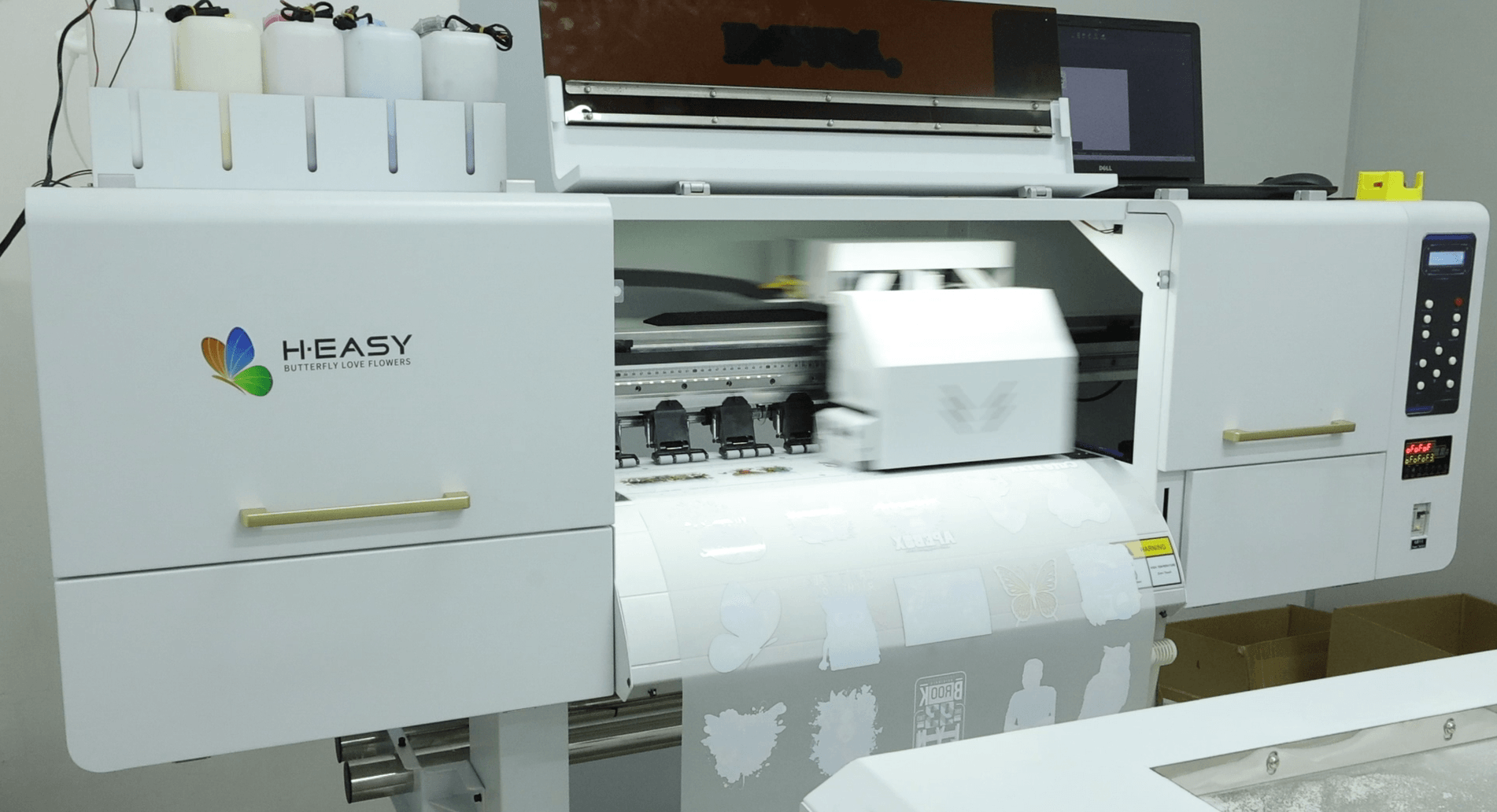
Once DTF orders become stable, the factory can evaluate a 60 cm production system with integrated powdering and curing, such as the H·EASY HY-702.
If the Factory Mainly Produces Sportswear, Cycling Wear and Team Uniforms
If existing customers mainly use polyester fabrics, sublimation may be the more relevant digital route.
Typical applications include:
- football jerseys;
- basketball uniforms;
- cycling wear;
- training wear;
- team apparel;
- selected outdoor and performance garments.
Sublimation is well suited to polyester and large-area, all-over color designs.
A factory with an established sportswear customer base does not need to enter cotton DTG first simply because DTG is receiving market attention.
The digital process should follow the existing order structure.
If Customers Require Printed Fabric Rolls
Some screen printing factories serve customers that need printed fabric before cutting and sewing.
In this case, the factory may need to evaluate:
- reactive direct printing;
- pigment direct printing;
- disperse direct printing;
- sublimation.
Roll-to-roll digital textile printing requires different equipment, pretreatment and post-treatment systems from garment DTG or DTF.
The factory must first determine whether the customer requires:
Finished Garment Printing
or:
Roll-to-Roll Fabric Printing
4. Fabric Structure Determines the Printing Route
Two garments may look similar, but different fibers can require completely different digital processes.
| Fabric / Product | Process to Evaluate |
|---|---|
| Cotton garments | DTG |
| Cotton, polyester and selected blended garments | DTF |
| Polyester sportswear and team uniforms | Sublimation |
| Cotton and cellulosic fabric rolls | Reactive or pigment direct printing |
| Multi-fiber blended fabric rolls | Pigment printing, depending on the required result |
| Polyester fabric rolls | Disperse direct printing or sublimation |
Before purchasing equipment, calculate:
What fabric accounts for approximately 80% of the factory’s future orders?
Do not choose an entire production system around an occasional special order.
The right machine should first serve the most stable and most promising part of the current customer base.
5. Order Quantity Is Not the Only Factor — Order Composition Matters More
A customer may say:
“We produce about 100 pieces per day.”
But 100 pieces can represent very different production requirements.
Situation A: 100 Pieces with One Design
This order is suitable for continuous production.
If the quantity increases significantly, screen printing may still maintain a strong cost advantage.
Digital printing may still be useful when fast startup or rapid replenishment is required.
Situation B: 100 Pieces Across 20 Designs
The total quantity is still 100 pieces, but production requires frequent:
- file changes;
- artwork confirmation;
- garment matching;
- positioning adjustments;
- order checking.
The bottleneck may not be machine speed.
It may be changeover efficiency and order management.
Situation C: 20 Pieces Today, 80 Tomorrow and No Order the Next Day
This indicates that the digital business is still being tested.
Equipment selection should prioritize:
- initial investment;
- flexibility;
- utilization rate;
- operating difficulty;
- maintenance cost.
Situation D: A Stable 100–200 Pieces Every Day
When orders become consistent and machine waiting, loading, pretreatment and finishing begin to limit delivery, the factory can consider:
- dual-station equipment;
- in-line pretreatment;
- wider-format systems;
- integrated powder shaking;
- higher continuous-production capacity.
Equipment configuration should therefore be based on:
Order Volume + SKU Count + Order Stability + Delivery Time + Growth Plan
6. The Ratio of Dark to Light Garments Also Affects Equipment Selection
Dark garment production usually requires more steps than light garment production.
For example, dark cotton DTG commonly involves:
Pretreatment → White Ink → Color Ink → Curing
Light garments usually do not require the same white underbase.
If the factory receives many:
- black T-shirts;
- dark hoodies;
- color-critical branded garments;
- urgent dark-garment orders;
equipment selection should focus on:
- white ink management;
- pretreatment efficiency;
- white/color registration;
- curing capacity;
- continuous loading.
White ink circulation and white ink maintenance are also critical in DTF production.
Providing a supplier with the ratio of dark to light orders is therefore more useful than reporting only daily output.
7. Which Orders Should Enter Digital Production First?
For a factory with an existing screen printing line, the following orders are usually the best starting points.
Sampling Orders
Digital printing can shorten the time from artwork to a physical sample.
After approval, the factory can decide whether to continue with digital production or move the bulk order to screen printing.
Small-Batch, Multi-Design Orders
This is one of the clearest digital-printing applications.
It is particularly suitable for orders with:
- many designs;
- small quantities per design;
- frequent changes;
- short lead times.
Urgent Replenishment
A bulk screen printing order may already be complete, but the customer may suddenly need several dozen additional pieces.
Restarting the complete screen printing setup may be uneconomical.
Digital equipment can support smaller replenishment runs.
Personalized Orders
Examples include:
- names;
- numbers;
- photographs;
- customized text;
- different artwork for each garment.
These orders are difficult to complete efficiently with the same traditional screen set.
Brand Test Orders
Brands can produce a limited quantity to test the market.
If sales are successful, the factory can decide whether to:
- continue using digital printing for replenishment;
- or move the larger order to screen printing.
This connects the two processes instead of forcing them to compete.
8. Build a “Screen Printing + Digital Printing” Order-Routing Rule
After digital equipment enters the factory, operators should not decide every order informally.
A simple routing standard is more effective.
| Order Characteristics | Recommended Production Route |
|---|---|
| One design, large volume, stable repetition | Screen printing |
| Small batch, multiple designs | Digital printing |
| Sampling | Digital printing |
| Personalized content | Digital printing |
| Urgent replenishment | Digital printing |
| Test styles and initial small orders | Digital printing |
| Large repeat order after a successful test | Recompare screen and digital costs |
| Mixed-fabric orders | DTF or separate process matching |
| Premium cotton short runs | DTG |
| All-over polyester sportswear | Sublimation |
This prevents screen printing and digital printing from competing for the same orders.
Screen printing continues to serve stable bulk production.
Digital printing increases flexibility and expands the range of orders the factory can accept.
9. Do Not Try to Complete the Digital Transformation in One Step
For a factory with a mature screen printing business, the safer path is usually not to purchase multiple digital systems at once.
A phased approach is more practical.
Stage 1: Analyze Current Orders
Review the last three to six months and record:
- orders rejected because the quantity was too low;
- orders that were difficult because of too many designs;
- orders lost because of short lead times;
- sampling requests;
- urgent replenishment;
- dark-garment ratio;
- main fabrics;
- average order quantity.
Stage 2: Select One Clear Entry Point
For example:
- more premium cotton garments → evaluate DTG;
- more multi-fabric customization → evaluate DTF;
- more sportswear → evaluate sublimation;
- more cotton fabric-roll orders → evaluate the appropriate direct-to-fabric process.
The first digital machine should solve a problem that already exists.
It should not depend on a market that has not yet appeared.
Stage 3: Test with Real Orders
Do not rely only on machine brochures or generic test images.
Use the factory’s own:
- garments;
- fabrics;
- artwork;
- colors;
- delivery requirements.
Test:
- image quality;
- hand feel;
- washing performance;
- actual speed;
- labor requirements;
- pretreatment;
- curing;
- cost per piece.
Stage 4: Build a Dedicated Digital Workflow
Digital production needs its own management system, including:
- RIP files;
- color parameters;
- fabric records;
- ink maintenance;
- sampling procedures;
- equipment maintenance;
- order archiving;
- repeat-order file management.
A digital printer should not simply be placed inside the screen printing workshop and managed exactly like a screen printing line.
Stage 5: Expand Only After Orders Stabilize
When equipment utilization, order sources and processes are stable, the factory can add:
- higher-capacity machines;
- dual stations;
- wider-format systems;
- automated pretreatment;
- integrated post-processing;
- a second digital printing process.
Expansion should be based on real production data rather than specification anxiety.
10. Do Not Ignore Existing Staff and Workshop Capability
A factory with an existing screen printing business already has an important advantage:
It understands garment production.
However, digital printing still requires new capabilities, including:
- digital file preparation;
- RIP software;
- color management;
- white ink maintenance;
- printhead care;
- pretreatment control;
- curing parameters;
- short-run scheduling.
Before buying equipment, determine:
- Who will manage digital production?
- Is there a dedicated maintenance operator?
- Can existing workers be trained?
- Is temperature and humidity control available?
- Is the finishing equipment adequate?
- How will screen and digital orders be scheduled?
A machine can be purchased quickly.
Stable digital production capability must be developed through people, workflows and process data.
11. Do Not Compare Digital Equipment by Speed Alone
Suppliers often promote:
- printhead quantity;
- maximum speed;
- resolution;
- printing width.
These specifications matter.
But a screen printing factory moving into digital production should also evaluate the following.
Does the Process Match Existing Products?
Can the machine actually handle the garments and fabrics the factory receives most often?
What Is the Stable Production Capacity?
Do not look only at maximum speed.
Understand the stable output under the factory’s actual fabric, artwork and quality requirements.
How Difficult Is Maintenance?
What must operators do each day?
How are white ink, printheads and the ink-delivery system maintained?
Can Post-Processing Keep Up?
A fast printer does not increase line output if pretreatment, powdering, curing or heat pressing becomes the bottleneck.
Will Parts and Support Remain Available?
Digital equipment requires maintenance.
The important question is whether the factory can restore production quickly after a problem occurs.
12. How H·EASY Helps Screen Printing Factories Match the Right Digital Solution
H·EASY provides several garment and textile digital printing routes.
DTG Printing
Better suited to:
- cotton garments;
- T-shirts and hoodies;
- branded apparel;
- POD;
- personalized short runs.
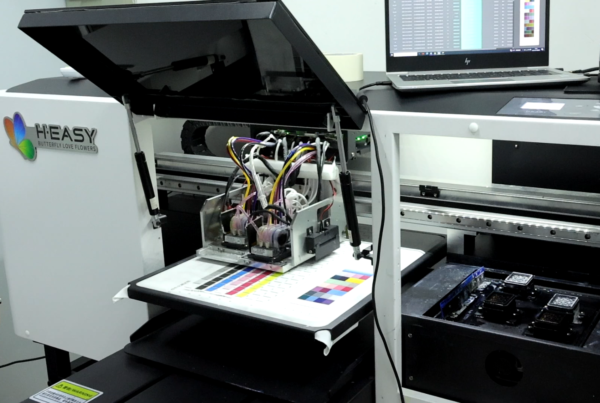
H·EASY can match single-station or dual-station DTG solutions according to the customer’s order stage.
A single-station system is more suitable for startups, sampling and low-volume multi-design work.
A dual-station system with in-line pretreatment is more suitable when orders are stable and the factory needs higher continuous-production efficiency.
DTF Printing
Better suited to:
- multi-fabric garments;
- workwear;
- teamwear;
- e-commerce customization;
- multi-design short runs;
- urgent replenishment.
Customers moving from smaller machines into 60 cm production can evaluate production DTF solutions such as the H·EASY HY-702 according to their daily output requirements.
Sublimation Printing
Better suited to:
- polyester sportswear;
- cycling wear;
- team uniforms;
- all-over color graphics;
- selected performance garments.
Digital Textile Printing
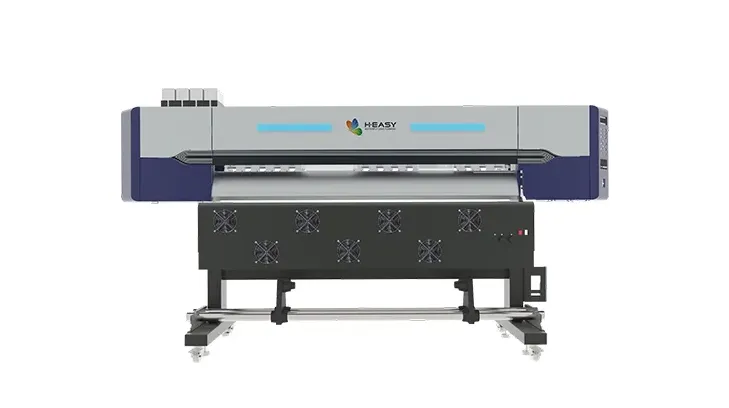
Better suited to roll-to-roll fabric production.
The machine and process should be matched according to:
- cotton;
- blended fabrics;
- polyester;
- print width;
- target capacity;
- pretreatment and post-treatment capability.
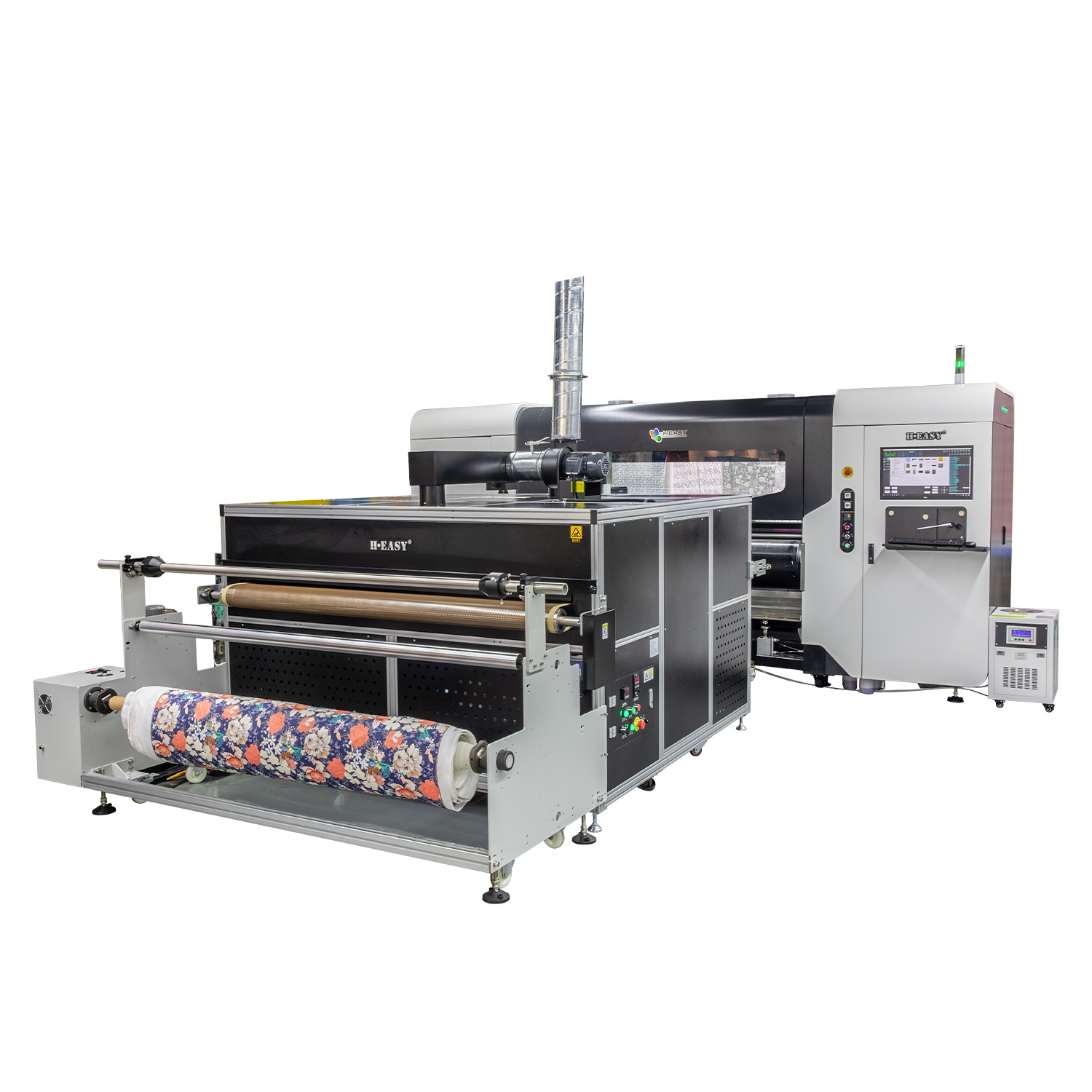
H·EASY’s selection logic is not to recommend one machine first.
It is to understand:
Product → Fabric → Order Structure → Process → Capacity → Machine
13. How Should Screen Printing and Digital Printing Work Together Long-Term?
When both production capabilities are available, the factory can create a more complete customer-service model.
Screen printing and digital printing are strongest under different order conditions. For a broader comparison of setup, order flexibility, fabric requirements and production scale, see Digital vs Traditional Textile Printing: How to Choose.
Product Development Stage
Use digital printing for fast samples and product testing.
Market Testing Stage
Use digital printing for dozens or hundreds of test pieces.
Volume Growth Stage
If the design becomes stable and the quantity increases significantly, recompare screen printing and digital production costs.
Replenishment Stage
Use digital printing for smaller repeat orders without restarting the full screen printing preparation process.
This creates a workflow such as:
Digital Sampling → Digital Test Order → Screen Printing Bulk Order → Digital Replenishment
Digital printing provides speed and flexibility.
Screen printing provides bulk-production efficiency.
This is often more realistic than asking which process will replace the other.
Conclusion: If You Already Run Screen Printing, Start Digital Transformation by Finding the Order Gap
Screen printing has not lost its value because digital printing is growing.
What has changed is:
- order size;
- number of designs;
- sampling speed;
- replenishment rhythm;
- personalization;
- fabric variety.
For a factory with an existing screen printing business, the safest digital strategy is not to replace the original production line immediately.
First identify:
Which orders does screen printing still handle best?
Then identify:
Which orders are becoming difficult, slow or uneconomical because of quantity, design count or delivery requirements?
Let digital printing enter those orders first.
Use real production to verify the process, customer demand and capacity.
Once the order flow becomes stable, expand the machine configuration and digital process step by step.
The correct sequence is:
Existing Orders → Production Gap → Digital Process → Equipment → Expansion
not:
Buy a Machine → Find an Order
H·EASY can evaluate the factory’s products, fabrics, average order quantity, number of designs, dark/light garment ratio and future expansion plans to determine whether DTG, DTF, sublimation or roll-to-roll digital textile printing should be the first step.
Because the right digital equipment for a screen printing factory is not necessarily the fastest machine.
It is:
The solution that fills the existing order gap and works together with the current screen printing line.
FAQ
Does a screen printing factory need to remove its existing equipment after adding digital printing?
No. Screen printing can continue handling stable, large-volume and fixed-design orders, while digital printing handles sampling, small batches, multiple designs, personalization and urgent replenishment.
Should a screen printing factory start with DTF or DTG?
It depends on existing products. If the factory mainly prints cotton T-shirts, hoodies and premium branded apparel, DTG is worth evaluating. If it handles many fabric types and rapidly changing products, DTF may be more suitable.
How many daily orders are needed before buying digital equipment?
Daily quantity alone is not enough. The factory should also consider order stability, number of designs, dark-garment ratio, delivery requirements and the number of small orders currently being rejected.
Is digital printing suitable for large-volume orders?
It can handle large-volume production, but whether it is more economical than screen printing depends on design count, fabric, lead time, labor and equipment capacity.
Can digital printing be used to make samples for screen printing customers?
Yes. Digital sampling can shorten the time from artwork to physical sample. After approval, the factory can decide whether to continue with digital production or move the bulk order to screen printing.
What is the biggest risk when a traditional printing factory moves into digital printing?
The biggest risk is usually not that the machine cannot print. It is that the selected process does not match the existing orders, order demand is insufficient, post-processing is incomplete, or the factory lacks maintenance and color-management capability.