Before Buying a Digital Printing Machine, Answer These 5 Questions First
For many buyers entering digital printing for the first time, the first question is usually: “How much does this machine cost?”
Price matters. But if price is the first and only filter, it is easy to choose the wrong equipment.
Digital printing is not a business where one machine automatically fits every order. Different products, fabrics, order volumes and delivery requirements need different printing processes and machine configurations.
Some factories buy more capacity than they can use. Others buy too little capacity and cannot keep up once orders increase.
The right machine is determined less by what other factories are buying and more by the orders you actually expect to produce.
Before comparing models and quotations, answer these five questions first.
Quick Answer: What Should You Confirm Before Buying?
| Question | Why It Matters | What It Determines |
|---|---|---|
| 1. What do you mainly print? | Different products suit different processes | DTF / DTG / Sublimation / Digital Textile Printing |
| 2. What fabrics do you mainly use? | Fiber type affects ink and process compatibility | Ink, pretreatment, fixation and finishing route |
| 3. How much do you produce? | Order volume determines the required capacity | Entry-level, multi-station or industrial configuration |
| 4. What do your customers value most? | Customer priorities shape production requirements | Cost, lead time, quality or flexibility |
| 5. How large do you plan to grow? | Equipment should support the next stage of the business | Expansion room and investment timing |
1. What Do You Mainly Print?
This is the first question to answer.
Many buyers start by asking, “Is DTF better than DTG?” There is no universal answer, because the correct process depends on the product.
Compare the garment printing methods by product and fabric before selecting equipment.
If You Mainly Print T-Shirts, Hoodies and Branded Apparel
DTG (Direct to Garment) should be one of the first processes to evaluate. It prints artwork directly onto the garment and is especially suitable for cotton-based products where print feel, image quality and customization matter.
- Cotton T-shirts
- Hoodies
- Branded apparel
- Designer collections
- Print-on-demand orders
- Personalized garments
If You Mainly Print Teamwear, Workwear or E-Commerce Custom Orders
DTF offers broader application flexibility. Artwork is first printed onto PET film and then heat-transferred to the garment, making it practical for factories handling many styles and multiple fabric types.
- T-shirts
- Hoodies
- Polo shirts
- Workwear
- Team apparel
- Canvas bags
- E-commerce customization
If your typical order is small, SKU-heavy and frequently changing, flexibility may matter more than the highest possible machine speed.
If You Mainly Print Sportswear, Cycling Wear or Team Uniforms
Sublimation is usually a key process to evaluate for polyester-based products. It is well suited to vivid color, large-area graphics and all-over designs.
- Football jerseys
- Basketball uniforms
- Cycling wear
- Training wear
- Teamwear
- Polyester performance apparel
If You Mainly Print Roll-to-Roll Fabric
If you print fabric rolls that will later be cut and sewn, the equipment selection moves into industrial digital textile printing. Depending on the fiber and final product requirements, the process may include:
- Pigment direct printing
- Reactive direct printing
- Disperse direct printing
The first step is therefore not “Which machine is best?” It is “What am I actually going to produce?”
2. What Fabrics Do You Mainly Use?
Two garments may look similar, but different fabrics can require completely different printing processes.
Cotton
For cotton products, buyers typically need to consider color performance, print detail, hand feel, ink-fabric compatibility, fixation and wash durability. DTG can be suitable for finished cotton garments, while reactive or pigment direct printing may be evaluated for roll-to-roll cotton fabrics depending on the target product.
Polyester
Polyester printing often focuses on color vibrancy, sublimation performance, wash durability and large-area graphics. Sublimation is a common route for sportswear and team apparel, while disperse direct printing may be considered for some roll-to-roll polyester applications.
Blended Fabrics
Blended fabrics are more complex because different fibers can respond differently to the same ink system. Depending on the product and quality target, factories may evaluate DTF, pigment direct printing or other processes with broader material compatibility.
A useful purchasing rule is to identify the fabric used in roughly 80% of your expected orders. The main equipment should be selected around your core business, not around occasional special jobs.
3. What Is Your Real Order Volume?
Order volume is one of the main factors that determines machine configuration.
A business producing 20 pieces per day and a factory producing 2,000 pieces per day should not be using the same capacity logic.
Dozens of Pieces Per Day
If you are still testing the market, starting a customization business or processing very small orders, maximum speed may not be the priority. More important factors may include:
- Initial investment
- Ease of operation
- Order flexibility
- Maintenance requirements
- Cost at low order volumes
Dozens to Hundreds of Pieces Per Day
Once production becomes more stable, the focus shifts toward higher efficiency, multi-station configurations, automation, continuous operation and matching drying or finishing capacity.
Thousands of Pieces or Industrial Continuous Production
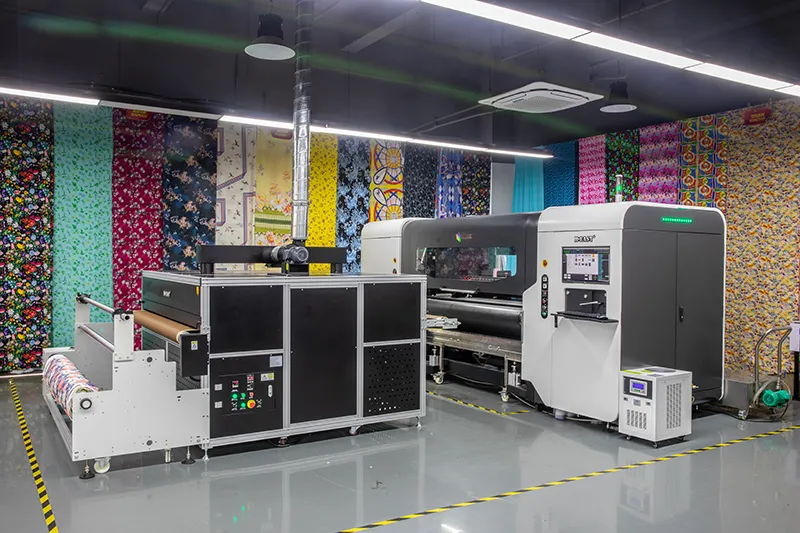
At industrial scale, the question is no longer only which printer to buy. You need to evaluate the complete production system:
Printer → Feeding → Drying / Fixation → Finishing → Workflow Management
For roll-to-roll textile printing, print width, printhead configuration and target daily output also become important selection criteria.
4. What Do Your Customers Care About Most?
The machine ultimately exists to serve your customers, not the specification sheet.
If Customers Care Most About Price
You need to control total production cost, including labor, consumables, machine depreciation and order changeover cost. The highest specification is not always the most economical choice.
If Customers Care Most About Lead Time
E-commerce sellers, event apparel suppliers, teamwear customers and fast-fashion businesses often value fast sampling, rapid artwork changes, short runs and quick replenishment.
- Fast sampling
- Reduced or no screen-making
- Quick artwork changeover
- Stable production
- Fast repeat orders
If Customers Care Most About Quality
Brand apparel and premium customization may place more emphasis on color, resolution, hand feel, consistency, wash performance and final garment appearance. In these cases, the fastest machine is not necessarily the right machine. The machine, ink, fabric and process must work together.
A useful question is: What are your customers actually willing to pay for - lower cost, faster delivery, better quality or customization?
5. How Large Do You Plan to Grow?
Many buyers only plan for today, but a digital printing machine is usually expected to support the business for years.
Before choosing a configuration, ask:
- If you produce 100 pieces per day now, could that grow to 500?
- Will you add new product categories in the next two or three years?
- Will your customer base expand from local orders to brands, e-commerce or exports?
- Could one machine become a multi-machine production setup?
- Could you expand from garment printing into roll-to-roll fabric printing?
If the growth path is already clear, choose a configuration with reasonable expansion room. If the market is still being tested, there is no need to over-invest in capacity far beyond current demand.
Why the Highest Speed Is Not Always the Best Choice
One common purchasing mistake is to assume that a higher specification always means a better investment.
Maximum theoretical speed is not the same as effective daily output. Real production is affected by:
- Fabric type
- Artwork coverage
- Required print quality
- Operator skill
- Order changeovers
- Maintenance
- Drying and fixation
- Post-treatment
So when comparing machines, do not ask only: “What is the maximum speed?”
Also ask: “What is the stable production speed for my fabric and my order?”
Build a Simple Order Profile Before Requesting a Quotation
If you are still unsure which machine fits your business, fill in this basic production profile before speaking with a supplier.
| Question | Your Answer |
|---|---|
| Main products | T-shirt / Hoodie / Sportswear / Fabric Roll / Other |
| Main fabrics | Cotton / Polyester / Blended / Other |
| Daily order volume | ___ pcs / ___ m² |
| Average order size | ___ |
| Number of designs per month | ___ |
| Top customer priority | Price / Quality / Delivery / Customization |
| Current printing process | ___ |
| Need fast sampling? | Yes / No |
| Target capacity in 2-3 years | ___ |
| Plan to add product categories? | Yes / No |
Use this order profile with the textile printer buying checklist when evaluating a supplier’s proposal.
How We Match the Production Solution Before Recommending the Machine
A better equipment-selection sequence is to understand the product, fabric, order volume and required process first, then match the machine configuration.
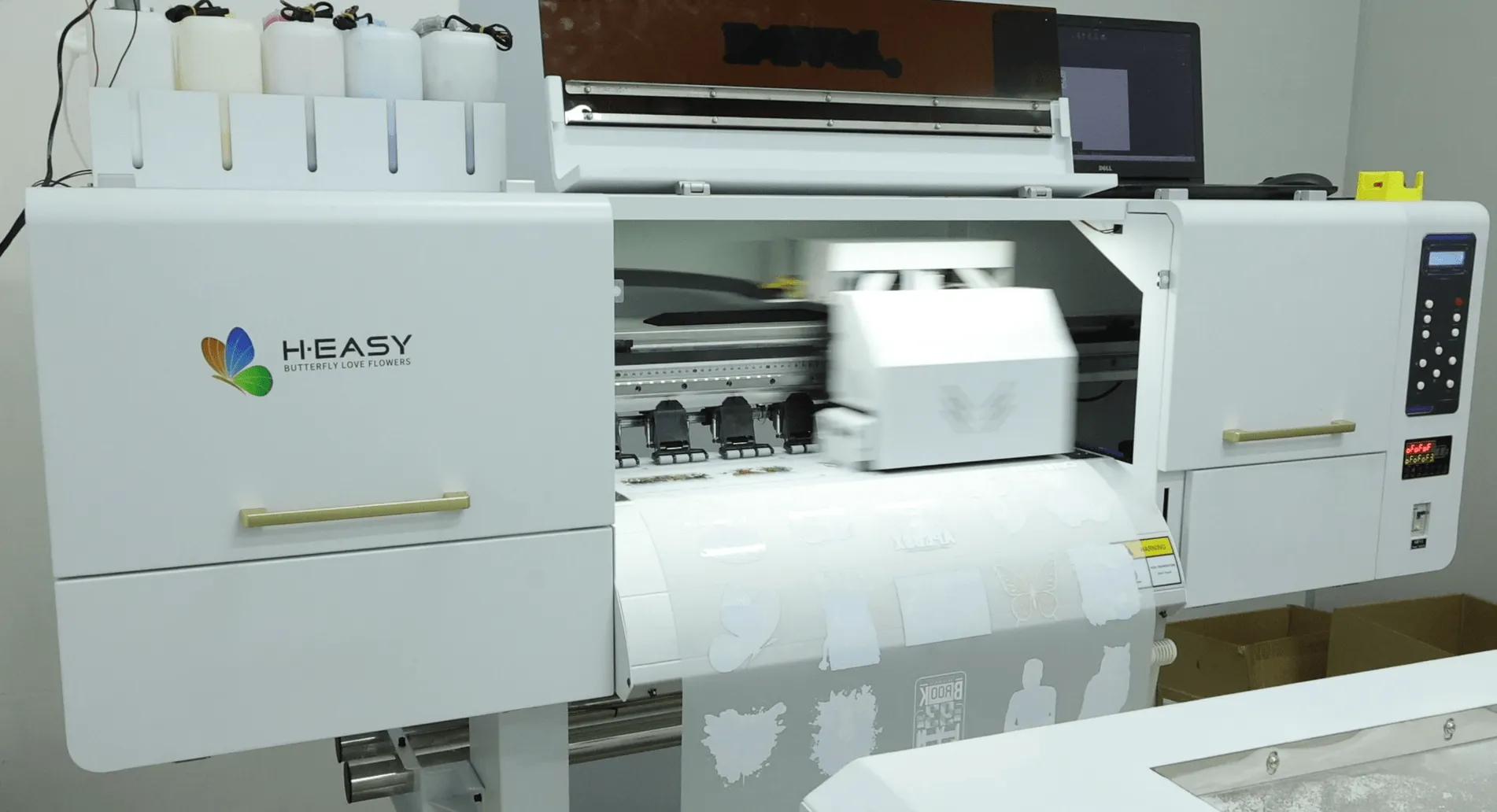
DTF Printing
Suitable for flexible garment production across multiple products and materials.
- Multiple fabric types
- Small-batch orders
- Many styles and SKUs
- E-commerce customization
- Fast turnaround
DTG Printing
Suitable for direct printing on cotton garments and premium customized apparel.
- Cotton garments
- T-shirts and hoodies
- Brand apparel
- Print-on-demand
- Premium personalized products
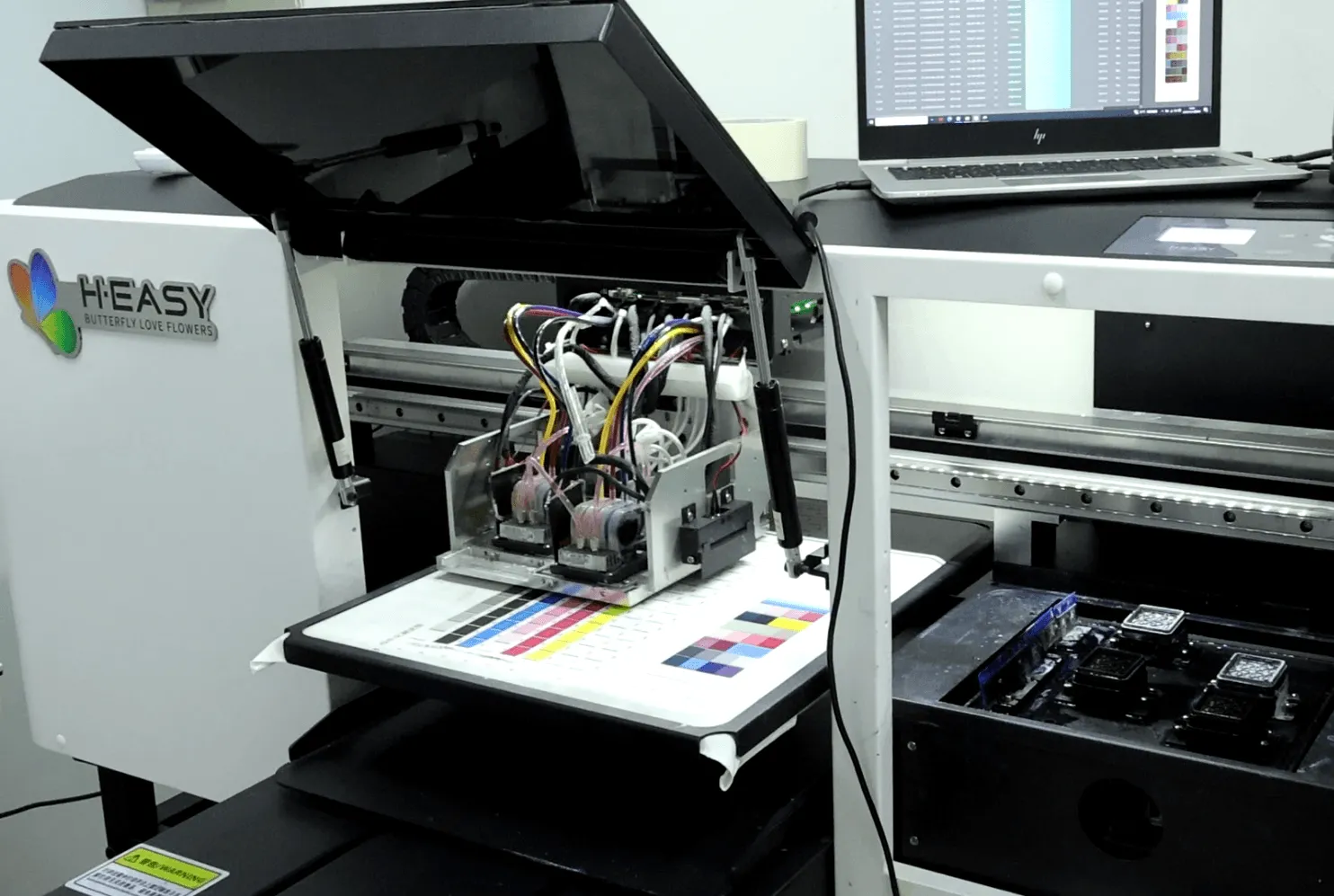
Sublimation Printing
Suitable for polyester sportswear and products requiring large-area color graphics.
- Polyester sportswear
- Cycling wear
- Team uniforms
- All-over printing
- Performance apparel
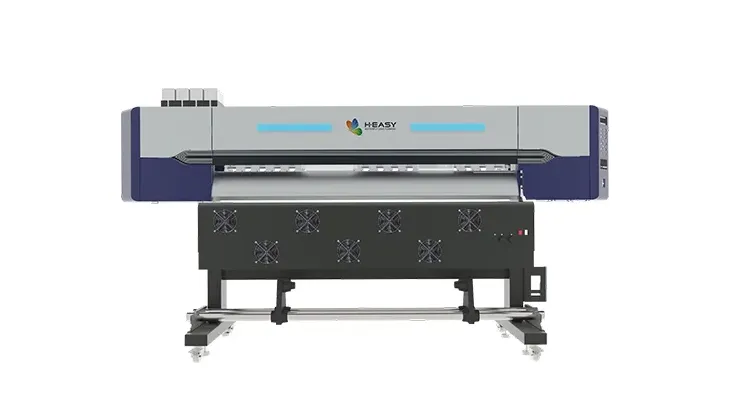
Digital Textile Printing
Suitable for roll-to-roll textile production where process selection depends on the fiber and target application.
- Cotton
- Blended fabrics
- Polyester
- Medium- to high-volume textile production
A practical selection path is:
Product → Fabric → Order Volume → Process → Required Capacity → Machine
This is more reliable than starting with Price → Speed → Machine and only later deciding what the equipment should produce.
The Purchase Price Is Only One Part of the Investment
Two machines may have different quotations, but the lower-priced machine is not automatically the lower-cost machine over time.
Long-term production cost can include:
- Ink and consumables
- Printhead life
- Routine maintenance
- Downtime
- Labor
- Reject and rework rates
- Machine utilization
- After-sales support
- Future expansion capability
The better comparison is:
Total Cost of Ownership + Production Fit
In other words: How much will the machine cost to operate over time, and how well does it match the orders you actually have?
Conclusion: Understand the Orders Before Choosing the Machine
Buying digital printing equipment should not be reduced to comparing price and headline specifications.
- Define the main products you want to print.
- Identify the fabrics that make up most of your orders.
- Estimate your realistic daily order volume.
- Understand what your customers value most.
- Plan for how the business may grow over the next few years.
Once these five questions are clear, choosing the right machine becomes much easier.
The right machine is not necessarily the cheapest one or the one with the highest specification. It is the machine that best fits your order structure and your current stage of business.
Printers matched to this guide