
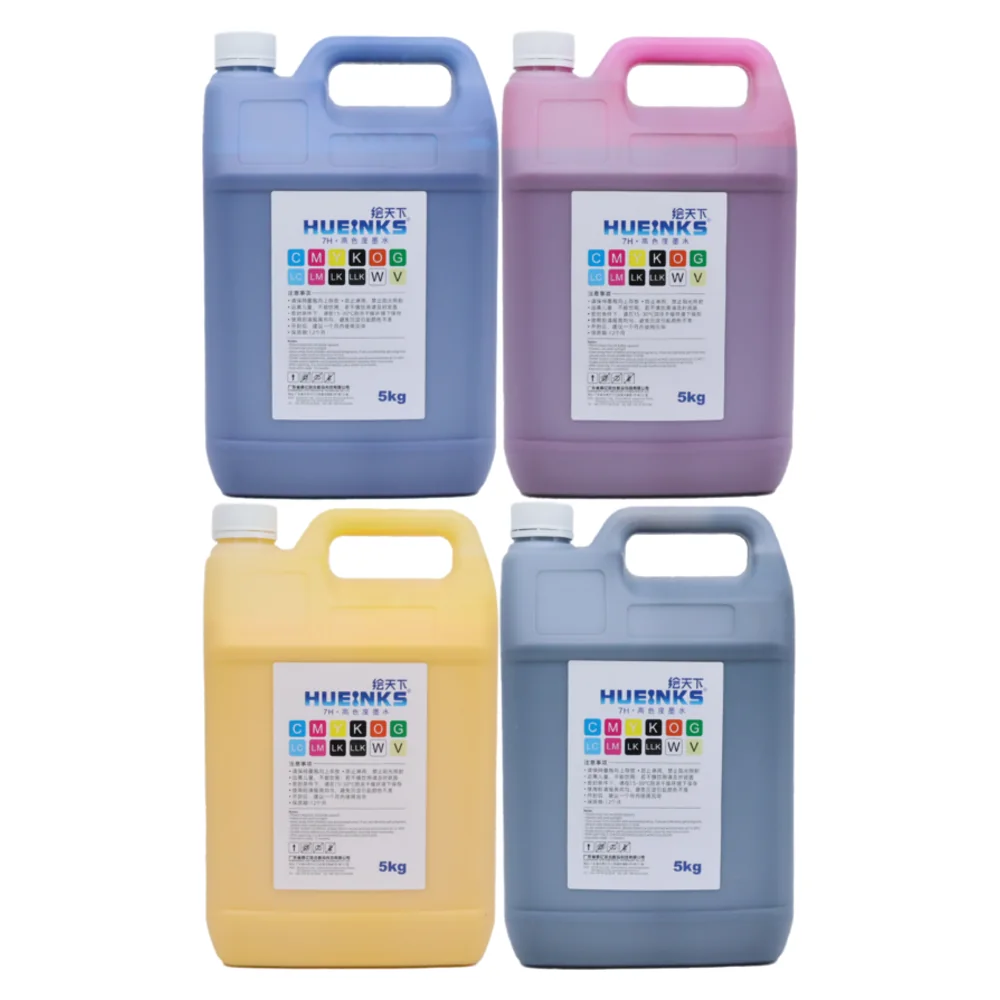
Textile Ink, 5 kg
One line, three routes: reactive for natural fibres, disperse for polyester, pigment without a wet line. Chemistry set per order.
- R2R reactive
- R2R disperse
- R2R pigment
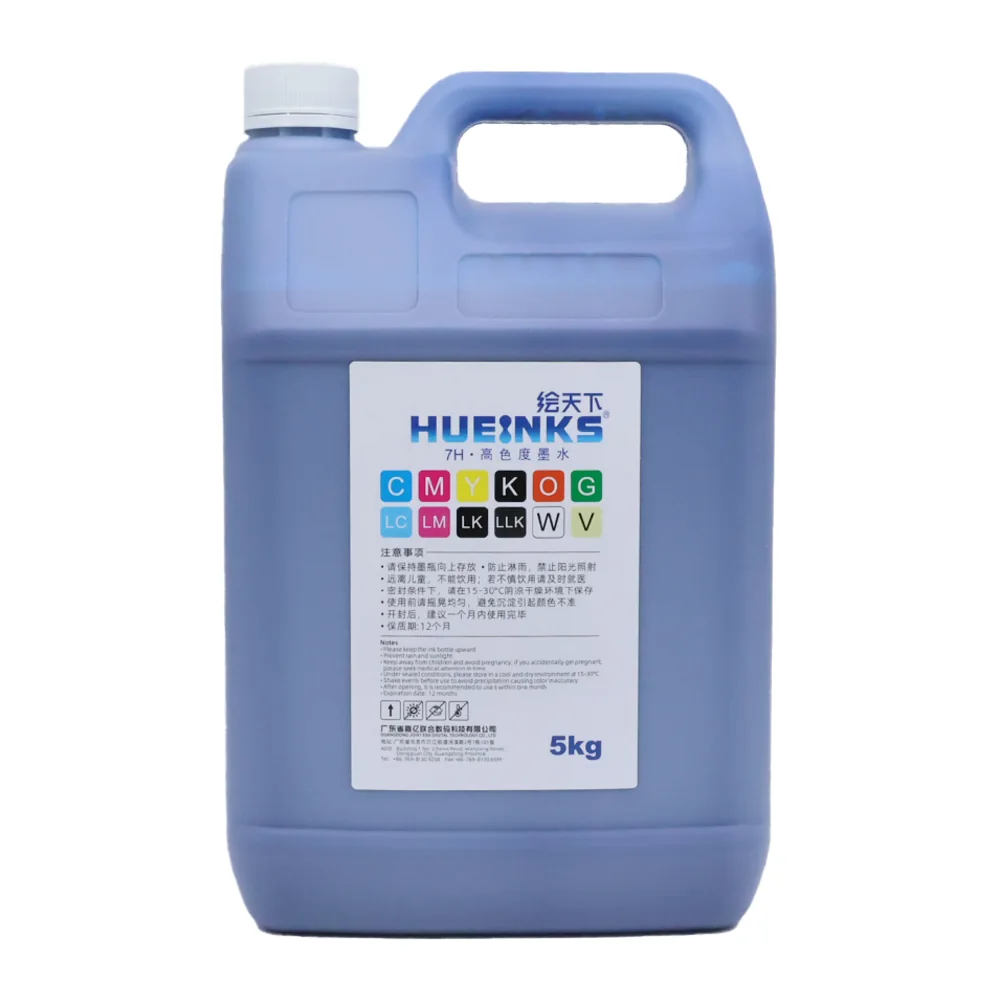
- Bottle size
- 5 kg
- Channel range on the label
- C, M, Y, K, O, G, LC, LM, LK, LLK, W, V
- Colours for this route
- Confirmed at quotation
What it runs on
Compatibility with your exact machine, printhead and the ink currently in it is confirmed at quotation. Changing chemistry without a correct flush damages printheads.
Stated properties
| Ink chemistry | Reactive dye, high-temp disperse dye or pigment dispersion - set per order |
|---|---|
| Net weight | 5 kg per bottle |
| Storage | Sealed, cool and dry, 15-30 °C |
| Shelf life | 12 months |
| After opening | Use within one month |
| Before use | Shake evenly; precipitation shifts colour |
| Handling | Keep upright, out of rain and direct sunlight |
Source: Product packaging label - Transcribed from the current HUEINKS product label, photographed 2026-08-11. The label is common to the whole line and does not name the chemistry; the earlier packaging is no longer shipped.. Properties not listed above are not published, because we have no source for them.
What it prints
Output from this route on production fabric. Your own substrate is sampled before you commit to volume.
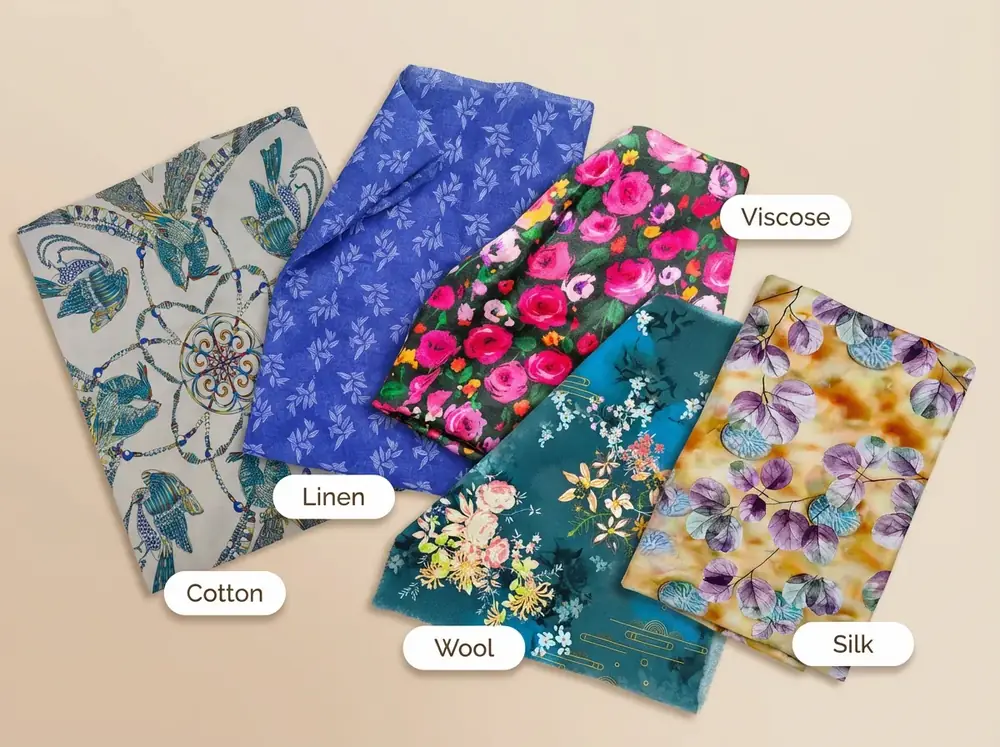

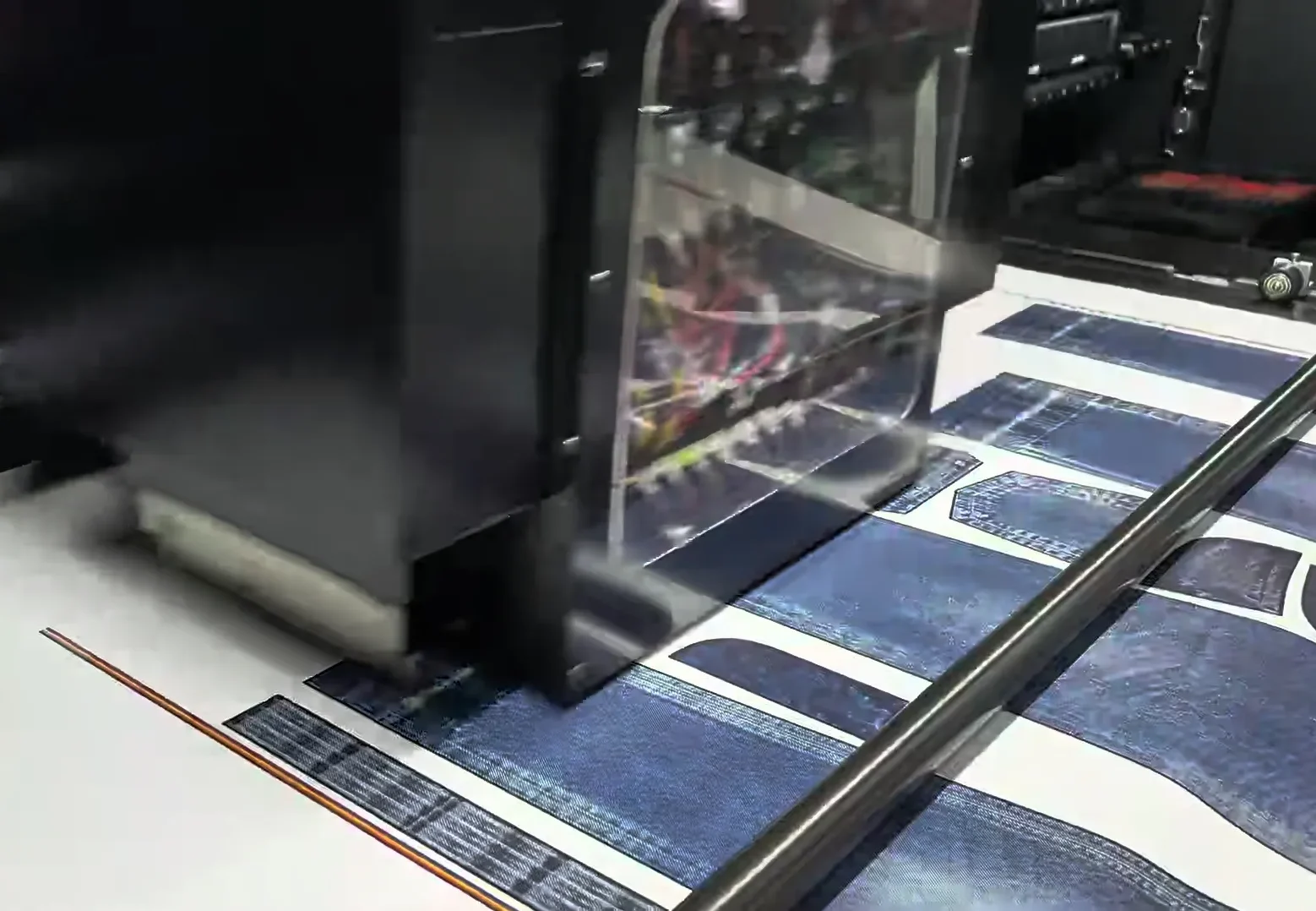
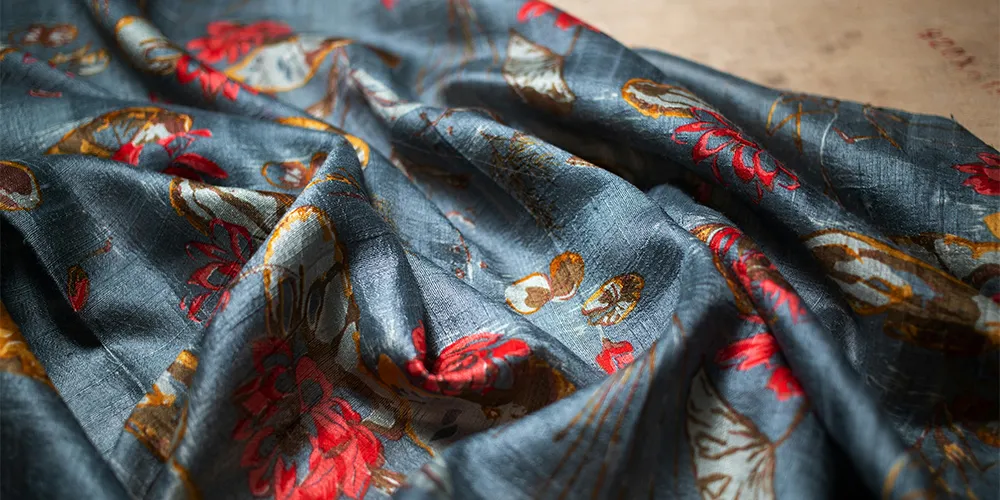
One bottle, three routes
Every ink in this line ships in the same 5 kg bottle under the same HUEINKS label. The label lists the channel range and nothing about the chemistry, because the chemistry is not a shelf choice: it is set for your fabric and your finishing line when the order is quoted.
That is why this is one product page rather than three. What changes between the routes is not the packaging or the printer - it is the fibre the dye has to bond to, and the equipment that fixes it afterwards.
The three routes below are the same three the ink routes and processes guide sets side by side. If you have not chosen yet, start there: the choice is driven by what you print and what finishing equipment you can host, not by the ink price.
Reactive: cotton, linen, silk and wool
Reactive dye forms a covalent bond with cellulose or protein in the fibre rather than sitting on the surface, which is why the route holds colour through repeated laundering and keeps the fabric’s original hand-feel. It is the standard for premium cotton apparel, silk scarves and bedding.
The cost of that quality is the wet line. Reactive printing needs pre-treatment, steaming, washing-off and drying, which is the reason a mill printing cotton keeps a steamer and a washer on the floor. It does not bond to polyester at all.
Disperse: polyester and stretch knits
High-temp disperse sublimes into the fibre under heat and sits inside it, so polyester sportswear printed this way keeps its colour through washing and does not crack when the fabric stretches. It covers polyester, poly blends and elastane knits - the fabrics reactive ink cannot bond to.
Compared with transfer-paper sublimation, printing direct to fabric removes the paper and the press from the cost model, which is why mills running roll goods move to it as volume grows. Fixation is heat rather than a full wet line.
Pigment: cotton and blends without a wet line
Pigment holds colour on the fabric with a binder and fixes it with heat, so the steamer, washer and effluent treatment disappear from the factory plan. For a producer who cannot get a discharge permit, or who wants short runs turned around the same day, that is usually the deciding factor.
It also crosses fibre types: because nothing has to react with the fibre chemically, one ink set covers cotton, polyester and blends. The trade-off against reactive is hand-feel and depth on dark grounds, and how much of that difference you see depends on the pre-treatment more than on the ink. Fabric preparation drives colour yield, rub fastness and hand-feel here more than in any other route - why fabric pre-treatment matters in pigment printing covers the mechanism, and the pretreatment liquid is supplied alongside.
What we can state, and what we cannot
The values in the table above are transcribed from the current product label. That is a real source, and a weaker one than a datasheet: it establishes packaging, storage window, shelf life and handling, and it does not establish wash or rub fastness grades, light fastness, sublimation temperature, binder content or viscosity.
We do not publish those numbers. Where a tender needs them, we request the manufacturer’s current technical data sheet for the exact chemistry and batch you would be supplied, because formulations are revised and a figure from an older sheet is not evidence about the drum you receive. Ink consumption per square metre is likewise not an ink property in isolation - it moves with coverage, pass count and fabric, and our published working on it sits in how much pigment ink is used per square metre with the conditions stated.
Qualifying the ink before volume
Ink is one part of a stack. Output depends on the pre-treatment chemistry, the fixation stage, your fabric’s preparation and your dryer’s real temperature profile - none of which are properties of the ink. The order that avoids expensive surprises:
- Confirm printhead, damper and ink-path compatibility for your machine and the ink currently in it. Mixing chemistries without a correct flush destroys heads.
- Print your own fabric, not a demo substrate, through your own finishing line.
- Set fixation time and temperature against your own equipment, measured rather than assumed.
- Assess the result against your buyer’s fastness requirement, tested by a lab that will put its name to the report.
- Only then commit to volume.
The HY-Series roll-to-roll platform supports reactive, disperse, acid and pigment routes on the same chassis, so a mill running cotton today can add a polyester line later without replacing the machine - the ink route and the finishing equipment change, not the printer. The R2R fabric printer overview shows how a line is configured around it.
Supply
HUEINKS is one of our own ink brands, specified by us and qualified against our own machines before it is sold alongside them. The packaging was refreshed in 2026 and the earlier bottles are no longer shipped, so a page showing the old label is out of date rather than an alternative option.
Pricing, lead time, minimum order and the dangerous-goods classification for your shipping route are confirmed at quotation, along with which chemistry your fabric needs.
For the wider picture on choosing a route, see pigment vs reactive printing, R2R ink workflows and how to choose the right fabric printing process.
Shipping and safety documentation
Safety data sheet
Available on request
Dangerous goods
Confirmed per shipping route at quotation
Minimum order and lead time
Quoted per destination and quantity. Tell us your machine model and monthly consumption.
Frequently asked questions
Which chemistry does my fabric need?
Cotton, linen, viscose, silk and wool take reactive. Polyester, poly blends and elastane knits take high-temp disperse. Cotton and mixed fibre without a steamer and washer take pigment. The fabric decides, not the ink price, and the finishing equipment you can host decides with it.
Is this one universal ink for every fabric?
No. It is one product line in one bottle under one label, and the three chemistries inside it are different formulations for different fibres. A bottle holds one of them. We set which one against your fabric and your finishing line when we quote, because a bottle of reactive dye will not bond to polyester whatever the label says.
What post-processing does each route need?
Reactive needs a full wet line: pre-treat, print, steam, wash, dry. Disperse needs heat fixation and no wet line. Pigment needs heat fixation only, which is why it suits producers who cannot get a discharge permit. Budget for the steamer and washer before you budget for the ink.
Can one machine run more than one chemistry?
The roll-to-roll platform supports all of them, but not simultaneously and not without a correct changeover. Switching chemistry means flushing the ink path properly; mills running two routes at volume usually dedicate a machine per chemistry rather than swap back and forth.
Will this ink run on my printer?
The line is catalogued for Ricoh printheads and is used on Ricoh Gen6 roll-to-roll platforms. Printhead, damper and ink-path compatibility for your specific machine and its current ink set is confirmed at quotation - switching chemistry without flushing a machine correctly damages heads.
Tell us your machine and your monthly volume
We quote consumables against a specific machine, printhead and ink set, not from a catalogue line, because that is the only way the answer is useful.