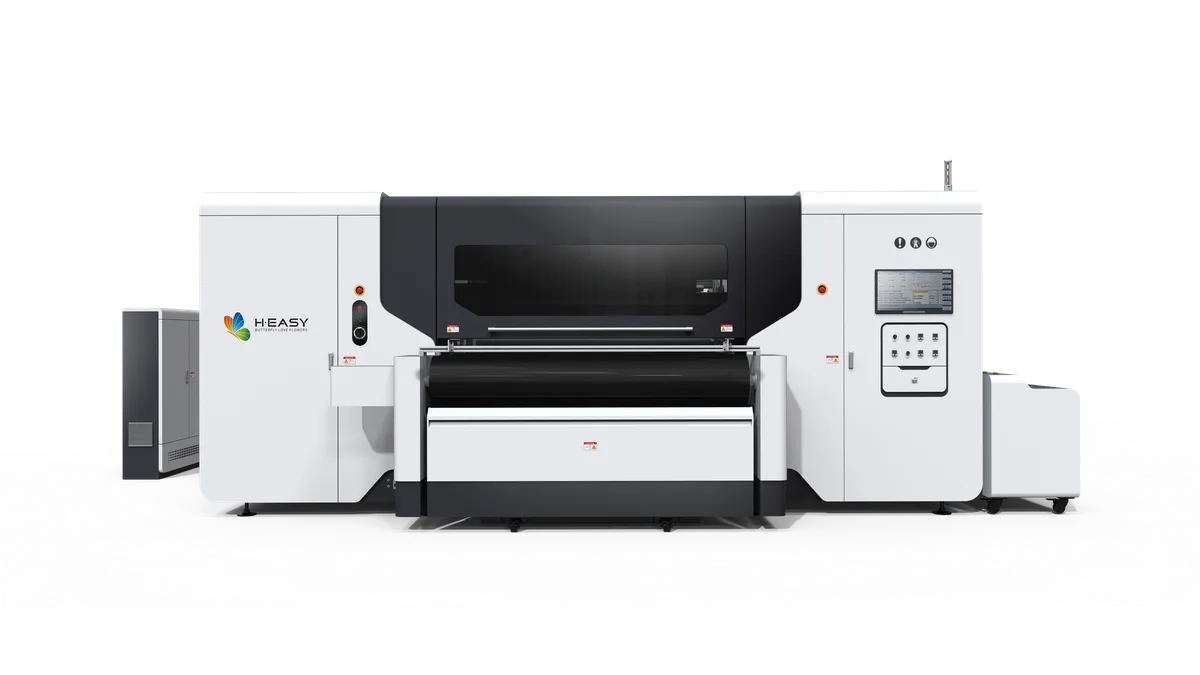
Why the H·EASY HY-2232 Digital Textile Printer Is Ideal for Baby and Children's Textile Printing
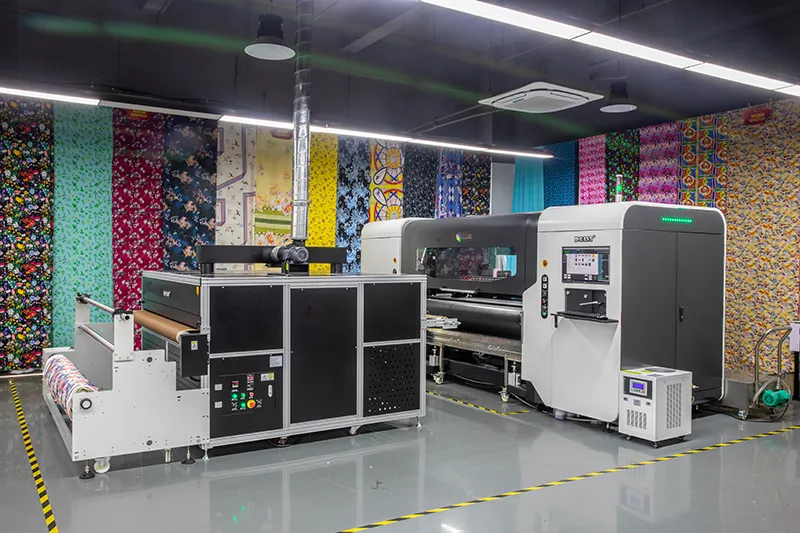
The baby and children’s textile market is growing steadily. Products such as kidswear, baby home textiles, parent-child clothing, children’s underwear, knitted sets, brushed fabrics, and soft-touch textile products require higher printing standards than ordinary fabric applications.
For brand owners, a printed baby textile product must not only look attractive. It also needs to meet higher expectations for soft hand feel, clear pattern details, stable color performance, dry and wet rubbing fastness, washing stability, production efficiency, batch consistency, and process reliability.
For printing factories, baby and children’s textiles are not simple fabric orders. They require stable equipment, suitable ink, printhead protection, pretreatment, drying, finishing, fabric feeding control, and strict production management.
Many factories want to enter the baby textile printing market, but often face three key challenges: low production efficiency, difficulty balancing color and hand feel, and higher printhead damage risk on knitted or brushed fabrics.
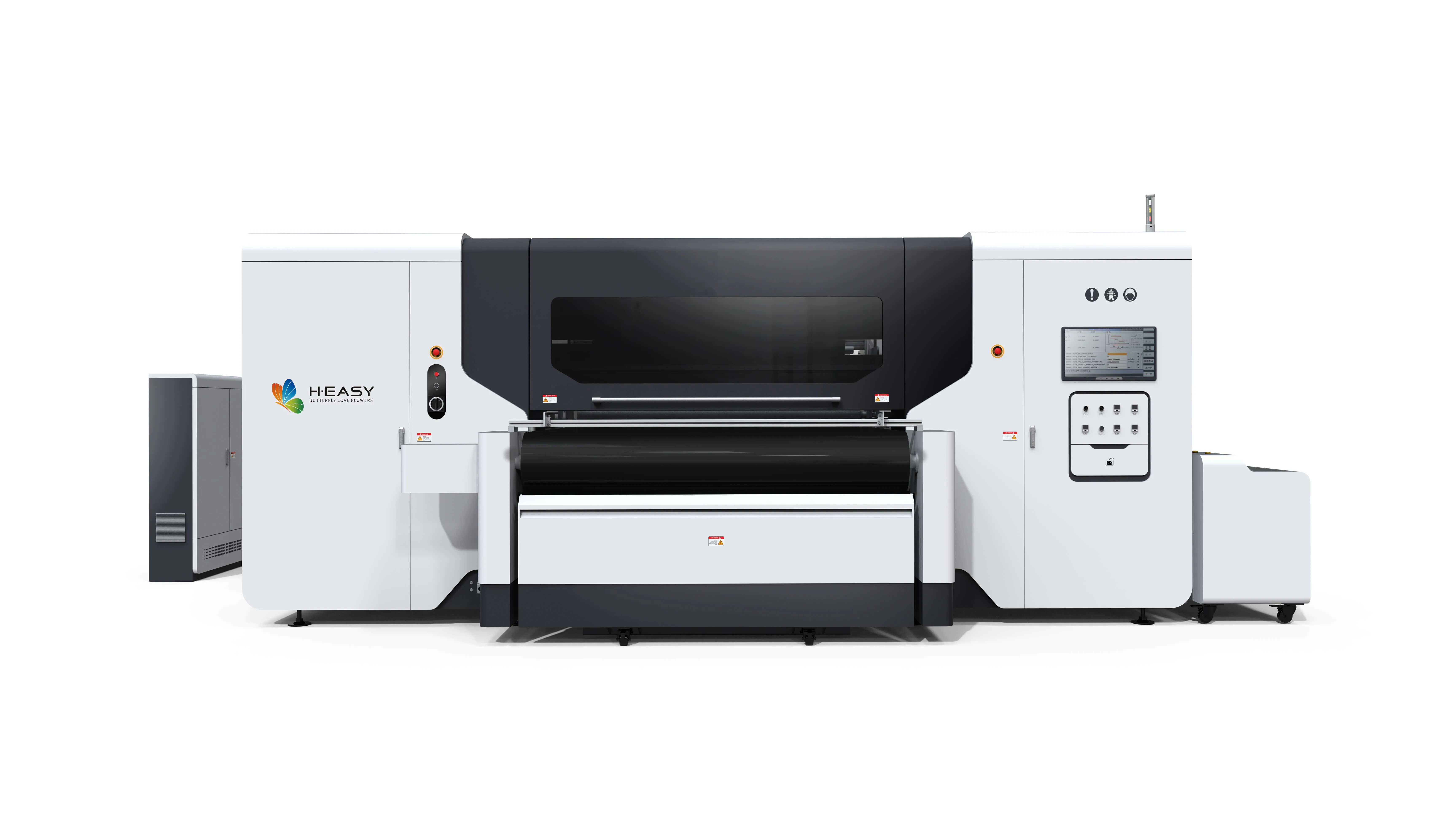
The H·EASY HY-2232 digital textile printer is designed for industrial textile printing applications. With 32 Ricoh Gen6 printheads, a 2200 mm effective print width, up to 2400 dpi resolution, adhesive-belt transport, and model-specific production references, it provides a practical direction for baby textile fabrics, kidswear, baby home textiles, cartoon patterns, IP-style designs, and fast-response orders.
Quick Answer: Why Is the HY-2232 Suitable for Baby and Children’s Textile Printing?
The key value of the HY-2232 is not only speed. It helps factories build a more stable production system through 32 Ricoh Gen6 printheads, a 2200 mm print width, adhesive-belt transport, model-specific 2-pass and 3-pass output references, and a configurable direct-to-fabric ink workflow.
| Baby Textile Printing Challenge | HY-2232 Solution Direction |
|---|---|
| Many styles and short delivery cycles | A 32-head configuration supports medium-to-high production capacity |
| Low efficiency with multiple-pass printing | Published references cover 650 m²/h at 2-pass and 450 m²/h at 3-pass |
| Difficult color performance on knitted and brushed fabrics | Ricoh Gen6 printheads and a qualified ink workflow support consistent output |
| Hard to balance hand feel and quality requirements | Ink, pretreatment, drying, and finishing can be tested together |
| Uneven or fluffy fabric surfaces | Adhesive-belt conveyance helps hold stretch and knit fabrics flat |
| Long-roll fabric stability requirements | Constant-tension feeding supports stable continuous production |
| High requirements for bulk consistency | Resolution, color management, and recorded production settings support repeatability |
1. Why Is Baby Textile Printing More Difficult?
Baby and children’s fabrics are different from ordinary garment fabrics. Common baby textile materials include:
- cotton knitted fabric;
- stretch knitted fabric;
- brushed fabric;
- cotton-spandex fabric;
- cotton-polyester blends;
- soft-touch home textile fabrics;
- children’s garment fabrics.
These fabrics often have several characteristics: soft surfaces, strong elasticity, fluffy texture, more lint or surface fibers, less stable fabric flatness, high hand-feel requirements, and high sensitivity to fastness and testing standards.
This means baby textile printing should not only focus on whether the fabric can be printed. Factories must also consider whether the printed fabric still feels soft, whether pattern details are clear, whether fastness is stable, and whether bulk production can remain consistent. The printed cotton product applications guide provides additional context for matching cotton products with print routes, finishing, and approval plans.
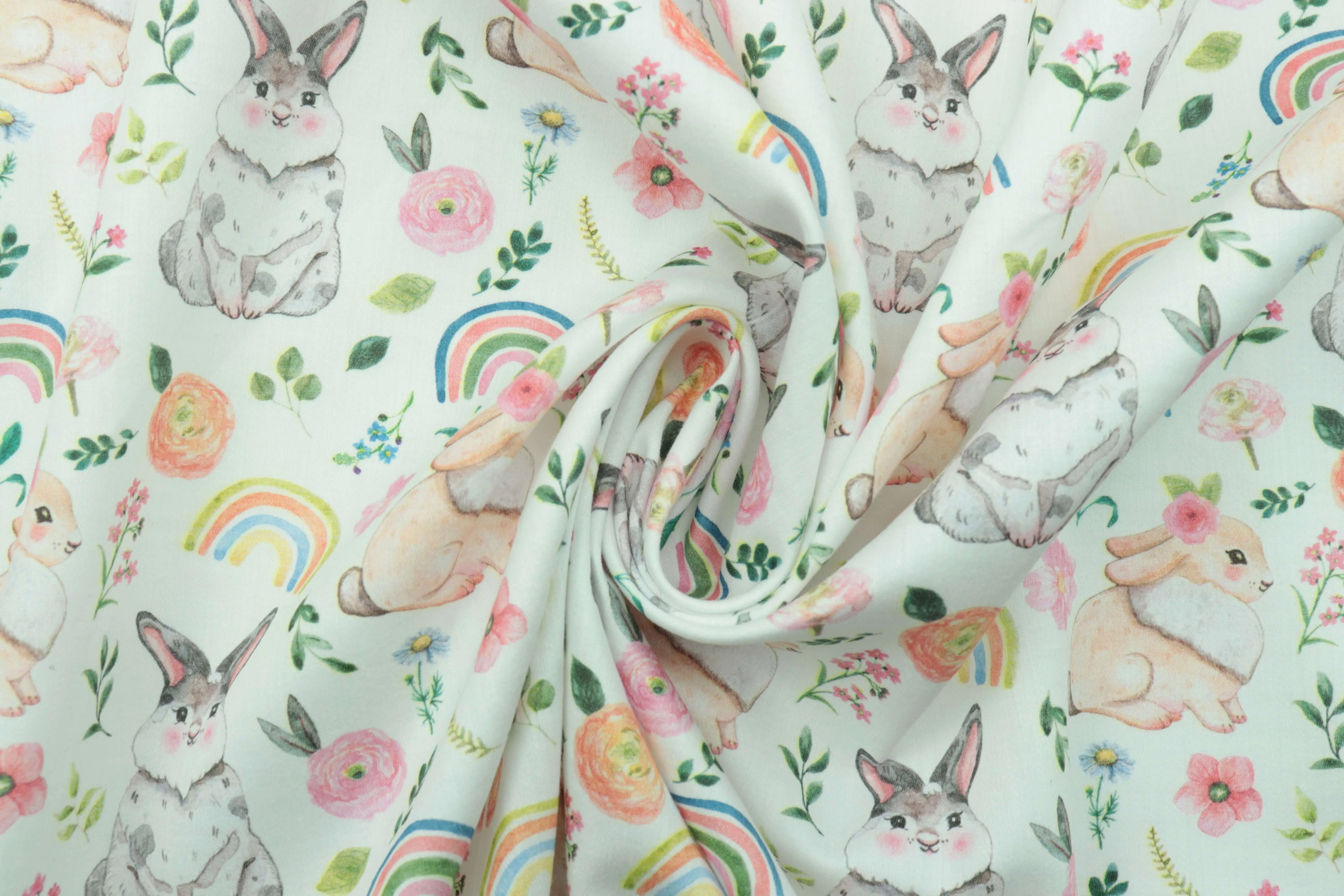
2. Three Major Pain Points in Baby Textile Printing
2.1 Multiple Styles and Frequent Batches Reduce Production Efficiency
Baby textile orders often involve many patterns and frequent updates, such as children’s clothing collections, parent-child clothing designs, cartoon-style patterns, IP-style graphics, e-commerce test orders, brand sampling, and multi-size or multi-color orders.
If machine output is limited, or if multiple passes are required to achieve the desired color depth, factories may face slower production speed, higher ink consumption, longer delivery time, limited capacity release, and difficulty handling larger brand orders.
The HY-2232 uses a 32-head Ricoh Gen6 configuration. Its published reference output is 650 m²/h at 2-pass and 450 m²/h at 3-pass. Actual production speed should be confirmed based on fabric type, artwork coverage, ink volume, pass mode, resolution, feathering, room conditions, and customer requirements.
2.2 Color, Fastness, and Hand Feel Must Be Balanced
Baby and children’s textiles usually require clean color performance, fine pattern details, soft hand feel, washing stability, dry and wet rubbing fastness, and comfortable touch for close-to-skin products.
For baby textile printing, the solution is not simply adding more ink. Factories need to control the full process, including printhead jetting stability, ink compatibility, pretreatment formula, ICC color profile, drying temperature, finishing method, and bulk production testing. The digital textile print color fastness troubleshooting guide explains how ink, fabric, pretreatment, fixation, and washing can affect the final result.
2.3 Knitted and Brushed Fabrics Increase Printhead Risk
Knitted, brushed, and fluffy baby fabrics are often less flat than standard woven fabrics. If fabric feeding is unstable or printhead clearance is not suitable, production may face fabric rubbing the printhead, lint affecting the nozzle surface, missing nozzles, nozzle clogging, more cleaning downtime, and higher maintenance cost.
The HY-2232 uses adhesive-belt conveyance and constant-tension feeding to help hold stretch and knitted fabrics flat during transport. Printhead clearance and feeding settings should still be qualified with the actual fabric thickness, stretch, surface fibers, and pretreatment condition before bulk production.
3. Why Digital Direct Printing Fits the Baby Textile Market
Digital direct printing is suitable for small-batch, multi-pattern, and multi-fabric textile production. A typical production workflow may include fabric inspection, pretreatment, digital printing, drying, fixation or finishing when needed, and final testing.
3.1 Suitable for Small-Batch and Multi-Pattern Orders
Children’s clothing and baby textile products change patterns quickly. Brands often need to develop new patterns, new collections, seasonal products, parent-child series, e-commerce test styles, and IP-style collaborations. Digital printing does not require traditional screen-making. Once the artwork is processed, it can be printed directly, making it suitable for multi-style, small-batch, and quick-repeat orders.
3.2 Suitable for Cotton, Knitted, and Blended Fabrics
Common baby textile fabrics include cotton, cotton-spandex, cotton-polyester, knitted fabrics, brushed fabrics, and soft blended materials. Before bulk production, factories should always test hand feel, color fastness, washing performance, safety requirements, and batch consistency.
3.3 Better Fit for Flexible Baby Textile Supply Chains
Baby textile brands are moving from large inventory models toward more flexible production. They need fast sampling, quick product launches, small-batch testing, fast replenishment, and lower inventory risk. The HY-2232 digital textile printing solution helps printing factories adapt to this order structure.
4. HY-2232 Key Parameters and Production Value
| Parameter | HY-2232 Specification |
|---|---|
| Printhead | 32 Ricoh Gen6 printheads |
| Effective print width | 2200 mm |
| Printing resolution | Up to 2400 dpi |
| Production speed | 650 m²/h at 2-pass; 450 m²/h at 3-pass |
| Print software | Neostampa / Texprint |
| Ink routes | Reactive / disperse / acid / pigment, up to 12 colors |
| Power | AC 380 V, 3L + N + G, 50/60 Hz, 15 to 35 kW depending on configuration |
Published values are planning references. Final output and configuration should be confirmed against the intended material, artwork, ink route, coverage, quality target, and acceptance standard. Buyers can review the complete HY-Series direct-to-fabric R2R platform before confirming a configuration.
5. How the HY-2232 Improves Baby Textile Printing Efficiency
5.1 32 Ricoh Gen6 Printheads for Medium-to-High Production Capacity
The HY-2232 is equipped with 32 Ricoh Gen6 printheads, making it suitable for baby textile factories that need higher output and stable bulk production. Kidswear, e-commerce apparel, and baby home textile orders often have many styles, short delivery cycles, frequent batches, and fast artwork changes. A 32-head configuration helps factories build stronger production capacity and reduce delivery pressure caused by limited machine output.
5.2 2200 mm Effective Print Width for More Fabric Applications
The HY-2232 offers an effective print width of 2200 mm. For baby knitted fabrics, garment fabrics, and home textile fabrics, a 2200 mm platform can cover more common width requirements and provide more space for edge control and continuous printing.
5.3 Up to 2400 dpi for Cartoon and IP-Style Pattern Reproduction
Children’s garments often use cartoon characters, animal patterns, illustrations, letters, playful graphics, and IP-style design elements. These patterns require good line clarity, color performance, and detail reproduction. The HY-2232 supports printing resolution up to 2400 dpi, helping improve visual quality and detail performance.
5.4 Ink Configurations Supporting Up to 12 Colors
The HY-2232 belongs to an HY-Series platform that supports reactive, disperse, acid, and pigment ink routes with configurations of up to 12 colors. For baby and children’s designs, the selected color configuration can be qualified for gradient performance, cartoon color reproduction, image detail, and visual richness. Actual color performance should still be tested together with ink, ICC profiles, fabric, and pretreatment.
5.5 Adhesive-Belt Conveyance
The HY-Series uses adhesive-belt conveyance with belt cleaning and heating. For baby knitted, brushed, and stretch fabrics, stable fabric transport is essential. The belt system helps keep fabric flat and reduces the risk of skewing, wrinkling, and pattern deformation.
5.6 Negative-Pressure Printhead Cleaning
The HY-Series provides an operator-triggered negative-pressure cleaning routine for use when a nozzle check shows blockage. This gives operators a documented recovery step without making an unsupported timed automatic-cleaning claim.
5.7 Constant-Tension Feeding for Continuous Production
Constant-tension feeding and web guiding help control long-roll fabric transport and reduce wrinkles or dimensional shift. Drying, fixation, steaming, washing, and finishing requirements still depend on the selected ink route and fabric.
6. How the HY-2232 Helps Factories Compete in the Baby Textile Market
Competition in baby textile printing is not only about price. The real competitive factors are production efficiency, image quality, hand-feel control, fastness stability, and delivery capability.
6.1 Faster Response to Children’s Wear Brand Launches
Children’s wear brands update products quickly and change patterns frequently. The HY-2232 digital workflow helps factories switch artwork faster and shorten sampling and production cycles.
6.2 Better Fit for IP-Style and Detailed Cartoon Patterns
Baby and children’s garments often use cartoons, illustrations, animal graphics, letters, and IP-style patterns. These designs require good line reproduction and color expression. The HY-2232’s resolution, configurable ink routes, and 32-head platform help support detailed pattern production.
6.3 Suitable for More Mother-and-Baby Textile Products
Beyond children’s clothing, baby textile digital printing can also expand into baby bedding, swaddles, bibs, parent-child outfits, children’s hats, baby home products, and baby decorative fabrics. This allows printing factories to expand beyond a single kidswear category and serve a wider mother-and-baby textile market.
6.4 Better Support for Mid-to-High-End Brand Customers
Baby textile brand customers usually care more about production stability and compliance. The HY-2232 supports factories with stable equipment performance and configurable ink workflows. Final compliance of baby textile products should always be verified by third-party testing and the customer’s required standards. Equipment and process support can provide a production foundation, but they do not replace final testing.
7. Recommended Production Workflow for Baby Textile Printing
| Step | Process Focus |
|---|---|
| 1. Fabric inspection | Check pH, absorbency, weft skew, cleanliness, lint, and fabric width stability |
| 2. Pretreatment testing | Adjust pretreatment formulas for cotton, knitted, brushed, and blended fabrics |
| 3. Sample printing | Test color, lines, ink volume, hand feel, and ink spreading |
| 4. Drying and post-printing treatment | Set temperature and time according to fabric and ink requirements |
| 5. Softening treatment | For close-to-skin baby fabrics, softening treatment may be required |
| 6. Fastness testing | Test dry rubbing, wet rubbing, washing performance, color change, and hand feel |
| 7. Trial production | Run a continuous small-batch trial before bulk production |
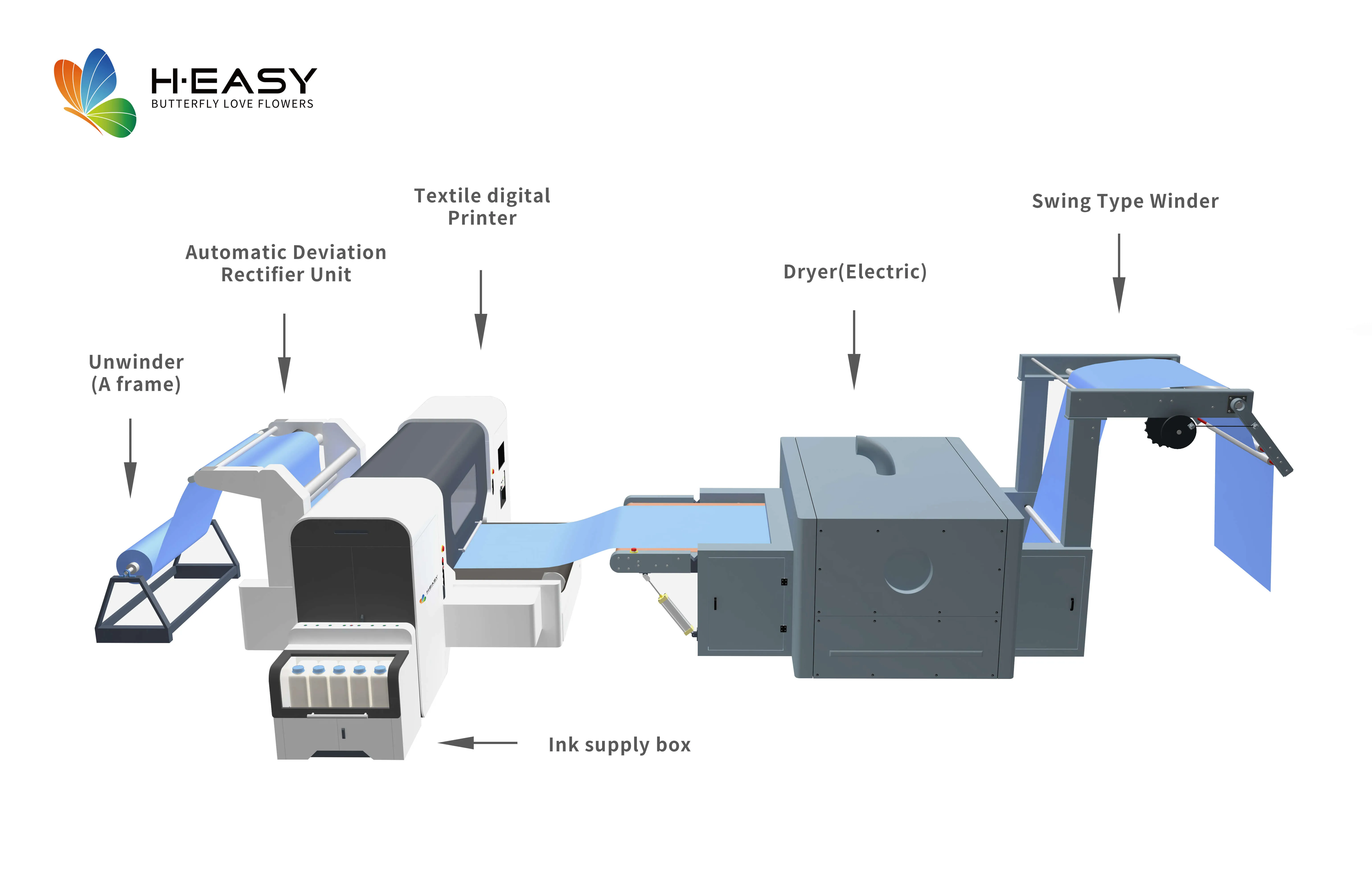
8. Typical Baby Textile Orders Suitable for the HY-2232
| Application Type | Typical Products |
|---|---|
| Children’s garment fabrics | T-shirts, sets, base layers, rompers |
| Knitted fabrics | Stretch knits, cotton-spandex knits, soft-touch knits |
| Brushed fabrics | Autumn and winter kidswear, homewear, pajama fabrics |
| Baby home textiles | Bedding, swaddles, cushions, decorative fabrics |
| Personalized products | Name graphics, parent-child designs, birthday styles |
| IP-style pattern orders | Cartoon graphics, illustrations, collaboration styles |
| Fast-response orders | E-commerce test styles, small-batch reorders |
Conclusion: The HY-2232 Is an Efficient Direct Printing Solution for Baby Textiles
The baby textile market is moving toward higher quality, faster delivery, more flexible production, and more stable process control.
For printing factories, entering the baby textile segment requires more than standard equipment. Knitted, brushed, cotton, and blended baby fabrics require higher standards for production efficiency, color performance, hand feel, fastness, and printhead protection.
The H·EASY HY-2232 digital textile printer is a 2200 mm, 32-head Ricoh Gen6 configuration with published output references of 650 m²/h at 2-pass and 450 m²/h at 3-pass. It supports resolution up to 2400 dpi and reactive, disperse, acid, or pigment ink workflows.
For printing companies planning to expand into children’s wear, baby home textiles, knitted fabrics, brushed fabrics, and fast-response baby textile orders, the HY-2232 is a digital textile printing solution worth considering.
Sources and references
- HY-Series 1.8-3.2m R2R Textile PrintersThe HY-2232 model name, 2200 mm print width, 32 Ricoh Gen6 printheads, 650 m²/h 2-pass and 450 m²/h 3-pass reference speeds, 2400 dpi resolution, ink routes, RIP software and model-dependent power range.