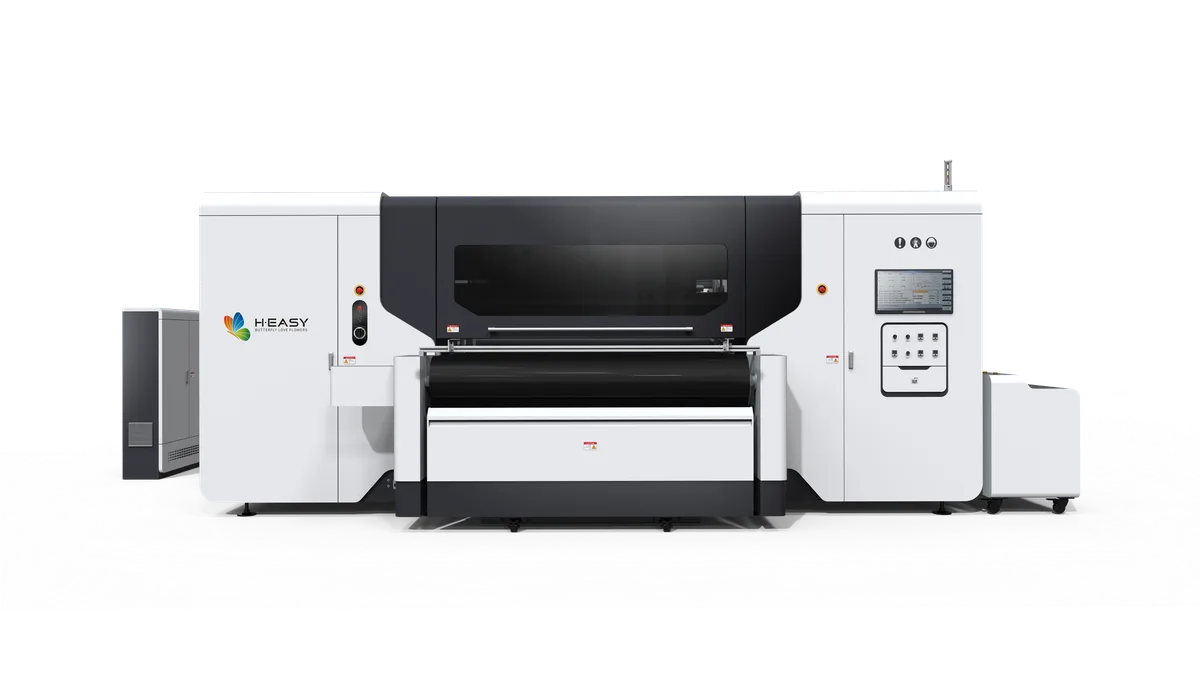
Digital Floral Fabric Printing: A Production Workflow
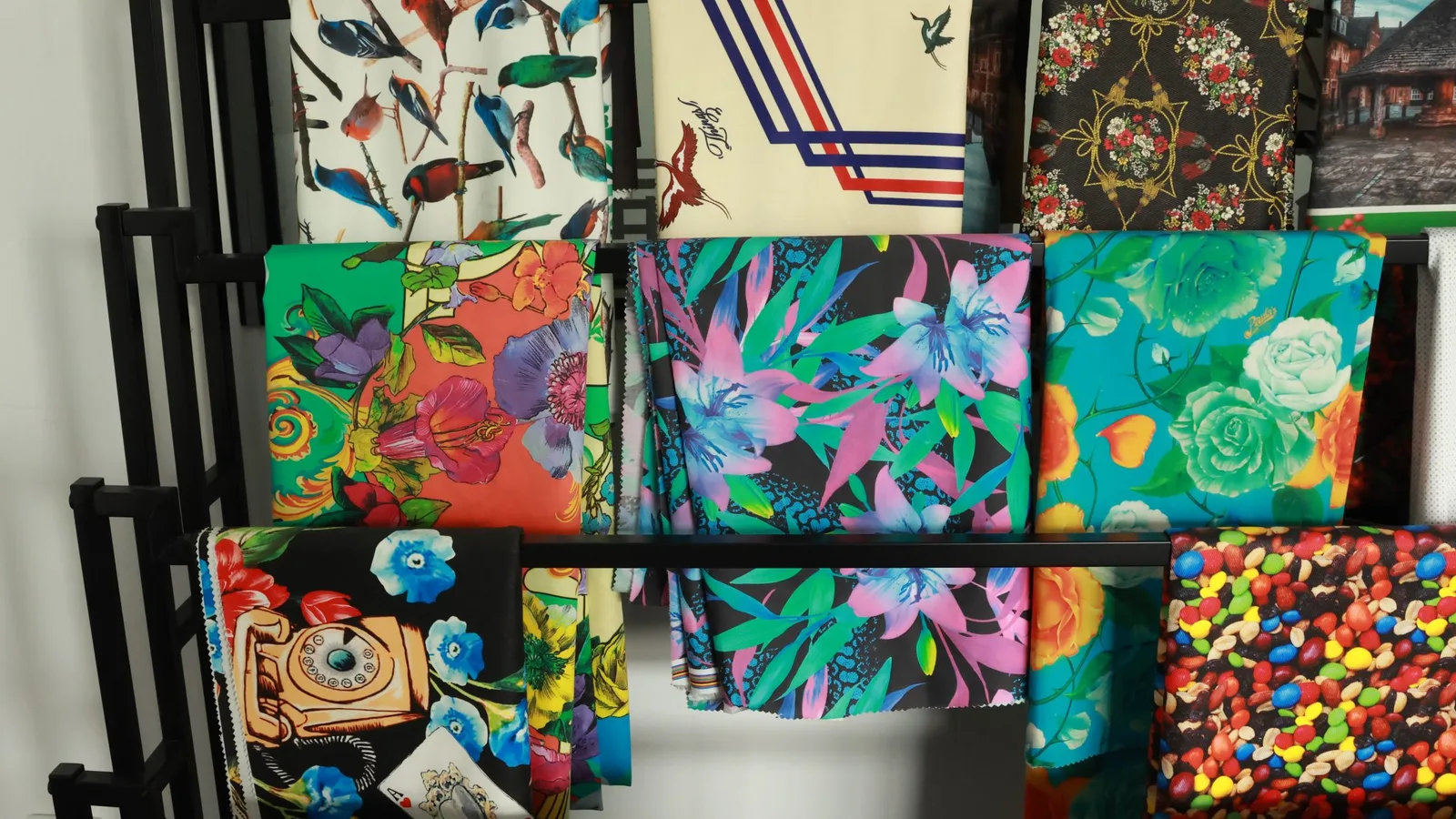
Successful floral fabric printing is less about choosing an attractive motif and more about controlling the path from repeat artwork to finished textile. A botanical design can hide small color variations, but it also exposes broken stems, clipped petals, visible tile seams and feed errors across a large area. The production workflow therefore has to qualify the design, fabric, ink route, printer setup and finishing process as one system.
The sequence below is suitable for fashion, furnishing and other roll-to-roll applications. It begins with the approval question and ends with a reference that production can actually reproduce.
Define what the floral print must achieve
Start with the end use, not the printer. A lightweight garment fabric, a dense decorative textile and a fabric intended for frequent washing do not share the same visual, handle or durability priorities. Record the intended fibre, construction, face side, required finish and the characteristics the buyer will inspect.
This definition prevents a common sampling error: approving a beautiful floral image on a convenient substitute fabric. That print can support a creative decision, but it cannot approve color, edge character or hand for the production material. The fabric and process selection guide helps establish a suitable route before artwork is tuned around the wrong substrate.
Build and test the repeat
A roll-to-roll floral file needs more than a single finished illustration. Its tile must join without a visible boundary, while stems, leaves and background elements continue naturally from one edge to the other. Review the join with several tiles placed beside and above one another. Look for accidental lines, empty channels, repeated clusters and elements that appear unnaturally close at the seam.
Scale is also a production decision. Fine veins and small tonal transitions may look clear on a monitor yet disappear into a textured weave or spread after ink meets the fabric. Judge important detail at the intended print size and viewing distance. Keep the editable source separate from the print-ready export so a correction to the repeat does not overwrite the design master.
Color definitions should be intentional before the file enters the RIP. Name the approved artwork revision, preserve its embedded profile information and identify any colors that matter to the buyer. A screen preview is useful for editing, but the finished textile, not the monitor, becomes the production reference.
Match fabric, ink and pretreatment
The floral motif does not determine the ink chemistry; the fibre and required end performance do. Reactive, pigment and disperse routes interact with textile fibres and finishing in different ways. Pretreatment or coating then controls how the drop holds on the surface, how far it spreads and how much detail remains around petal edges and fine lines.
Do not compensate for a mismatched route by repeatedly changing artwork color. First confirm the fibre identification, fabric preparation, ink compatibility and finishing path. The textile ink selection guide sets out the decision by material and process, while the ink workflow guide explains why the required after-treatment differs.
Print a controlled strike-off
The strike-off should expose the risks in the real job. Include a complete repeat join, important fine detail, dark and light areas, critical colors and a representative section of the background. Use production-representative fabric, pretreatment, ink, profile, print mode and finishing wherever the sample is expected to approve bulk output.
Before judging the pattern, run the machine checks that protect the result from false conclusions. Confirm nozzle condition, stable fabric loading, appropriate tension and an even surface through the print zone. A missing nozzle or drifting feed can imitate an artwork seam; editing the file will not correct either fault.
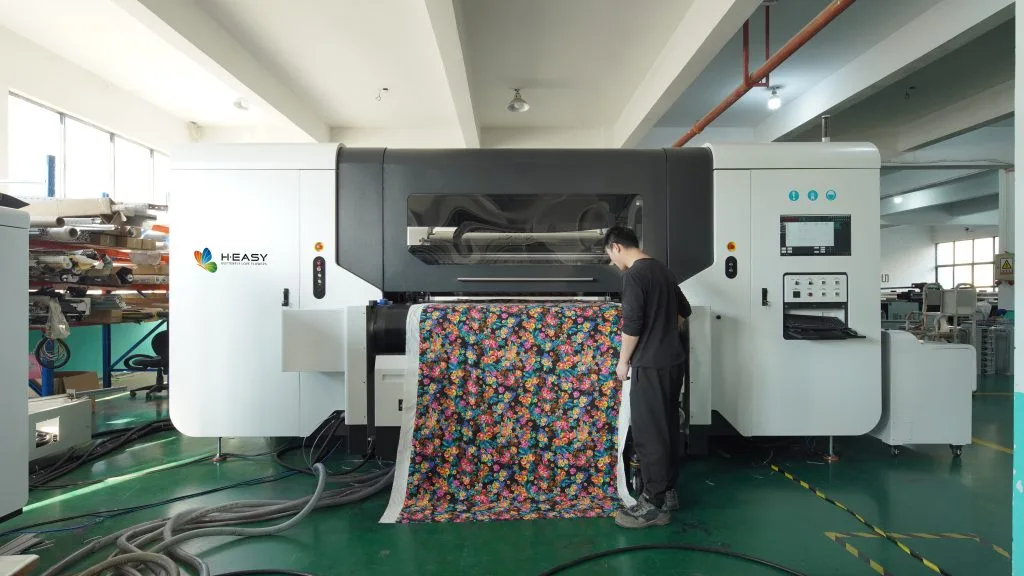
Inspect the strike-off across the width and along the feed direction. A defect that repeats at the artwork tile boundary points toward the file. A line tied to the carriage direction or a change that develops as the roll advances points toward nozzle condition, feed, tension or drying. This distinction keeps design corrections separate from machine corrections.
Finish the sample before approval
Freshly printed fabric is not the finished product. Follow the fixation, washing, drying or curing route required by the selected chemistry, then allow the material to reach the condition used for inspection. Finishing can alter color, surface feel, edge definition and fabric dimensions. Approval before this stage creates a target that production may be unable to match honestly.
Compare the finished strike-off with the agreed reference under a controlled viewing method. Check the repeat join, color relationship, fine detail, marks, banding, face appearance and hand. Apply the buyer’s specified durability or fastness method where required; an informal shop-floor check should not be described as certified performance.
The textile print quality checklist provides a reusable inspection order for the finished sample and the first approved production output.
Turn approval into a reproducible record
Keep the physical approved sample with the artwork revision, substrate identification, pretreatment and finishing route, ink and profile reference, machine setup record, operator notes and approval status. Store it where light, contamination and handling will not quietly change the comparison standard.
Production should begin by matching this package, not by reconstructing settings from memory. If the fabric lot, ink route, profile or finishing equipment changes, treat the first output as a new qualification rather than assuming the old approval transfers unchanged.
Common floral-printing faults and where to look
A visible line at the repeat boundary
Preview adjacent tiles and inspect whether motifs and backgrounds cross the edge cleanly. If the line exists in the file, repair the repeat. If it appears only on fabric, check feed consistency, nozzle condition and how the substrate lies in the print zone.
Muddy fine detail
Confirm that the source file contains enough detail at print scale, then examine pretreatment, fabric absorbency, profile and ink load. Adding artificial sharpness to the artwork cannot recover detail lost through uncontrolled spread.
Color that changes after finishing
Make the finished sample the approval target and keep the processing route consistent. A profile cannot compensate for unrecorded changes in fixation, washing, curing or fabric preparation.
Pattern drift along the roll
Check fabric loading, edge guidance, tension and take-up behavior. A seamless digital tile will still look misregistered when the textile wanders or stretches through the line.
Choose equipment around the qualified route
For floral production, useful printer questions concern media handling, ink compatibility, profiling control, nozzle maintenance, service access and the ability to hold a stable setup across sampling and production. Headline output claims do not replace a strike-off on the intended textile.
The digital textile sampling workflow shows how to define an approval sample, and the roll-to-roll textile printer family provides the current equipment context. Qualify the process with the real fabric, then let the approved floral sample govern the production run.