Printed Cotton Product Applications: A Buyer’s Guide
Printed cotton works across apparel, home-textile, accessory, and short-run product programs when the fabric construction, printing chemistry, finishing route, and approval method are treated as one specification. The useful question is not simply whether a design can be placed on cotton. It is whether the chosen route can deliver the required color, hand, detail, care behavior, and sewing performance on the production fabric.
That distinction matters because two cotton fabrics can react differently even when they look similar on a purchasing sample. Yarn construction, surface hair, absorbency, incoming finish, stretch, and preparation can all change ink spread, color development, drying, fixation, washing, and final dimensions.
Start with the end product, not the printer
Define the product architecture before asking for a strike-off. A cushion cover, a shirt panel, and a tote bag may share artwork, but they do not necessarily need the same fabric, print side, penetration, hand, or finishing route.
For each application, record:
- the fabric composition and construction supplied by the mill;
- whether the material is woven or knitted, stable or stretch-sensitive;
- the visible side, seam allowances, repeat direction, and cut orientation;
- the expected hand, drape, opacity, and surface character;
- the buyer’s care, color, dimensional, and appearance requirements;
- the finishing and garment-making steps that follow printing.
Use the fabric-process selector when the substrate or chemistry route has not yet been fixed. It helps separate fiber compatibility from the later questions of workflow and equipment.
Apparel and sleepwear need construction-aware artwork
Cotton shirts, dresses, sleepwear, children’s apparel, and casual garments can use repeats, engineered placements, or panel-specific artwork. The print file must reflect how the garment will be cut and assembled. Motifs near a placket, pocket, collar, cuff, or side seam may need a deliberate position rather than a continuous repeat.
The sample should be sewn or at least folded at critical construction points. A flat swatch can hide a scale problem, poor motif alignment, show-through, or a hand that becomes uncomfortable when several layers meet. Knitted cotton also needs handling controls that prevent distortion between printing, finishing, cutting, and sewing.
Before approving bulk fabric, compare the printed and finished sample under the same lighting and handling conditions used for release. Keep the approved fabric and garment reference together so the production team can distinguish a print change from a cutting or assembly change.
Home-textile applications depend on viewing distance and finish
Cushions, table linens, light decorative panels, and similar home-textile goods often present larger uninterrupted areas than garments. This makes repeat joins, side-to-side shade, skew, wrinkles, and local mottling easier to see. A design that looks balanced on a screen may also feel too dense or too sparse at the finished-product scale.
Review home-textile artwork at its intended viewing distance and in a simple product mock-up. Then check whether laundering, pressing, coating, or another finish changes the hand, color, or dimensions. The home-textile solution overview provides a useful starting point for discussing substrate width, finishing, and product flow.
Bags, accessories, and craft goods reward flexible sampling
Tote bags, pouches, fabric covers, patches, and craft components can be good candidates for varied designs or short replenishment cycles. Their small format does not remove process risk. Heavy canvas, light poplin, brushed surfaces, and coated cotton blends can require different preparation and print control.
Accessories also expose edges, folds, handles, topstitching, and reinforced zones. Place important artwork away from hidden or heavily stitched areas unless the design intentionally crosses them. If the product uses several printed components, mark orientation and lot identity so mismatched panels are not sewn together.
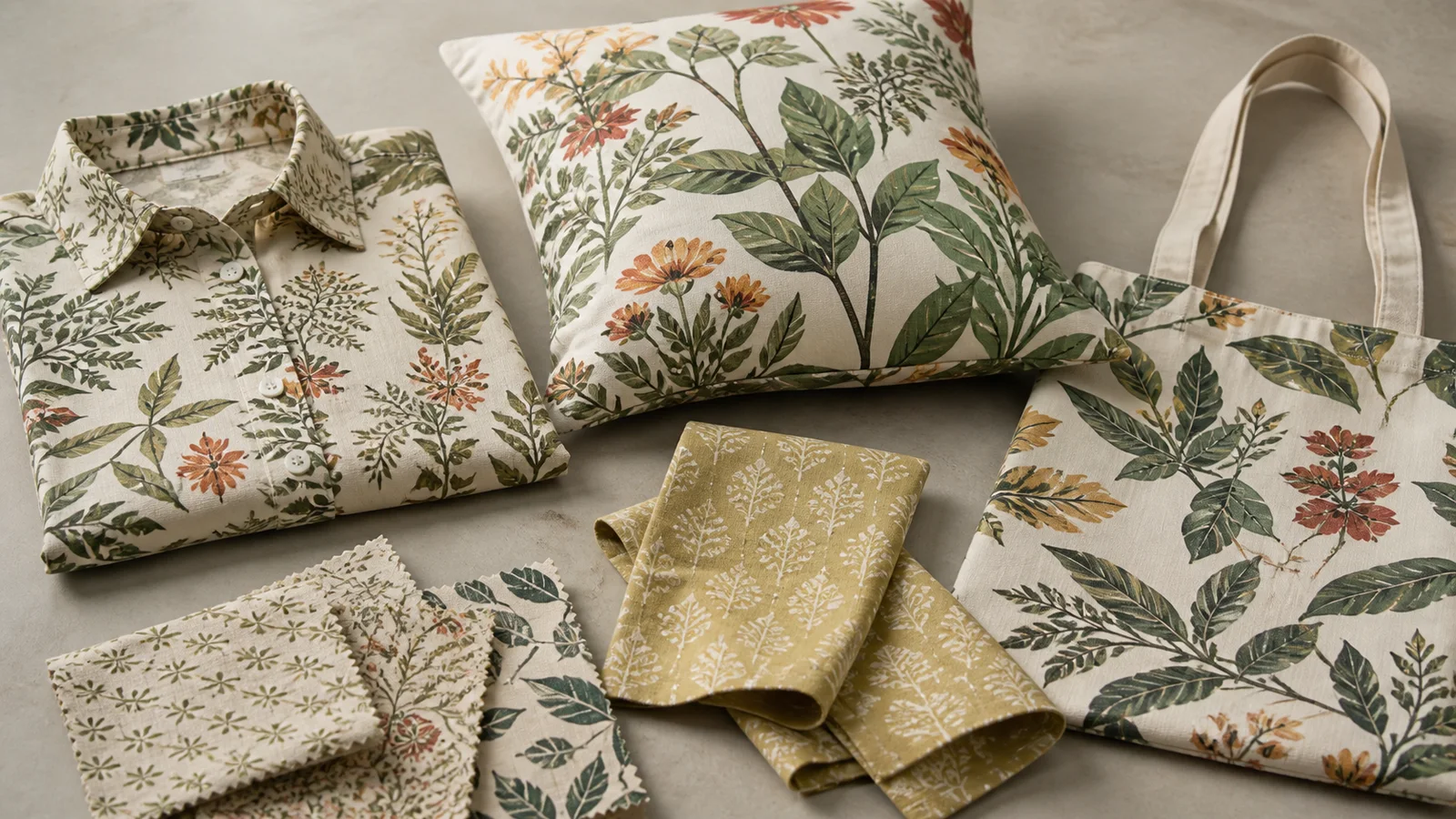
Temporary contextual product visualization generated for this guide; it is not presented as a company production photograph.
Choose a complete cotton printing route
Cotton printing is a linked workflow. The practical choice between reactive, pigment, or another qualified route depends on the fabric, desired result, available pretreatment and finishing equipment, environmental controls, and buyer acceptance method.
A reactive route normally includes compatible fabric preparation, controlled pretreatment, printing, fixation, washing, drying, and final finishing. A pigment route uses its own compatible pretreatment or binder system and curing controls. Neither should be reduced to an ink choice or a printer setting.
The R2R ink-workflow guide explains these route boundaries. For cotton programs already assigned to a reactive workflow, the reactive process-control guide shows how to keep fabric, coating, printing, steaming, washing, and inspection traceable.
Build an approval sample that represents production
An attractive laboratory swatch is only useful when it represents the intended bulk route. Use the same identified fabric construction, pretreatment family, ink set, profile logic, finishing sequence, and inspection conditions planned for production. If a substitute is unavoidable, label the difference and avoid treating the result as final approval.
A strong sample pack includes:
- the original artwork file, color target, scale, and repeat instruction;
- an identified fabric swatch before printing;
- the printed sample after the complete finishing route;
- a simple cut or sewn mock-up of critical product areas;
- the approved hand, appearance, and care criteria;
- the recipe, profile, material, and process revisions used;
- notes for any acceptable variation or unresolved risk.
The digital textile sampling workflow helps turn this material into a repeatable approval record rather than a loose collection of swatches.
Qualify the factory around the application
When comparing production partners or equipment, send an application brief instead of asking only for maximum output or print width. A useful brief names the cotton construction, product type, artwork mode, required finish, existing pretreatment and post-treatment capability, expected lot changes, and release method.
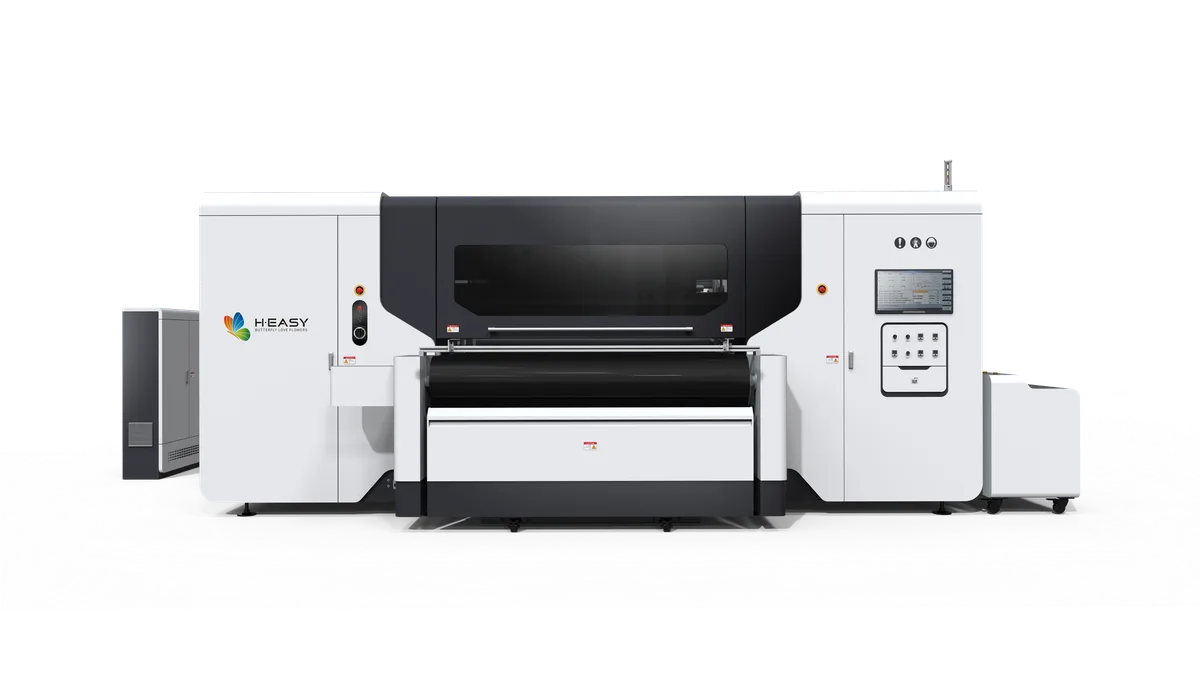
The current R2R textile printer family is one equipment path within a qualified cotton workflow. The final configuration must still be reviewed together with material handling, pretreatment, fixation or curing, washing where required, drying, finishing, and inspection. Use the contact form to share the fabric specification, product application, artwork, and current process so the complete route can be reviewed before sampling.